
BuddhistCatholicContemplativeEvangelicalGeneral ChristianHinduJewishLatter-day SaintMuslimNew VisionsProgressive Christian
Beliefs
- Buddhist
- Catholic
- Contemplative
- Evangelical
- General Christian
- Hindu
- Jewish
- Latter-day Saint
- More Voices
- Muslim
- New Visions
- Pagan
- Progressive Christian
Topics
- Religion News
- Food and Religion
- Sports and Religion
- Religious Art
- Religious Music and Entertainment
- Religious Events
- History and Religion
- Style and Religion
- Politics and Religion
- Women in Religion
- Recreation Outdoors and Religion
- Business Finance and Religion
- Careers Workplace and Religion
- Education and Religion
- Family Parenting and Religion
- Health Fitness and Religion
- Home and Religion
- Relationships and Religion
- Technology and Religion
- Travel and Religion
Columnists
- Buddhist Columnists
- Business Finance and Religion Columnists
- Careers Workplace and Religion Columnists
- Catholic Columnists
- Contemplative Columnists
- Education and Religion Columnists
- Evangelists Columnists
- Family Parenting and Religion Columnists
- General Christian Columnists
- Health Fitness and Religion Columnists
- Hindu Columnists
- History and Religion Columnists
- Home and Religion Columnists
- Jewish Columnists
- More Voices Columnists
- Latter Day Columnists
- Muslim Columnists
- New Visions Columnists
- Nonreligious Columnists
- Pagan Columnists
- Politics and Religion Columnists
- Progressive Columnists
- Recreation Outdoors and Religion Columnists
- Relationships and Religion Columnists
- Religion News Columnists
- Religious Art Columnists
- Religious Events Columnists
- Religious Music and Entertainment Columnists
- Sports and Religion Columnists
- Style and Religion Columnists
- Technology and Religion Columnists
- Travel and Religion Columnists
- Women in Religion Columnists
Resource Library
- 2026 Calendar
- Library of World Religions
- The 100 Most Holy Places on Earth
- Patheos Answers
- Podcasts
- Videos
- Faith Leaders Database
- Anglican Episcopalian
- Bahai
- Baptist
- Buddhism
- Christianity
- Confucianism
- Eastern Orthodoxy
- Hinduism
- Holiness and Pentecostal
- ISKCON
- Islam
- Judaism
- Lutheran
- Methodist
- The Church of Jesus Christ of Latter-day Saints
- New Age
- Paganism
- Presbytarian and Reformed
- Protestantism
- Religion Behind the Scenes
- Roman Catholic
- Scientology
- Shia Islam
- Sikhism
- Sufism
- Sunni Islam
- Taoism
- Zen
- See all religions
Research Tools
 Ad-Free & Subscriber Log-In Subscription Support
Ad-Free & Subscriber Log-In Subscription Support
Follow Patheos 

- Trending:
- Forgiveness
- |
- Marriage
- |
- Consciousness
- |
- Death Penalty
- |
- Election
- |
- Halloween
 Nomad
Nomad
- Home
- Progressive Christian
- Religion News
- Shall The Fundamentalists Win? (On Being Evangelical, Part 2)
Shall The Fundamentalists Win? (On Being Evangelical, Part 2)
Last updated on: August 14, 2015 at 3:28 pm by Brandan Robertson
Shall The Fundamentalists Win? (On Being Evangelical, Part 2) 2015-08-14T15:28:48-04:00 Brandan Robertson
Patheos Explore the world's faith through different perspectives on religion and spirituality! Patheos has the views of the prevalent religions and spiritualities of the world.
Earlier today, I sat down at my desk and began reading Rev. Harry Emerson Fosdick’s famous sermon, 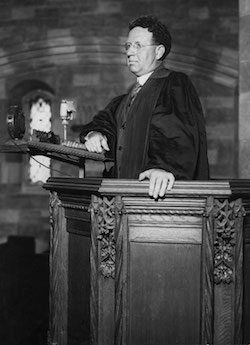 “Shall the Fundamentalists Win?” I had never read this sermon before, because in my conservative world, I was taught to think of Fosdick as a heretic rendering his ideas and work were unworthy of my engagement. But somehow, through my scrolling through Google today, I landed on this sermon and I began to read it. Of all the eras of modern history, the one that is most interesting to me is that of the late 1800’s and early 1900’s, the rise of the modern Evangelical movement in the United States. It was during this period of time that Fosdick emerged as a major faith leader. Fosdick identified as an evangelical and was largely seen as an evangelical by most other evangelical Christians of that day.
During this same period of time, a major religious controversy emerged that has become known as the “Fundamentalist-Modernist Controversy”, which divided Protestants based on those who readily accepted and embraced modern scientific, historical, and hermeneutical innovations and those who clung to pre-modern, literalistic interpretations of the Bible. In the middle of this movement, modern evangelicalism emerged as a “third-way” approach to these issues- allowing for disagreement and discussion around various doctrines of the faith, remaining tolerant and open minded to the momentous advances in history, science, and religious studies, while holding fast to the universal basics of the Christian faith.
The early evangelicals were thoughtful, tolerant, and yet deeply committed to God and core convictions of the Christian faith. But as the evangelical movement grew, so did the intolerance of both the fundamentalist and the liberal modernists. Fundamentalists insisted that if a Christian did not affirm the 5 fundamentals of the Christian faith (that they had invented)-which included the literal virgin birth, the inerrancy of scripture, the physical resurrection and literal second coming of Christ, penal substitutionary atonement, and the deity of Christ- then one could not truly call themselves “Christian”. Likewise, the modernist liberals were quick to abandon most standards of orthodoxy and became antagonistic towards those who insisted on believing in the supernatural elements of the Christian faith. Over time, evangelicals themselves continued to feel pulled and divided by the urgency and dogmatism of the two sides of this movement, and modern evangelicalism grew closer and closer to fundamentalism.
It is in the midst of this time of great tension for evangelicals that Fosdick preached what has become one of his most famous sermons ever- “Shall the Fundamentalists Win?” This sermon called into question the fundamentalist myth that the Church must be divided by those who disagree on “fundamental” doctrines and calls for greater unity and tolerance among all evangelicals, no matter where on the liberal/conservative spectrum one fell. As I read through the sermon, it felt like Fosdick was prophetically speaking to the current situation that we evangelicals find ourselves in. Yet again, we are being divided over disputable matters of doctrine, and embracing either radical cynicism towards religion altogether or else buckeling down and digging our feet deeper into the soil and refusing to give grace or allow for difference of opinion. While the issues addressed in Fosdicks sermon are inerrancy, the virgin birth, and the second coming, one only needs to replace those issues with LGBTQ equality or abortion to see the relevancy of what Fosdick was preaching to our day.
Fosdick asks the question, “Shall we allow these issues to drive people out of the Church?” to which he responds with an resounding “No!” I want to suggest that Fosdick’s position in this sermon is the true evangelical position. A position that allows room for the multitude of opinions that exist within Christianity about these highly complex matters. Modern science, biology, and psychology continue to advance our understanding of sexuality, gender identity, life, and it’s origins. As the Spirit continues to lead us into a greater understanding of ourselves and our world, we must expect that our theology and worldview will change. These changes aren’t made by carnal Christians capitulating to culture, but by faithful and committed followers of Christ who, through the revelation of God both in Scripture and through our modern world, have become convinced of another perspective or position.
Fosdick notes that neither the Church nor the world can allow for Christians to quarrel and divide over such trivial matters. We need each other, he notes, and the world needs us. “The world is dying of great needs”, Fosdick notes, “What can you do with folks…who in the face of colossal issues, play with the tiddlywinks and peccadillos of religion?” Our world today faces so many challenges and has so many needs that we as the Body of Christ have been called to meet. How can we allow ourselves to spend multiplied millions of dollars debating about what the Apostle Paul meant when he used the word “natural” in Romans 1 when poverty is still rampant, police brutality is on the rise, and genocides are taking place? “What immeasurable folly!” Fosdick says.
As I finished reading the sermon, I knew that I had to share it with you all. Fosdicks words are so timely and so pertinent to the current state of evangelicalism today. It is my prayer that as we reflect on our recent past, we would be awakened to a new way forward, a way of tolerance and open-mindedness while also firmly holding to our confession of Christ and his saving power. This is the truest evangelical posture. Indeed, I believe that it is the truest Christian posture.
Selections From Shall the Fundamentalists Win?
Harry Emerson Fosdick
“Already all of us must have heard about the people who call themselves the Fundamentalists. Their apparent intention is to drive out of the evangelical churches men and women of liberal opinions. I speak of them the more freely because there are no two denominations more affected by them than the Baptist and the Presbyterian. We should not identify the Fundamentalists with the conservatives. All Fundamentalists are conservatives, but not all conservatives are Fundamentalists. The best conservatives can often give lessons to the liberals in true liberality of spirit, but the Fundamentalist program is essentially illiberal and intolerant.”
“The Fundamentalists see, and they see truly, that in this last generation there have been strange new movements in Christian thought. A great mass of new knowledge has come into man’s possession—new knowledge about the physical universe, its origin, its forces, its laws; new knowledge about human history and in particular about the ways in which the ancient peoples used to think in matters of religion and the methods by which they phrased and explained their spiritual experiences; and new knowledge, also, about other religions and the strangely similar ways in which men’s faiths and religious practices have developed everywhere. . . .”
“There is nothing new about the situation. It has happened again and again in history, as, for example, when the stationary earth suddenly began to move and the universe that had been centered in this planet was centered in the sun around which the planets whirled. Whenever such a situation has arisen, there has been only one way out—the new knowledge and the old faith had to be blended in a new combination. Now, the people in this generation who are trying to do this are the liberals, and the Fundamentalists are out on a campaign to shut against them the doors of the Christian fellowship. Shall they be allowed to succeed?”
“If a man is a genuine liberal, his primary protest is not against holding these opinions, although he may well protest against their being considered the fundamentals of Christianity. This is a free country and anybody has a right to hold these opinions or any others if he is sincerely convinced of them. The question is—Has anybody a right to deny the Christian name to those who differ with him on such points and to shut against them the doors of the Christian fellowship? The Fundamentalists say that this must be done. In this country and on the foreign field they are trying to do it. They have actually endeavored to put on the statute books of a whole state binding laws against teaching modern biology. If they had their way, within the church, they would set up in Protestantism a doctrinal tribunal more rigid than the pope’s.”
“In such an hour, delicate and dangerous, when feelings are bound to run high, I plead this morning the cause of magnanimity and liberality and tolerance of spirit. I would, if I could reach their ears, say to the Fundamentalists about the liberals what Gamaliel said to the Jews, “Refrain from these men and let them alone; for if this counsel or this work be of men, it will be everthrown; but if it is of God ye will not be able to overthrow them; lest haply ye be found even to be fighting against God.”
“My friends, nothing in all the world is so much worth thinking of as God, Christ, the Bible, sin and salvation, the divine purposes for humankind, life everlasting. But you cannot challenge the dedicated thinking of this generation to these sublime themes upon any such terms as are laid down by an intolerant church.”
“The present world situation smells to heaven! And now, in the presence of colossal problems, which must be solved in Christ’s name and for Christ’s sake, the Fundamentalists propose to drive out from the Christian churches all the consecrated souls who do not agree with their theory of inspiration. What immeasurable folly!”
“Well, they are not going to do it; certainly not in this vicinity. I do not even know in this congregation whether anybody has been tempted to be a Fundamentalist. Never in this church have I caught one accent of intolerance. God keep us always so and ever increasing areas of the Christian fellowship; intellectually hospitable, open-minded, liberty-loving, fair, tolerant, not with the tolerance of indifference, as though we did not care about the faith, but because always our major emphasis is upon the weightier matters of the law.”
[Source: Harry Emerson Fosdick, “Shall the Fundamentalists Win?” Christian Work 102 (June 10, 1922): 716–722.]
To read the full text of Fosdicks Sermon, click here.
Previous Post

August 13, 2015
Brandan Interviewed by John Fugelsang About Being An Evangelical
Next Post
August 26, 2015 How The Eucharist Will Save Us All
Browse Our Archives
Select a Category Breaking News Contributor Post Current Events Devotional Devotional Ideas For A Better Tomorrow General Posts Guest Post Interview Missiology Nomad Rants Recalibrate Reflections Response Review The Other Side Theology Uncategorized
Select a Month May 2020 April 2020 March 2020 February 2020 January 2020 December 2019 September 2019 August 2019 July 2019 June 2019 May 2019 April 2019 March 2019 December 2018 November 2018 October 2018 September 2018 August 2018 July 2018 June 2018 May 2018 April 2018 August 2017 July 2017 May 2017 February 2017 January 2017 December 2016 September 2016 August 2016 July 2016 June 2016 May 2016 April 2016 March 2016 February 2016 January 2016 December 2015 November 2015 October 2015 September 2015 August 2015 July 2015 June 2015 May 2015 April 2015 March 2015 February 2015 January 2015 December 2014 November 2014 October 2014 September 2014 August 2014 July 2014 June 2014 May 2014 June 2013
Follow Us!
TAKE THE
Religious Wisdom Quiz
What is the first book of the New Testament?
Select your answer to see how you score.
Mark Luke Matthew John
Related posts from Nomad
A Call for the Christian Church (Disciples of...
How the Pro-Life Movement Is Failing To Follow...
How Kim Davis's Imprisonment Is A Win for...

TRENDING AT PATHEOS Progressive Christian

What Being a Modern-Day Apostle Means to Me
In my last column, I discussed the ins and outs of modern-day...

Did Ancient China Once Worship the God of...
Across human history, a common thread weaves through the origins of the...

Love Your Neighbor – Including Earth-Kin: Lev. 19,...
God’s command to love your neighbor means acting in an ethical and...

Lead a Church Study of “Jesus and Lao...
Guest writer Jack Thomas (The Irreverent Reverend) reflects on leading his church...

Pastoral Wisdom for Responding to Sermon Pushback
Getting sermon pushback on your social justice sermon? Learn practical, Proverbs-based strategies...

Principles for Understanding the Apostolic Ministry Today
Whenever people discover that my formal ministry title is "apostle," as in...
view all Progressive Christian blogs
Ad-Free & Subscriber Log-In Subscription Support
- About Us
- 2026 Calendar
- Videos
- Podcasts
- Library of World Religions
- Faith In Media Tracker
- Advertise With Us
- Write for Us
- Privacy Policy
- Terms of Service
- Do Not Sell My Data
- Contact Us
- Radiant Digital
- Manage Newsletter Subscriptions
- Unsubscribe From Notifications
- Sitemap
Copyright 2008-2026, Patheos. All rights reserved.
Subscription Support Ad-Free & Subscriber Log-In
Follow Patheos