
BuddhistCatholicContemplativeEvangelicalGeneral ChristianHinduJewishLatter-day SaintMuslimNew VisionsProgressive Christian
Beliefs
- Buddhist
- Catholic
- Contemplative
- Evangelical
- General Christian
- Hindu
- Jewish
- Latter-day Saint
- More Voices
- Muslim
- New Visions
- Pagan
- Progressive Christian
Topics
- Religion News
- Food and Religion
- Sports and Religion
- Religious Art
- Religious Music and Entertainment
- Religious Events
- History and Religion
- Style and Religion
- Politics and Religion
- Women in Religion
- Recreation Outdoors and Religion
- Business Finance and Religion
- Careers Workplace and Religion
- Education and Religion
- Family Parenting and Religion
- Health Fitness and Religion
- Home and Religion
- Relationships and Religion
- Technology and Religion
- Travel and Religion
Columnists
- Buddhist Columnists
- Business Finance and Religion Columnists
- Careers Workplace and Religion Columnists
- Catholic Columnists
- Contemplative Columnists
- Education and Religion Columnists
- Evangelists Columnists
- Family Parenting and Religion Columnists
- General Christian Columnists
- Health Fitness and Religion Columnists
- Hindu Columnists
- History and Religion Columnists
- Home and Religion Columnists
- Jewish Columnists
- More Voices Columnists
- Latter Day Columnists
- Muslim Columnists
- New Visions Columnists
- Nonreligious Columnists
- Pagan Columnists
- Politics and Religion Columnists
- Progressive Columnists
- Recreation Outdoors and Religion Columnists
- Relationships and Religion Columnists
- Religion News Columnists
- Religious Art Columnists
- Religious Events Columnists
- Religious Music and Entertainment Columnists
- Sports and Religion Columnists
- Style and Religion Columnists
- Technology and Religion Columnists
- Travel and Religion Columnists
- Women in Religion Columnists
Resource Library
- 2026 Calendar
- Library of World Religions
- The 100 Most Holy Places on Earth
- Patheos Answers
- Podcasts
- Videos
- Faith Leaders Database
- Anglican Episcopalian
- Bahai
- Baptist
- Buddhism
- Christianity
- Confucianism
- Eastern Orthodoxy
- Hinduism
- Holiness and Pentecostal
- ISKCON
- Islam
- Judaism
- Lutheran
- Methodist
- The Church of Jesus Christ of Latter-day Saints
- New Age
- Paganism
- Presbytarian and Reformed
- Protestantism
- Religion Behind the Scenes
- Roman Catholic
- Scientology
- Shia Islam
- Sikhism
- Sufism
- Sunni Islam
- Taoism
- Zen
- See all religions
Research Tools
 Ad-Free & Subscriber Log-In Subscription Support
Ad-Free & Subscriber Log-In Subscription Support
Follow Patheos 

- Trending:
- Forgiveness
- |
- Marriage
- |
- Consciousness
- |
- Death Penalty
- |
- Election
- |
- Halloween

- Home
- Beckwith's recent books
- Return to Rome: the book
- About
- Representative Articles and Book Chapters
- Useful Links
- Home
- Catholic
- Politics and Religion
- New Paper: Dignitatis Humanae: Navigating the Legacy of Vatican II
New Paper: Dignitatis Humanae: Navigating the Legacy of Vatican II
Last updated on: January 6, 2023 at 6:12 pm by Francis J. Beckwith
New Paper: Dignitatis Humanae: Navigating the Legacy of Vatican II 2023-01-06T18:12:58-05:00 Francis J. Beckwith
Patheos Explore the world's faith through different perspectives on religion and spirituality! Patheos has the views of the prevalent religions and spiritualities of the world.
On January 19, 2023 I will be delivering an invited paper at the annual meeting of the American Academy of Catholic Scholars and Artists. I just posted on SSRN the first draft of the paper, which you can find here. Entitled, “Dignitatis Humanae: Navigating the Legacy of Vatican II,” here’s the abstract (which is taken from the paper’s introduction):
The Second Vatican Council published its Declaration on Religious Freedom, Dignitatis Humanae, on December 7,1965. At the time, it was seen by many as a significant departure from the Catholic Church’s long-held magisterial teachings on religious liberty and the relationship between church and state, even though much of the conceptual work undergirding its reasoning had been undertaken
by the Church for nearly a century. Nevertheless, there is little doubt that Dignitatis Humanae constituted at least a development in Catholic doctrine, one that moved the Church, in the eyes of some, closer to the Lockean claim —once enthusiastically rebuffed by the Church —that on matters of faith the government should
not interfere with the religious choices of its citizens, and that on matters of government, religious bodies should not interfere with the proper exercise of state power. But, as I point out in this paper, the Council itself claims that its account of religious liberty relies on the Church’s perennial understandings of human nature and the divine law, neither of which fits comfortably in Locke’s scheme of things.
As with all the documents of the Second Vatican Council, Dignitatis Humanae was intended to confront the challenges of the modern world while safeguarding the deposit of faith. In the early to mid-1960s, the “modern world” that Dignitatis Humanae confronted was one in which religion and religious liberty were seen through two historical trajectories, one backward looking and the other forward looking: (1) the lived experience of the North American and European states that had settled on a variety of modi vivendi, reflected in various legal instruments and international declarations, that sought to accommodate their peoples’ religious diversity, and (2) the present experience of nations behind the iron curtain that were effectively atheistic regimes that sought to suppress, for the purpose of ultimately eradicating, their peoples’ religious beliefs and practices.
Although Dignitatis Humanae masterfully came to terms with both trajectories, the modern world that gave them salience, like pet rocks and bell-bottom blue jeans, is no longer with us. Our new modern world is much different. It is one in which the very idea of religious liberty, as an essential component of social justice, is increasingly questioned. The premises on which Dignitatis Humanae relied are
no longer dominant in the academy or in the wider culture. What was once, just a generation ago, hailed as the Council’s most significant concession in its encounter with modern thought seems now to be out of step with current trends.
Consequently, in order to properly navigate Dignitatis Humanae’s legacy today, one must take seriously the differing accounts of religious liberty that pose the most significant challenges to the Declaration’s premises. As a first step toward that end, I am going to offer a brief synopsis of Dignitatis Humanae, followed by a summary of categories of challenges to religion and religious liberty that seem to contravene the Declaration’s understanding.
You can read the whole paper here.
Politics and Religion
History and Religion


Recent Comments
"Racists will continue to promote racism."
Should DEI departments hire the best ..."
"“ Professor Trueman focuses on the consequences to academic freedom in college settings in which ..."
Trueman: A Notre Dame Professor Sues ..."
"A non-denominational prayer could still be specific to a "denomination." In other words, a non-denominational ..."
Is it Time to Rethink the ..."
"I like your syllogistic rendition of Prof. Beckwith's argument. But it seems to me that ..."
Is it Time to Rethink the ..."
Browse Our Archives
Select a Category 2010 Election 2012 2012 Election Abortion Academic freedom Academic Freedom Alliance Affirmative Action Al Mohler Alvin Plantinga Amazon.com American Culture Animal Rights Anti-Catholic Bigotry Antichrist apologetics Apostolic Succession Appearance Aristotle Ash Wednesday atheism Baptists Barack Obama basketball Baylor Best Books Bias Biden Billy Joel bioethics Bishop Gorman High School Bishop Robert Barron blogging Bob Dylan books C. S. Lewis Called to Communion Calvin College Calvinism Cancel culture Casey v. Planned Parenthood Catholic Catholic Answers Catholic saints Catholic Social Thought Catholic World Report Catholicism China Christianity Christianity Today Christians Christmas Christopher Hitchens Chuck Colson Church Fathers Church of England communion of the saints Conclave Confirmation Conservatism Constitutional Law contraception conversion stories Cornel West Critical Race Theory Culture of Death Culture of Life Daddy's Little Girl Darby Beckwith David Boonin David Crowder David Novak Defending Life DEI Dinesh D'Souza Dobbs v. Jackson Women's Health Dobbs v. Jackson Women's Health Organization Dr. Tod Worner E. O. Wilson Easter Edgardo Mortara Edith Schaeffer Elizabeth Beckwith Emergent Church Emily Edmondson Epistemology Equality Eric Metaxas Ethics Evangelical Philosophical Society Evangelical Theological Society Evangelicalism Evangelicals Evangelium Vitae EWTN faith and reason Falkirk Center family Federalist Society feminism Film First Amendment First Things Football Fr. Robert Barron Francis A. Schaeffer Frank Capra Frankie Beckwith God Good Friday Gospel Coalition Grateful Dead Gratitude Greg Koukl Ground Zero Mosque Hadley Arkes Harold Joseph Beckwith Harverford College Hell Higher Education Hillary Clinton Hobby Lobby Houston Baptist University Humanities humor Integralism intelligent design Internal Revenue Service Islam It's a Wonderful Life Ivy League J. Budziszewski Jesus Movement Jimmy Akin Jimmy Stewart Joe Dickerson John F. Kennedy John Gerstner John J. Haldane John Locke John Rawls Journeys of Faith Judaism Judith Jarvis Thomson Justification Keith Green Keith Whittington King James Version Las Vegas Latter-day Saints Laura Nyro Law Lawrence Ferlinghetti Levon Helm Liberalism Liberty University Lou Reed Lutheranism Malcolm & Alwyn Marriage Martin Luther Mary the Mother of God Media Media appearances Michael Licona Michael Ruse Michele Bachmann Michelle Bachmann Mike Huckabee Mike Krzyzewski Miracles MIT Mitt Romney monozygotic twinning Moral Theology Mormonism music N. T. Wright Natural Law New Books Network New Evangelization new word New York Times Newt Gingrich Newtown Massacre Nicholas Wolterstorff Norman L. Geisler Note Dame Notre Dame NSA spying O. Carter Snead Papal Conclave Papal Conclave 2013 Passover Pat Robertson Patheos Penance Personhood Philosophy Philosophy of Religion Planned Parenthood Political Correctness Political Liberalism politics Politics for Christians Pope Benedict XVI Pope Francis Pope John Paul I Pope John Paul II Pope John XXIII Pope Leo XII Pope Paul VI Pope Pius XII Prayer in Schools President Barack Obama President Bill Clinton President Ronald W. Reagan Princeton Problem of Evil Prolife Protestantism Providence College Public Discourse Publications Publishing Purgatory R. C. Sproul Racism Ralph Wood RCIA Real Presence Reformation relativism relics Religion religious art Religious Liberty Religious urban legends Republican Party Resurrection Return to Rome Reversion Rhetoric Richard Dawkins Richard Mouw Rick Santorum Riley Beckwith Robert P. George Rod Dreher Roe v. Wade Roger Olson Ronald Dworkin Ronald W. Reagan Rush Limbaugh Russell Moore Ryan T. Anderson Sanctity of Life Satan Sexual Ethics Sexual misconduct Snoop Dogg Social Justice South Park Southern Baptists Speaking Engagement Speech St. Augustine St. Francis of Assisi St. Peter's Catholic Student Center St. Thomas Aquinas St. Thomas More stained glass Stand to Reason Stanford Stephen H. Webb Studies in Christian Ethics Super Bowl LV Syllabus The Band The Beatles The Bible The Catholic Thing the Christian university The City The King's College The Moral Argument The Sacraments The Vatican theology Theology of the Body Thomas Aquinas Thomas Nagel Thomas S. Hibbs Thomistic Institute Tim Challies Timothy George Tolerance Tony Sclafani Transubstantiation Trump U. S. Supreme Court Uncategorized University Faculty for Life University of Dallas UNLV Vatican Virtual Book Burning Volokh Conspiracy Walker Percy William F. Buckley William Lane Craig Wokeness Word of Fire
Select a Month August 2025 June 2025 March 2025 February 2025 December 2024 November 2024 October 2024 July 2024 April 2024 March 2024 January 2024 December 2023 November 2023 October 2023 September 2023 August 2023 July 2023 June 2023 January 2023 October 2022 August 2022 July 2022 June 2022 May 2022 April 2022 March 2022 February 2022 September 2021 June 2021 May 2021 April 2021 March 2021 February 2021 January 2021 December 2020 November 2020 October 2020 September 2020 August 2020 July 2020 October 2015 August 2015 July 2015 May 2015 April 2015 July 2014 April 2014 March 2014 January 2014 December 2013 November 2013 October 2013 September 2013 August 2013 July 2013 June 2013 May 2013 April 2013 March 2013 February 2013 January 2013 December 2012 November 2012 October 2012 September 2012 August 2012 July 2012 June 2012 May 2012 April 2012 March 2012 February 2012 January 2012 December 2011 November 2011 October 2011 September 2011 August 2011 July 2011 June 2011 May 2011 April 2011 March 2011 February 2011 January 2011 December 2010 November 2010 October 2010
Follow Us!
TAKE THE
Religious Wisdom Quiz
Who said, "The Lord said to my Lord, ‘Sit at my right hand’"?
Select your answer to see how you score.
David Isaiah Solomon Moses
Related posts from Return to Rome
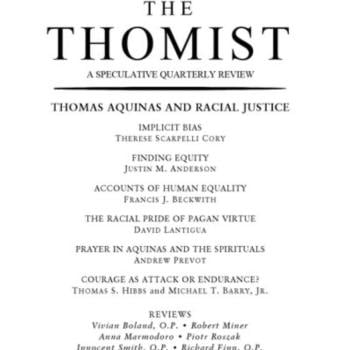
Aquinas, Racism, and Secular Accounts of Human Equality
The Fully Robby: My review of Robert George's...
Religious Freedom and Abortion
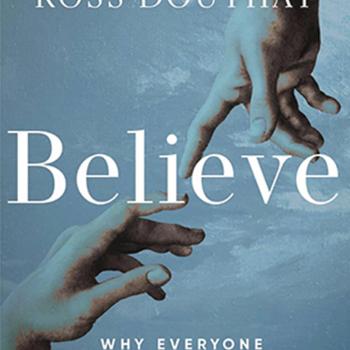
My review of Ross Douthat's new book, Believe.
TRENDING AT PATHEOS Catholic

Creation, Preservation, and Teleology in Catholic Theology
As I write this, it is very early Monday morning. Like millions...

The Parable Of The Sower And The Word...
One of Christ’s most famous parables is that of the sower who...

Rejecting Doom: Christian Hope And Human Action
Christianity is a religion of hope. We are to have hope and...

Why I Choose the Eucharist Over the Sermon
Choose the Eucharist, Not the Sermon What are we supposed to get...

5 Design Elements Found in Spiritually Rooted Homes
Putting Spirituality Into Home Decor Our homes are more than our living...

Credo: A Story of God Told with the...
About 10 years ago, I began to imagine a personal "Credo" that...
view all Catholic blogs
What Are Your Thoughts?leave a comment
Ad-Free & Subscriber Log-In Subscription Support
- About Us
- 2026 Calendar
- Videos
- Podcasts
- Library of World Religions
- Faith In Media Tracker
- Advertise With Us
- Write for Us
- Privacy Policy
- Terms of Service
- Do Not Sell My Data
- Contact Us
- Radiant Digital
- Manage Newsletter Subscriptions
- Unsubscribe From Notifications
- Sitemap
Copyright 2008-2026, Patheos. All rights reserved.
Subscription Support Ad-Free & Subscriber Log-In
Follow Patheos