
BuddhistCatholicContemplativeEvangelicalGeneral ChristianHinduJewishLatter-day SaintMuslimNew VisionsProgressive Christian
Beliefs
- Buddhist
- Catholic
- Contemplative
- Evangelical
- General Christian
- Hindu
- Jewish
- Latter-day Saint
- More Voices
- Muslim
- New Visions
- Pagan
- Progressive Christian
Topics
- Religion News
- Food and Religion
- Sports and Religion
- Religious Art
- Religious Music and Entertainment
- Religious Events
- History and Religion
- Style and Religion
- Politics and Religion
- Women in Religion
- Recreation Outdoors and Religion
- Business Finance and Religion
- Careers Workplace and Religion
- Education and Religion
- Family Parenting and Religion
- Health Fitness and Religion
- Home and Religion
- Relationships and Religion
- Technology and Religion
- Travel and Religion
Columnists
- Buddhist Columnists
- Business Finance and Religion Columnists
- Careers Workplace and Religion Columnists
- Catholic Columnists
- Contemplative Columnists
- Education and Religion Columnists
- Evangelists Columnists
- Family Parenting and Religion Columnists
- General Christian Columnists
- Health Fitness and Religion Columnists
- Hindu Columnists
- History and Religion Columnists
- Home and Religion Columnists
- Jewish Columnists
- More Voices Columnists
- Latter Day Columnists
- Muslim Columnists
- New Visions Columnists
- Nonreligious Columnists
- Pagan Columnists
- Politics and Religion Columnists
- Progressive Columnists
- Recreation Outdoors and Religion Columnists
- Relationships and Religion Columnists
- Religion News Columnists
- Religious Art Columnists
- Religious Events Columnists
- Religious Music and Entertainment Columnists
- Sports and Religion Columnists
- Style and Religion Columnists
- Technology and Religion Columnists
- Travel and Religion Columnists
- Women in Religion Columnists
Resource Library
- 2026 Calendar
- Library of World Religions
- The 100 Most Holy Places on Earth
- Patheos Answers
- Podcasts
- Videos
- Faith Leaders Database
- Anglican Episcopalian
- Bahai
- Baptist
- Buddhism
- Christianity
- Confucianism
- Eastern Orthodoxy
- Hinduism
- Holiness and Pentecostal
- ISKCON
- Islam
- Judaism
- Lutheran
- Methodist
- The Church of Jesus Christ of Latter-day Saints
- New Age
- Paganism
- Presbytarian and Reformed
- Protestantism
- Religion Behind the Scenes
- Roman Catholic
- Scientology
- Shia Islam
- Sikhism
- Sufism
- Sunni Islam
- Taoism
- Zen
- See all religions
Research Tools
 Ad-Free & Subscriber Log-In Subscription Support
Ad-Free & Subscriber Log-In Subscription Support
Follow Patheos 

- Trending:
- Forgiveness
- |
- Marriage
- |
- Consciousness
- |
- Death Penalty
- |
- Election
- |
- Halloween
 Religious Tolerance
- Home
- More Voices
- Roe v. Wade: The War Between Science And Religion
Roe v. Wade: The War Between Science And Religion
Last updated on: January 7, 2019 at 9:15 pm by Bruce A Robinson
Roe v. Wade: The War Between Science And Religion 2019-01-07T21:15:53+00:00 Bruce A Robinson
Patheos Explore the world's faith through different perspectives on religion and spirituality! Patheos has the views of the prevalent religions and spiritualities of the world.
The abortion war wages on in America. Welcome to Roe v. Wade.
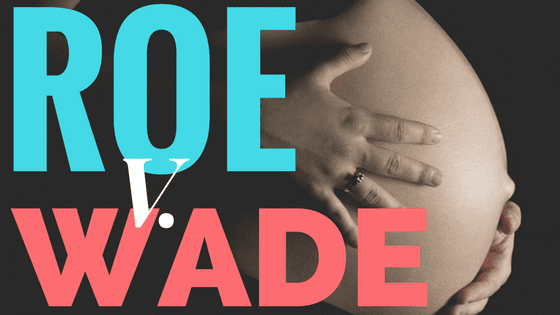
On January 22, 1973, the U.S. Supreme Court issued its famous abortion ruling called “Roe v. Wade.”
“Jane Roe” was a pseudonym for the plaintiff, Norma McCorvey. “Henry Wade” was the defendant, the district attorney of Dallas County, TX who enforced a state law that banned all abortions except those required to save a pregnant woman’s life.
Jane Roe launched a lawsuit to have such laws declared unconstitutional. At that time, individual U.S. states had many different laws restricting when in pregnancy — and under what conditions — a woman could legally obtain an abortion.
The court ruling applied to all states in the United States and was based on the majority of Justices’ interpretation of the Fourteenth Amendment to the U.S. Constitution. They believed it contained a “right to personal privacy.”
Their 7 to 2 decision allows a woman some access to abortion at any stage of pregnancy. However, it also allows individual states to restrict access to abortion during the third trimester of pregnancy.
Their decision was based on the time in pregnancy when the fetus becomes viable. Before **viability (before the fetus can live independently from her or his mother) the court decided that the interests of the pregnant woman were paramount. Only after viability did the rights of the fetus to live outweigh the desire of the woman to have an abortion. Even then, if a continued pregnancy would threaten the life or “health” of the woman, an abortion is permitted.
The Court placed the timing of viability at approximately the start of the last trimester — the last third of pregnancy. This typically occurs somewhere between the 24th and 28th week of pregnancy and would be determined on an individual basis by the attending physician.
A decade after the Roe v. Wade decision, Justice Sandra Day O’Connor commented that Roe v. Wade was on a “collision course with itself.”
As medical technology develops, the point of viability will be gradually pushed backwards in time. The world’s current record for youngest surviving fetus is James Elgin Gill. He was born during 1988 in Ottawa, ON, Canada at a gestational age of 21 weeks, 5 days. He is now a healthy adult in his late 20’s.
Dr. Yoshinori Kuwabara of Juntendo University in Japan has successfully gestated goat embryos in an artificial womb. If such a device is refined for human use, it could have a profound effect on the availability of abortions for humans.
Religious responses to abortion before & after Roe v. Wade
The Roman Catholic Church and Orthodox Judaism had long opposed abortion. Together, they formed the initial organized opposition to Roe. Fundamentalist and other evangelical Christians largely accepted the ruling. In its November 8, 1968 edition of the evangelical publication Christianity Today posted a “Protestant Affirmation” that stated:
“Whether or not the performance of an induced abortion is sinful we are not agreed, but about the necessity of it and permissibility for it under certain circumstances we are in accord.”
In 1971, the Southern Baptist Convention passed a resolution calling for:
“… legislation that will allow the possibility of abortion under such circumstances as rape, incest, clear evidence of fetal abnormality, and carefully ascertained evidence of the likelihood of damage to the emotional, mental, and physical health of the mother.”
A week after the court ruling, W. Barry Garrett, writing for the Baptist Press, said that Roe:
“… advanced the cause of religious liberty, human equality and justice. … There is no official Southern Baptist position on abortion, or any other such question. Among 12 million Southern Baptists, there are probably 12 million different opinions. …”
Religious liberty, human equality and justice are advanced by the [U.S.] Supreme Court abortion decision.”
Albert Mohler commented recently on the On Faith web site:
“… prior to Roe v. Wade, … evangelicals were, with a few notable exceptions, confused and uncertain about the question of abortion. … By 1976, [three years after the High Court issued its ruling,] the Southern Baptist Convention would declare every abortion to be a “decision to terminate the life of an innocent human being.”
Similarly, the large evangelical movement would develop an overwhelming pro-life consensus, seeing abortion as a great moral evil and a threat to the dignity of all human life.
Influential evangelical figures such as Francis Schaeffer and Dr. C. Everett Koop (later Surgeon General of the United States) helped to forge a united evangelical front against abortion.
From the 1980 U. S. presidential election until the present, the pro-life movement has been populated, funded, and directed (for the most part) by evangelical and Roman Catholic leaders.
Beyond that, the emergence of crisis pregnancy centers and support systems for women considering abortion have come from the work of millions of pro-life Roman Catholics and evangelicals at the grassroots.
And so, today, we have very large and active pro-life and pro-choice movements working in opposite directions.
The current consensus on some aspects of abortion
Most people agree that an individual human ovum and spermatozoa are not forms of human life. They do exhibit three of the four characteristics required by the scientific definition of life: metabolism, growth, and reaction to stimuli.
However, they do not meet the fourth requirement: reproduction. That is, one ovum cannot divide and produce two ova. One spermatozoon cannot divide and produce two spermatozoa. However, once conception occurs, the resultant zygote is a form of life because it can divide and produce two pre-embryos. This is how identical twins are formed.
Since a pre-embryo contains human DNA, it is considered a form of human life.
Also, almost everyone regards a new-born as not only a form of human life but as a human person.
The Roman Catholic Church teaches that no abortion is moral even if it is necessary to save the woman’s life.
However, most people agree that when a human life becomes a human person, abortion should be allowed in a few extreme cases such as when the woman’s life is threatened.
The problem is that there is no consensus on when a human life becomes a human person. Most in the pro-life movement believe this happens at conception.
The traditional Jewish belief is that a fetus becomes fully human when she or he has half emerged from their mother’s body.
Those in the pro-choice movement generally believe that it happens somewhere in between conception and birth.
One of many beliefs is that it happens when the higher brain functions of the fetus first turn on at about 24 weeks gestation and the fetus becomes sentient — able to sense its environment.
If these groups could be encouraged to come together and engage in sincere dialogue, there might be some hope of reaching a consensus and seeking a common solution. However, most of their interaction has been debate, not dialogue.
References
CNN News. 2017. Roe v. Wade Fast Facts.
Foer F. 1997. Slate Magazine. Fetal Viability.
Bird C. 2017. VeryWell. World’s Smallest and Youngest Preemies.
Garrett W. Berry. 2010. The Gospel Coalition. High Court Holds Abortion To Be ‘A right of Privacy’.
Mohler R. Albert. 2013. OnFaith. Roe v. Wade anniversary: How abortion became an evangelical issue.
The views presented on this blog are an extension of those presented on the Religious Tolerance website. The purpose of all articles is to compare the full range of beliefs and actions by people who are members of various faith groups within Christianity and other world religions, individuals who are NOT Affiliated with a faith group (NOTAs), and secularists.
Previous Post

December 29, 2017
Atheists - How Many Of Them Are There In America?
Next Post
December 31, 2017 Women: Religion's Despised Necessity and Valued Treasure
Browse Our Archives
Select a Category Uncategorized
Select a Month February 2018 January 2018 December 2017
Follow Us!
TAKE THE
Religious Wisdom Quiz
Who danced with all his might before the LORD as the Ark was brought to Jerusalem?
Select your answer to see how you score.
Samuel David Jonathan Nathan
Related posts from Religious Tolerance

Hell And It's Existence According To Alternative Christian...

Did DES (Diethylstilbestrol) Cause People To Be Transgender?

Is There Life After Death? If So, Where...

Flat Earth Concepts In Religion And All That...
TRENDING AT PATHEOS More Voices

Reading America at 250: A Nation Wrestles With...
As part of my own reflection on the 250th anniversary of the...

Whenever I am reading a book or listening to an argument, I...

President Trump Ban Animal Torture Videos on Facebook
Call for Stricter Regulations of Animal Abuse Content on Facebook Although President...

Draft Amendments to Address Ritual Abuse in New...
The proposed changes would make it illegal for individuals in domestic partnerships...

How Bans on LGBTQ+ Student Clubs Threaten Religious...
On June 20, 2025, the State of Texas passed Senate Bill 12....

The Truth About the Gen Z Revival
This past year, there has been a lot of media buzz surrounding...
view all More Voices blogs
Ad-Free & Subscriber Log-In Subscription Support
- About Us
- 2026 Calendar
- Videos
- Podcasts
- Library of World Religions
- Faith In Media Tracker
- Advertise With Us
- Write for Us
- Privacy Policy
- Terms of Service
- Do Not Sell My Data
- Contact Us
- Radiant Digital
- Manage Newsletter Subscriptions
- Unsubscribe From Notifications
- Sitemap
Copyright 2008-2026, Patheos. All rights reserved.
Subscription Support Ad-Free & Subscriber Log-In
Follow Patheos