
BuddhistCatholicContemplativeEvangelicalGeneral ChristianHinduJewishLatter-day SaintMuslimNew VisionsProgressive Christian
Beliefs
- Buddhist
- Catholic
- Contemplative
- Evangelical
- General Christian
- Hindu
- Jewish
- Latter-day Saint
- More Voices
- Muslim
- New Visions
- Pagan
- Progressive Christian
Topics
- Religion News
- Food and Religion
- Sports and Religion
- Religious Art
- Religious Music and Entertainment
- Religious Events
- History and Religion
- Style and Religion
- Politics and Religion
- Women in Religion
- Recreation Outdoors and Religion
- Business Finance and Religion
- Careers Workplace and Religion
- Education and Religion
- Family Parenting and Religion
- Health Fitness and Religion
- Home and Religion
- Relationships and Religion
- Technology and Religion
- Travel and Religion
Columnists
- Buddhist Columnists
- Business Finance and Religion Columnists
- Careers Workplace and Religion Columnists
- Catholic Columnists
- Contemplative Columnists
- Education and Religion Columnists
- Evangelists Columnists
- Family Parenting and Religion Columnists
- General Christian Columnists
- Health Fitness and Religion Columnists
- Hindu Columnists
- History and Religion Columnists
- Home and Religion Columnists
- Jewish Columnists
- More Voices Columnists
- Latter Day Columnists
- Muslim Columnists
- New Visions Columnists
- Nonreligious Columnists
- Pagan Columnists
- Politics and Religion Columnists
- Progressive Columnists
- Recreation Outdoors and Religion Columnists
- Relationships and Religion Columnists
- Religion News Columnists
- Religious Art Columnists
- Religious Events Columnists
- Religious Music and Entertainment Columnists
- Sports and Religion Columnists
- Style and Religion Columnists
- Technology and Religion Columnists
- Travel and Religion Columnists
- Women in Religion Columnists
Resource Library
- 2026 Calendar
- Library of World Religions
- The 100 Most Holy Places on Earth
- Patheos Answers
- Podcasts
- Videos
- Faith Leaders Database
- Anglican Episcopalian
- Bahai
- Baptist
- Buddhism
- Christianity
- Confucianism
- Eastern Orthodoxy
- Hinduism
- Holiness and Pentecostal
- ISKCON
- Islam
- Judaism
- Lutheran
- Methodist
- The Church of Jesus Christ of Latter-day Saints
- New Age
- Paganism
- Presbytarian and Reformed
- Protestantism
- Religion Behind the Scenes
- Roman Catholic
- Scientology
- Shia Islam
- Sikhism
- Sufism
- Sunni Islam
- Taoism
- Zen
- See all religions
Research Tools
 Ad-Free & Subscriber Log-In Subscription Support
Ad-Free & Subscriber Log-In Subscription Support
Follow Patheos 

- Trending:
- Forgiveness
- |
- Marriage
- |
- Consciousness
- |
- Death Penalty
- |
- Election
- |
- Halloween
 Religious Tolerance
- Home
- More Voices
- Who Was Jesus? The No Nonsense Guide To The King Of Kings
Who Was Jesus? The No Nonsense Guide To The King Of Kings
Last updated on: December 14, 2017 at 5:51 pm by Bruce A Robinson
Who Was Jesus? The No Nonsense Guide To The King Of Kings 2017-12-14T17:51:40+00:00 Bruce A Robinson
Patheos Explore the world's faith through different perspectives on religion and spirituality! Patheos has the views of the prevalent religions and spiritualities of the world.
Jesus. Who in God’s name was he?
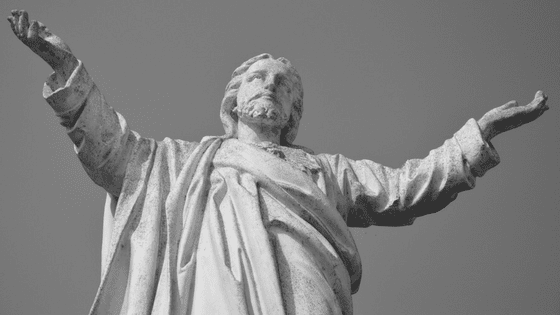
Firstly, let’s tackle his actual name.
Since Jesus is a Greek name, he wouldn’t have been called “Jesus” by either his his family or followers. They would have referred to him as “Yeshua,” an abbreviation of the Jewish name for “Joshua” which means “to rescue” or “to deliver.”
The Christian Scriptures (New Testament) were written in Greek. Consequently, the authors translated his name to Greek as “Yesous.” The English version of this name is “Jesus.”
At the end of the day, most Christians call him by that name today.
I’ve always felt that to not call a person by their actual name is a bit insulting, but maybe that’s just me.
Ironically, Jesus was not a Christian; he was an Orthodox Jew. The followers of Jesus first referred to themselves as followers of “The Way.”
According to Acts 11:26, the disciples were first called Christians in Antioch circa 44 CE (Common Era), over a decade after Jeshuah’s execution by the Roman Army. But that is another story.
In what year was Jesus born?
Many Christians assume he was born on DEC-25 in the year 1 BCE (Before the Common Era; equivalent to BC). That way, his birth would have occurred with days of the time when all history is divided between:
• BCE (Before the Common Era) a.k.a. BC (Before Christ) and
• CE (Common Era) a.k.a. AD, or Anno Domini, (The Year of the Lord).
The year remains unknown but there are some clues in the Bible that point to a date approximately 5 BCE:
• Luke 1:5 says that he was born when Herod was King of Judea — that is, sometime between 37 BCE to 4 BCE.
• Luke 2:1-4 says that he was born when Cyrenius was Governor of Syria — that is, sometimes after 4 or 5 BCE (scholars differ). The passage also says that everyone had to return to the city of their ancestors to be registered and taxed.
There is no historical record of this actually happening outside of the Bible. It should have been mentioned extensively because it would have involved a massive movement of people which would have paralyzed all other activities in the Empire at the time.
There was a census in Judea during 6 CE, but this was only a local census that was conducted to facilitate later taxation.
During the 6th Century CE, Dionysius Exiguus (a.k.a. “Denny the Dwarf”) fixed the year of Yeshua’s birth as 0001-DEC-25 BCE.
In what month was Jesus born?
We can be fairly certain that he was not born on DEC-25. Luke 2:8 mentions that shepherds were living in their fields keeping watch over their flocks by night.
In reality, long before that time of the year, the flocks would have been moved from the fields into pens.
Fortunately, the approximate month of Jeshua’s birth can be approximately determined from the month of John the Baptist’s conception:
• Luke 1:5 says we know that Zacharias — John’s father — was a priest “of the Abijah division of the Temple service corps.”
• 1 Chronicles 24:15 says that priests of that division began temple service at the start of the 9th week of the year. But by the end of that week, the Jewish Feast of Weeks festival had begun. Thus, he would have remained on duty until the end of the 10th week.
• Luke 1:23-24 mentions that at the end of his service, Zacharias returned directly to his home, and that John was conceived shortly thereafter — probably during the second half of the month of Sivan.
• If we assume a pregnancy lasting nine months. John would have been born sometime in the springtime.
• Luke 1:36 states that the angel visited Mary when John’s mother Elizabeth was 6 months pregnant.
• Luke 1:31 says that Mary conceived very shortly after the angel’s visit.
• If we assume another 9 month pregnancy, Jesus would have been born about 6 months after John — sometime in the fall of the year.
Why did the Christian Church choose December 25th?
Many ancient pagan religions chose the Winter Solstice as the birth date of their Gods and Goddesses. This is the day with the shortest daytime and longest nighttime in the year. It happens on or about DEC-21.
However, people in those days lacked precise methods of measuring time intervals. They waited until after the actual Solstice when the daytime was noticeably longer, and settled on DEC-25 as the approximate date of the Solstice. This was a very important time, because it indicated that the daytime was lengthening. That was evidence that Spring and the start of the growing season would once again return.
Some of the Pagan deities in what is now Europe and the Middle East who were also believed to have been born on DEC-25 were: Apollo, Attis, Baal, Bacchus, Dionysus, Helios, Hercules, Horus, Jupiter, Mithra, Nimrod, Osiris, Perseus, Sol Invictus, and Tammuz.
Yeshua, ironically, shared many of the events in his life with some of the Pagan goddesses and gods, including the virgin birth, a murder attempt, organizing of a group of twelve disciples, a death, visiting the Underworld, resurrection, etc.
To learn more about the similarities between Pagan and Christian practices, click here.
For example, the Roman God Attis was born of the virgin Nana on DEC-25. He was killed by being crucified on a tree in order to bring salvation to humanity. He was resurrected on a Sunday. His followers began worshiping Attis cica 200 BCE. During religious services, they symbolically ate bread which represented his body.
Oddly, nobody seems to have recorded the actual birth date of Yeshua.
Saturnalia was a major annual celebration honoring the Roman god, Saturn. It was moved to DEC-25 by Emperor Domitian who ruled from 51 to 96 CE.
Also, DEC-25 was considered the birth date of Mithra, a Persian god, who had a large following in ancient Rome. They celebrated DEC-25 as the festival of “dies natalis solis invicti,” the “birthday of the unconquered sun.”
The early church often selected dates and locations for its own use that were considered sacred by existing Pagan religions. They found that it was easier to do this rather than create new dates and locations, because it simplified their followers’ conversion process from Pagan to Christian.
So, DEC-25 became recognized as the birth day of Yeshua/Jesus starting at some date before 354 CE. 1
I’ve always favored the Autumn equinox as a good date to celebrate Jeshua’s birth because it seems to have happened around that time of the year. It’s a date that’s also linked to the change of the seasons. But, again, maybe that’s just me.
References
Salusbury M. (2009) Did the Romans Invent Christmas. Retrieved from http://www.historytoday.com/
To read more insightful faith based articles, please visit us at Religious Tolerance.
Previous Post

February 8, 2018
Hell And It's Existence According To Alternative Christian Teachings
Next Post
December 6, 2017 Is Being Transgender A Choice Or Something Deeper?
Browse Our Archives
Select a Category Uncategorized
Select a Month February 2018 January 2018 December 2017
Follow Us!
TAKE THE
Religious Wisdom Quiz
Which prophet lamented over Israel's oppression of the poor?
Select your answer to see how you score.
Amos Hosea Obadiah Joel
Related posts from Religious Tolerance

Hell And It's Existence According To Alternative Christian...

Did DES (Diethylstilbestrol) Cause People To Be Transgender?

Is There Life After Death? If So, Where...

Flat Earth Concepts In Religion And All That...
TRENDING AT PATHEOS More Voices

Reading America at 250: A Nation Wrestles With...
As part of my own reflection on the 250th anniversary of the...

Whenever I am reading a book or listening to an argument, I...

President Trump Ban Animal Torture Videos on Facebook
Call for Stricter Regulations of Animal Abuse Content on Facebook Although President...

Draft Amendments to Address Ritual Abuse in New...
The proposed changes would make it illegal for individuals in domestic partnerships...

How Bans on LGBTQ+ Student Clubs Threaten Religious...
On June 20, 2025, the State of Texas passed Senate Bill 12....

The Truth About the Gen Z Revival
This past year, there has been a lot of media buzz surrounding...
view all More Voices blogs
Ad-Free & Subscriber Log-In Subscription Support
- About Us
- 2026 Calendar
- Videos
- Podcasts
- Library of World Religions
- Faith In Media Tracker
- Advertise With Us
- Write for Us
- Privacy Policy
- Terms of Service
- Do Not Sell My Data
- Contact Us
- Radiant Digital
- Manage Newsletter Subscriptions
- Unsubscribe From Notifications
- Sitemap
Copyright 2008-2026, Patheos. All rights reserved.
Subscription Support Ad-Free & Subscriber Log-In
Follow Patheos