
BuddhistCatholicContemplativeEvangelicalGeneral ChristianHinduJewishLatter-day SaintMuslimNew VisionsProgressive Christian
Beliefs
- Buddhist
- Catholic
- Contemplative
- Evangelical
- General Christian
- Hindu
- Jewish
- Latter-day Saint
- More Voices
- Muslim
- New Visions
- Pagan
- Progressive Christian
Topics
- Religion News
- Food and Religion
- Sports and Religion
- Religious Art
- Religious Music and Entertainment
- Religious Events
- History and Religion
- Style and Religion
- Politics and Religion
- Women in Religion
- Recreation Outdoors and Religion
- Business Finance and Religion
- Careers Workplace and Religion
- Education and Religion
- Family Parenting and Religion
- Health Fitness and Religion
- Home and Religion
- Relationships and Religion
- Technology and Religion
- Travel and Religion
Columnists
- Buddhist Columnists
- Business Finance and Religion Columnists
- Careers Workplace and Religion Columnists
- Catholic Columnists
- Contemplative Columnists
- Education and Religion Columnists
- Evangelists Columnists
- Family Parenting and Religion Columnists
- General Christian Columnists
- Health Fitness and Religion Columnists
- Hindu Columnists
- History and Religion Columnists
- Home and Religion Columnists
- Jewish Columnists
- More Voices Columnists
- Latter Day Columnists
- Muslim Columnists
- New Visions Columnists
- Nonreligious Columnists
- Pagan Columnists
- Politics and Religion Columnists
- Progressive Columnists
- Recreation Outdoors and Religion Columnists
- Relationships and Religion Columnists
- Religion News Columnists
- Religious Art Columnists
- Religious Events Columnists
- Religious Music and Entertainment Columnists
- Sports and Religion Columnists
- Style and Religion Columnists
- Technology and Religion Columnists
- Travel and Religion Columnists
- Women in Religion Columnists
Resource Library
- 2026 Calendar
- Library of World Religions
- The 100 Most Holy Places on Earth
- Patheos Answers
- Podcasts
- Videos
- Faith Leaders Database
- Anglican Episcopalian
- Bahai
- Baptist
- Buddhism
- Christianity
- Confucianism
- Eastern Orthodoxy
- Hinduism
- Holiness and Pentecostal
- ISKCON
- Islam
- Judaism
- Lutheran
- Methodist
- The Church of Jesus Christ of Latter-day Saints
- New Age
- Paganism
- Presbytarian and Reformed
- Protestantism
- Religion Behind the Scenes
- Roman Catholic
- Scientology
- Shia Islam
- Sikhism
- Sufism
- Sunni Islam
- Taoism
- Zen
- See all religions
Research Tools
 Ad-Free & Subscriber Log-In Subscription Support
Ad-Free & Subscriber Log-In Subscription Support
Follow Patheos 

- Trending:
- Forgiveness
- |
- Marriage
- |
- Consciousness
- |
- Death Penalty
- |
- Election
- |
- Halloween
 Religious Tolerance
- Home
- More Voices
- Atheists. There Are More Of Them Than You Think
Atheists. There Are More Of Them Than You Think
Last updated on: February 8, 2018 at 11:47 pm by Bruce A Robinson
Atheists. There Are More Of Them Than You Think 2018-02-08T23:47:19+00:00 Bruce A Robinson
Patheos Explore the world's faith through different perspectives on religion and spirituality! Patheos has the views of the prevalent religions and spiritualities of the world.
Atheists. Lots of them. Surprise!
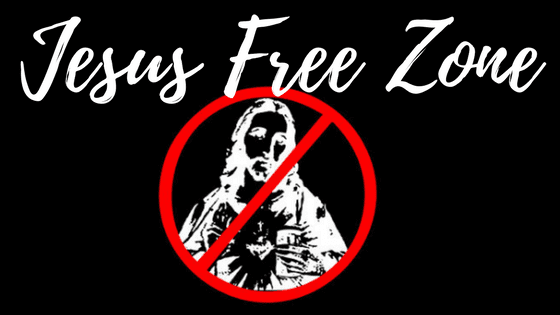
But Regular Public Opinion Polls on Atheism would have you assuming differently.
The question is: can these polls be trusted?
Firstly, there is no consensus of the precise meaning of the words: “Atheist,” and “Atheism.”
Dictionaries, Atheist groups, Christian and other religious groups, and individuals use different definitions.
When a polling agency asks whether a person is an Atheist, those participants who reply usually base their response on their own meaning. This may or may not not fall within the polling agency’s definition, dictionary definitions, or with the meaning that most other Americans use.
Some dictionary definitions of “Atheist” and “Atheism” imply that Atheists are certain no deity exists. Others imply that Atheists are simply lacking a belief in a deity. Still others include both concepts:
- The Oxford Living Dictionaries web site defines an Atheist as “A person who disbelieves or lacks belief in the existence of God or gods.”
- The 2014 Collins English Dictionary defines an Atheist as “A person who does not believe in God or gods.”
- The 2010 Random House Kernerman Webster’s College Dictionary uses “A person who denies or disbelieves the existence of a supreme being.”
- The Mirriam-Webster web site defines an Atheist as “Someone who believes that there is no god (or gods).”
Wikipedia offers multiple definitions of “Atheist:”
“… in the broadest sense, the absence of belief in the existence of deities. Less broadly, atheism is the rejection of belief that any deities exist. In an even narrower sense, atheism is specifically the position that there are no deities. Atheism is contrasted with theism, which, in its most general form, is the belief that at least one deity exists.
On the other hand, the American Atheists web site takes a firm stand:
“To be clear: Atheism is not a disbelief in gods or a denial of gods; it is a lack of belief in gods.”
There is a difference between passively lacking a belief in a God, and actively denying the existence of a God.
A personal non-religious example might clarify the difference:
Consider the unicorn. I feel certain it doesn’t exist… that it’s merely a mythical species. As with Bigfoot and the Lock Ness Monster, there is no truly conclusive evidence they exist. However, if asked whether the unicorn may have evolved on another planet somewhere else in the universe, I lack a firm belief because I have no proof to either agree or disagree.
Consequently, if a polling agency asks a person whether they are an Atheist, do not believe in God or they indeed have no belief in God, the poll’s results will be very different.
Keep in mind that results will also differ depending on the confidence the individual being polled has that it’s safe to reveal such a personal manner to a stranger over the telephone.
There is confusion between the terms “Atheist” and “Agnostic:”
An Agnostic is generally defined as a person who believes there is no conclusive evidence whether one or more gods do or do not exist. They generally feel ethically bound to withhold their belief. Some Agnostics assert that a proof is impossible now and in the future.
To many people, the gap between an Atheistic belief and Agnostic belief is very narrow.
The level of disapproval of Atheism and Atheists is very high in the U.S.
Many people feel that for a person to lead an moral and ethical life they must first believe in the existence of the Christian God or at least of some other deity or pantheon of deities.
Without a belief in a God and perhaps also belief in the possibility of eternal punishment in the torture chambers of Hell, some feel that a person has no motivation to lead a decent and ethical life.
One indication of this disapproval is regularly shown by Gallup polls when they measure the percentage of adults who say that they would vote for:
“… a generally well-qualified person for president who happened to be an Atheist.”
They found that the percentage increased from 18% in 1958, to 40% in 1978, 49% in 1999, 54% in 2012, and 58% in 2015. Although the acceptance is increasing, it would have to become far greater for a president to have a chance of actually being elected if she or he is known to be an Atheist.
Will Gervais, a University of Kentucky psychologist, conducted a deeper study by into the public’s negative judgment of Atheists. They uncovered some shocking data. His paper’s abstract states:
“Scientific research yields inconsistent and contradictory evidence relating religion to moral judgments and outcomes, yet most people on earth nonetheless view belief in God (or gods) as central to morality, and many view atheists with suspicion and scorn. To evaluate intuitions regarding a causal link between religion and morality, this paper tested intuitive moral judgments of atheists and other groups. Across five experiments (N=1,152), American participants intuitively judged a wide variety of immoral acts (e.g. serial murder, consensual incest, necrobestiality, cannibalism) as representative of atheists, but not of eleven other religious, ethnic, and cultural groups. Even atheist participants judged immoral acts as more representative of atheists than of other groups. These findings demonstrate a prevalent intuition that belief in God serves a necessary function in inhibiting immoral conduct, and may help explain persistent negative perceptions of atheists.”
Tom Jacobs, author of an article in the Pacific Standard magazine, discussed Gervais’ study. Jacobs concluded that as long as:
“… people are convinced there is no good without God, atheists fighting for public acceptance face a struggle of Biblical proportions.”
In view of these high levels of distrust and dislike, many Atheists being contacted by a polling agency won’t feel comfortable revealing their beliefs to a stranger over the phone. They are more likely to protect themselves in case the caller is not who they claim to be or the information won’t be held confidentially and leaked to others.
Some Atheists will even refuse to reply or will report, falsely, that they identify with an organized religion.
Data reported by polling agencies are only approximations of the true value.
The margin of error for a typical poll involving 1,100 individuals, is about ±3 percent. That typically means that if the poll were repeated 20 times with a different but truly randomized group of 1,100 individuals, that for 19 of the polls, the average result would fall within ±3 percentage. Thus a poll that returned an estimated percentage of Atheists equal to 10%, if the poll were replicated 20 times, the result would be within a range of 9.7% to 10.3% for 19 of those polls.
References
Oxford Living Dictionaries. 2017. Definition of atheist in English. At https://en.oxforddictionaries.com/
Merriam-Webster. 2017. How AGNOSTIC Differs from ATHEIST. At https://www.merriam-webster.com/
Wikipedia. 2017. Atheism. At https://en.wikipedia.org/
The American Atheists web site is located at: https://www.atheists.org/
Jones J M. 2012. Atheists, Muslims See Most Bias as Presidential Candidates. At http://news.gallup.com/
Saad L. 2015. Support for Nontraditional Candidates Varies by Religion. At http://news.gallup.com/
Gervais W M. 2014. Everything Is Permitted? People Intuitively Judge Immorality as Representative of Atheists. At http://journals.plos.org/
Jacobs T. 2014. Americans Intuitively Judge Atheists as Immoral. At https://psmag.com/
Note: In this essay, I capitalize the words Atheist and Atheism. Usually, only organized religions are so capitalized. However we note that when an Atheist is asked what their religion is, they some answer “Atheist.” Although Atheism is lacking some of the attributes of religion, some regard it as a religion because it involves a belief about God , and often involves personal ethical beliefs. Thus I capitalize the term here.
The views presented on this blog are an extension of those presented on the Religious Tolerance website. The purpose of all articles is to compare the full range of beliefs and actions by people who are members of various faith groups within Christianity and other world religions, individuals who are NOT Affiliated with a faith group (NOTAs), and secularists.
Previous Post

December 8, 2017
Christianity Doesn't Exist And Here's Proof!
Next Post
December 15, 2017 Salvation Is A Forked Tongue Affair In The Bible
Browse Our Archives
Select a Category Uncategorized
Select a Month February 2018 January 2018 December 2017
Follow Us!
TAKE THE
Religious Wisdom Quiz
True or False: Moses entered the Promised Land before he died.
Select your answer to see how you score.
FALSE TRUE
Related posts from Religious Tolerance

Hell And It's Existence According To Alternative Christian...

Did DES (Diethylstilbestrol) Cause People To Be Transgender?

Is There Life After Death? If So, Where...
Flat Earth Concepts In Religion And All That...
TRENDING AT PATHEOS More Voices

Reading America at 250: A Nation Wrestles With...
As part of my own reflection on the 250th anniversary of the...

Whenever I am reading a book or listening to an argument, I...

President Trump Ban Animal Torture Videos on Facebook
Call for Stricter Regulations of Animal Abuse Content on Facebook Although President...

Draft Amendments to Address Ritual Abuse in New...
The proposed changes would make it illegal for individuals in domestic partnerships...

How Bans on LGBTQ+ Student Clubs Threaten Religious...
On June 20, 2025, the State of Texas passed Senate Bill 12....

The Truth About the Gen Z Revival
This past year, there has been a lot of media buzz surrounding...
view all More Voices blogs
Ad-Free & Subscriber Log-In Subscription Support
- About Us
- 2026 Calendar
- Videos
- Podcasts
- Library of World Religions
- Faith In Media Tracker
- Advertise With Us
- Write for Us
- Privacy Policy
- Terms of Service
- Do Not Sell My Data
- Contact Us
- Radiant Digital
- Manage Newsletter Subscriptions
- Unsubscribe From Notifications
- Sitemap
Copyright 2008-2026, Patheos. All rights reserved.
Subscription Support Ad-Free & Subscriber Log-In
Follow Patheos