
BuddhistCatholicContemplativeEvangelicalGeneral ChristianHinduJewishLatter-day SaintMuslimNew VisionsProgressive Christian
Beliefs
- Buddhist
- Catholic
- Contemplative
- Evangelical
- General Christian
- Hindu
- Jewish
- Latter-day Saint
- More Voices
- Muslim
- New Visions
- Pagan
- Progressive Christian
Topics
- Religion News
- Food and Religion
- Sports and Religion
- Religious Art
- Religious Music and Entertainment
- Religious Events
- History and Religion
- Style and Religion
- Politics and Religion
- Women in Religion
- Recreation Outdoors and Religion
- Business Finance and Religion
- Careers Workplace and Religion
- Education and Religion
- Family Parenting and Religion
- Health Fitness and Religion
- Home and Religion
- Relationships and Religion
- Technology and Religion
- Travel and Religion
Columnists
- Buddhist Columnists
- Business Finance and Religion Columnists
- Careers Workplace and Religion Columnists
- Catholic Columnists
- Contemplative Columnists
- Education and Religion Columnists
- Evangelists Columnists
- Family Parenting and Religion Columnists
- General Christian Columnists
- Health Fitness and Religion Columnists
- Hindu Columnists
- History and Religion Columnists
- Home and Religion Columnists
- Jewish Columnists
- More Voices Columnists
- Latter Day Columnists
- Muslim Columnists
- New Visions Columnists
- Nonreligious Columnists
- Pagan Columnists
- Politics and Religion Columnists
- Progressive Columnists
- Recreation Outdoors and Religion Columnists
- Relationships and Religion Columnists
- Religion News Columnists
- Religious Art Columnists
- Religious Events Columnists
- Religious Music and Entertainment Columnists
- Sports and Religion Columnists
- Style and Religion Columnists
- Technology and Religion Columnists
- Travel and Religion Columnists
- Women in Religion Columnists
Resource Library
- 2026 Calendar
- Library of World Religions
- The 100 Most Holy Places on Earth
- Patheos Answers
- Podcasts
- Videos
- Faith Leaders Database
- Anglican Episcopalian
- Bahai
- Baptist
- Buddhism
- Christianity
- Confucianism
- Eastern Orthodoxy
- Hinduism
- Holiness and Pentecostal
- ISKCON
- Islam
- Judaism
- Lutheran
- Methodist
- The Church of Jesus Christ of Latter-day Saints
- New Age
- Paganism
- Presbytarian and Reformed
- Protestantism
- Religion Behind the Scenes
- Roman Catholic
- Scientology
- Shia Islam
- Sikhism
- Sufism
- Sunni Islam
- Taoism
- Zen
- See all religions
Research Tools
 Ad-Free & Subscriber Log-In Subscription Support
Ad-Free & Subscriber Log-In Subscription Support
Follow Patheos 

- Trending:
- Forgiveness
- |
- Marriage
- |
- Consciousness
- |
- Death Penalty
- |
- Election
- |
- Halloween

- Home
- New Visions
- Religion News
- Is Religious Faith Compatible with Scientific Thinking?
Is Religious Faith Compatible with Scientific Thinking?
Last updated on: November 16, 2023 at 10:24 pm by Richard Ostling
Is Religious Faith Compatible with Scientific Thinking? 2023-11-16T22:24:33-05:00 Richard Ostling
Patheos Explore the world's faith through different perspectives on religion and spirituality! Patheos has the views of the prevalent religions and spiritualities of the world.
 Mirrors with telescope: counting stars vs. the cells in one brain. / Pixabay.com
THE RELIGION GUY’S ANSWER:
The question above was the headline with a November 14 psychologytoday.com article by Joseph Pierre, a clinical professor of psychiatry at the University of California, San Francisco – the latest of so many that address this perennial issue. His answer was yes or no, depending. Atheists may say no, period. As we’ll see, prominent scientists have replied with a yes.
Pierre explains that “many of our beliefs are difficult, and sometimes impossible, to falsify,” and religion seeks to offer satisfactory answers for many such scientific “unknowns.” Examples: Does God exist? What happens when we die? With these kinds of inevitable questions humans ask, faith believes “in the absence of evidence” as science understands that term.
Wariness about “absolute truth”
In his outlook, the best way to hold faith-based beliefs is to acknowledge “the possibility of being wrong” and allow “room for others to have different beliefs” without confusing faith with “absolute truth.” But, needless to say, most religions and most religionists do hold to absolutes.
He continues that “religious faith doesn’t have to involve denialism,” defined as rejection of the existing scientific evidence due to religious faith, as with those he labels “fundamentalists.” A typical example would be the “young Earth” creationists, whose literal interpretation of the Bible rejects science’s long-held conclusion that our universe and home planet have existed for billions upon billions of years.
Unlike faith-based knowledge, science is open to reformulated theories derived from new data, he continues. “Most of us hold scientific belief based not so much on faith as on the trust of experts.” When people lose trust in scientists’ expert consensus, the path is open to denial of evidence, misinformation, and unverified conspiracy theories that are fostered especially on the Internet.
Grounded in skepticism
By its nature, he explains, science “is grounded in a particular form of skepticism.” So “when there’s no evidence, as with many religious questions, science tends to be either agnostic or nihilistic, which is not always appropriate.” And it’s important to acknowledge that “many people have religious beliefs and still think scientifically.”
Some of them are not just scientists but famously so, he reminds us, and cites in particular Francis Collins, the recently retired director of America’s National Institutes of Health, who was much in the news over political entanglements in the COVID crisis.
For the purposes of this article, he’s important as the head of the world’s largest funder of biomedical research, with $45 billion in grants during fiscal 2022. Before that, Collins spent 15 years leading the NIH’s National Human Genome Research Institute as it concluded the massive effort that largely mapped the genes in humanity’s chromosomes. While at the University of Michigan, he established his reputation as one of the world’s top genetic researchers by identifying the gene that causes cystic fibrosis.
On the religious side, Collins depicted his conversion from atheism to evangelical Christianity, and told how faith and science are congruent, in his 2006 book “The Language of God: A Scientist Presents Evidence for Belief” (Free Press). In it, he insists that “God is most certainly not threatened by science; He made it possible” and science is actually “enhanced” by God. Contrary to some fellow believers, Collins embraces “theistic evolution,” according to which God’s creative work is seen as operating through Darwin’s theory of natural selection over eons of time to produce the proliferation of biological species. He adds, however, that Darwinism’s explanatory power is limited in certain ways.
“Harmony” with biblical faith
Responding to the wide discussion about his book, Collins in 2009 founded BioLogos (https://biologos.org/), with posted Web writings and related educational programs to promote this viewpoint. BioLogos believes that “the Bible is the inspired and authoritative word of God” and “invites the church and the world to see the harmony between science and biblical faith as we present an evolutionary understanding of God’s creation.”
The Guy started pondering all this in recent days when learning about the death this past May 28 of another world-class U.S. Christian in science, Owen Gingerich, a longtime astronomy professor at the Harvard-Smithsonian Center for Astrophysics. Gingrich had various technical discoveries to his credit but his stature became news when the International Astronomical Union chose him to chair the committee to decide whether Pluto, though small, is still to be regarded as a planet in our solar system. (His panel said yes, but instead the I.A.U. called it a “dwarf planet.”)
Gingrich, a lifelong member of the Mennonite church, formulated his thinking on the science-and-religion interchange in a Harvard lecture series that he turned into the fascinating little book “God’s Universe” (Harvard University Press) Bu coincidence, it appeared simultaneously with Collins’s work and, like it, is clearly framed for amateurs like The Guy.
As you’d expect with such a prominent cosmologist, Gingerich affirmed Darwin’s basic insight and the vast timescale of the universe, over against what’s called “creationism.” He also opposed the “Intelligent Design” movement insofar as it’s offered as a refutation of Darwinism. He did conclude that the inexplicably complex person we know as God is the reasonable path for understanding the cosmos as described by science.
Set aside the infinitely vast universe, he suggested, and consider just each individual human’s brain, which per science is “by far the most complex physical object known to us in the entire cosmos.” It contains a number of synapse connections between nerve cells that “vastly exceeds the number of stars in our Milky Way,” namely 10 to the 15th power for the cells compared with 10 to the 11th power for the stars.
A “wonderfully congenial” universe
Then there’s the precise ratio between Earth’s existing molecules of oxygen and carbon, the gravitational forces and other environmental conditions that are “wonderfully congenial to intelligent, self-conscious life,” that is, humanity as science knows it. Are we humans “the unplanned outcome of a naturalistic, mechanistic process – that is, essentially a glorious accident”? Gingerich concluded that what we observe is both “extraordinary and improbable,” which means the universe “carries the hidden assumption of design and purpose” i.e. God. And there’s much more.
Speaking of scientists as believing Christians, Gingerich was a specialist in the history of science and discussed four major astronomers in his companion book “God’s Planet” (2014, also from Harvard). Copernicus (1473 – 1543) proposed that Earth rotates around the sun, laying ground for Galileo (1564 – 1642) and his celebrated conflict with the Vatican over Bible interpretation. Johannes Kepler (1571 – 1630) developed the laws of planets’ motions in the solar system, from which Isaac Newton (1643 – 1727) assessed the gravitation among the planets and with the Earth and the Moon.
Gingerich was a member of the American Scientific Affiliation (https://network.asa3.org), an organization of scientists and science educators who believe in “the divine inspiration, trustworthiness and authority of the Bible in matters of faith and conduct” and – pertinent to this discussion — that “in creating and preserving the universe, God has endowed it with contingent order and intelligibility, the basis of scientific investigation.”
Those interested in pursuing these issues might well read the Collins and Gingerich books, and could tune in to a free ASA symposium streamed online January 27 on the topic “Why Science and Faith Need Each Other in These Times.” Register here: https://network.asa3.org/events/EventDetails.aspx?id=1794617&group=/ Keynoter Elaine Howard Ecklund is a Rice University sociologist who specializes in the relationship between science and religion.
New Visions
General Christian
Education and Religion
Previous Post

November 3, 2023
Question for Diwali: Why does Hinduism extol vegetarian diets?
Next Post

December 7, 2023 Should people who’ve shed Christian beliefs celebrate Christmas anyway?
Recent Comments
"(First off, a correction: telescopes were invented about 1,300 years after Ptolemy's death.)Skeptics have been ..."
UFO buzz: Will life on distant ..."
"NIPs... spurn labels and are averse to “organized religion” with its expectations about moral lifestyles ..."
How do categories differ among America’s ..."
"Atheists are those who are certain God does not exist, and the same for all ..."
How do categories differ among America’s ..."
"We already know what happens, Christianity is the only worldview that has completely answered all ..."
Why doesn’t the Bible mention dinosaurs?
Browse Our Archives
Select a Category Uncategorized
Select a Month October 2026 September 2026 August 2026 July 2026 June 2026 May 2026 April 2026 March 2026 February 2026 January 2026 December 2025 November 2025 October 2025 September 2025 August 2025 July 2025 June 2025 May 2025 April 2025 March 2025 February 2025 January 2025 December 2024 November 2024 October 2024 September 2024 August 2024 July 2024 June 2024 May 2024 April 2024 March 2024 February 2024 January 2024 December 2023 November 2023 October 2023 September 2023 August 2023 July 2023 June 2023 May 2023 April 2023 March 2023 February 2023 January 2023 December 2022 November 2022 October 2022 September 2022 August 2022 July 2022 June 2022 May 2022 April 2022 March 2022 February 2022 January 2022 December 2021 November 2021 October 2021 September 2021 August 2021 July 2021 June 2021 May 2021 April 2021 March 2021 February 2021 January 2021 December 2020 November 2020 October 2020 September 2020 August 2020 July 2020 June 2020 May 2020 April 2020 March 2020 February 2020 January 2020 December 2019 November 2019 October 2019 September 2019 August 2019 July 2019 June 2019 May 2019 April 2019 March 2019 February 2019 January 2019 December 2018 November 2018 October 2018 September 2018 August 2018 July 2018 June 2018 May 2018 April 2018 March 2018 February 2018 January 2018 December 2017 November 2017 October 2017 September 2017 August 2017 July 2017 June 2017 May 2017 April 2017 March 2017 February 2017 January 2017 December 2016 November 2016 October 2016 September 2016 August 2016 July 2016 June 2016 May 2016 April 2016 March 2016 February 2016 January 2016 December 2015 November 2015 October 2015 September 2015 August 2015 July 2015 June 2015 May 2015 April 2015 March 2015 February 2015 January 2015 December 2014 November 2014 October 2014 September 2014 August 2014 July 2014 June 2014 May 2014 April 2014 March 2014 February 2014 January 2014 December 2013 November 2013 October 2013 September 2013 August 2013 July 2013 June 2013 May 2013 April 2013 March 2013 February 2013 January 2013 December 2012
TAKE THE
Religious Wisdom Quiz
Where does the Bible say, "do to others as you would have them do to you"?
Select your answer to see how you score.
Revelation Leviticus Luke Judges
Related posts from Religion Q and A

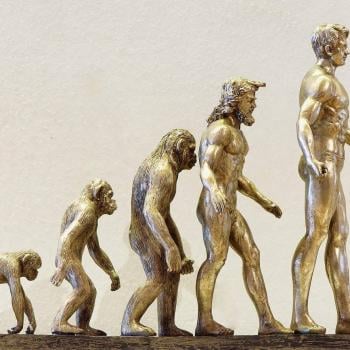
How Has Religion's Evolution Debate Evolved?

Should Churches Endorse Political Candidates?

Surrogacy's $15 Billion Boom Raises Hard Moral Questions
TRENDING AT PATHEOS Religion News

Should Churches Endorse Political Candidates?
Amid a highly charged election season, federal court filings last month will...

Surrogacy's $15 Billion Boom Raises Hard Moral Questions
The current surrogacy situation is confusing and fast-evolving. Most of Europe...

Why the Media Only Sees Faith in a...
Faith Beyond the Headlines Faith rarely makes headlines when it is quietly...

Patheos July 2026 Featured Writer: Dr. Joey Cochran
Dr. Joey Cochran is a historian of religion, a General Editor of...

Patheos June 2026 Featured Writer: Dr. James F....
Dr. James F. McGrath holds the Clarence L. Goodwin Chair in New...

How Faith and Religion Shaped America's First 250...
Faith and the Founding: What Media Gets Wrong Religion has shaped America...
view all Religion News blogs
What Are Your Thoughts?leave a comment
Ad-Free & Subscriber Log-In Subscription Support
- About Us
- 2026 Calendar
- Videos
- Podcasts
- Library of World Religions
- Faith In Media Tracker
- Advertise With Us
- Write for Us
- Privacy Policy
- Terms of Service
- Do Not Sell My Data
- Contact Us
- Radiant Digital
- Manage Newsletter Subscriptions
- Unsubscribe From Notifications
- Sitemap
Copyright 2008-2026, Patheos. All rights reserved.
Subscription Support Ad-Free & Subscriber Log-In
Follow Patheos