
BuddhistCatholicContemplativeEvangelicalGeneral ChristianHinduJewishLatter-day SaintMuslimNew VisionsProgressive Christian
Beliefs
- Buddhist
- Catholic
- Contemplative
- Evangelical
- General Christian
- Hindu
- Jewish
- Latter-day Saint
- More Voices
- Muslim
- New Visions
- Pagan
- Progressive Christian
Topics
- Religion News
- Food and Religion
- Sports and Religion
- Religious Art
- Religious Music and Entertainment
- Religious Events
- History and Religion
- Style and Religion
- Politics and Religion
- Women in Religion
- Recreation Outdoors and Religion
- Business Finance and Religion
- Careers Workplace and Religion
- Education and Religion
- Family Parenting and Religion
- Health Fitness and Religion
- Home and Religion
- Relationships and Religion
- Technology and Religion
- Travel and Religion
Columnists
- Buddhist Columnists
- Business Finance and Religion Columnists
- Careers Workplace and Religion Columnists
- Catholic Columnists
- Contemplative Columnists
- Education and Religion Columnists
- Evangelists Columnists
- Family Parenting and Religion Columnists
- General Christian Columnists
- Health Fitness and Religion Columnists
- Hindu Columnists
- History and Religion Columnists
- Home and Religion Columnists
- Jewish Columnists
- More Voices Columnists
- Latter Day Columnists
- Muslim Columnists
- New Visions Columnists
- Nonreligious Columnists
- Pagan Columnists
- Politics and Religion Columnists
- Progressive Columnists
- Recreation Outdoors and Religion Columnists
- Relationships and Religion Columnists
- Religion News Columnists
- Religious Art Columnists
- Religious Events Columnists
- Religious Music and Entertainment Columnists
- Sports and Religion Columnists
- Style and Religion Columnists
- Technology and Religion Columnists
- Travel and Religion Columnists
- Women in Religion Columnists
Resource Library
- 2026 Calendar
- Library of World Religions
- The 100 Most Holy Places on Earth
- Patheos Answers
- Podcasts
- Videos
- Faith Leaders Database
- Anglican Episcopalian
- Bahai
- Baptist
- Buddhism
- Christianity
- Confucianism
- Eastern Orthodoxy
- Hinduism
- Holiness and Pentecostal
- ISKCON
- Islam
- Judaism
- Lutheran
- Methodist
- The Church of Jesus Christ of Latter-day Saints
- New Age
- Paganism
- Presbytarian and Reformed
- Protestantism
- Religion Behind the Scenes
- Roman Catholic
- Scientology
- Shia Islam
- Sikhism
- Sufism
- Sunni Islam
- Taoism
- Zen
- See all religions
Research Tools
 Ad-Free & Subscriber Log-In Subscription Support
Ad-Free & Subscriber Log-In Subscription Support
Follow Patheos 

- Trending:
- Forgiveness
- |
- Marriage
- |
- Consciousness
- |
- Death Penalty
- |
- Election
- |
- Halloween

- Home
- Religion News
- Question: Why doesn’t the U.S. Census ask about religion?
Question: Why doesn’t the U.S. Census ask about religion?
Last updated on: April 25, 2023 at 1:47 pm by Richard Ostling
Question: Why doesn’t the U.S. Census ask about religion? 2023-04-25T13:47:19-04:00 Richard Ostling
Patheos Explore the world's faith through different perspectives on religion and spirituality! Patheos has the views of the prevalent religions and spiritualities of the world.
THE RELIGION GUY’S ANSWER:
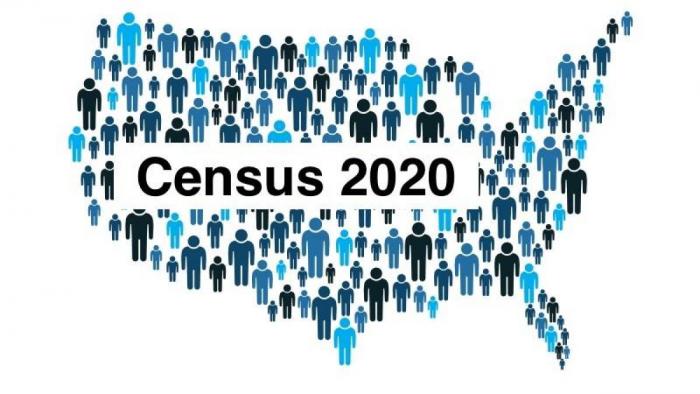
Does church-state separation forbid the question? / www.commerce.gov
Most Americans may never have thought about this, an odd omission considering that religion is such an important aspect of society. Canada’s government, for example, has asked about religious affiliations since 1871.
But from the first once-a-decade U.S. Census conducted in 1790, the federal government has never directly asked all Americans about their religion (or lack thereof). Responses are anonymous, which should remove any sensitivities about answering such a question. The usual explanation is that “separation of church and state” forbids such questionining by a government agency, which is debatable.
Much of the history below draws upon an April 12 article about the Census by the Pew Research Center that has further detail for those interested, available here: www.pewresearch.org/short-reads/2023/04/12/why-the-us-census-doesnt-ask-americans-about-their-religion/.
Instead of church-and-state entanglement, The Guy offers a different sort of objection to Census involvement. Religious affiliation or identity may be too complicated a matter for government nose-counters to deal with accurately.
Several non-government agencies with more expertise in this area collect standard data on Americans’ religion, with numbers that regularly conflict due to differing methods, assumptions and definitions. One of the most important is Pew Research’s own Religious Landscape Study, last issued in 2014. See www.pewresearch.org/religion/religious-landscape-study/. Groundwork for the next round has already begun. Pew’s precision on religious factions and identities is vital because Protestant categories like “Lutheran” or “Presbyterian” mask big differences among groups with that label.
A “census” and other non-government sources
That sort of specificity is also provided in the “U.S. Religion Census” (www.usreligioncensus.org) conducted each decade since 1990 by experts in religion statistics. This agency recently posted data as of 2020 for 372 religious groups. The numbers are searchable by state and county as well as nationwide. Religious groups are categorized by several broad “traditions” within which there are numerous “families.” The detailed local surveying is useful because many congregations disguise denominational affiliations in their names. Also, individual members may not know exactly which group they’re part of.
This census provided the remarkable news that the nation’s biggest Protestant body is now the cumulative 21 million members in 44,319 independent, non-denominational local congregations that surveyors found. Look for ongoing arguments over the census’s memberships for African-American denominations, which are far below traditional claims. Also of interest is the 4,454,908 estimate for U.S. Muslims, well outnumbering those affiliated with Judaism, within which the census says Orthodoxy now has more active members than either the Conservative or Reform branches.
From 1916 through 2012, an annually published yearbook collected church statistics as reported by the various Christian denominations themselves, but thin finances and staffing at the National Council of Churches ended this valuable service. The Association of Statisticians of American Religious Bodies maintains a regularly updated online continuation of the idea at www.yearbookofchurches.org/. Valuable data on religion also come from Gallup Polls, Duke University’s National Congregations Study, the General Social Survey at the University of Chicago, the Harvard University-based Cooperative Congressional Election Study, and the Center for the Study of Global Christianity at Gordon-Conwell Theological Seminary.
Debate, but no change
Pew Research recounts that the Census Bureau prepared for the 1960 survey by testing out a question on religious affiliation in Milwaukee, and then with a nationwide sample. The bureau’s director at the time thought a religion question would not violate church-state separation or be any more offensive or intrusive than asking about a person’s level of education. Proponents said the resulting information would not only help religious leaders but academic researchers and public school planners. However, concerns about privacy and opposition from certain religious groups kept the question off the 1960 Census.
By 1976, a different bureau director said such a question “would appear to infringe upon the traditional separation of church and state” and, legality aside, he feared “controversy on this very sensitive issue could affect public cooperation.” In October of that year, the U.S. Congress barred the decennial Census from asking about respondents’ “religious beliefs” or “membership in a religious body.” Some Jewish organizations had objected with the Holocaust still in believers’ memories, as did some Baptists, Latter-day Saints, and followers of Christian Science.
The Census Bureau has gathered voluntary religion information, apart from the main Census in which the law requires all residents to answer the questions. Sometimes population or household surveys have asked about worship attendance or religious donations. Five times from 1850 to 1890, the Census collected reports from faith leaders about their memberships or the number of houses of worship in their communities. In 1906 the bureau launched the “Census of Religious Bodies” that gathered data from questionnaires mailed to religious leaders. Eventually budget constraint ended that useful practice. The Census Bureau issues economic data on religious groups in its County Business Patterns reports, and formerly repeated church membership statistics from the National Council’s yearbook when it issued the annual “Statistical Abstract of the United States.”
History and Religion
Previous Post

April 12, 2023
Question: "Why have many worshippers stopped singing in church"?
Next Post

May 10, 2023 Question: Should Christians Use Tarot Cards?
Recent Comments
"(First off, a correction: telescopes were invented about 1,300 years after Ptolemy's death.)Skeptics have been ..."
UFO buzz: Will life on distant ..."
"NIPs... spurn labels and are averse to “organized religion” with its expectations about moral lifestyles ..."
How do categories differ among America’s ..."
"Atheists are those who are certain God does not exist, and the same for all ..."
How do categories differ among America’s ..."
"We already know what happens, Christianity is the only worldview that has completely answered all ..."
Why doesn’t the Bible mention dinosaurs?
Browse Our Archives
Select a Category Uncategorized
Select a Month October 2026 September 2026 August 2026 July 2026 June 2026 May 2026 April 2026 March 2026 February 2026 January 2026 December 2025 November 2025 October 2025 September 2025 August 2025 July 2025 June 2025 May 2025 April 2025 March 2025 February 2025 January 2025 December 2024 November 2024 October 2024 September 2024 August 2024 July 2024 June 2024 May 2024 April 2024 March 2024 February 2024 January 2024 December 2023 November 2023 October 2023 September 2023 August 2023 July 2023 June 2023 May 2023 April 2023 March 2023 February 2023 January 2023 December 2022 November 2022 October 2022 September 2022 August 2022 July 2022 June 2022 May 2022 April 2022 March 2022 February 2022 January 2022 December 2021 November 2021 October 2021 September 2021 August 2021 July 2021 June 2021 May 2021 April 2021 March 2021 February 2021 January 2021 December 2020 November 2020 October 2020 September 2020 August 2020 July 2020 June 2020 May 2020 April 2020 March 2020 February 2020 January 2020 December 2019 November 2019 October 2019 September 2019 August 2019 July 2019 June 2019 May 2019 April 2019 March 2019 February 2019 January 2019 December 2018 November 2018 October 2018 September 2018 August 2018 July 2018 June 2018 May 2018 April 2018 March 2018 February 2018 January 2018 December 2017 November 2017 October 2017 September 2017 August 2017 July 2017 June 2017 May 2017 April 2017 March 2017 February 2017 January 2017 December 2016 November 2016 October 2016 September 2016 August 2016 July 2016 June 2016 May 2016 April 2016 March 2016 February 2016 January 2016 December 2015 November 2015 October 2015 September 2015 August 2015 July 2015 June 2015 May 2015 April 2015 March 2015 February 2015 January 2015 December 2014 November 2014 October 2014 September 2014 August 2014 July 2014 June 2014 May 2014 April 2014 March 2014 February 2014 January 2014 December 2013 November 2013 October 2013 September 2013 August 2013 July 2013 June 2013 May 2013 April 2013 March 2013 February 2013 January 2013 December 2012
TAKE THE
Religious Wisdom Quiz
What Christian group is known for their "Circuit Riders" in history?
Select your answer to see how you score.
Anglicans Methodists Baptists Lutherans
Related posts from Religion Q and A

Should Churches Endorse Political Candidates?

Surrogacy's $15 Billion Boom Raises Hard Moral Questions

How Much Peril Do U.S. Evangelical Colleges Face?

TRENDING AT PATHEOS Religion News

Should Churches Endorse Political Candidates?
Amid a highly charged election season, federal court filings last month will...

Surrogacy's $15 Billion Boom Raises Hard Moral Questions
The current surrogacy situation is confusing and fast-evolving. Most of Europe...

Why the Media Only Sees Faith in a...
Faith Beyond the Headlines Faith rarely makes headlines when it is quietly...

Patheos July 2026 Featured Writer: Dr. Joey Cochran
Dr. Joey Cochran is a historian of religion, a General Editor of...

Patheos June 2026 Featured Writer: Dr. James F....
Dr. James F. McGrath holds the Clarence L. Goodwin Chair in New...

How Faith and Religion Shaped America's First 250...
Faith and the Founding: What Media Gets Wrong Religion has shaped America...
view all Religion News blogs
What Are Your Thoughts?leave a comment
Ad-Free & Subscriber Log-In Subscription Support
- About Us
- 2026 Calendar
- Videos
- Podcasts
- Library of World Religions
- Faith In Media Tracker
- Advertise With Us
- Write for Us
- Privacy Policy
- Terms of Service
- Do Not Sell My Data
- Contact Us
- Radiant Digital
- Manage Newsletter Subscriptions
- Unsubscribe From Notifications
- Sitemap
Copyright 2008-2026, Patheos. All rights reserved.
Subscription Support Ad-Free & Subscriber Log-In
Follow Patheos