
BuddhistCatholicContemplativeEvangelicalGeneral ChristianHinduJewishLatter-day SaintMuslimNew VisionsProgressive Christian
Beliefs
- Buddhist
- Catholic
- Contemplative
- Evangelical
- General Christian
- Hindu
- Jewish
- Latter-day Saint
- More Voices
- Muslim
- New Visions
- Pagan
- Progressive Christian
Topics
- Religion News
- Food and Religion
- Sports and Religion
- Religious Art
- Religious Music and Entertainment
- Religious Events
- History and Religion
- Style and Religion
- Politics and Religion
- Women in Religion
- Recreation Outdoors and Religion
- Business Finance and Religion
- Careers Workplace and Religion
- Education and Religion
- Family Parenting and Religion
- Health Fitness and Religion
- Home and Religion
- Relationships and Religion
- Technology and Religion
- Travel and Religion
Columnists
- Buddhist Columnists
- Business Finance and Religion Columnists
- Careers Workplace and Religion Columnists
- Catholic Columnists
- Contemplative Columnists
- Education and Religion Columnists
- Evangelists Columnists
- Family Parenting and Religion Columnists
- General Christian Columnists
- Health Fitness and Religion Columnists
- Hindu Columnists
- History and Religion Columnists
- Home and Religion Columnists
- Jewish Columnists
- More Voices Columnists
- Latter Day Columnists
- Muslim Columnists
- New Visions Columnists
- Nonreligious Columnists
- Pagan Columnists
- Politics and Religion Columnists
- Progressive Columnists
- Recreation Outdoors and Religion Columnists
- Relationships and Religion Columnists
- Religion News Columnists
- Religious Art Columnists
- Religious Events Columnists
- Religious Music and Entertainment Columnists
- Sports and Religion Columnists
- Style and Religion Columnists
- Technology and Religion Columnists
- Travel and Religion Columnists
- Women in Religion Columnists
Resource Library
- 2026 Calendar
- Library of World Religions
- The 100 Most Holy Places on Earth
- Patheos Answers
- Podcasts
- Videos
- Faith Leaders Database
- Anglican Episcopalian
- Bahai
- Baptist
- Buddhism
- Christianity
- Confucianism
- Eastern Orthodoxy
- Hinduism
- Holiness and Pentecostal
- ISKCON
- Islam
- Judaism
- Lutheran
- Methodist
- The Church of Jesus Christ of Latter-day Saints
- New Age
- Paganism
- Presbytarian and Reformed
- Protestantism
- Religion Behind the Scenes
- Roman Catholic
- Scientology
- Shia Islam
- Sikhism
- Sufism
- Sunni Islam
- Taoism
- Zen
- See all religions
Research Tools
 Ad-Free & Subscriber Log-In Subscription Support
Follow Patheos 

- Trending:
- Advent
- |
- Forgiveness
- |
- Thanksgiving
- |
- Election
- |
- Seasonal Holidays
- |
- Marriage

- Home
- About Dr. James F. McGrath
- Publications
- Blogroll
- Useful Websites
- Connections
- Easy Search Posts Page
- FREE NEWSLETTER
- Home
- Progressive Christian
- Christology within Judaism (Enoch Seminar June 2026)
Christology within Judaism (Enoch Seminar June 2026)
Last updated on: June 27, 2026 at 1:46 pm by James F. McGrath
Christology within Judaism (Enoch Seminar June 2026) 2026-06-27T13:46:22-04:00 James F. McGrath
Patheos Explore the world's faith through different perspectives on religion and spirituality! Patheos has the views of the prevalent religions and spiritualities of the world.
Introduction
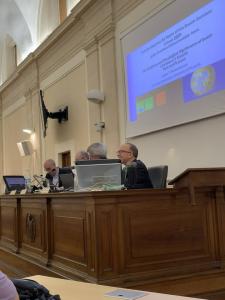 This summer’s Enoch Seminar meeting on the topic of Christology within Judaism is sure to be remembered as a key moment in this area of study. We gathered in Rome at the Waldensian School of Theology. While I have been involved in a lot of conferences, and have been involved in leading and organizing what happens in certain program units at big conferences, this Enoch Seminar meeting was my first time taking the leading role assembling an entire conference by invitation. Enoch Seminar meetings bring together individuals considered to have something important to say and a distinctive perspective to offer on key topics. The Nangeroni meeting format involves papers circulated in advance, so that we can focus on discussing them rather than listening to them. They are consistently generative of important momentum in scholarship. I believe that to be especially the case for this one.
Our focus at this meeting was on messianisms (including Christology) and “monotheism” (the scare quotes acknowledging the problematic nature of that term). I have used the phrase “Christology within Judaism” because on the one hand, it links to the wider efforts to situate Christian origins as a phenomenon within the Judaism of that time, and on the other hand it highlights the unhelpful historic tendency to study “Christology” (things said about Jesus) as something distinct and potentially separate from Jewish messianism in the same time period.
Rome Nangeroni Meeting in Brief
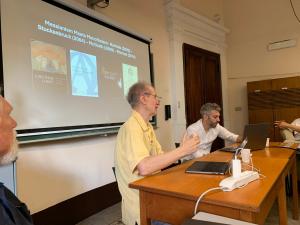 Gabriele Boccaccini presented the opening introductory session, and his was the only presentation offered at length rather than circulated beforehand. He was thus able to take the papers into account in getting the meeting started. He surveyed a series of phases in the study of Christology, suggesting that the one that comes next will be determined to a significant extent by what happens at this meeting. That was something I only hoped when I began organizing it together with Loren Stuckenbruck. Once I read the papers, my hope grew stronger. Having Gabriele articulate it as his introductory expectation was daunting but encouraging. Now with hindsight, I believe that he is correct.
I will not attempt to summarize the papers here. You can read the abstracts on the Enoch Seminar website. We have a major European academic publisher interested in publishing the proceedings, and so hopefully you will not have to wait too long before being able to read the full riches of what was offered. Here I will share an edited version of what I said about the volume in the book proposal, which expresses my feelings about the contents of the conference that will be embodied in and disseminated through the volume.
The 2026 Enoch Seminar Nangeroni meeting included scholars spanning three generations, from those nearing retirement to those new to academia. As such, it provided a spectacularly comprehensive survey of the state of the field, coupled with innovative proposals and pointers to where things are headed. That means the proceedings volume will be one that anyone interested in ancient Jewish messianism, Christian origins, New Testament Christology, and a wide array of other topics will absolutely have to consult.
There have been many volumes tackling Paul and other early Christian authors and some of their topics of focus “within Judaism,” and the title of the volume seeks to connect to and harness that interest. On the other hand, there has been no volume that was specifically about Christology “within Judaism.” The closest volume is perhaps the one from the 2016 Enoch Seminar, Reading the Gospel of John’s Christology as Jewish Messianism, published by E.J. Brill. The 2026 meeting aimed to pick up where that earlier conference left off. The narrow focus on the Gospel of John means that this new volume offers something radically different from the earlier one, while the citation and reception of that volume is indicative of how the new proposed volume will likely be received.
In his opening session, Gabriele Boccaccini outlined the history of work on Christology and monotheism, and suggested that we are on the cusp of a new phase of research, one that he did not outline but was confident would be made clear by the end of our meeting. That did indeed prove to be the case. While there was obviously never any prospect of academic achieving unanimity, there are clear indications of emerging consensus on key conclusions in a configuration that has not typified the field in the past. Perhaps more crucially, we were unanimous on many points related to method and approach. The future of the field will be:
Integrated as part of the study of Jewish messianisms more broadly in this period
Aware of how anti-Judaism and religious polemics have influenced the field both consciously and subconsciously, including in the ve
ry tendency to treat Christology as a separate topic from Jewish messianism, but also in the search for ways in which Jesus was allegedly “not merely” or “more than just” the Jewish messiah.
Informed by awareness of:
- The recency of monolatry
- The widespread embrace of it nonetheless in Jewish populations in Judaea and Galilee
- The spectrum of divinity and the potential for a figure to move along it, rather than permanently occupying a static position on the spectrum
Interdisciplinary
Interfaith with respect to the backgrounds, assumptions, and influences on scholars, as well as personal commitments they may have
International
Dialogical across these varied backgrounds and perspectives
Cognizant that New Testament authors and their sources had religious experiences that did not automatically provide them with clear answers on how to best articulate the implications thereof, so that they were in many instances seeking and exploring answers through the language they used, rather than providing definitive answers
The editors and contributors are confident that the contents of this volume will be sufficiently generative as to become key points of reference in scholarship in the years and decades that follow the publication of the volume.
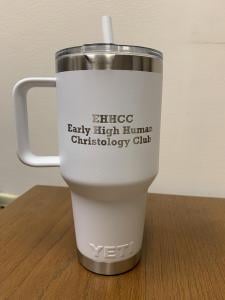 We don’t have a catchy name for the new phase yet, unless “Christology within Judaism” catches on. One of the participants, Dustin Smith, decided to play on the nickname of an earlier phase, whose advocates became known as the Early High Christology Club. At the meeting, Ken Schenck observed that the early high Christology stance stands in contrast not only with the low Christology perspective, but the “slow Christology” perspective. Dustin made a drinking cup with a new logo, referring to the Early High Human Christology Club. Not everyone who participated in the meeting would agree with this terminology or the perspective it represents, and some who might fit under that umbrella would prefer to nuance things differently. But I think many of us agree that the early Christians, whatever they thought about pre-existence or about how the divine was present in the life of Jesus, thought that this human person had been exalted to God’s right hand and made God’s second in command ruling over the universe. As Bart Ehrman has pointed out, that is anything but a low Christology!
Pontifical Biblical Institute Public Event
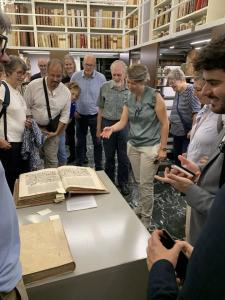 This Enoch Seminar meeting occurred in the 25th year since the founding of the organization. It was appropriate and important to mark the occasion. We did so not only through the conference itself, but also through a public event at the Pontifical Biblical Institute. Luca Pedroli welcomed us and gave us a tour of the library together with his colleague Dean Paola Mollo. I had had the privilege of meeting Luca previously due to our shared interest in John the Baptist.
The main focus of the event was a public lecture by Loren Stuckenbruck on the significance of Enoch for Christian theology. For those who work in the field, the reference will be obvious, but likely not for a wider public. There was a Book of Enoch that circulated widely in the first century, being known to the Qumran community which produced the Dead Sea Scrolls, and to early Christians. It is quoted in the New Testament in the Epistle of Jude, and echoes in the Gospel of Matthew and other places. The text did not end up as part of Catholic or Protestant Bibles, nor the majority of Orthodox Bibles, but it is part of the canon of the Ethiopian church. In addition to studying the text, Loren has spent many years photographing manuscripts, allowing us to have a better sense of what this important text says, in addition to clarifying what it means.
The lecture was livestreamed and can still be viewed on the Pontifical Biblical Institute’s YouTube channel, and so I will share the video here. I had the privilege of not only serving as a respondent, but also to saying something about the meeting that had brought us to Rome, and also introducing Loren.
Catacombs of Priscilla and Mausoleum of Constantina
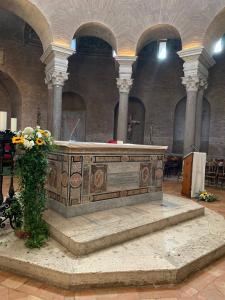 Enoch Seminar meetings that take place in interesting locations typically include an excursion of some sort. First we went to the Catacombs of Priscilla. We were not permitted to take photos but you can find many online as well as in published books. The guide explained that the widely held idea that Christians worshiped in catacombs is almost certainly false. These were underground graveyards. Burial was important to Christians as also to Jews, and this was not typical of others in Italy. Purchasing increasing numbers of tracts of land for burial above ground was not feasible, and so wealthy patrons donated land for subterranean use. The presence of very striking artwork highlights the importance of these places. The dead were not merely buried and forgotten in antiquity. As more space was needed, the chambers would have been enlarged downwards. (As an interesting aside, my time at Lakeside Chautauqua about a week later coincided with a series of talks there by Greg Athnos, including one about the catacombs.)
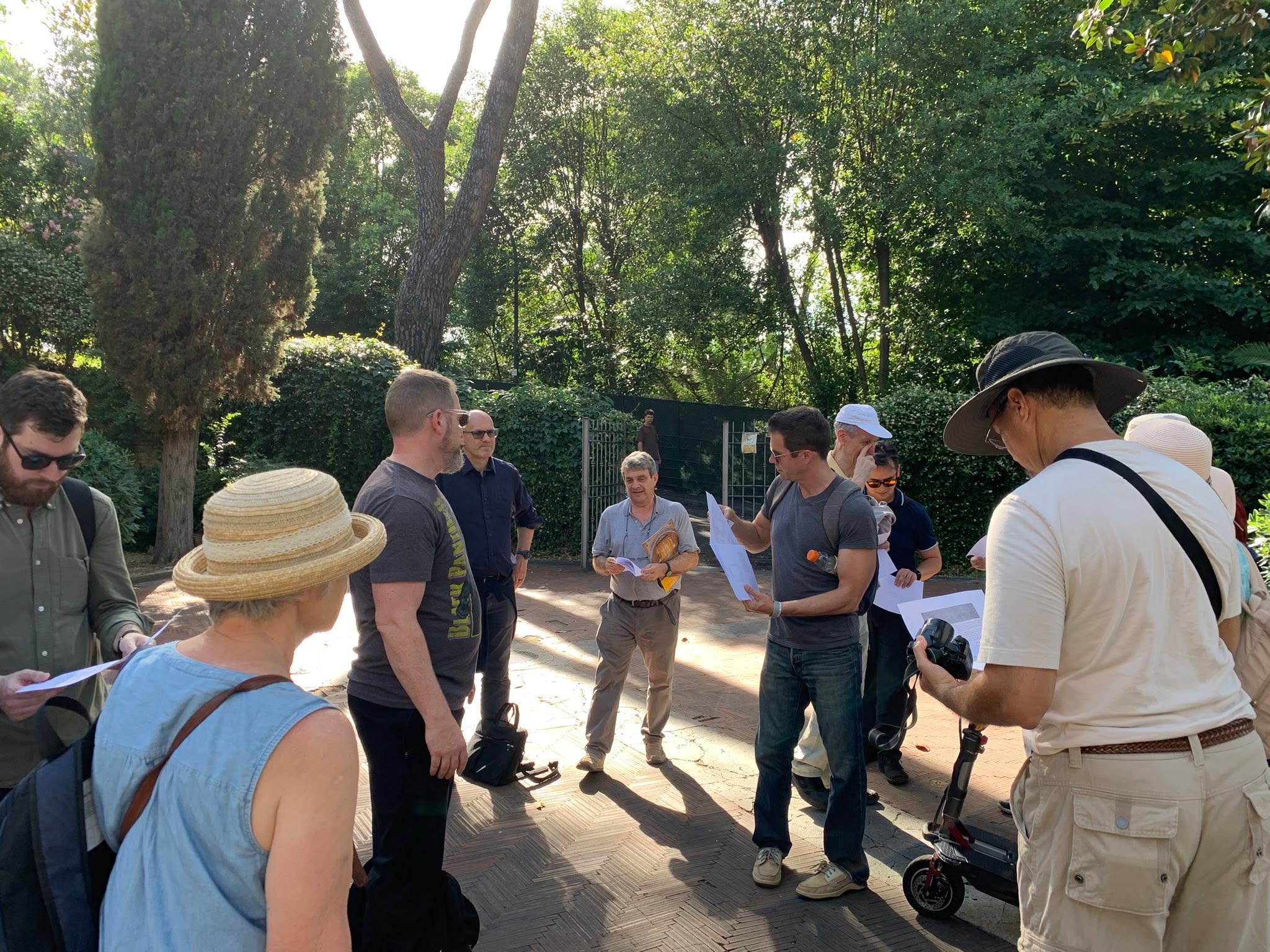
The other place we visited was the Mausoleum of Constantina, the daughter of Constantine. The adjacent Church of St. Agnes was undergoing renovation and so we were not able to visit it. Our tour guide was Prof. Alberto Camplani of the University of Roma La sapienza.
Of course, Rome is absolutely full of amazing history and we saw much else, including on the way between the Waldensian School of Theology and the Pontifical Biblical Institute. I shared thoughts on visiting Rome in an earlier post.
Conclusion
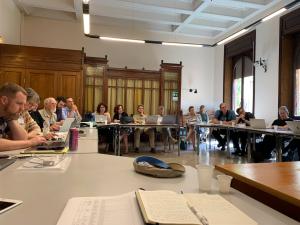 The Enoch Seminar is still going strong, and it has become more significant since its inception 25 years ago. The name reflects its founding focus on the Enochic literature. Its scope has since broadened to encompass Christology within Judaism and everything else related to Christian origins in their Jewish context. As I contacted potential participants, there were a couple whose response was “but I don’t work on Enoch.” I hope that over the next 25 years of activity of this important organization, it will become generally known that it is focused on much more than Enoch and the literature about him–as important as that subject is, as the above lecture by Loren Stuckenbruck will make clear to you if you aren’t already aware of it.
This year marked ten years since my own first participation in an Enoch Seminar meeting. It is a truly special organization. It fosters a depth of conversation that is rare. They do online meetings phenomenally well.
Below are some of my past blog posts about past Enoch Seminar meetings that I have been involved with in some way.
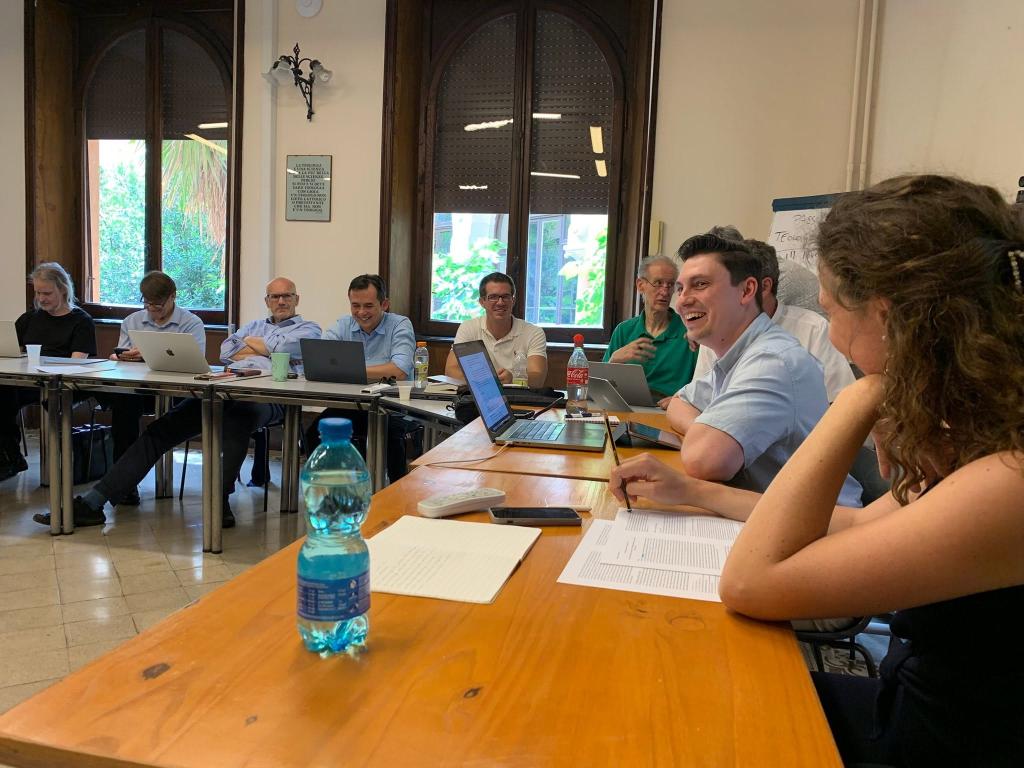
And finally, a couple more photos from our important and deep but also highly enjoyable Enoch Seminar meeting about Christology within Judaism.
Previous Post

June 24, 2026
The Murder of the Beloved Son
Next Post

June 27, 2026 Generative AI is Nothing New
Recent Comments
"And to you!"
Make Evangelicalism Christian Again
"Thank You, I identify as "strange" wink, wink! Anyway, at this point we're not going ..."
Make Evangelicalism Christian Again
"You are such a strange individual and so difficult to have a conversation with. You ..."
Make Evangelicalism Christian Again
"What you're suggesting citing these "rabbinical" interpretations you're favoring are just that - interpretations. There ..."
Make Evangelicalism Christian Again
Browse Our Archives
Select a Category 1 Corinthians 1 John 1 Peter 1 Samuel 1 Thessalonians 1 Timothy 2 Corinthians 2 Kings 2 Peter 2 Samuel 2 Thessalonians 2 Timothy academia Acts of the Apostles afterlife Akhaten Alcatraz American Academy of Religion Amos Anglican Arabic Aramaic archaeology art artificial intelligence astronomy atheism atonement Babylon 5 Baptists Battlestar Galactica Bible Biblical Studies Carnival biblioblogging Black Mirror Blade Runner Book of Job book review Buddhism Call for Papers China Christianity Christmas Christology Chronicles Coptic creation Daniel Deuteronomy Doctor Who Dune Easter Ecclesiastes economics education Eldad Keynan Enoch Seminar Ephesians eschatology Esther Evangelicals evolution Exodus Expanse Ezekiel Ezra fantasy Fringe fundamentalism Galatians games Ge'ez genealogy Genesis Gnosticism Gospel of Jesus' Wife Gospel of John Gospel of Judas Gospel of Luke Gospel of Mark Gospel of Matthew Gospel of Peter Gospel of Thomas Greek Harry Potter Hebrew Hebrews Hinduism historical Jesus history Hitchhiker's Guide to the Galaxy Holidays horror Hosea humor incarnation India inerrancy information literacy inspirational Intelligent Design Ireland Isaiah Islam Israel Italy James Jeremiah John the Baptist Jonah Joshua Judaism Jude Judges Judith Lamentations languages Latin Leviticus libraries literature Lord of the Rings LOST Mandaeans Mandaic memes Methodism Micah monotheism morality Mormons movies music mythicism NASSCAL Nehemiah new perspective New Testament news Numbers Orthodox paganism panentheism pantheism Patheos Paul and his letters Pentecostals Philippians Philippians 2:6-11 philosophy physics Planet of the Apes podcast politics Progressive Christianity Protestantism Proverbs Psalms pseudoscience racism religion Revelation Roman Catholicism Romania Romans Ruth scams science science fiction Secret Gospel of Mark Society of Biblical Literature Song of Songs Star Trek Star Wars Stargate Swahili Syriac Taoism technology Terminator The Handmaid's Tale The Hobbit The Matrix theodicy theology theory Timeless Titus tomb Torchwood travel TRON Uncategorized United Kingdom Westworld X-Files young-earth creationism Zechariah
Select a Month November 2026 October 2026 September 2026 August 2026 July 2026 June 2026 May 2026 April 2026 March 2026 February 2026 January 2026 December 2025 November 2025 October 2025 September 2025 July 2025 June 2025 May 2025 April 2025 March 2025 February 2025 January 2025 December 2024 November 2024 October 2024 September 2024 August 2024 July 2024 June 2024 May 2024 April 2024 March 2024 February 2024 January 2024 December 2023 November 2023 October 2023 September 2023 August 2023 July 2023 May 2023 April 2023 March 2023 February 2023 January 2023 December 2022 November 2022 October 2022 September 2022 August 2022 July 2022 June 2022 May 2022 April 2022 March 2022 February 2022 January 2022 December 2021 November 2021 October 2021 September 2021 August 2021 July 2021 June 2021 May 2021 April 2021 March 2021 February 2021 January 2021 December 2020 November 2020 October 2020 September 2020 August 2020 July 2020 June 2020 May 2020 April 2020 March 2020 February 2020 January 2020 December 2019 November 2019 October 2019 September 2019 August 2019 July 2019 June 2019 May 2019 April 2019 March 2019 February 2019 January 2019 December 2018 November 2018 October 2018 September 2018 August 2018 July 2018 June 2018 May 2018 April 2018 March 2018 February 2018 January 2018 December 2017 November 2017 October 2017 September 2017 August 2017 July 2017 June 2017 May 2017 April 2017 March 2017 February 2017 January 2017 December 2016 November 2016 October 2016 September 2016 August 2016 July 2016 June 2016 May 2016 April 2016 March 2016 February 2016 January 2016 December 2015 November 2015 October 2015 September 2015 August 2015 July 2015 June 2015 May 2015 April 2015 March 2015 February 2015 January 2015 December 2014 November 2014 October 2014 September 2014 August 2014 July 2014 June 2014 May 2014 April 2014 March 2014 February 2014 January 2014 December 2013 November 2013 October 2013 September 2013 August 2013 July 2013 June 2013 May 2013 April 2013 March 2013 February 2013 January 2013 December 2012 November 2012 October 2012 September 2012 August 2012 July 2012 June 2012 May 2012 April 2012 March 2012 February 2012 January 2012 December 2011 November 2011 October 2011 September 2011 August 2011 July 2011 June 2011 May 2011 April 2011 March 2011 February 2011 January 2011 December 2010 November 2010 October 2010 September 2010 August 2010 July 2010 June 2010 May 2010 April 2010 March 2010 February 2010 January 2010 December 2009 November 2009 October 2009 September 2009 August 2009 July 2009 June 2009 May 2009 April 2009 March 2009 February 2009 January 2009 December 2008 November 2008 October 2008 September 2008 August 2008 July 2008 June 2008 May 2008 April 2008 March 2008 February 2008 January 2008 December 2007 November 2007 October 2007 September 2007 August 2007 July 2007 June 2007 February 2007 January 2001
Follow Us!
TAKE THE
Religious Wisdom Quiz
What was the name of the blind beggar Jesus healed near Jericho?
Select your answer to see how you score.
Matthias Bartimaeus Simon Cornelius
Books by This Author Books by James F. McGrath
Related posts from Religion Prof: The Blog of James F. McGrath
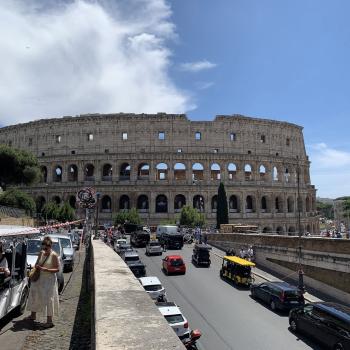
A Religion Scholar's Rome Recommendations
Religion Prof: The Blog of James F. McGrath

John's Adoptionist Christology? Limits of AI Lit Reviews
Religion Prof: The Blog of James F. McGrath
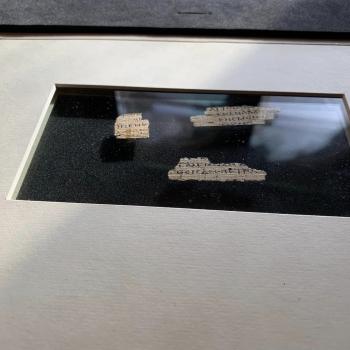
John and Jesus under Roman Occupation?
Religion Prof: The Blog of James F. McGrath
New Books on Early Christian Hymns
Religion Prof: The Blog of James F. McGrath
TRENDING AT PATHEOS Progressive Christian

Happy Thanksgiving! I published this Thanksgiving column back in 2017 in...

More Than a Meal: A Messianic Thanksgiving
A Messianic Thanksgiving What if Thanksgiving became more than a meal to...

The Darkening of the Sun, Moon, and Stars
The darkening of the sun and moon and the falling of stars...

Gratitude as the Parent of All Virtues
Giving thanks stems from gratitude. Cicero said that gratitude is the parent...

Make Thanksgiving Bring Family Closer
Written by Dr. David K. Ewen from Eternal Truth Bible College Start...

Ghosts, Spirits, and Wizards in Post-Puritan New England
As it is Thanksgiving, I have a seasonal post concerned with New...
view all Progressive Christian blogs
What Are Your Thoughts?leave a comment
Ad-Free & Subscriber Log-In Subscription Support
- About Us
- 2026 Calendar
- Videos
- Podcasts
- Library of World Religions
- Faith In Media Tracker
- Advertise With Us
- Write for Us
- Privacy Policy
- Terms of Service
- Do Not Sell My Data
- Contact Us
- Radiant Digital
- Manage Newsletter Subscriptions
- Unsubscribe From Notifications
- Sitemap
Copyright 2008-2026, Patheos, part of the Radiant Digital network of media brands. All rights reserved.
Subscription Support Ad-Free & Subscriber Log-In
Follow Patheos