
BuddhistCatholicContemplativeEvangelicalGeneral ChristianHinduJewishLatter-day SaintMuslimNew VisionsProgressive Christian
Beliefs
- Buddhist
- Catholic
- Contemplative
- Evangelical
- General Christian
- Hindu
- Jewish
- Latter-day Saint
- More Voices
- Muslim
- New Visions
- Pagan
- Progressive Christian
Topics
- Religion News
- Food and Religion
- Sports and Religion
- Religious Art
- Religious Music and Entertainment
- Religious Events
- History and Religion
- Style and Religion
- Politics and Religion
- Women in Religion
- Recreation Outdoors and Religion
- Business Finance and Religion
- Careers Workplace and Religion
- Education and Religion
- Family Parenting and Religion
- Health Fitness and Religion
- Home and Religion
- Relationships and Religion
- Technology and Religion
- Travel and Religion
Columnists
- Buddhist Columnists
- Business Finance and Religion Columnists
- Careers Workplace and Religion Columnists
- Catholic Columnists
- Contemplative Columnists
- Education and Religion Columnists
- Evangelists Columnists
- Family Parenting and Religion Columnists
- General Christian Columnists
- Health Fitness and Religion Columnists
- Hindu Columnists
- History and Religion Columnists
- Home and Religion Columnists
- Jewish Columnists
- More Voices Columnists
- Latter Day Columnists
- Muslim Columnists
- New Visions Columnists
- Nonreligious Columnists
- Pagan Columnists
- Politics and Religion Columnists
- Progressive Columnists
- Recreation Outdoors and Religion Columnists
- Relationships and Religion Columnists
- Religion News Columnists
- Religious Art Columnists
- Religious Events Columnists
- Religious Music and Entertainment Columnists
- Sports and Religion Columnists
- Style and Religion Columnists
- Technology and Religion Columnists
- Travel and Religion Columnists
- Women in Religion Columnists
Resource Library
- 2026 Calendar
- Library of World Religions
- The 100 Most Holy Places on Earth
- Patheos Answers
- Podcasts
- Videos
- Faith Leaders Database
- Anglican Episcopalian
- Bahai
- Baptist
- Buddhism
- Christianity
- Confucianism
- Eastern Orthodoxy
- Hinduism
- Holiness and Pentecostal
- ISKCON
- Islam
- Judaism
- Lutheran
- Methodist
- The Church of Jesus Christ of Latter-day Saints
- New Age
- Paganism
- Presbytarian and Reformed
- Protestantism
- Religion Behind the Scenes
- Roman Catholic
- Scientology
- Shia Islam
- Sikhism
- Sufism
- Sunni Islam
- Taoism
- Zen
- See all religions
Research Tools
 Ad-Free & Subscriber Log-In Subscription Support
Ad-Free & Subscriber Log-In Subscription Support
Follow Patheos 

- Trending:
- Forgiveness
- |
- Marriage
- |
- Consciousness
- |
- Death Penalty
- |
- Election
- |
- Halloween

- Home
- About Dr. James F. McGrath
- Publications
- Blogroll
- Useful Websites
- Connections
- Easy Search Posts Page
- FREE NEWSLETTER
- Home
- Progressive Christian
- Education and Religion
- Interview with Garrick Allen about Words Are Not Enough
Interview with Garrick Allen about Words Are Not Enough
Last updated on: November 3, 2024 at 4:45 pm by James F. McGrath
Interview with Garrick Allen about Words Are Not Enough 2024-11-03T16:45:56-05:00 James F. McGrath
Patheos Explore the world's faith through different perspectives on religion and spirituality! Patheos has the views of the prevalent religions and spiritualities of the world.
I am delighted I got the chance to take a look at Garrick Allen‘s important new book, Words Are Not Enough: Paratexts, Manuscripts, and the Real New Testament (Eerdmans 2024) and to get him to provide an interview about it. We tend to think about paratexts differently depending on whether they are ancient or modern. Yet there is so much that connects ancient commentaries and modern ones, for instance, and yet we rarely think of them as similar, much less compare them in the kind of thoughtful way that Garrick Allen has. You’ll never think about the Schofield Bible or the Green Bible – or about ancient Bibles with annotations and illustrations – in the same way again! Here’s the interview. Garrick’s answers are in bold.
Garrick, thank you for writing a book about a fascinating and neglected topic. Those of us who teach biblical studies know that readers of the Bible are influenced by other words and ideas about the Bible that reach them via various routes, including sermons and art. Quite often that additional information is found within their Bibles, in the form of illustrations and/or commentary, and sometimes other things like charts and diagrams of the end times. Why do you think that, with all the scholarship that has been produced about the Bible, comparatively little scholarly attention prior to your book has focused on these paratexts, the things that go along with the text that influence readers and which, for historians of religion, clue us in about how the Bible was understood in past generations?
Thanks so much, James! There are number of reasons why paratexts have been hidden in plain sight when it comes to the Bible. The first is that biblical scholars have, for the most part, given over the manuscripts to the textual critics, who then abstract the texts the manuscripts carry from their material context in the form of transcriptions. These abstractions are used to create editions and make textual judgements. Textual criticism is not bad (in fact, it’s quite good!), but its focus on reconstructing an ancient text of some kind means that it can easily bracket off anything “non-original.” Paratexts of the New Testament are the product of tradition, so they get lost in the mix and become invisible to users of editions of vernacular Bibles.
Another reason is that, except for the last twenty years or so, access to manuscripts has been extremely limited. Very few people had the resources and time to travel to dozens of museums, libraries, and private collections for the purpose of exploring specific paratexts. The explosion of accessible digital images through tools like the New Testament Virtual Manuscript Room and institution repositories makes it possible for us to examine both the paratextuality of individual manuscripts (even those not especially valuable for textual criticism!) and to map the transmission of these features across the corpus, to see the structures and complex interactions between biblical works and paratextual traditions.
The final reason that I’ll mention is this: paratext have been overlooked because they are not amenable to grand narratives. They are the piecemeal residues of larger intellectual contexts, rarely reflecting on their own purposes or functions. Even in some of the more systemic paratexts, like the Eusebian apparatus or the catenae extracts, it is difficult to tell a clear story. Eusebius’s work enables users to cross-reference parallel passages in the four gospels, but the impetus and intended outcomes of such a system are contested. Like all manuscript study, paratexts can be quite technical, so if the big picture payoff seems low at the outset, scholars might be tempted to look elsewhere. I think, however, that although it’s a challenge to craft one overarching narrative, the power of the paratext lies in its complex diversity, decentering scholarly fixations and enabling us to ask some new questions.
Do you have a favorite Bible edition or paratextual resource, ancient or modern?
Not really! I use also sorts of critical editions and vernacular Bibles in my work, which is a good way to simulate what it’s like to use multiple manuscripts. I depends on what question you have, but it’s good to listen to many voices in most cases, I think. In terms of some of the work I’m currently involved in, I’m regularly using von Soden’s edition from the early 20th century, which gives a pretty good overview of many of the paratexts found in Greek New Testament manuscripts. I’m also working on the Euthalian tradition to Acts, the Catholic Epistles, and Paul at the moment. It’s a complicated set of lists, prefaces, cross-references, and text divisions, so I often have its last edition open, made by Alessando Zaccagni in 1698. Working with manuscripts and paratexts is nice because you never know what you’ll have the chance to work with day to day!
What is the most interesting (in your opinion) illustration or doodle in the margins of a New Testament manuscript?
There’s so many to choose from! One thing about working with paratexts is that you get to spend most of your day just reading manuscripts and you come across some unusual and fun things. I tweet about some of the things I run across, but some of the examples that struck me are in the book. A good case is GA 1175 (Patmos, St John the Theologian Monstery, 16), an Apostolos manuscript from the tenth century. It has multiple notes and doodles made by later readers, including some weird little guys and battle in the margin between two characters in European and Ottoman garb brandishing weapons. But there’s so much more, and none of these post-production doodles have been catalogued: there’s multiple ships, drawings of monasteries, and a portrait of Jesus in the back flyleaves with tiny little hands. There are more serious things too, like prayers in the margins, and dozens of examples of later readers copying out the alphabet in the margins or mimicking the script of the main text. The New Testament’s manuscripts were also a space where people learned to read and write, often because they might have been the only books in a given community. Personally, I’m drawn to the non-professional drawings, the things made by regular folks in the process of using a manuscript.
I know that when I look at patristic commentaries on the New Testament, my mind categorizes them as somehow inherently different from something like the Scofield Bible or the Green Bible. What do we miss about both if we fail to consider how these are similar?
I agree! But when we look closely at the manuscripts the categories we bring can breakdown when we see the tradition in all its glorious complexity. I’ll say two things: first, many of the manuscripts we classify as “New Testament manuscript” have commentary built into them, either as single author commentaries (like Andrew of Caesarea on Revelation) or as catena (extracts of multiple patristic authors arranged around the texts they comment upon). So commentary and scripture are inextricable in many cases. Second, many of our modern Bibles also include modern kinds of commentary. The Scofield Bible is a famous example, containing layers to pretty top-down perspectives by Scofield himself (a Confederate soldier and dispensationalist). Many even hailed his marginal notes as a major advance in Bible technology, but those people had clearly never seen a medieval Greek manuscript. When we look at the manuscripts, it’s clear our own Bibles rarely do anything truly innovative; in most cases the paratexts we encounter in our Bibles are a shadow of what we find in the manuscripts.
What are some of the most interesting paratexts or manuscripts that you didn’t include in your new book? For those who read your book who are thinking about future research projects, what deserves further attention?
There’s so many. In the last chapter of the book I describe a few of them. The most prominent is the liturgical apparatus that occurs in the vast majority of the manuscripts in one form or another. There are long lection lists that prescribe which texts ought to be read on which days and feasts and copious marginal annotations that tell lectors where to start and stop, which in some case have been revised multiple times. There is much work to be done on these lectional systems and the relationship between textual transmission and Orthodox ritual. The list goes on, though: illuminations and other decorative traditions, signs of devotion (prayers and doxologies), owner’s notes and colophons, and much more! We also need to move beyond the Greek tradition and explore how these features function in other languages, like Armenian, Latin, Coptic, Georgian, Gothic, and Syriac, to see how these traditions developed their own paratextual realities. There is so much more work to be done, which is why I find this area so exciting.
Thank you for the chance to interview you about this, and congratulations on the publication of this important book! I hope it will get the attention it deserves.
Readers, get your copy of Words are Not Enough through Amazon or any local bookstore you prefer to purchase through. For more, check out the “Meet This Book” on the Eerdmans blog about Words are Not Enough!
General Christian
Education and Religion
Previous Post

October 31, 2024
Why Some Christians Oppose Halloween—and Why They’re Wrong
Next Post

November 4, 2024 Who I Want to Win the Election
Recent Comments
"V. good.For me, the gold standard for this sort of thing is still Wikihistory by ..."
The Time-Traveler’s Apprentice (A Short Story)
"The one who says "no one comes to the Father but through me" is the ..."
Attack on Religious Freedom in Indiana
"Until I read, "As a Christian, it is possible but not at all necessary to ..."
Attack on Religious Freedom in Indiana
"Hey James, regarding your penultimate paragraph, I struggle with the same issue. I do think ..."
Browse Our Archives
Select a Category 1 Corinthians 1 John 1 Peter 1 Samuel 1 Thessalonians 1 Timothy 2 Corinthians 2 Kings 2 Peter 2 Samuel 2 Thessalonians 2 Timothy academia Acts of the Apostles afterlife Akhaten Alcatraz American Academy of Religion Amos Anglican Arabic Aramaic archaeology art artificial intelligence astronomy atheism atonement Babylon 5 Baptists Battlestar Galactica Bible Biblical Studies Carnival biblioblogging Black Mirror Blade Runner Book of Job book review Buddhism Call for Papers China Christianity Christmas Christology Chronicles Coptic creation Daniel Deuteronomy Doctor Who Dune Easter Ecclesiastes economics education Eldad Keynan Enoch Seminar Ephesians eschatology Esther Evangelicals evolution Exodus Expanse Ezekiel Ezra fantasy Fringe fundamentalism Galatians games Ge'ez genealogy Genesis Gnosticism Gospel of Jesus' Wife Gospel of John Gospel of Judas Gospel of Luke Gospel of Mark Gospel of Matthew Gospel of Peter Gospel of Thomas Greek Harry Potter Hebrew Hebrews Hinduism historical Jesus history Hitchhiker's Guide to the Galaxy Holidays horror Hosea humor incarnation India inerrancy information literacy inspirational Intelligent Design Ireland Isaiah Islam Israel Italy James Jeremiah John the Baptist Jonah Joshua Judaism Jude Judges Judith Lamentations languages Latin Leviticus libraries literature Lord of the Rings LOST Mandaeans Mandaic memes Methodism Micah monotheism morality Mormons movies music mythicism NASSCAL Nehemiah new perspective New Testament news Numbers Orthodox paganism panentheism pantheism Patheos Paul and his letters Pentecostals Philippians Philippians 2:6-11 philosophy physics Planet of the Apes podcast politics Progressive Christianity Protestantism Proverbs Psalms pseudoscience racism religion Revelation Roman Catholicism Romania Romans Ruth scams science science fiction Secret Gospel of Mark Society of Biblical Literature Song of Songs Star Trek Star Wars Stargate Swahili Syriac Taoism technology Terminator The Handmaid's Tale The Hobbit The Matrix theodicy theology theory Timeless Titus tomb Torchwood travel TRON Uncategorized United Kingdom Westworld X-Files young-earth creationism Zechariah
Select a Month October 2026 September 2026 August 2026 July 2026 June 2026 May 2026 April 2026 March 2026 February 2026 January 2026 December 2025 November 2025 October 2025 September 2025 July 2025 June 2025 May 2025 April 2025 March 2025 February 2025 January 2025 December 2024 November 2024 October 2024 September 2024 August 2024 July 2024 June 2024 May 2024 April 2024 March 2024 February 2024 January 2024 December 2023 November 2023 October 2023 September 2023 August 2023 July 2023 May 2023 April 2023 March 2023 February 2023 January 2023 December 2022 November 2022 October 2022 September 2022 August 2022 July 2022 June 2022 May 2022 April 2022 March 2022 February 2022 January 2022 December 2021 November 2021 October 2021 September 2021 August 2021 July 2021 June 2021 May 2021 April 2021 March 2021 February 2021 January 2021 December 2020 November 2020 October 2020 September 2020 August 2020 July 2020 June 2020 May 2020 April 2020 March 2020 February 2020 January 2020 December 2019 November 2019 October 2019 September 2019 August 2019 July 2019 June 2019 May 2019 April 2019 March 2019 February 2019 January 2019 December 2018 November 2018 October 2018 September 2018 August 2018 July 2018 June 2018 May 2018 April 2018 March 2018 February 2018 January 2018 December 2017 November 2017 October 2017 September 2017 August 2017 July 2017 June 2017 May 2017 April 2017 March 2017 February 2017 January 2017 December 2016 November 2016 October 2016 September 2016 August 2016 July 2016 June 2016 May 2016 April 2016 March 2016 February 2016 January 2016 December 2015 November 2015 October 2015 September 2015 August 2015 July 2015 June 2015 May 2015 April 2015 March 2015 February 2015 January 2015 December 2014 November 2014 October 2014 September 2014 August 2014 July 2014 June 2014 May 2014 April 2014 March 2014 February 2014 January 2014 December 2013 November 2013 October 2013 September 2013 August 2013 July 2013 June 2013 May 2013 April 2013 March 2013 February 2013 January 2013 December 2012 November 2012 October 2012 September 2012 August 2012 July 2012 June 2012 May 2012 April 2012 March 2012 February 2012 January 2012 December 2011 November 2011 October 2011 September 2011 August 2011 July 2011 June 2011 May 2011 April 2011 March 2011 February 2011 January 2011 December 2010 November 2010 October 2010 September 2010 August 2010 July 2010 June 2010 May 2010 April 2010 March 2010 February 2010 January 2010 December 2009 November 2009 October 2009 September 2009 August 2009 July 2009 June 2009 May 2009 April 2009 March 2009 February 2009 January 2009 December 2008 November 2008 October 2008 September 2008 August 2008 July 2008 June 2008 May 2008 April 2008 March 2008 February 2008 January 2008 December 2007 November 2007 October 2007 September 2007 August 2007 July 2007 June 2007 February 2007 January 2001
Follow Us!
TAKE THE
Religious Wisdom Quiz
True or False: David committed adultery with Bathsheba and arranged for her husband Uriah to be killed.
Select your answer to see how you score.
TRUE FALSE
Books by This Author Books by James F. McGrath
Related posts from Religion Prof: The Blog of James F. McGrath

Religion Prof: The Blog of James F. McGrath

Religion Prof: The Blog of James F. McGrath

The Obsolete Paradigm of a Purely Mythical Jesus
Religion Prof: The Blog of James F. McGrath
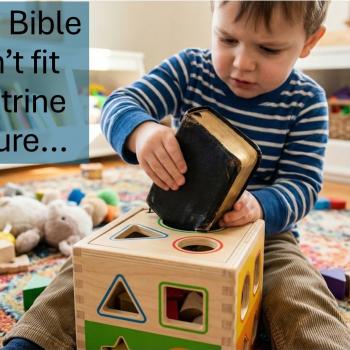
Unscriptural Doctrines of Scripture
Religion Prof: The Blog of James F. McGrath
TRENDING AT PATHEOS Progressive Christian

In one sense walking into Westminster Abbey is like walking down the...

'Super Scam Me' Exposes AI Jon Bon Jovi...
Leslie Pickett believed she was in a relationship with Jon Bon Jovi....

The Brazilian Remake of Kendricks' 'Flywheel' Opens in...
“Flywheel,” the story that launched the Kendrick Brothers’ filmmaking career is getting...

The Dangers of Gradual Accommodation (Winking at Sin)
Recently, the “law of gradualness” resurfaced during the opening of a weeklong,...

The Iron Gates and the Lion of the...
Yesterday, I didn't finish my report about, well, yesterday. So I'll...

The Image: On the Horror of Capitalism and...
The Image Then went the Pharisees, and took counsel how they might...
view all Progressive Christian blogs
What Are Your Thoughts?leave a comment
Ad-Free & Subscriber Log-In Subscription Support
- About Us
- 2026 Calendar
- Videos
- Podcasts
- Library of World Religions
- Faith In Media Tracker
- Advertise With Us
- Write for Us
- Privacy Policy
- Terms of Service
- Do Not Sell My Data
- Contact Us
- Radiant Digital
- Manage Newsletter Subscriptions
- Unsubscribe From Notifications
- Sitemap
Copyright 2008-2026, Patheos. All rights reserved.
Subscription Support Ad-Free & Subscriber Log-In
Follow Patheos