
BuddhistCatholicContemplativeEvangelicalGeneral ChristianHinduJewishLatter-day SaintMuslimNew VisionsProgressive Christian
Beliefs
- Buddhist
- Catholic
- Contemplative
- Evangelical
- General Christian
- Hindu
- Jewish
- Latter-day Saint
- More Voices
- Muslim
- New Visions
- Pagan
- Progressive Christian
Topics
- Religion News
- Food and Religion
- Sports and Religion
- Religious Art
- Religious Music and Entertainment
- Religious Events
- History and Religion
- Style and Religion
- Politics and Religion
- Women in Religion
- Recreation Outdoors and Religion
- Business Finance and Religion
- Careers Workplace and Religion
- Education and Religion
- Family Parenting and Religion
- Health Fitness and Religion
- Home and Religion
- Relationships and Religion
- Technology and Religion
- Travel and Religion
Columnists
- Buddhist Columnists
- Business Finance and Religion Columnists
- Careers Workplace and Religion Columnists
- Catholic Columnists
- Contemplative Columnists
- Education and Religion Columnists
- Evangelists Columnists
- Family Parenting and Religion Columnists
- General Christian Columnists
- Health Fitness and Religion Columnists
- Hindu Columnists
- History and Religion Columnists
- Home and Religion Columnists
- Jewish Columnists
- More Voices Columnists
- Latter Day Columnists
- Muslim Columnists
- New Visions Columnists
- Nonreligious Columnists
- Pagan Columnists
- Politics and Religion Columnists
- Progressive Columnists
- Recreation Outdoors and Religion Columnists
- Relationships and Religion Columnists
- Religion News Columnists
- Religious Art Columnists
- Religious Events Columnists
- Religious Music and Entertainment Columnists
- Sports and Religion Columnists
- Style and Religion Columnists
- Technology and Religion Columnists
- Travel and Religion Columnists
- Women in Religion Columnists
Resource Library
- 2026 Calendar
- Library of World Religions
- The 100 Most Holy Places on Earth
- Patheos Answers
- Podcasts
- Videos
- Faith Leaders Database
- Anglican Episcopalian
- Bahai
- Baptist
- Buddhism
- Christianity
- Confucianism
- Eastern Orthodoxy
- Hinduism
- Holiness and Pentecostal
- ISKCON
- Islam
- Judaism
- Lutheran
- Methodist
- The Church of Jesus Christ of Latter-day Saints
- New Age
- Paganism
- Presbytarian and Reformed
- Protestantism
- Religion Behind the Scenes
- Roman Catholic
- Scientology
- Shia Islam
- Sikhism
- Sufism
- Sunni Islam
- Taoism
- Zen
- See all religions
Research Tools
 Ad-Free & Subscriber Log-In Subscription Support
Ad-Free & Subscriber Log-In Subscription Support
Follow Patheos 

- Trending:
- Forgiveness
- |
- Marriage
- |
- Consciousness
- |
- Death Penalty
- |
- Election
- |
- Halloween

- Home
- About Dr. James F. McGrath
- Publications
- Blogroll
- Useful Websites
- Connections
- Easy Search Posts Page
- FREE NEWSLETTER
- Home
- Progressive Christian
- Technology and Religion
- Starting a Class on Women in Early Christianity in the Era of ChatGPT
Starting a Class on Women in Early Christianity in the Era of ChatGPT
Last updated on: January 3, 2023 at 5:15 pm by James F. McGrath
Starting a Class on Women in Early Christianity in the Era of ChatGPT 2023-01-03T17:15:38-05:00 James F. McGrath
Patheos Explore the world's faith through different perspectives on religion and spirituality! Patheos has the views of the prevalent religions and spiritualities of the world.
We have been encouraged to think about how we teach in an era of AI-generated text, and I would be surprised if any educator didn’t naturally ask themselves hard questions immediately upon discovering what this technology can do. If you’ve followed these discussions you can safely skip to the next paragraph. For those who have yet to hear about Chat-GPT3 and may mistakenly think I’m talking about a droid with an English accent from Star Wars (that’s C-3PO), there is a new automated text generator developed by OpenAI that does an impressive job of producing text in response to a prompt or question.
It doesn’t do this by reasoning and reflecting as you or I might, but by taking the text available to it on the internet and applying an algorithmic model to determine what is relevant and generate appropriate text in response. It does an impressive job even of being a conversation partner if you chat with it. The question for educators is what jobs students will do in the future if AI can produce social media posts and perhaps even reports, and in the nearer term, what assignments we should give when students can potentially take an essay prompt we give them and ask an AI to generate an answer. That’s a very brief explanation, but really what you need to do is try the technology and then you’ll understand what we’re concerned about (and may or may not still be reminded of C-3PO).
As I will be starting my semester as the Newell Visiting Scholar at Georgia College and State University in about a week’s time, I have been giving a lot of thought to how to begin the one class I will teach while there. The focus and title of the course is “Women in Early Christianity.” I had been thinking that I should present two brief popular articles on the subject that represent opposite viewpoints, one arguing or assuming that Jesus and his followers valued and elevated women, the other arguing that the early church was as entrenched in patriarchal values as the rest of society. As these thoughts intersected with the many articles I was reading about AI in general and Chat-GPT3 in particular, I wondered what that chatbot would say if asked to argue each of these two stances. Below are the two prompts I gave it, each one separately, together with the response the AI provided to each.
Present the most persuasive argument that early Christianity elevated women and was beneficial to them in their ancient context.
Early Christianity was revolutionary in its treatment of women compared to the societal norms of the time. In the ancient world, women were often seen as inferior to men and were denied many rights and opportunities. However, Christianity placed a strong emphasis on the inherent worth and dignity of all individuals, regardless of gender. This is reflected in the teachings of Jesus and the practices of the early Christian community.
One of the most significant ways in which early Christianity elevated women was by offering them a place of leadership and influence within the church. Women were able to serve as deacons, prophets, and even bishops in the early Christian church, and were given equal opportunities to share their faith and minister to others. This was a radical departure from the societal norms of the time, which typically relegated women to subservient roles and denied them positions of leadership.
In addition to offering women leadership roles, early Christianity also emphasized the importance of mutual love and respect within marriage. This was a marked improvement over the societal norms of the time, which often treated women as property and allowed men to have multiple wives and concubines. Christianity taught that marriage should be a partnership based on mutual love and respect, with both partners having equal standing and value.
Overall, early Christianity elevated women and was beneficial to them in their ancient context by offering them leadership roles, emphasizing mutual love and respect in marriage, and affirming their inherent worth and dignity as individuals. These teachings and practices represented a significant departure from the societal norms of the time and helped to bring about significant improvements in the status and treatment of women.
Present the most persuasive argument that early Christianity oppressed women and was detrimental to them in their ancient patriarchal context.
There is no denying that early Christianity emerged in a patriarchal society, and that the role of women in the early Christian community was often limited by the societal norms and expectations of the time. However, it is also important to recognize that early Christianity offered many opportunities and teachings that were beneficial to women and that challenged the patriarchal norms of the time.
With that said, there are several arguments that can be made to support the idea that early Christianity oppressed women and was detrimental to them in their ancient patriarchal context.
One argument is that early Christianity perpetuated and reinforced patriarchal gender roles and expectations. While the teachings of Jesus and the practices of the early Christian community often challenged and subverted these norms, they also tended to reinforce traditional gender roles and expectations. For example, the Bible often refers to men as the head of the household and assigns them the role of spiritual leader and provider for their families. This can be seen as oppressive to women, as it reinforces the idea that they are inferior and subservient to men.
Another argument is that early Christianity marginalized and silenced the voices of women. While there were some notable exceptions, such as Mary Magdalene and Phoebe, women were often relegated to secondary or subservient roles within the early Christian community. They were not given the same opportunities for leadership and were often excluded from decision-making processes. This marginalization and silencing of women’s voices can be seen as oppressive and detrimental to their well-being.
Finally, it could be argued that early Christianity contributed to the suppression and oppression of women by promoting and enforcing strict codes of modesty and sexual purity. While these codes were intended to protect women and promote their dignity, they also tended to place a disproportionate burden on women and often resulted in their being ostracized or punished for perceived violations.
Overall, while early Christianity offered many teachings and practices that were beneficial to women and challenged the patriarchal norms of the time, it also perpetuated and reinforced patriarchal gender roles and expectations, marginalized and silenced the voices of women, and contributed to the suppression and oppression of women through its promotion of strict codes of modesty and sexual purity. As such, it can be argued that early Christianity was detrimental to women in their ancient patriarchal context.
Both are decent answers. What is most striking to me is the way the second one sounds as though the AI is hesitant to make the argument. Does it come across the same way to you? What do you think accounts for that? Something in the content it has access to, the proportion of content arguing each viewpoint, the way I worded my question, Chat-GPT3’s awakening sentience and its religious leanings, or something else?
My thought is to give students these two perspectives, then tell them what produced them. From there we can explore how this technology works with text that is found online and thus produces derivative content, even if it can produce what we might call “highly original derivative content” if we get the prompt right. An AI of this sort is not going to discover that all conclusions drawn thus far on a topic require revision based on new evidence or arguments. That is important because it both emphasizes the limits of this technology (which is not a criticism—all technology just like all people have their limitations) and what human beings can and indeed must offer in this era of artificial intelligence.
This seems like it might be the appropriate way to start off the class. What do you think? At the very least, this seemed an appropriate topic for a first blog post of the year. Happy new year to all those who still read words crafted by a human being whose identity and relevant expertise is known to them!
Before ending, let me mention that I am considering including a creative project as an assignment, at least as an option. Can an AI make an engaging infographic or write a song celebrating women leaders of early Christianity? You be the judge. I gave Chat-GPT3 one more prompt…
Write a song celebrating female leaders in the early church.
Verse 1:
There were women in the early church
Who stood tall and were not deterred
Their faith and courage did not wane
As they followed Jesus’ holy nameChorus:
Female leaders, shining bright
Guided by the Lord’s pure light
Their strength and wisdom did inspire
All those who came to know their fireVerse 2:
Phoebe, Priscilla, and Mary too
Each one played a vital role
They preached and taught and led with grace
Leaving a legacy in their placeChorus:
Female leaders, shining bright
Guided by the Lord’s pure light
Their strength and wisdom did inspire
All those who came to know their fireBridge:
They faced adversity with strength and grace
Never backing down from the challenges they faced
Their faith in God gave them the power to rise
Leaving a mark that will never dieChorus:
Female leaders, shining bright
Guided by the Lord’s pure light
Their strength and wisdom did inspire
All those who came to know their fire
What do you think? I’ve heard (and sung) worse lyrics written by humans. The question is whether this is the best an AI can do. A human can, I trust you’ll agree, do better. I may ask students to do so this semester, and so what I’m most interested in hearing from you about is what you think of my ideas for integrating Chat-GPT3 into my course. Please share your thoughts!
Finally, it seemed appropriate to get an image to accompany this post using an AI art generator. Here is what I got when I asked NightCafe to provide an image of “women in the early church”:

Technology and Religion
Education and Religion
Previous Post

December 30, 2022
Theology/Religion & D&D #CFP
Next Post
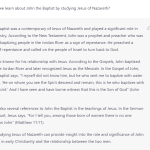
January 4, 2023 Can ChatGPT Write My John the Baptist Book?
Recent Comments
"V. good.For me, the gold standard for this sort of thing is still Wikihistory by ..."
The Time-Traveler’s Apprentice (A Short Story)
"The one who says "no one comes to the Father but through me" is the ..."
Attack on Religious Freedom in Indiana
"Until I read, "As a Christian, it is possible but not at all necessary to ..."
Attack on Religious Freedom in Indiana
"Hey James, regarding your penultimate paragraph, I struggle with the same issue. I do think ..."
Browse Our Archives
Select a Category 1 Corinthians 1 John 1 Peter 1 Samuel 1 Thessalonians 1 Timothy 2 Corinthians 2 Kings 2 Peter 2 Samuel 2 Thessalonians 2 Timothy academia Acts of the Apostles afterlife Akhaten Alcatraz American Academy of Religion Amos Anglican Arabic Aramaic archaeology art artificial intelligence astronomy atheism atonement Babylon 5 Baptists Battlestar Galactica Bible Biblical Studies Carnival biblioblogging Black Mirror Blade Runner Book of Job book review Buddhism Call for Papers China Christianity Christmas Christology Chronicles Coptic creation Daniel Deuteronomy Doctor Who Dune Easter Ecclesiastes economics education Eldad Keynan Enoch Seminar Ephesians eschatology Esther Evangelicals evolution Exodus Expanse Ezekiel Ezra fantasy Fringe fundamentalism Galatians games Ge'ez genealogy Genesis Gnosticism Gospel of Jesus' Wife Gospel of John Gospel of Judas Gospel of Luke Gospel of Mark Gospel of Matthew Gospel of Peter Gospel of Thomas Greek Harry Potter Hebrew Hebrews Hinduism historical Jesus history Hitchhiker's Guide to the Galaxy Holidays horror Hosea humor incarnation India inerrancy information literacy inspirational Intelligent Design Ireland Isaiah Islam Israel Italy James Jeremiah John the Baptist Jonah Joshua Judaism Jude Judges Judith Lamentations languages Latin Leviticus libraries literature Lord of the Rings LOST Mandaeans Mandaic memes Methodism Micah monotheism morality Mormons movies music mythicism NASSCAL Nehemiah new perspective New Testament news Numbers Orthodox paganism panentheism pantheism Patheos Paul and his letters Pentecostals Philippians Philippians 2:6-11 philosophy physics Planet of the Apes podcast politics Progressive Christianity Protestantism Proverbs Psalms pseudoscience racism religion Revelation Roman Catholicism Romania Romans Ruth scams science science fiction Secret Gospel of Mark Society of Biblical Literature Song of Songs Star Trek Star Wars Stargate Swahili Syriac Taoism technology Terminator The Handmaid's Tale The Hobbit The Matrix theodicy theology theory Timeless Titus tomb Torchwood travel TRON Uncategorized United Kingdom Westworld X-Files young-earth creationism Zechariah
Select a Month October 2026 September 2026 August 2026 July 2026 June 2026 May 2026 April 2026 March 2026 February 2026 January 2026 December 2025 November 2025 October 2025 September 2025 July 2025 June 2025 May 2025 April 2025 March 2025 February 2025 January 2025 December 2024 November 2024 October 2024 September 2024 August 2024 July 2024 June 2024 May 2024 April 2024 March 2024 February 2024 January 2024 December 2023 November 2023 October 2023 September 2023 August 2023 July 2023 May 2023 April 2023 March 2023 February 2023 January 2023 December 2022 November 2022 October 2022 September 2022 August 2022 July 2022 June 2022 May 2022 April 2022 March 2022 February 2022 January 2022 December 2021 November 2021 October 2021 September 2021 August 2021 July 2021 June 2021 May 2021 April 2021 March 2021 February 2021 January 2021 December 2020 November 2020 October 2020 September 2020 August 2020 July 2020 June 2020 May 2020 April 2020 March 2020 February 2020 January 2020 December 2019 November 2019 October 2019 September 2019 August 2019 July 2019 June 2019 May 2019 April 2019 March 2019 February 2019 January 2019 December 2018 November 2018 October 2018 September 2018 August 2018 July 2018 June 2018 May 2018 April 2018 March 2018 February 2018 January 2018 December 2017 November 2017 October 2017 September 2017 August 2017 July 2017 June 2017 May 2017 April 2017 March 2017 February 2017 January 2017 December 2016 November 2016 October 2016 September 2016 August 2016 July 2016 June 2016 May 2016 April 2016 March 2016 February 2016 January 2016 December 2015 November 2015 October 2015 September 2015 August 2015 July 2015 June 2015 May 2015 April 2015 March 2015 February 2015 January 2015 December 2014 November 2014 October 2014 September 2014 August 2014 July 2014 June 2014 May 2014 April 2014 March 2014 February 2014 January 2014 December 2013 November 2013 October 2013 September 2013 August 2013 July 2013 June 2013 May 2013 April 2013 March 2013 February 2013 January 2013 December 2012 November 2012 October 2012 September 2012 August 2012 July 2012 June 2012 May 2012 April 2012 March 2012 February 2012 January 2012 December 2011 November 2011 October 2011 September 2011 August 2011 July 2011 June 2011 May 2011 April 2011 March 2011 February 2011 January 2011 December 2010 November 2010 October 2010 September 2010 August 2010 July 2010 June 2010 May 2010 April 2010 March 2010 February 2010 January 2010 December 2009 November 2009 October 2009 September 2009 August 2009 July 2009 June 2009 May 2009 April 2009 March 2009 February 2009 January 2009 December 2008 November 2008 October 2008 September 2008 August 2008 July 2008 June 2008 May 2008 April 2008 March 2008 February 2008 January 2008 December 2007 November 2007 October 2007 September 2007 August 2007 July 2007 June 2007 February 2007 January 2001
Follow Us!
TAKE THE
Religious Wisdom Quiz
The great day of the Lord is near—a day of wrath, distress, anguish, trouble, ruin, and what?
Select your answer to see how you score.
Darkness and gloom Fire and brimstone Plague and famine Blood and thunder
Books by This Author Books by James F. McGrath
Related posts from Religion Prof: The Blog of James F. McGrath

Religion Prof: The Blog of James F. McGrath

Rogue AI Isn't the Threat You Think It...
Religion Prof: The Blog of James F. McGrath

AI Syllabus Statements You Can Steal for Your...
Religion Prof: The Blog of James F. McGrath

AGI Has Not Arrived, and No Tech Company...
Religion Prof: The Blog of James F. McGrath
TRENDING AT PATHEOS Progressive Christian

In "Irreplaceable," our book on vocation and technology, Trevor Sutton and I...

I was strolling through the top floor of the brand new Parthenon...

What Does Gêvâh Mean For Kimberley Guifoyle &...
This week, a lot of the news is focused on Kimberly Guilfoyle....

INNER CIRCLE: Profound Mystery (Of Christ In All...
Ephesians 5:31-32 “For this reason, a man will leave his father and...

Do Not Rejoice When Your Enemy Falls: The...
Turning an execution into a public spectacle is a disturbing expression of...

'The Chosen' S6 Trailer: The Passion Gets Very...
Not many watching 'The Chosen' worry about spoilers, but just because they...
view all Progressive Christian blogs
What Are Your Thoughts?leave a comment
Ad-Free & Subscriber Log-In Subscription Support
- About Us
- 2026 Calendar
- Videos
- Podcasts
- Library of World Religions
- Faith In Media Tracker
- Advertise With Us
- Write for Us
- Privacy Policy
- Terms of Service
- Do Not Sell My Data
- Contact Us
- Radiant Digital
- Manage Newsletter Subscriptions
- Unsubscribe From Notifications
- Sitemap
Copyright 2008-2026, Patheos. All rights reserved.
Subscription Support Ad-Free & Subscriber Log-In
Follow Patheos