
BuddhistCatholicContemplativeEvangelicalGeneral ChristianHinduJewishLatter-day SaintMuslimNew VisionsProgressive Christian
Beliefs
- Buddhist
- Catholic
- Contemplative
- Evangelical
- General Christian
- Hindu
- Jewish
- Latter-day Saint
- More Voices
- Muslim
- New Visions
- Pagan
- Progressive Christian
Topics
- Religion News
- Food and Religion
- Sports and Religion
- Religious Art
- Religious Music and Entertainment
- Religious Events
- History and Religion
- Style and Religion
- Politics and Religion
- Women in Religion
- Recreation Outdoors and Religion
- Business Finance and Religion
- Careers Workplace and Religion
- Education and Religion
- Family Parenting and Religion
- Health Fitness and Religion
- Home and Religion
- Relationships and Religion
- Technology and Religion
- Travel and Religion
Columnists
- Buddhist Columnists
- Business Finance and Religion Columnists
- Careers Workplace and Religion Columnists
- Catholic Columnists
- Contemplative Columnists
- Education and Religion Columnists
- Evangelists Columnists
- Family Parenting and Religion Columnists
- General Christian Columnists
- Health Fitness and Religion Columnists
- Hindu Columnists
- History and Religion Columnists
- Home and Religion Columnists
- Jewish Columnists
- More Voices Columnists
- Latter Day Columnists
- Muslim Columnists
- New Visions Columnists
- Nonreligious Columnists
- Pagan Columnists
- Politics and Religion Columnists
- Progressive Columnists
- Recreation Outdoors and Religion Columnists
- Relationships and Religion Columnists
- Religion News Columnists
- Religious Art Columnists
- Religious Events Columnists
- Religious Music and Entertainment Columnists
- Sports and Religion Columnists
- Style and Religion Columnists
- Technology and Religion Columnists
- Travel and Religion Columnists
- Women in Religion Columnists
Resource Library
- 2026 Calendar
- Library of World Religions
- The 100 Most Holy Places on Earth
- Patheos Answers
- Podcasts
- Videos
- Faith Leaders Database
- Anglican Episcopalian
- Bahai
- Baptist
- Buddhism
- Christianity
- Confucianism
- Eastern Orthodoxy
- Hinduism
- Holiness and Pentecostal
- ISKCON
- Islam
- Judaism
- Lutheran
- Methodist
- The Church of Jesus Christ of Latter-day Saints
- New Age
- Paganism
- Presbytarian and Reformed
- Protestantism
- Religion Behind the Scenes
- Roman Catholic
- Scientology
- Shia Islam
- Sikhism
- Sufism
- Sunni Islam
- Taoism
- Zen
- See all religions
Research Tools
 Ad-Free & Subscriber Log-In Subscription Support
Ad-Free & Subscriber Log-In Subscription Support
Follow Patheos 

- Trending:
- Forgiveness
- |
- Marriage
- |
- Consciousness
- |
- Death Penalty
- |
- Election
- |
- Halloween

- Home
- About Dr. James F. McGrath
- Publications
- Blogroll
- Useful Websites
- Connections
- Easy Search Posts Page
- FREE NEWSLETTER
- Home
- Progressive Christian
- A Piece of the Biblical Action
A Piece of the Biblical Action
Last updated on: February 18, 2021 at 5:18 am by James F. McGrath
A Piece of the Biblical Action 2021-02-17T14:29:44-05:00 James F. McGrath
Patheos Explore the world's faith through different perspectives on religion and spirituality! Patheos has the views of the prevalent religions and spiritualities of the world.
 I’ve been rewatching the original series of Star Trek and as always have been taking notes on points I might return to in blog posts or other contexts, in particular things related to religion. My memories of the episode “A Piece of the Action” were largely the existence of a society patterned on Chicago’s mob wars in the 1920s. I had, however, not remembered how that society came to have those characteristics. There is a direct relevance to religion, and as I watched the episode while eating my lunch, it intersected with the class I had taught that morning on Abraham and his family and the subject of “biblical marriage” and “biblical family values.”
The Star Trek story involves a planet Sigma Iotia Two that had contact with explorers from Earth before the Prime Directive (here called the non-interference directive) was established. That contact, we soon learn, led to cultural contamination and influence. The Iotians are said to have an “imitative” tendency as well as being fast learners. The premise is that the earlier ship, the Horizon, left behind a book, which the Iotians now call “The Book” and may have on a reading stand much as one would a Bible. The analogy is not merely implicit. McCoy says it outright:
MCCOY: One book on the gangs of Chicago did all this. It’s amazing.
SPOCK: They evidently seized upon that one book as the blueprint for an entire society.
MCCOY: It’s the Bible.
Soon after that dialogue, Captain Kirk creates a diversion by explaining a card game he calls Fizzbin, which has ridiculous and arbitrary rules. I previously considered that just another bit of comedy in the episode, but on further reflection I think there is poignant symbolism in it. A game is a set of arbitrary rules, crafted to accomplish some end. If the rules are too arbitrary, one of the aims of playing games, namely having fun, is liable to be undermined, although err too far on the side of simplicity and it may not seem challenging enough. When a scripture is imposed as the rules of a society’s “game,” any number of effects are possible, positive or negative, depending on the contents of the texts in question.
However, what happened in this case, as with the Bible by analogy, is that an account of the way things once were is mistaken for a description of how things ought to be. The Iotians have clearly embraced the gangster values described in “The Book” (its title is Chicago Mobs of the Twenties), and so much of what they do may not feel like an imposition. Yet by the end of the episode we realize that the Iotians are capable of seeing how their way of life has inefficiencies and inconveniences. We might say it takes a revelation from the heavens (the Enterprise) to provide the necessary authority to bring about change. It also takes an intervention that communicates in the language and cultural idioms that the Iotians use, making that the starting point for effecting change. There is a lesson in that.
But the deep resonance for me was with the class I taught, in which I have asked students to read a story that involves or intersects with patriarchy, polygamy, slavery, concubinage, adultery, infertility and childbirth, and child sacrifice. Reading Genesis is not for the squeamish or faint of heart! The key thing I seek to help students to do is to recognize that, on the one hand, the challenges of survival in the pre-modern world, without social security, without modern medicine and science, made particular approaches to marriage and appeasing of deities seem to make sense. We do not need to agree, but in order to evaluate the stories and decide how we feel about them in an appropriate and fair way, we need to understand. If you were trying to find a way to ensure you have children who provide labor in the short term and care for you when you are too old to work yourself later on, certain institutions and practices may make sense that do not to us in the same way. That does not excuse or justify them. Likewise if your only explanation and possible recourse when confronted with drought or pandemic is to try to get whatever deity or deities is responsible to relent, the drastic action of offering them your firstborn child in the hope of ensuring survival for your other children and yourself may seem to make sense. We can understand the desperation, and need not approve in any way in order to do so. So far, so good. But if we take these texts and their depiction of what was as though it mandates what should be, we will have serious problems.
Students recognize right away that people today who talk about “biblical marriage” do not have Abraham’s story and his relationships in mind. The ideal of monogamy and a mutual commitment based on love are so far removed from the ancient world’s arranged marriages, exchanges of dowry and bride price, polygamy, concubinage, and the like, that it is hard to fathom how anyone can hear “biblical marriage” and think that is a slogan that accurately depicts marriage in the United States up until recently.
I also ask students to at least notice the patriarchal assumptions in the narrative. When Sarai is said to be “barren” it provides a natural introduction to an analogy for traditional patriarchal marriage. A farmer may own multiple fields, and plant his seed in them. No other farmer, on the other hand, may plant their seeds in some other farmer’s fields. The way that men and women are thought of in patriarchal marriage is analogous, and that is why a man may have multiple wives but a woman may not have multiple husbands within this framework.
There is more that I could say, but they key point at the intersection of this classic Star Trek episode and this classic biblical story is that a description of what was, mistaken for a mandate for what should or must be, can cause serious harm. The mistake is not with the text and its authors, but those who misunderstand the character and status of the text and turn it into something it should never have been.
That isn’t the only biblical connection in the episode. Kirk uses the phrase from Psalm 8, “out of the mouths of babes.” It is the child in question who utters the phrase that provides the title for the episode, “a piece of the action.” I am not sure what the scriptwriters had in mind with this additional biblical allusion. Perhaps it is a hint that children may prove more flexible than their parents. We certainly see this in relation to discussions of “biblical marriage” and “family values” in the present day. Younger people seem ready to move behind a framework arbitrarily imposed on their society, one built on mistaking an is (or more precisely as was) for an ought.
The story remains open-ended inasmuch as there is an insistence that the Federation (called “the Feds” in the episode, presumably as a result of the Iotians equating a group referred to in abbreviated form in “The Book” with the authority behind their otherworldly visitors) is taking over. This raises the question of whether working with the way things are and making a smaller adjustment, using a show of force and deception, are really the only way to bring about change. At the very end, McCoy realizes that he left behind a communicator, which his crewmates realize may allow the Iotians to make all kinds of technological developments as they inevitably take it apart and come to understand the workings of the “transtator,” said to be the basis of much Starfleet technology. If an outside influence could move things in the direction of a rigid emulation of 20th century mob wars, what could this piece of technology bring about as a form of influence? How does technology’s potential to radically alter a culture differ from the potential of a text deemed sacred to do so?
For more about “A Piece of the Action,” see Nique Yager’s hilarious visual review of the episode, highlighting some of the absurdities in the episode’s story in a truly entertaining way. See also the transcript of the episode.
Previous Post

February 17, 2021
Source Criticism: When the Bible Doesn't Make Sense
Next Post

February 19, 2021 There Is No Bible
Browse Our Archives
Select a Category 1 Corinthians 1 John 1 Peter 1 Samuel 1 Thessalonians 1 Timothy 2 Corinthians 2 Kings 2 Peter 2 Samuel 2 Thessalonians 2 Timothy academia Acts of the Apostles afterlife Akhaten Alcatraz American Academy of Religion Amos Anglican Arabic Aramaic archaeology art artificial intelligence astronomy atheism atonement Babylon 5 Baptists Battlestar Galactica Bible Biblical Studies Carnival biblioblogging Black Mirror Blade Runner Book of Job book review Buddhism Call for Papers China Christianity Christmas Christology Chronicles Coptic creation Daniel Deuteronomy Doctor Who Dune Easter Ecclesiastes economics education Eldad Keynan Enoch Seminar Ephesians eschatology Esther Evangelicals evolution Exodus Expanse Ezekiel Ezra fantasy Fringe fundamentalism Galatians games Ge'ez genealogy Genesis Gnosticism Gospel of Jesus' Wife Gospel of John Gospel of Judas Gospel of Luke Gospel of Mark Gospel of Matthew Gospel of Peter Gospel of Thomas Greek Harry Potter Hebrew Hebrews Hinduism historical Jesus history Hitchhiker's Guide to the Galaxy Holidays horror Hosea humor incarnation India inerrancy information literacy inspirational Intelligent Design Ireland Isaiah Islam Israel Italy James Jeremiah John the Baptist Jonah Joshua Judaism Jude Judges Judith Lamentations languages Latin Leviticus libraries literature Lord of the Rings LOST Mandaeans Mandaic memes Methodism Micah monotheism morality Mormons movies music mythicism NASSCAL Nehemiah new perspective New Testament news Numbers Orthodox paganism panentheism pantheism Patheos Paul and his letters Pentecostals Philippians Philippians 2:6-11 philosophy physics Planet of the Apes podcast politics Progressive Christianity Protestantism Proverbs Psalms pseudoscience racism religion Revelation Roman Catholicism Romania Romans Ruth scams science science fiction Secret Gospel of Mark Society of Biblical Literature Song of Songs Star Trek Star Wars Stargate Swahili Syriac Taoism technology Terminator The Handmaid's Tale The Hobbit The Matrix theodicy theology theory Timeless Titus tomb Torchwood travel TRON Uncategorized United Kingdom Westworld X-Files young-earth creationism Zechariah
Select a Month October 2026 September 2026 August 2026 July 2026 June 2026 May 2026 April 2026 March 2026 February 2026 January 2026 December 2025 November 2025 October 2025 September 2025 July 2025 June 2025 May 2025 April 2025 March 2025 February 2025 January 2025 December 2024 November 2024 October 2024 September 2024 August 2024 July 2024 June 2024 May 2024 April 2024 March 2024 February 2024 January 2024 December 2023 November 2023 October 2023 September 2023 August 2023 July 2023 May 2023 April 2023 March 2023 February 2023 January 2023 December 2022 November 2022 October 2022 September 2022 August 2022 July 2022 June 2022 May 2022 April 2022 March 2022 February 2022 January 2022 December 2021 November 2021 October 2021 September 2021 August 2021 July 2021 June 2021 May 2021 April 2021 March 2021 February 2021 January 2021 December 2020 November 2020 October 2020 September 2020 August 2020 July 2020 June 2020 May 2020 April 2020 March 2020 February 2020 January 2020 December 2019 November 2019 October 2019 September 2019 August 2019 July 2019 June 2019 May 2019 April 2019 March 2019 February 2019 January 2019 December 2018 November 2018 October 2018 September 2018 August 2018 July 2018 June 2018 May 2018 April 2018 March 2018 February 2018 January 2018 December 2017 November 2017 October 2017 September 2017 August 2017 July 2017 June 2017 May 2017 April 2017 March 2017 February 2017 January 2017 December 2016 November 2016 October 2016 September 2016 August 2016 July 2016 June 2016 May 2016 April 2016 March 2016 February 2016 January 2016 December 2015 November 2015 October 2015 September 2015 August 2015 July 2015 June 2015 May 2015 April 2015 March 2015 February 2015 January 2015 December 2014 November 2014 October 2014 September 2014 August 2014 July 2014 June 2014 May 2014 April 2014 March 2014 February 2014 January 2014 December 2013 November 2013 October 2013 September 2013 August 2013 July 2013 June 2013 May 2013 April 2013 March 2013 February 2013 January 2013 December 2012 November 2012 October 2012 September 2012 August 2012 July 2012 June 2012 May 2012 April 2012 March 2012 February 2012 January 2012 December 2011 November 2011 October 2011 September 2011 August 2011 July 2011 June 2011 May 2011 April 2011 March 2011 February 2011 January 2011 December 2010 November 2010 October 2010 September 2010 August 2010 July 2010 June 2010 May 2010 April 2010 March 2010 February 2010 January 2010 December 2009 November 2009 October 2009 September 2009 August 2009 July 2009 June 2009 May 2009 April 2009 March 2009 February 2009 January 2009 December 2008 November 2008 October 2008 September 2008 August 2008 July 2008 June 2008 May 2008 April 2008 March 2008 February 2008 January 2008 December 2007 November 2007 October 2007 September 2007 August 2007 July 2007 June 2007 February 2007 January 2001
Follow Us!
TAKE THE
Religious Wisdom Quiz
Who did God call to lead the Israelites out of Egypt?
Select your answer to see how you score.
Joseph David Aaron Moses
Books by This Author Books by James F. McGrath
Related posts from Religion Prof: The Blog of James F. McGrath

Religion Prof: The Blog of James F. McGrath

Thinking about Protocol Droids
Religion Prof: The Blog of James F. McGrath
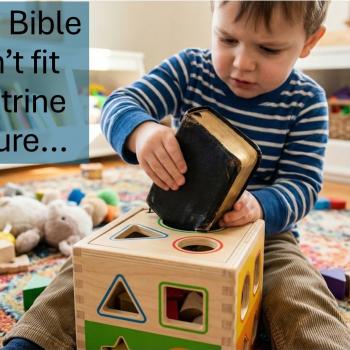
Unscriptural Doctrines of Scripture
Religion Prof: The Blog of James F. McGrath

Religion Prof: The Blog of James F. McGrath
TRENDING AT PATHEOS Progressive Christian

I was strolling through the top floor of the brand new Parthenon...

What Does Gêvâh Mean For Kimberley Guifoyle &...
This week, a lot of the news is focused on Kimberly Guilfoyle....

INNER CIRCLE: Profound Mystery (Of Christ In All...
Ephesians 5:31-32 “For this reason, a man will leave his father and...

Do Not Rejoice When Your Enemy Falls: The...
Turning an execution into a public spectacle is a disturbing expression of...

'The Chosen' S6 Trailer: The Passion Gets Very...
Not many watching 'The Chosen' worry about spoilers, but just because they...

The purpose-driven labor priest
A labor activist reads Rick Warren and it gets me wondering about...
view all Progressive Christian blogs
Ad-Free & Subscriber Log-In Subscription Support
- About Us
- 2026 Calendar
- Videos
- Podcasts
- Library of World Religions
- Faith In Media Tracker
- Advertise With Us
- Write for Us
- Privacy Policy
- Terms of Service
- Do Not Sell My Data
- Contact Us
- Radiant Digital
- Manage Newsletter Subscriptions
- Unsubscribe From Notifications
- Sitemap
Copyright 2008-2026, Patheos. All rights reserved.
Subscription Support Ad-Free & Subscriber Log-In
Follow Patheos