
BuddhistCatholicContemplativeEvangelicalGeneral ChristianHinduJewishLatter-day SaintMuslimNew VisionsProgressive Christian
Beliefs
- Buddhist
- Catholic
- Contemplative
- Evangelical
- General Christian
- Hindu
- Jewish
- Latter-day Saint
- More Voices
- Muslim
- New Visions
- Pagan
- Progressive Christian
Topics
- Religion News
- Food and Religion
- Sports and Religion
- Religious Art
- Religious Music and Entertainment
- Religious Events
- History and Religion
- Style and Religion
- Politics and Religion
- Women in Religion
- Recreation Outdoors and Religion
- Business Finance and Religion
- Careers Workplace and Religion
- Education and Religion
- Family Parenting and Religion
- Health Fitness and Religion
- Home and Religion
- Relationships and Religion
- Technology and Religion
- Travel and Religion
Columnists
- Buddhist Columnists
- Business Finance and Religion Columnists
- Careers Workplace and Religion Columnists
- Catholic Columnists
- Contemplative Columnists
- Education and Religion Columnists
- Evangelists Columnists
- Family Parenting and Religion Columnists
- General Christian Columnists
- Health Fitness and Religion Columnists
- Hindu Columnists
- History and Religion Columnists
- Home and Religion Columnists
- Jewish Columnists
- More Voices Columnists
- Latter Day Columnists
- Muslim Columnists
- New Visions Columnists
- Nonreligious Columnists
- Pagan Columnists
- Politics and Religion Columnists
- Progressive Columnists
- Recreation Outdoors and Religion Columnists
- Relationships and Religion Columnists
- Religion News Columnists
- Religious Art Columnists
- Religious Events Columnists
- Religious Music and Entertainment Columnists
- Sports and Religion Columnists
- Style and Religion Columnists
- Technology and Religion Columnists
- Travel and Religion Columnists
- Women in Religion Columnists
Resource Library
- 2026 Calendar
- Library of World Religions
- The 100 Most Holy Places on Earth
- Patheos Answers
- Podcasts
- Videos
- Faith Leaders Database
- Anglican Episcopalian
- Bahai
- Baptist
- Buddhism
- Christianity
- Confucianism
- Eastern Orthodoxy
- Hinduism
- Holiness and Pentecostal
- ISKCON
- Islam
- Judaism
- Lutheran
- Methodist
- The Church of Jesus Christ of Latter-day Saints
- New Age
- Paganism
- Presbytarian and Reformed
- Protestantism
- Religion Behind the Scenes
- Roman Catholic
- Scientology
- Shia Islam
- Sikhism
- Sufism
- Sunni Islam
- Taoism
- Zen
- See all religions
Research Tools
 Ad-Free & Subscriber Log-In Subscription Support
Ad-Free & Subscriber Log-In Subscription Support
Follow Patheos 

- Trending:
- Forgiveness
- |
- Marriage
- |
- Consciousness
- |
- Death Penalty
- |
- Election
- |
- Halloween

- Home
- About Dr. James F. McGrath
- Publications
- Blogroll
- Useful Websites
- Connections
- Easy Search Posts Page
- FREE NEWSLETTER
- Home
- Progressive Christian
- The Works of the Flesh are Obvious (Unless They are Theological)
The Works of the Flesh are Obvious (Unless They are Theological)
Last updated on: June 22, 2020 at 6:18 am by James F. McGrath
The Works of the Flesh are Obvious (Unless They are Theological) 2020-06-22T06:18:04-04:00 James F. McGrath
Patheos Explore the world's faith through different perspectives on religion and spirituality! Patheos has the views of the prevalent religions and spiritualities of the world.
Paul’s discussion of the works of the flesh and the fruit of the Spirit in his letter to the Galatians was pretty important in my trajectory as an interpreter of the New Testament epistles of Paul. I remember reading his lengthy discussion of salvation not being by works, only to arrive at his list of works of the flesh and to find myself baffled by his statement that those who do such things will not inherit the kingdom of God.
This conundrum sat in the back of my mind, niggling away, until I read Dunn’s discussion of the works of the Law in Paul, which finally allowed me to understand Paul as something other than simply self-contradictory.
The Reformation’s concern with salvation as “not through works” didn’t just relativize the importance of good works. It also downplays the significance of bad ones. Of course, some Protestants are liable to nonetheless harp on about particular things that they feel they can claim characterize the world but not Christians. However, those of us who know Protestant churches well from the inside will recognize certain “works of the flesh” as also characteristics of Christian communities, in particular dissention, factions, strife, and quarrels. These are sometimes treated as unimportant matters when they simply focus on the color of the carpet or music styles. Even then they tend to be tolerated. But when one is dissentious and prone to quarrel about theology, sometimes these works of the flesh are treated as though they were spiritual gifts. Paul doesn’t say, however, that theological strife and factions are an exception to his statement.
A friend of mine shared a quote from Gavin Ortlund, Finding the Right Hills to Die On. He writes, “There’s an old saying (I can’t remember where I heard it): ‘There is no doctrine a fundamentalist won’t fight over, and no doctrine a liberal will fight over.’ Strictly speaking, that’s not quite fair to thoughtful liberals and fundamentalists. But we can probably recognize these two instincts. Most of us have a tendency in one direction or the other—to fight over doctrine too much or too little. This book is about finding the happy place between these two extremes—the place of wisdom, love, and courage that will best serve the church and advance the gospel in our fractured times. In other words, it’s about finding the right hills to die on.”
Ironically my friend who shared that believes the hill worth dying on is biblical inerrancy, which in my view is tantamount to idolatry. What for him is one of the doctrines worth fighting for, from my perspective seems a dangerous and sinful teaching that ought to be sharply criticized rather than defended from criticism.
As I’ve often said, most Christians agree with the famous saying, which they might even misattribute to an authoritative source in their own tradition such as Augustine or Wesley: “in essentials unity, in non-essentials liberty, and in all things charity.” Apparently it actually comes from Marco Antonio de Dominis, an archbishop who was condemned as a heretic and who seems to have been advocating liberty on some matters that others considered essential. That’s the irony of the saying: most Christians and most human beings agree with it, but because we don’t agree on which things are essential, it doesn’t prevent controversy.
Paul presumably followed some version of the principle, since he spoke of factions and quarrels as works of the flesh…in a letter that describes his quarrel with Peter in Antioch!
I’ve talked before about the challenge of maintaining a sense of shared identity and principles while practicing diversity and inclusivity. A Sunday school discussion helped me think through the topic, as I realized that we can actually understand ourselves to be precisely a people committed to following Jesus and worshipping God together, enriched by our differences and learning from those who disagree with us. We can have a shared central commitment which relativizes the importance of everything else.
But of course, as has already been said, not everyone will agree with this decision about what is essential and provides our unity, and what are matters in which liberty should be the rule. Yet if we can get the last bit about charity (sometimes translated as “love”) in all things right, maybe, just maybe, we can do a better job when it comes to the things we consider essentials too.
Perhaps I will return to this topic on a future occasion and approach it from another angle that I think could be instructive. What answer would emerge if we asked and investigated the question of what hill Jesus chose to die on (metaphorically speaking, of course)?
Of related interest elsewhere:
Steve Wiggins blogged about a book on Abraham as a potential source of unity or conflict between Jews, Christians, and Muslims. He writes, “Much of the violence between faiths comes down to conflicting claims of ownership. As the book makes clear, if people resolve to celebrate difference rather than to distrust the other we can all live together in peace. The only thing lacking to make this happen is the will. Unfortunately, the conflict draws its energy from religious beliefs, or, more precisely, politics using religion to get its ends. And for that one doesn’t have to travel all the way to the Middle East.”
Knowing which dragons to poke is a similar idea to knowing which hill to die on, and it is mentioned in this quote from N. T. Wright:
https://thewayofimprovement.com/2020/05/12/commonplace-book-143/
Richard Beck notes a point of agreement between Sigmund Freud and Psalm 36
Previous Post
June 21, 2020
White Christianity and Disney Princess Theology
Next Post
June 23, 2020 Spiritual Resistance
Browse Our Archives
Select a Category 1 Corinthians 1 John 1 Peter 1 Samuel 1 Thessalonians 1 Timothy 2 Corinthians 2 Kings 2 Peter 2 Samuel 2 Thessalonians 2 Timothy academia Acts of the Apostles afterlife Akhaten Alcatraz American Academy of Religion Amos Anglican Arabic Aramaic archaeology art artificial intelligence astronomy atheism atonement Babylon 5 Baptists Battlestar Galactica Bible Biblical Studies Carnival biblioblogging Black Mirror Blade Runner Book of Job book review Buddhism Call for Papers China Christianity Christmas Christology Chronicles Coptic creation Daniel Deuteronomy Doctor Who Dune Easter Ecclesiastes economics education Eldad Keynan Enoch Seminar Ephesians eschatology Esther Evangelicals evolution Exodus Expanse Ezekiel Ezra fantasy Fringe fundamentalism Galatians games Ge'ez genealogy Genesis Gnosticism Gospel of Jesus' Wife Gospel of John Gospel of Judas Gospel of Luke Gospel of Mark Gospel of Matthew Gospel of Peter Gospel of Thomas Greek Harry Potter Hebrew Hebrews Hinduism historical Jesus history Hitchhiker's Guide to the Galaxy Holidays horror Hosea humor incarnation India inerrancy information literacy inspirational Intelligent Design Ireland Isaiah Islam Israel Italy James Jeremiah John the Baptist Jonah Joshua Judaism Jude Judges Judith Lamentations languages Latin Leviticus libraries literature Lord of the Rings LOST Mandaeans Mandaic memes Methodism Micah monotheism morality Mormons movies music mythicism NASSCAL Nehemiah new perspective New Testament news Numbers Orthodox paganism panentheism pantheism Patheos Paul and his letters Pentecostals Philippians Philippians 2:6-11 philosophy physics Planet of the Apes podcast politics Progressive Christianity Protestantism Proverbs Psalms pseudoscience racism religion Revelation Roman Catholicism Romania Romans Ruth scams science science fiction Secret Gospel of Mark Society of Biblical Literature Song of Songs Star Trek Star Wars Stargate Swahili Syriac Taoism technology Terminator The Handmaid's Tale The Hobbit The Matrix theodicy theology theory Timeless Titus tomb Torchwood travel TRON Uncategorized United Kingdom Westworld X-Files young-earth creationism Zechariah
Select a Month October 2026 September 2026 August 2026 July 2026 June 2026 May 2026 April 2026 March 2026 February 2026 January 2026 December 2025 November 2025 October 2025 September 2025 July 2025 June 2025 May 2025 April 2025 March 2025 February 2025 January 2025 December 2024 November 2024 October 2024 September 2024 August 2024 July 2024 June 2024 May 2024 April 2024 March 2024 February 2024 January 2024 December 2023 November 2023 October 2023 September 2023 August 2023 July 2023 May 2023 April 2023 March 2023 February 2023 January 2023 December 2022 November 2022 October 2022 September 2022 August 2022 July 2022 June 2022 May 2022 April 2022 March 2022 February 2022 January 2022 December 2021 November 2021 October 2021 September 2021 August 2021 July 2021 June 2021 May 2021 April 2021 March 2021 February 2021 January 2021 December 2020 November 2020 October 2020 September 2020 August 2020 July 2020 June 2020 May 2020 April 2020 March 2020 February 2020 January 2020 December 2019 November 2019 October 2019 September 2019 August 2019 July 2019 June 2019 May 2019 April 2019 March 2019 February 2019 January 2019 December 2018 November 2018 October 2018 September 2018 August 2018 July 2018 June 2018 May 2018 April 2018 March 2018 February 2018 January 2018 December 2017 November 2017 October 2017 September 2017 August 2017 July 2017 June 2017 May 2017 April 2017 March 2017 February 2017 January 2017 December 2016 November 2016 October 2016 September 2016 August 2016 July 2016 June 2016 May 2016 April 2016 March 2016 February 2016 January 2016 December 2015 November 2015 October 2015 September 2015 August 2015 July 2015 June 2015 May 2015 April 2015 March 2015 February 2015 January 2015 December 2014 November 2014 October 2014 September 2014 August 2014 July 2014 June 2014 May 2014 April 2014 March 2014 February 2014 January 2014 December 2013 November 2013 October 2013 September 2013 August 2013 July 2013 June 2013 May 2013 April 2013 March 2013 February 2013 January 2013 December 2012 November 2012 October 2012 September 2012 August 2012 July 2012 June 2012 May 2012 April 2012 March 2012 February 2012 January 2012 December 2011 November 2011 October 2011 September 2011 August 2011 July 2011 June 2011 May 2011 April 2011 March 2011 February 2011 January 2011 December 2010 November 2010 October 2010 September 2010 August 2010 July 2010 June 2010 May 2010 April 2010 March 2010 February 2010 January 2010 December 2009 November 2009 October 2009 September 2009 August 2009 July 2009 June 2009 May 2009 April 2009 March 2009 February 2009 January 2009 December 2008 November 2008 October 2008 September 2008 August 2008 July 2008 June 2008 May 2008 April 2008 March 2008 February 2008 January 2008 December 2007 November 2007 October 2007 September 2007 August 2007 July 2007 June 2007 February 2007 January 2001
Follow Us!
TAKE THE
Religious Wisdom Quiz
According to 1 John, what three things testify on earth?
Select your answer to see how you score.
Prayer, fasting, and almsgiving The Spirit, the water, and the blood The Father, the Son, and the Holy Spirit Faith, hope, and love
Books by This Author Books by James F. McGrath
Related posts from Religion Prof: The Blog of James F. McGrath

Religion Prof: The Blog of James F. McGrath
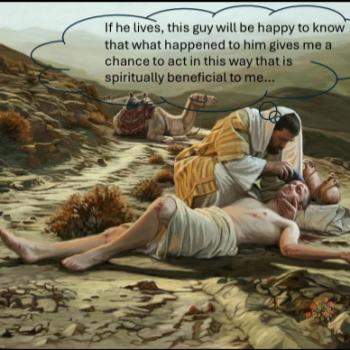
Faith that Lives (Matthew 7:12-29)
Religion Prof: The Blog of James F. McGrath

Religion Prof: The Blog of James F. McGrath

Religion Prof: The Blog of James F. McGrath
TRENDING AT PATHEOS Progressive Christian

The Sermon on the Mount, Part I: Matthew...
The Sermon on the Mount, Part I (Matthew 4:12-5:12) St. Matthew moves...

What's up from Crossway: Reviewing some of their latest A few weeks...

Janie Learns the Way of the Cross: A...
Teaching children about Jesus' Passion can be challenging. Many parents and educators...

Looking For Good Catholic Writing - October 2026
He alone extends the heavens, and he walks upon the waves of...

In "Irreplaceable," our book on vocation and technology, Trevor Sutton and I...

I was strolling through the top floor of the brand new Parthenon...
view all Progressive Christian blogs
Ad-Free & Subscriber Log-In Subscription Support
- About Us
- 2026 Calendar
- Videos
- Podcasts
- Library of World Religions
- Faith In Media Tracker
- Advertise With Us
- Write for Us
- Privacy Policy
- Terms of Service
- Do Not Sell My Data
- Contact Us
- Radiant Digital
- Manage Newsletter Subscriptions
- Unsubscribe From Notifications
- Sitemap
Copyright 2008-2026, Patheos. All rights reserved.
Subscription Support Ad-Free & Subscriber Log-In
Follow Patheos