
BuddhistCatholicContemplativeEvangelicalGeneral ChristianHinduJewishLatter-day SaintMuslimNew VisionsProgressive Christian
Beliefs
- Buddhist
- Catholic
- Contemplative
- Evangelical
- General Christian
- Hindu
- Jewish
- Latter-day Saint
- More Voices
- Muslim
- New Visions
- Pagan
- Progressive Christian
Topics
- Religion News
- Food and Religion
- Sports and Religion
- Religious Art
- Religious Music and Entertainment
- Religious Events
- History and Religion
- Style and Religion
- Politics and Religion
- Women in Religion
- Recreation Outdoors and Religion
- Business Finance and Religion
- Careers Workplace and Religion
- Education and Religion
- Family Parenting and Religion
- Health Fitness and Religion
- Home and Religion
- Relationships and Religion
- Technology and Religion
- Travel and Religion
Columnists
- Buddhist Columnists
- Business Finance and Religion Columnists
- Careers Workplace and Religion Columnists
- Catholic Columnists
- Contemplative Columnists
- Education and Religion Columnists
- Evangelists Columnists
- Family Parenting and Religion Columnists
- General Christian Columnists
- Health Fitness and Religion Columnists
- Hindu Columnists
- History and Religion Columnists
- Home and Religion Columnists
- Jewish Columnists
- More Voices Columnists
- Latter Day Columnists
- Muslim Columnists
- New Visions Columnists
- Nonreligious Columnists
- Pagan Columnists
- Politics and Religion Columnists
- Progressive Columnists
- Recreation Outdoors and Religion Columnists
- Relationships and Religion Columnists
- Religion News Columnists
- Religious Art Columnists
- Religious Events Columnists
- Religious Music and Entertainment Columnists
- Sports and Religion Columnists
- Style and Religion Columnists
- Technology and Religion Columnists
- Travel and Religion Columnists
- Women in Religion Columnists
Resource Library
- 2026 Calendar
- Library of World Religions
- The 100 Most Holy Places on Earth
- Patheos Answers
- Podcasts
- Videos
- Faith Leaders Database
- Anglican Episcopalian
- Bahai
- Baptist
- Buddhism
- Christianity
- Confucianism
- Eastern Orthodoxy
- Hinduism
- Holiness and Pentecostal
- ISKCON
- Islam
- Judaism
- Lutheran
- Methodist
- The Church of Jesus Christ of Latter-day Saints
- New Age
- Paganism
- Presbytarian and Reformed
- Protestantism
- Religion Behind the Scenes
- Roman Catholic
- Scientology
- Shia Islam
- Sikhism
- Sufism
- Sunni Islam
- Taoism
- Zen
- See all religions
Research Tools
 Ad-Free & Subscriber Log-In Subscription Support
Ad-Free & Subscriber Log-In Subscription Support
Follow Patheos 

- Trending:
- Forgiveness
- |
- Marriage
- |
- Consciousness
- |
- Death Penalty
- |
- Election
- |
- Halloween

- Home
- About Dr. James F. McGrath
- Publications
- Blogroll
- Useful Websites
- Connections
- Easy Search Posts Page
- FREE NEWSLETTER
- Home
- Progressive Christian
- John Rutter’s Requiem
John Rutter’s Requiem
Last updated on: November 16, 2019 at 5:32 am by James F. McGrath
John Rutter’s Requiem 2019-11-14T11:50:24-05:00 James F. McGrath
Patheos Explore the world's faith through different perspectives on religion and spirituality! Patheos has the views of the prevalent religions and spiritualities of the world.
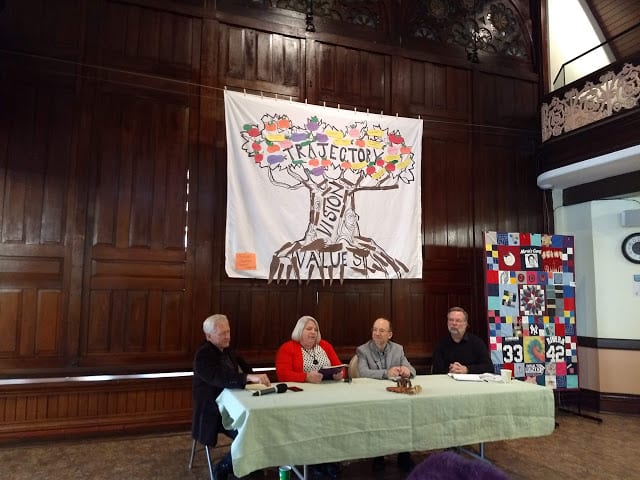
I thought I would share the thoughts that were part of my panel presentation as part of this year’s Spirit and Place Festival, just before the performance of John Rutter’s Requiem. My qualification when the panel was organized was the fact that I teach a course on the Bible and music, and love Rutter’s music. Before the event took place, I added additional qualifications as my father passed away and I attended a concert the following day for which my family already had tickets, which helped me to explore and experience my grief.
The Psalms represent at the same time the most accessible and the most troubling part of Bible. They have been turned into pop songs (Melodians/Boney M, U2), but sometimes with noteworthy omissions (what is left out of “By The Rivers Of Babylon” is especially striking, if understandable, but worth noticing and reflecting on all the same). Imprecatory psalms like this one – that is, psalms that curse or wish ill upon enemies – can be difficult for some who come to the Bible expecting it to be divine words rather than human ones. When we recognize that the Psalmist behind Psalm 137 had lost his or her own children in the Babylonian siege of Jerusalem, we understand the raw emotion expressed in this lament in a new light. It is not merely wishing others harm, but that desire that those who caused one pain be made to feel that pain themselves. Complaining is arguably one of the most neglected aspects of biblical piety.
The work as a whole features significant links between the beginning and the end (both in the words and the music). But there are also echoes throughout, and in particular the Pie Jesu includes musical echoes of more than one theme from the first movement.
For me, the piece mirrors the trajectory of the Bible from Genesis to Revelation, light in the beginning and then at the end, order and hope emerging out of chaos. Reflecting on this I found it noteworthy how creation connects with lament in Job chapter 3: Job curses the day of his birth (i.e. wishes he had never been born), attempting through negations and inversions of key words from Genesis 1 to bring about an undoing of his own creation. Rutter likewise brings us back into chaos (musically) before light appears.
The second movement has a dramatic and moving cello part that for me recalls the Eastern European Jewish tradition of mournful playing of string instruments, while the vocal cadences are reminiscent of those in African American spirituals. Polyphony with a different character emerges to address Israel, before the sparser vocal line of the human calling to God for help returns.
There is a lot of back and forth, as fits the experience of grief. The Sanctus is majestic and hopeful, the Agnus Dei minor and somber. The alternation continues with Psalm 23 contrasting with the feel of Psalm 130, as well as continuing the alternating peaceful and troubled feeling as we move from movement to movement. And then again, each movement itself includes contrasting emotions. That is the experience of grief, of loss, of mourning, and music helps turn the words into something that we connect with emotionally at a deeper level. Right in the heart of the 6th movement, “The Lord Is My Shepherd,” we get a back and forth between choral voices in lament and an oboe attempting to restore the pastoral calm, before the come back together in harmony once again.
The ending feels less than final, as do so many of the psalms are. This expresses hope, expectation, looking beyond the moment in uncertainty.
As many will know (although I refrained from mentioning it in the context of the panel) Rutter is an agnostic – one who turns time and again to biblical texts as sources. Agnosticism and the Psalms mesh nicely together (although perhaps not quite as well as some of the wisdom literature).
You can read more from the composer’s own perspective in album notes available on his website. Also of possible interest:
And finally, if you’ve never actually listened to John Rutter’s Requiem, or if you have never listened to it closely, here is a version that is on YouTube. Let me know whether your impressions of it are similar to or different from mine, and what you think of my comments above after listening to it. And may it bring you comfort in whatever you are going through…
Previous Post

November 15, 2019
Review of Nicholaus Pumphrey, Superman and the Bible
Next Post

November 17, 2019 Transgressive Women in Speculative Fiction #CFP
Browse Our Archives
Select a Category 1 Corinthians 1 John 1 Peter 1 Samuel 1 Thessalonians 1 Timothy 2 Corinthians 2 Kings 2 Peter 2 Samuel 2 Thessalonians 2 Timothy academia Acts of the Apostles afterlife Akhaten Alcatraz American Academy of Religion Amos Anglican Arabic Aramaic archaeology art artificial intelligence astronomy atheism atonement Babylon 5 Baptists Battlestar Galactica Bible Biblical Studies Carnival biblioblogging Black Mirror Blade Runner Book of Job book review Buddhism Call for Papers China Christianity Christmas Christology Chronicles Coptic creation Daniel Deuteronomy Doctor Who Dune Easter Ecclesiastes economics education Eldad Keynan Enoch Seminar Ephesians eschatology Esther Evangelicals evolution Exodus Expanse Ezekiel Ezra fantasy Fringe fundamentalism Galatians games Ge'ez genealogy Genesis Gnosticism Gospel of Jesus' Wife Gospel of John Gospel of Judas Gospel of Luke Gospel of Mark Gospel of Matthew Gospel of Peter Gospel of Thomas Greek Harry Potter Hebrew Hebrews Hinduism historical Jesus history Hitchhiker's Guide to the Galaxy Holidays horror Hosea humor incarnation India inerrancy information literacy inspirational Intelligent Design Ireland Isaiah Islam Israel Italy James Jeremiah John the Baptist Jonah Joshua Judaism Jude Judges Judith Lamentations languages Latin Leviticus libraries literature Lord of the Rings LOST Mandaeans Mandaic memes Methodism Micah monotheism morality Mormons movies music mythicism NASSCAL Nehemiah new perspective New Testament news Numbers Orthodox paganism panentheism pantheism Patheos Paul and his letters Pentecostals Philippians Philippians 2:6-11 philosophy physics Planet of the Apes podcast politics Progressive Christianity Protestantism Proverbs Psalms pseudoscience racism religion Revelation Roman Catholicism Romania Romans Ruth scams science science fiction Secret Gospel of Mark Society of Biblical Literature Song of Songs Star Trek Star Wars Stargate Swahili Syriac Taoism technology Terminator The Handmaid's Tale The Hobbit The Matrix theodicy theology theory Timeless Titus tomb Torchwood travel TRON Uncategorized United Kingdom Westworld X-Files young-earth creationism Zechariah
Select a Month October 2026 September 2026 August 2026 July 2026 June 2026 May 2026 April 2026 March 2026 February 2026 January 2026 December 2025 November 2025 October 2025 September 2025 July 2025 June 2025 May 2025 April 2025 March 2025 February 2025 January 2025 December 2024 November 2024 October 2024 September 2024 August 2024 July 2024 June 2024 May 2024 April 2024 March 2024 February 2024 January 2024 December 2023 November 2023 October 2023 September 2023 August 2023 July 2023 May 2023 April 2023 March 2023 February 2023 January 2023 December 2022 November 2022 October 2022 September 2022 August 2022 July 2022 June 2022 May 2022 April 2022 March 2022 February 2022 January 2022 December 2021 November 2021 October 2021 September 2021 August 2021 July 2021 June 2021 May 2021 April 2021 March 2021 February 2021 January 2021 December 2020 November 2020 October 2020 September 2020 August 2020 July 2020 June 2020 May 2020 April 2020 March 2020 February 2020 January 2020 December 2019 November 2019 October 2019 September 2019 August 2019 July 2019 June 2019 May 2019 April 2019 March 2019 February 2019 January 2019 December 2018 November 2018 October 2018 September 2018 August 2018 July 2018 June 2018 May 2018 April 2018 March 2018 February 2018 January 2018 December 2017 November 2017 October 2017 September 2017 August 2017 July 2017 June 2017 May 2017 April 2017 March 2017 February 2017 January 2017 December 2016 November 2016 October 2016 September 2016 August 2016 July 2016 June 2016 May 2016 April 2016 March 2016 February 2016 January 2016 December 2015 November 2015 October 2015 September 2015 August 2015 July 2015 June 2015 May 2015 April 2015 March 2015 February 2015 January 2015 December 2014 November 2014 October 2014 September 2014 August 2014 July 2014 June 2014 May 2014 April 2014 March 2014 February 2014 January 2014 December 2013 November 2013 October 2013 September 2013 August 2013 July 2013 June 2013 May 2013 April 2013 March 2013 February 2013 January 2013 December 2012 November 2012 October 2012 September 2012 August 2012 July 2012 June 2012 May 2012 April 2012 March 2012 February 2012 January 2012 December 2011 November 2011 October 2011 September 2011 August 2011 July 2011 June 2011 May 2011 April 2011 March 2011 February 2011 January 2011 December 2010 November 2010 October 2010 September 2010 August 2010 July 2010 June 2010 May 2010 April 2010 March 2010 February 2010 January 2010 December 2009 November 2009 October 2009 September 2009 August 2009 July 2009 June 2009 May 2009 April 2009 March 2009 February 2009 January 2009 December 2008 November 2008 October 2008 September 2008 August 2008 July 2008 June 2008 May 2008 April 2008 March 2008 February 2008 January 2008 December 2007 November 2007 October 2007 September 2007 August 2007 July 2007 June 2007 February 2007 January 2001
Follow Us!
TAKE THE
Religious Wisdom Quiz
Who was the father of John the Baptist?
Select your answer to see how you score.
Joseph Simeon Nathan Zechariah
Books by This Author Books by James F. McGrath
Related posts from Religion Prof: The Blog of James F. McGrath

Two New Songs: Shine! and Come Spirit Come
Religion Prof: The Blog of James F. McGrath

Build Something Better (Songs from the Journey)
Religion Prof: The Blog of James F. McGrath
Religion Prof: The Blog of James F. McGrath
Psalm 119 and the Capabilities of ChatGPT
Religion Prof: The Blog of James F. McGrath
TRENDING AT PATHEOS Progressive Christian

The Sermon on the Mount, Part I: Matthew...
The Sermon on the Mount, Part I (Matthew 4:12-5:12) St. Matthew moves...

What's up from Crossway: Reviewing some of their latest A few weeks...

Janie Learns the Way of the Cross: A...
Teaching children about Jesus' Passion can be challenging. Many parents and educators...

Looking For Good Catholic Writing - October 2026
He alone extends the heavens, and he walks upon the waves of...

In "Irreplaceable," our book on vocation and technology, Trevor Sutton and I...

I was strolling through the top floor of the brand new Parthenon...
view all Progressive Christian blogs
Ad-Free & Subscriber Log-In Subscription Support
- About Us
- 2026 Calendar
- Videos
- Podcasts
- Library of World Religions
- Faith In Media Tracker
- Advertise With Us
- Write for Us
- Privacy Policy
- Terms of Service
- Do Not Sell My Data
- Contact Us
- Radiant Digital
- Manage Newsletter Subscriptions
- Unsubscribe From Notifications
- Sitemap
Copyright 2008-2026, Patheos. All rights reserved.
Subscription Support Ad-Free & Subscriber Log-In
Follow Patheos