
BuddhistCatholicContemplativeEvangelicalGeneral ChristianHinduJewishLatter-day SaintMuslimNew VisionsProgressive Christian
Beliefs
- Buddhist
- Catholic
- Contemplative
- Evangelical
- General Christian
- Hindu
- Jewish
- Latter-day Saint
- More Voices
- Muslim
- New Visions
- Pagan
- Progressive Christian
Topics
- Religion News
- Food and Religion
- Sports and Religion
- Religious Art
- Religious Music and Entertainment
- Religious Events
- History and Religion
- Style and Religion
- Politics and Religion
- Women in Religion
- Recreation Outdoors and Religion
- Business Finance and Religion
- Careers Workplace and Religion
- Education and Religion
- Family Parenting and Religion
- Health Fitness and Religion
- Home and Religion
- Relationships and Religion
- Technology and Religion
- Travel and Religion
Columnists
- Buddhist Columnists
- Business Finance and Religion Columnists
- Careers Workplace and Religion Columnists
- Catholic Columnists
- Contemplative Columnists
- Education and Religion Columnists
- Evangelists Columnists
- Family Parenting and Religion Columnists
- General Christian Columnists
- Health Fitness and Religion Columnists
- Hindu Columnists
- History and Religion Columnists
- Home and Religion Columnists
- Jewish Columnists
- More Voices Columnists
- Latter Day Columnists
- Muslim Columnists
- New Visions Columnists
- Nonreligious Columnists
- Pagan Columnists
- Politics and Religion Columnists
- Progressive Columnists
- Recreation Outdoors and Religion Columnists
- Relationships and Religion Columnists
- Religion News Columnists
- Religious Art Columnists
- Religious Events Columnists
- Religious Music and Entertainment Columnists
- Sports and Religion Columnists
- Style and Religion Columnists
- Technology and Religion Columnists
- Travel and Religion Columnists
- Women in Religion Columnists
Resource Library
- 2026 Calendar
- Library of World Religions
- The 100 Most Holy Places on Earth
- Patheos Answers
- Podcasts
- Videos
- Faith Leaders Database
- Anglican Episcopalian
- Bahai
- Baptist
- Buddhism
- Christianity
- Confucianism
- Eastern Orthodoxy
- Hinduism
- Holiness and Pentecostal
- ISKCON
- Islam
- Judaism
- Lutheran
- Methodist
- The Church of Jesus Christ of Latter-day Saints
- New Age
- Paganism
- Presbytarian and Reformed
- Protestantism
- Religion Behind the Scenes
- Roman Catholic
- Scientology
- Shia Islam
- Sikhism
- Sufism
- Sunni Islam
- Taoism
- Zen
- See all religions
Research Tools
 Ad-Free & Subscriber Log-In Subscription Support
Ad-Free & Subscriber Log-In Subscription Support
Follow Patheos 

- Trending:
- Forgiveness
- |
- Marriage
- |
- Consciousness
- |
- Death Penalty
- |
- Election
- |
- Halloween

- Home
- About Dr. James F. McGrath
- Publications
- Blogroll
- Useful Websites
- Connections
- Easy Search Posts Page
- FREE NEWSLETTER
- Home
- Progressive Christian
- CIC Information Fluency Workshop
CIC Information Fluency Workshop
Last updated on: March 6, 2015 at 11:17 am by James F. McGrath
CIC Information Fluency Workshop 2015-03-06T11:17:16-05:00 James F. McGrath
Patheos Explore the world's faith through different perspectives on religion and spirituality! Patheos has the views of the prevalent religions and spiritualities of the world.
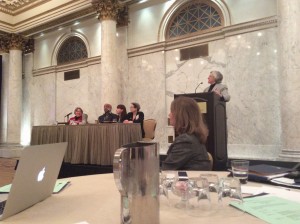
I am currently in Baltimore with some colleagues, at a workshop focused on information fluency in the disciplines of religion, philosophy, and the history of ideas. It started yesterday, and has already offered a lot of fascinating perspectives from faculty and librarians, including practical examples and specific online tools that can be used for teaching and collaborative learning. The workshop is supported by the American Academy of Religion, the Society of Biblical Literature, and the American Philosophical Association.
If you are not familiar with the term, the aim of information fluency is to get beyond literacy to fluency in the domain of one’s ability to identify and utilize reliable sources of information. (See the recently-released ACRL framework for information literacy for more on this subject.)
One subject that has come up in conversation more than once is this: how do we get students to use the best, most detailed and deepest scholarly sources, when journalistic ones, blogs, and other such web pages are easier to read and understand
Julie Wroblewski of Benedictine University spoke about opportunities and challenges in integrating information fluency in teaching. What do the principles and the mapping of goals that we articulate in the abstract look like in practice in the classroom? Wroblewski talked about discovering that students were not using resources even when they were made available and emphasized. Often we have offered an information dump rather than something well-curated. Making LibGuides is not a solution to our problems if students are not using them. She discussed the need to also have librarians present in classes. What works well? Embedded librarians, working through the assignments and resources in class with the students. She also shared about having students work with library archive resources, leading to an online student-driven curation exhibit. Digital portfolios create opportunities to talk about information-related issues such as copyright. And getting students involved in scanning helps them understand why not everything is on the internet! Making students content-creators leads to them thinking about who produced other sources they encounter.
Benedictine University is a Catholic school with a large Muslim population, providing great opportunities for interfaith courses and projects. And so another topic that came up more than once is the need to find one’s niche (including the challenges of finding a niche in an online setting).
An analogy was made with kung fu and the turning of a weakness into a strength. Small programs face challenges, but the small are also often nimble compared to the large, and so applying the analogy to the university, small departments and programs can potentially change more easily than large ones.
Wroblewski also spoke about how gaming is somethng that is taken for granted. As a result they have learned a particular approach to challenges: they typically desire to experiment and to have freedom to fail and try again.
Kevin Miles from Earlham College talked about a collaborative project with Earlham, Antioch, and Wabash Colleges, the Ancient Greek Philosophy Initiative. It is like a small undergraduate conference – a day-long conversation about his students’ research in philosophy and that of others. Miles talked about information overload, even if you are working on ancient Greek literature. More has been written than even a scholar has time to read. There is an unmanageabl amount one could potentially read, not just considering what is being written now, but that which is dead and gone, written in the past. He encouraged us to avoid the dumptruck effect: If you have more on your mind than students can process and overwhelm them with it. Students have to embrace the fact that they will leave more food on the table than they are able to eat. Decisions must be made. One way to do that is to pursue a guiding question. This is educational in and of itself: students’ realization that the field is bigger than their ability to cover it.
The Earlham College mission statement talks about awakening the teacher within the student. Miles challenges students to teach him something as the professor. And he emphasized thay what is catching students’ attention in his approach is not just the content, but becoming part of a community of scholars. I found myself wondering what it would look like if all students in some classes were expected to submit a proposal to an undergraduate conference or journal.
Jane Pinzino talked about scholarship being a conversation, and conversation meaning collaboration. She mentioned Voyant tools, which will offer digital analysis of online texts that visual learners will find helpful, and which can provide macro-analysis that hopefully all students can benefit from. And so if one inserts the URL of an online text version of Plato’s Republic, and then eliminate stock words, one will get a world cloud that successfully highlights key ideas. Clicking on justice, for instance, will then provide a graph of how frequently the term appears, and where.
There were some very interesting discussion points in the Q&A time after that first panel. Someone mentioned that students experience frustration when their university work seems like it is merely a means to an end. Connection of the course to a greater purpose changes their outlook. Enthusiasm requires joy in relation to the process and not just the product.
Students need to become aware of how overwhelming the task of information acquisition is. Is the notion of mastery of a field no longer usable, even in relation to those who persue a PhD? On the more positive side, students can be encouraged to view themselves not as becoming “masters,” but adventurers, explorers in the world of possibilities. Pursue the conversation.
There was a lot of emphasis on Open Access. I especially appreciated this call: we need to take back control of our intellectual property!
Those are some particularly memorable points from the first day of the workshop. On the morning of the second day, we started with informal conversations over breakfast, seated grouped as faculty, librarians, and administrators. The first panel included Tom Wartenberg talking about teaching a course “Philosophy for Children” which gets college students teaching philosophy to second graders. It also included David Nienhuis, who talked about the challenges teaching the generation of students shaped by non-denominationalism, in which students adore the Bible but have not read it. He talked about trying to get students to think not primarily in terms of experts and non-experts, but participantes in a conversation that includes people now dead who dedicated their life to studying, and themselves still learning, and many others at a variety of stages. He also talked about trying to find ways of keeping atudents from just running in panic to commentaries looking for someone else to provide “the answer” for them.
In the question time afterwards, Nienhuis added that, when students ask about questions of historicity, he points out that you can ask the text such questions as much as one wants, but the text itself will never answer you.
These are some highlghts from the first day and a half of the workshop. I may share more later today or tomorrow, but much of the remainder of the workshop will focus on developing a plan for integrating information fluency in our disciplines at our various institutions.
Is the term “information fluency” meaningful to most blog readers? If not, how would you articulate the wise use of resources to gather, digest, and do things with sources of information? How do you seek to model good practices when it comes to informing yourself about anything?
Council of Independent Colleges
Society of Biblical Literature
Previous Post

March 6, 2015
LOST Rewatch: The Economist
Next Post
March 7, 2015 The First Rule of Being God
Browse Our Archives
Select a Category 1 Corinthians 1 John 1 Peter 1 Samuel 1 Thessalonians 1 Timothy 2 Corinthians 2 Kings 2 Peter 2 Samuel 2 Thessalonians 2 Timothy academia Acts of the Apostles afterlife Akhaten Alcatraz American Academy of Religion Amos Anglican Arabic Aramaic archaeology art artificial intelligence astronomy atheism atonement Babylon 5 Baptists Battlestar Galactica Bible Biblical Studies Carnival biblioblogging Black Mirror Blade Runner Book of Job book review Buddhism Call for Papers China Christianity Christmas Christology Chronicles Coptic creation Daniel Deuteronomy Doctor Who Dune Easter Ecclesiastes economics education Eldad Keynan Enoch Seminar Ephesians eschatology Esther Evangelicals evolution Exodus Expanse Ezekiel Ezra fantasy Fringe fundamentalism Galatians games Ge'ez genealogy Genesis Gnosticism Gospel of Jesus' Wife Gospel of John Gospel of Judas Gospel of Luke Gospel of Mark Gospel of Matthew Gospel of Peter Gospel of Thomas Greek Harry Potter Hebrew Hebrews Hinduism historical Jesus history Hitchhiker's Guide to the Galaxy Holidays horror Hosea humor incarnation India inerrancy information literacy inspirational Intelligent Design Ireland Isaiah Islam Israel Italy James Jeremiah John the Baptist Jonah Joshua Judaism Jude Judges Judith Lamentations languages Latin Leviticus libraries literature Lord of the Rings LOST Mandaeans Mandaic memes Methodism Micah monotheism morality Mormons movies music mythicism NASSCAL Nehemiah new perspective New Testament news Numbers Orthodox paganism panentheism pantheism Patheos Paul and his letters Pentecostals Philippians Philippians 2:6-11 philosophy physics Planet of the Apes podcast politics Progressive Christianity Protestantism Proverbs Psalms pseudoscience racism religion Revelation Roman Catholicism Romania Romans Ruth scams science science fiction Secret Gospel of Mark Society of Biblical Literature Song of Songs Star Trek Star Wars Stargate Swahili Syriac Taoism technology Terminator The Handmaid's Tale The Hobbit The Matrix theodicy theology theory Timeless Titus tomb Torchwood travel TRON Uncategorized United Kingdom Westworld X-Files young-earth creationism Zechariah
Select a Month October 2026 September 2026 August 2026 July 2026 June 2026 May 2026 April 2026 March 2026 February 2026 January 2026 December 2025 November 2025 October 2025 September 2025 July 2025 June 2025 May 2025 April 2025 March 2025 February 2025 January 2025 December 2024 November 2024 October 2024 September 2024 August 2024 July 2024 June 2024 May 2024 April 2024 March 2024 February 2024 January 2024 December 2023 November 2023 October 2023 September 2023 August 2023 July 2023 May 2023 April 2023 March 2023 February 2023 January 2023 December 2022 November 2022 October 2022 September 2022 August 2022 July 2022 June 2022 May 2022 April 2022 March 2022 February 2022 January 2022 December 2021 November 2021 October 2021 September 2021 August 2021 July 2021 June 2021 May 2021 April 2021 March 2021 February 2021 January 2021 December 2020 November 2020 October 2020 September 2020 August 2020 July 2020 June 2020 May 2020 April 2020 March 2020 February 2020 January 2020 December 2019 November 2019 October 2019 September 2019 August 2019 July 2019 June 2019 May 2019 April 2019 March 2019 February 2019 January 2019 December 2018 November 2018 October 2018 September 2018 August 2018 July 2018 June 2018 May 2018 April 2018 March 2018 February 2018 January 2018 December 2017 November 2017 October 2017 September 2017 August 2017 July 2017 June 2017 May 2017 April 2017 March 2017 February 2017 January 2017 December 2016 November 2016 October 2016 September 2016 August 2016 July 2016 June 2016 May 2016 April 2016 March 2016 February 2016 January 2016 December 2015 November 2015 October 2015 September 2015 August 2015 July 2015 June 2015 May 2015 April 2015 March 2015 February 2015 January 2015 December 2014 November 2014 October 2014 September 2014 August 2014 July 2014 June 2014 May 2014 April 2014 March 2014 February 2014 January 2014 December 2013 November 2013 October 2013 September 2013 August 2013 July 2013 June 2013 May 2013 April 2013 March 2013 February 2013 January 2013 December 2012 November 2012 October 2012 September 2012 August 2012 July 2012 June 2012 May 2012 April 2012 March 2012 February 2012 January 2012 December 2011 November 2011 October 2011 September 2011 August 2011 July 2011 June 2011 May 2011 April 2011 March 2011 February 2011 January 2011 December 2010 November 2010 October 2010 September 2010 August 2010 July 2010 June 2010 May 2010 April 2010 March 2010 February 2010 January 2010 December 2009 November 2009 October 2009 September 2009 August 2009 July 2009 June 2009 May 2009 April 2009 March 2009 February 2009 January 2009 December 2008 November 2008 October 2008 September 2008 August 2008 July 2008 June 2008 May 2008 April 2008 March 2008 February 2008 January 2008 December 2007 November 2007 October 2007 September 2007 August 2007 July 2007 June 2007 February 2007 January 2001
Follow Us!
TAKE THE
Religious Wisdom Quiz
What sacred tent did God command the Israelites to build?
Select your answer to see how you score.
Booth House of David Tabernacle Temple
Books by This Author Books by James F. McGrath
Related posts from Religion Prof: The Blog of James F. McGrath
AI Syllabus Statements You Can Steal for Your...
Religion Prof: The Blog of James F. McGrath

Faith that Lasts (Colossians 1:9-14,24-29)
Religion Prof: The Blog of James F. McGrath
Faith that Learns (Mark 7:24-31; Luke 16:19-31)
Religion Prof: The Blog of James F. McGrath

Insights from Project Hail Mary
Religion Prof: The Blog of James F. McGrath
TRENDING AT PATHEOS Progressive Christian

Pope Leo Celebrates Mass for Nurses & Docs...
I don't have any idea how he did it, but Pope Leo...

The Sermon on the Mount, Part I: Matthew...
The Sermon on the Mount, Part I (Matthew 4:12-5:12) St. Matthew moves...

What's up from Crossway: Reviewing some of their latest A few weeks...

Janie Learns the Way of the Cross: A...
Teaching children about Jesus' Passion can be challenging. Many parents and educators...

Looking For Good Catholic Writing - October 2026
He alone extends the heavens, and he walks upon the waves of...

In "Irreplaceable," our book on vocation and technology, Trevor Sutton and I...
view all Progressive Christian blogs
Ad-Free & Subscriber Log-In Subscription Support
- About Us
- 2026 Calendar
- Videos
- Podcasts
- Library of World Religions
- Faith In Media Tracker
- Advertise With Us
- Write for Us
- Privacy Policy
- Terms of Service
- Do Not Sell My Data
- Contact Us
- Radiant Digital
- Manage Newsletter Subscriptions
- Unsubscribe From Notifications
- Sitemap
Copyright 2008-2026, Patheos. All rights reserved.
Subscription Support Ad-Free & Subscriber Log-In
Follow Patheos