
BuddhistCatholicContemplativeEvangelicalGeneral ChristianHinduJewishLatter-day SaintMuslimNew VisionsProgressive Christian
Beliefs
- Buddhist
- Catholic
- Contemplative
- Evangelical
- General Christian
- Hindu
- Jewish
- Latter-day Saint
- More Voices
- Muslim
- New Visions
- Pagan
- Progressive Christian
Topics
- Religion News
- Food and Religion
- Sports and Religion
- Religious Art
- Religious Music and Entertainment
- Religious Events
- History and Religion
- Style and Religion
- Politics and Religion
- Women in Religion
- Recreation Outdoors and Religion
- Business Finance and Religion
- Careers Workplace and Religion
- Education and Religion
- Family Parenting and Religion
- Health Fitness and Religion
- Home and Religion
- Relationships and Religion
- Technology and Religion
- Travel and Religion
Columnists
- Buddhist Columnists
- Business Finance and Religion Columnists
- Careers Workplace and Religion Columnists
- Catholic Columnists
- Contemplative Columnists
- Education and Religion Columnists
- Evangelists Columnists
- Family Parenting and Religion Columnists
- General Christian Columnists
- Health Fitness and Religion Columnists
- Hindu Columnists
- History and Religion Columnists
- Home and Religion Columnists
- Jewish Columnists
- More Voices Columnists
- Latter Day Columnists
- Muslim Columnists
- New Visions Columnists
- Nonreligious Columnists
- Pagan Columnists
- Politics and Religion Columnists
- Progressive Columnists
- Recreation Outdoors and Religion Columnists
- Relationships and Religion Columnists
- Religion News Columnists
- Religious Art Columnists
- Religious Events Columnists
- Religious Music and Entertainment Columnists
- Sports and Religion Columnists
- Style and Religion Columnists
- Technology and Religion Columnists
- Travel and Religion Columnists
- Women in Religion Columnists
Resource Library
- 2026 Calendar
- Library of World Religions
- The 100 Most Holy Places on Earth
- Patheos Answers
- Podcasts
- Videos
- Faith Leaders Database
- Anglican Episcopalian
- Bahai
- Baptist
- Buddhism
- Christianity
- Confucianism
- Eastern Orthodoxy
- Hinduism
- Holiness and Pentecostal
- ISKCON
- Islam
- Judaism
- Lutheran
- Methodist
- The Church of Jesus Christ of Latter-day Saints
- New Age
- Paganism
- Presbytarian and Reformed
- Protestantism
- Religion Behind the Scenes
- Roman Catholic
- Scientology
- Shia Islam
- Sikhism
- Sufism
- Sunni Islam
- Taoism
- Zen
- See all religions
Research Tools
 Ad-Free & Subscriber Log-In Subscription Support
Ad-Free & Subscriber Log-In Subscription Support
Follow Patheos 

- Trending:
- Forgiveness
- |
- Marriage
- |
- Consciousness
- |
- Death Penalty
- |
- Election
- |
- Halloween

- Home
- About Dr. James F. McGrath
- Publications
- Blogroll
- Useful Websites
- Connections
- Easy Search Posts Page
- FREE NEWSLETTER
- Home
- Progressive Christian
- When God Spoke Greek
When God Spoke Greek
Last updated on: August 2, 2013 at 10:48 am by James F. McGrath
When God Spoke Greek 2013-08-02T10:48:37-04:00 James F. McGrath
Patheos Explore the world's faith through different perspectives on religion and spirituality! Patheos has the views of the prevalent religions and spiritualities of the world.


In case you missed the blog tour thus far, Joel Watts started off the blog tour, followed by Andrew King, then Krista Dalton, then Abraham K-J (who has been responsible for leading a group spending a year reading through Greek Isaiah), then Jessica Parks, then Amanda McInnis. Brian LePort has also been asking discussion questions related to the book. And of course, Law’s own blog is also a place to go for interesting thoughts related to the book – as well as a funny parody of the Fox News interview with Reza Aslan! The conversation has spread elsewhere too – for instance, Nijay Gupta’s blog.
My role in the blog tour is to blog about the final chapters of the book. The penultimate chapter, chapter 13, is one of a number of colorfully-titled chapters in the book: “The Man with the Burning Hand versus the Man with the Honeyed Sword.” In case it wasn’t obvious, the two figures are Augustine and Jerome, and the focus of the chapter is the debate between the two over the status of the Septuagint, and Jerome’s work to create a new Latin Bible based on the Hebrew text.
The chapter returns to the Alexandrian allegorical approach and the contrasting Atiochene school, discussed in more detail in a previous chapter. Eusebius of Emesa is said to have been something of a bridge between the two, and having been fluent in both Greek and Syriac, he was aware in a way that few others had been of the status of the Septuagint as translation. This Eusebius was a major influence on another person of that name, Eusebius Sophronius Hieronymus, whom we know as “Jerome.”
Law helpfully highlights the strengths and weaknesses of the arguments used by Jerome and Augustine, as well as the different contexts within which they lived and worked. Jerome, living at various times in his life in places like Antioch and Bethlehem, was more directly aware of and involved in Jewish-Christian dialogue than was Augustine, and this surely shaped his views.
On the other hand, Law is very up front about the difference between Jerome’s own estimation of his ability in Hebrew, and the reality: Jerome “became like a first-year student with a semester of Hebrew under his belt. He knew just enough to be dangerous” (p.156). And some of the arguments Jerome used to argue his case – such as his claim that the New Testament authors never used the Septuagint – were spectacularly and demonstrably wrong (p.158).
I felt that the chapter wrapped up a little too abruptly. Early in the chapter, it had been mentioned that there was concern that a new Bible would undermine the church’s unity, but by the end, it is suggested that the Western church was gathering around Jerome’s Bible in an attempt to preserve unity. A bit more clarification on and detail about the dynamics of how events unfolded, and the political and church hierarchical support which affected this change, would have been useful. But on the whole, the chapter does what it aims to, namely indicating how the shift away from the dominance of the Septuagint began to come about, and how the “apocrypha” was created as a category in the process.
Chapter 14 is called “A Postscript” – but it is not to be neglected, as it really represents an attempt to bring together the threads of the book, and offer suggestions for where scholarship might go in response. Law emphasizes that the focus on getting back to an “original text” is a modern concern, even if it has some ancient roots. I might also add that the exclusive focus in some circles on the Hebrew Bible reflects a dubious theological presupposition: that the penning of those works in more or less their present form represents the singular moment of inspiration, when an allegedly inerrant text comes into existence. Yet all but a handful of extremists will accept that there were written sources which went into the creation of the Hebrew Bible as we now know it, and that in the process of copying errors and changes have crept in. That being the case, focusing exclusively on the Hebrew Bible, or more precisely on the the moment the works of the Hebrew Bible were penned, makes little sense for those interested in the history of the Jewish and Christian Bible(s). And just as one cannot make good sense of the history of Judaism and Christianity in the English-speaking world by ignoring English translations, one cannot fully understand or appreciate the history of Judaism and Christianity in the Greek-speaking world – including but not limited to the very beginnings of Christianity reflected in the New Testament – without studying the Septuagint.
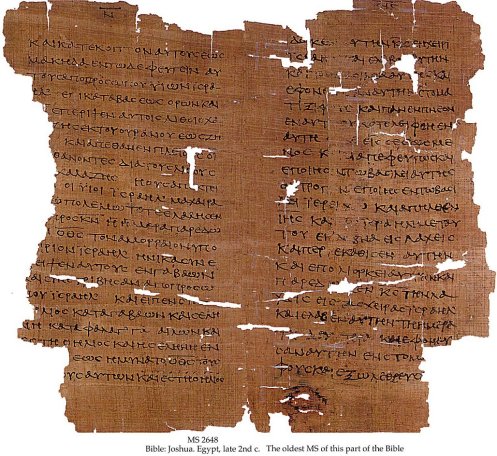 Law expresses his hope that there will be increased scholarly attention paid to the LXX in its own right, and not merely as a means to some other end. He likewise hopes that the LXX will get greater attention from theologians. The LXX is a translation which in many places reflects a particular theological outlook (p.170). Just as those who read English translations are influenced by the theology of those who translated it, so too the church’s theology cannot and should not be explained without some indication of its debt to the theology of the LXX translators.
Law also emphasizes more than once in these chapters that the obscurity of certain words and passages in the Septuagint was reflected and embraced in the theological viewpoint – articulated equally by Augustine in the West and by Ephrem in the East – that finding a single meaning of the text does not exhaust the riches of the text. I get the sense that Law sees in an appropriate appreciation of the role of the LXX in the church a resource that can help the church move away from the modernist-fundamentalist quest for the one true original text, and the one correct interpretation thereof, towards a stance that more closely resembles the early centuries of the church, when no such concern existed in anything like the form it sometimes takes in our day and age.
Since Law’s book ends not with his drawing things to a close, but with his expressing the hope that he has opened a door that others will walk through, I feel as though I should not try to wrap up this blog tour – other than to recommend When God Spoke Greek
Previous Post

August 2, 2013
Pauline Authorship: Visualizing the BNTC Survey Numbers
Next Post
August 2, 2013 Young-Earth Creationists are Without Excuse
Browse Our Archives
Select a Category 1 Corinthians 1 John 1 Peter 1 Samuel 1 Thessalonians 1 Timothy 2 Corinthians 2 Kings 2 Peter 2 Samuel 2 Thessalonians 2 Timothy academia Acts of the Apostles afterlife Akhaten Alcatraz American Academy of Religion Amos Anglican Arabic Aramaic archaeology art artificial intelligence astronomy atheism atonement Babylon 5 Baptists Battlestar Galactica Bible Biblical Studies Carnival biblioblogging Black Mirror Blade Runner Book of Job book review Buddhism Call for Papers China Christianity Christmas Christology Chronicles Coptic creation Daniel Deuteronomy Doctor Who Dune Easter Ecclesiastes economics education Eldad Keynan Enoch Seminar Ephesians eschatology Esther Evangelicals evolution Exodus Expanse Ezekiel Ezra fantasy Fringe fundamentalism Galatians games Ge'ez genealogy Genesis Gnosticism Gospel of Jesus' Wife Gospel of John Gospel of Judas Gospel of Luke Gospel of Mark Gospel of Matthew Gospel of Peter Gospel of Thomas Greek Harry Potter Hebrew Hebrews Hinduism historical Jesus history Hitchhiker's Guide to the Galaxy Holidays horror Hosea humor incarnation India inerrancy information literacy inspirational Intelligent Design Ireland Isaiah Islam Israel Italy James Jeremiah John the Baptist Jonah Joshua Judaism Jude Judges Judith Lamentations languages Latin Leviticus libraries literature Lord of the Rings LOST Mandaeans Mandaic memes Methodism Micah monotheism morality Mormons movies music mythicism NASSCAL Nehemiah new perspective New Testament news Numbers Orthodox paganism panentheism pantheism Patheos Paul and his letters Pentecostals Philippians Philippians 2:6-11 philosophy physics Planet of the Apes podcast politics Progressive Christianity Protestantism Proverbs Psalms pseudoscience racism religion Revelation Roman Catholicism Romania Romans Ruth scams science science fiction Secret Gospel of Mark Society of Biblical Literature Song of Songs Star Trek Star Wars Stargate Swahili Syriac Taoism technology Terminator The Handmaid's Tale The Hobbit The Matrix theodicy theology theory Timeless Titus tomb Torchwood travel TRON Uncategorized United Kingdom Westworld X-Files young-earth creationism Zechariah
Select a Month October 2026 September 2026 August 2026 July 2026 June 2026 May 2026 April 2026 March 2026 February 2026 January 2026 December 2025 November 2025 October 2025 September 2025 July 2025 June 2025 May 2025 April 2025 March 2025 February 2025 January 2025 December 2024 November 2024 October 2024 September 2024 August 2024 July 2024 June 2024 May 2024 April 2024 March 2024 February 2024 January 2024 December 2023 November 2023 October 2023 September 2023 August 2023 July 2023 May 2023 April 2023 March 2023 February 2023 January 2023 December 2022 November 2022 October 2022 September 2022 August 2022 July 2022 June 2022 May 2022 April 2022 March 2022 February 2022 January 2022 December 2021 November 2021 October 2021 September 2021 August 2021 July 2021 June 2021 May 2021 April 2021 March 2021 February 2021 January 2021 December 2020 November 2020 October 2020 September 2020 August 2020 July 2020 June 2020 May 2020 April 2020 March 2020 February 2020 January 2020 December 2019 November 2019 October 2019 September 2019 August 2019 July 2019 June 2019 May 2019 April 2019 March 2019 February 2019 January 2019 December 2018 November 2018 October 2018 September 2018 August 2018 July 2018 June 2018 May 2018 April 2018 March 2018 February 2018 January 2018 December 2017 November 2017 October 2017 September 2017 August 2017 July 2017 June 2017 May 2017 April 2017 March 2017 February 2017 January 2017 December 2016 November 2016 October 2016 September 2016 August 2016 July 2016 June 2016 May 2016 April 2016 March 2016 February 2016 January 2016 December 2015 November 2015 October 2015 September 2015 August 2015 July 2015 June 2015 May 2015 April 2015 March 2015 February 2015 January 2015 December 2014 November 2014 October 2014 September 2014 August 2014 July 2014 June 2014 May 2014 April 2014 March 2014 February 2014 January 2014 December 2013 November 2013 October 2013 September 2013 August 2013 July 2013 June 2013 May 2013 April 2013 March 2013 February 2013 January 2013 December 2012 November 2012 October 2012 September 2012 August 2012 July 2012 June 2012 May 2012 April 2012 March 2012 February 2012 January 2012 December 2011 November 2011 October 2011 September 2011 August 2011 July 2011 June 2011 May 2011 April 2011 March 2011 February 2011 January 2011 December 2010 November 2010 October 2010 September 2010 August 2010 July 2010 June 2010 May 2010 April 2010 March 2010 February 2010 January 2010 December 2009 November 2009 October 2009 September 2009 August 2009 July 2009 June 2009 May 2009 April 2009 March 2009 February 2009 January 2009 December 2008 November 2008 October 2008 September 2008 August 2008 July 2008 June 2008 May 2008 April 2008 March 2008 February 2008 January 2008 December 2007 November 2007 October 2007 September 2007 August 2007 July 2007 June 2007 February 2007 January 2001
Follow Us!
TAKE THE
Religious Wisdom Quiz
Which prophet was commanded to buy a field during a siege?
Select your answer to see how you score.
Obadiah Habakkuk Isaiah Jeremiah
Books by This Author Books by James F. McGrath
Related posts from Religion Prof: The Blog of James F. McGrath

Religion Prof: The Blog of James F. McGrath
Unscriptural Doctrines of Scripture
Religion Prof: The Blog of James F. McGrath

Religion Prof: The Blog of James F. McGrath
Interview with Garrick Allen about Words Are Not...
Religion Prof: The Blog of James F. McGrath
TRENDING AT PATHEOS Progressive Christian

57th Dove Awards Honor Dolly Parton, Crown New...
On gospel music’s biggest night, the 57th annual GMA Dove Awards honored...

The First Eucharistic Controversy: Christ’s Real Presence
For Catholics, the Eucharist is the source and summit of the Christian...

What a Stop Sign Can Teach Us About...
How to Make a Decision When You Can't Hear God Main point:...

Archdiocese Hosts Military Marriage Retreat in Germany
RASTATT, Germany — The transient military lifestyle, with its frequent deployments and...

Nearly every morning, I make the drive to Detroit with my high-school-age...

The Real AI Story Is Adoption Without Trust
Artificial intelligence has crossed a political threshold. It is no longer a...
view all Progressive Christian blogs
Ad-Free & Subscriber Log-In Subscription Support
- About Us
- 2026 Calendar
- Videos
- Podcasts
- Library of World Religions
- Faith In Media Tracker
- Advertise With Us
- Write for Us
- Privacy Policy
- Terms of Service
- Do Not Sell My Data
- Contact Us
- Radiant Digital
- Manage Newsletter Subscriptions
- Unsubscribe From Notifications
- Sitemap
Copyright 2008-2026, Patheos. All rights reserved.
Subscription Support Ad-Free & Subscriber Log-In
Follow Patheos