
BuddhistCatholicContemplativeEvangelicalGeneral ChristianHinduJewishLatter-day SaintMuslimNew VisionsProgressive Christian
Beliefs
- Buddhist
- Catholic
- Contemplative
- Evangelical
- General Christian
- Hindu
- Jewish
- Latter-day Saint
- More Voices
- Muslim
- New Visions
- Pagan
- Progressive Christian
Topics
- Religion News
- Food and Religion
- Sports and Religion
- Religious Art
- Religious Music and Entertainment
- Religious Events
- History and Religion
- Style and Religion
- Politics and Religion
- Women in Religion
- Recreation Outdoors and Religion
- Business Finance and Religion
- Careers Workplace and Religion
- Education and Religion
- Family Parenting and Religion
- Health Fitness and Religion
- Home and Religion
- Relationships and Religion
- Technology and Religion
- Travel and Religion
Columnists
- Buddhist Columnists
- Business Finance and Religion Columnists
- Careers Workplace and Religion Columnists
- Catholic Columnists
- Contemplative Columnists
- Education and Religion Columnists
- Evangelists Columnists
- Family Parenting and Religion Columnists
- General Christian Columnists
- Health Fitness and Religion Columnists
- Hindu Columnists
- History and Religion Columnists
- Home and Religion Columnists
- Jewish Columnists
- More Voices Columnists
- Latter Day Columnists
- Muslim Columnists
- New Visions Columnists
- Nonreligious Columnists
- Pagan Columnists
- Politics and Religion Columnists
- Progressive Columnists
- Recreation Outdoors and Religion Columnists
- Relationships and Religion Columnists
- Religion News Columnists
- Religious Art Columnists
- Religious Events Columnists
- Religious Music and Entertainment Columnists
- Sports and Religion Columnists
- Style and Religion Columnists
- Technology and Religion Columnists
- Travel and Religion Columnists
- Women in Religion Columnists
Resource Library
- 2026 Calendar
- Library of World Religions
- The 100 Most Holy Places on Earth
- Patheos Answers
- Podcasts
- Videos
- Faith Leaders Database
- Anglican Episcopalian
- Bahai
- Baptist
- Buddhism
- Christianity
- Confucianism
- Eastern Orthodoxy
- Hinduism
- Holiness and Pentecostal
- ISKCON
- Islam
- Judaism
- Lutheran
- Methodist
- The Church of Jesus Christ of Latter-day Saints
- New Age
- Paganism
- Presbytarian and Reformed
- Protestantism
- Religion Behind the Scenes
- Roman Catholic
- Scientology
- Shia Islam
- Sikhism
- Sufism
- Sunni Islam
- Taoism
- Zen
- See all religions
Research Tools
 Ad-Free & Subscriber Log-In Subscription Support
Ad-Free & Subscriber Log-In Subscription Support
Follow Patheos 

- Trending:
- Forgiveness
- |
- Marriage
- |
- Consciousness
- |
- Death Penalty
- |
- Election
- |
- Halloween

- Home
- Religion News
- Mexican Mennonites Combat Fears of Violence With a New Christmas Tradition
Mexican Mennonites Combat Fears of Violence With a New Christmas Tradition
Last updated on: December 11, 2019 at 11:53 am by The Conversation
Mexican Mennonites Combat Fears of Violence With a New Christmas Tradition 2019-12-11T11:53:22-05:00 The Conversation
Patheos Explore the world's faith through different perspectives on religion and spirituality! Patheos has the views of the prevalent religions and spiritualities of the world.
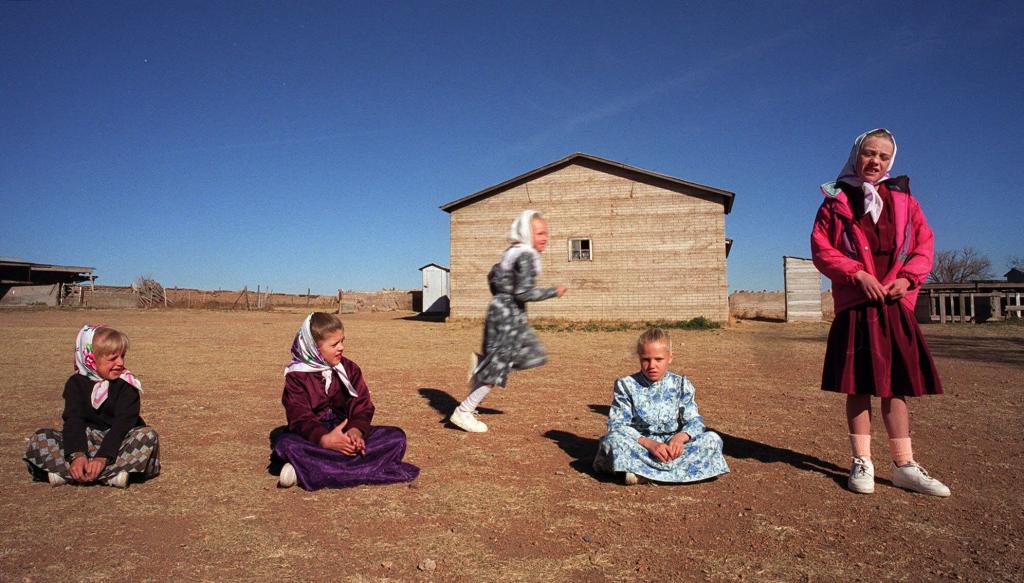
The countryside around Ciudad Cuauhtemoc, in the northern Mexican state of Chihuahua, is home to the country’s largest Mennonite population. (AP Photo/Gregory Bull)
By Rebecca Janzen, University of South Carolina
Mennonites in Mexico are promoting a bright new Christmas tradition – one born of somber origins.
The “Parade of Lights,” a nighttime procession of decorated vehicles and holiday party held this year on Dec. 7, was created by the Mennonite Museum in the northern Mexican state of Chihuahua to give local people – both Mennonite and Mexican alike – a safe, family-friendly way to celebrate Christmas amid growing violence.
Drug cartels often battle for control over Chihuahua, which lies along the U.S. border. In 2010, the deadliest year on record, the state had 6,421 murders. Crime then dropped for several years but is now rising sharply. Between 2014 and 2018, murders in Chihuahua increased 70%, from 1,758 in 2014 to nearly 3,000 in 2018.
Living in rather closed Christian communities, as Mennonites have for a century in Mexico, cannot entirely protect them from chronic and sometimes random violence. In 2012, the wife of a Mennonite pastor in Chihuahua was killed while traveling to a funeral. In 2017, three local men were shot in the Mennonite colony where they lived.
The Parade of Lights was created in 2017 in hopes of nurturing Chihuahua’s holiday spirit despite perceptions of danger.
A new Christmas tradition
This year, organizers say, about 4,000 people gathered on Dec. 7 to watch the main event: a parade of cars and trucks decorated with snowmen, presents, reindeer and nativity scenes. The procession starts in the Chihuahuan city of Cuauhtémoc, drives slowly down a normally busy highway, and ends at the Mennonite Museum eight miles away.
Antonio Loewen, the Mennonite Museum’s former director, created the holiday parade in 2017 as a way to “lift up [local] villages” – that is, counteract negative views that the area is cartel-ridden and dangerous.
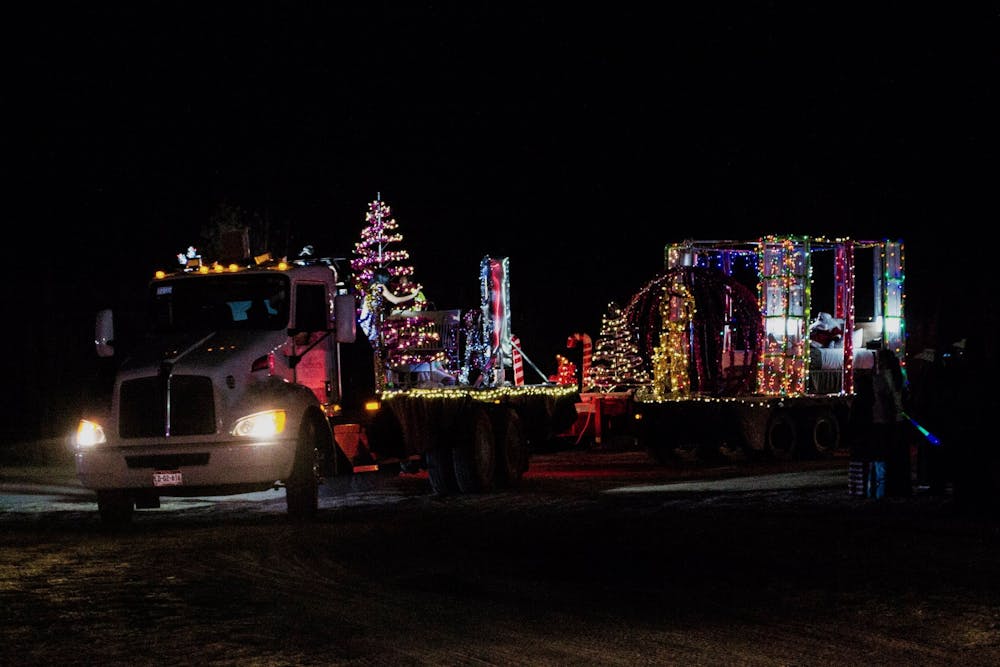
A truck decorated for the 2019 Parade of Lights, near Ciudad Cuauhtémoc, Chihuahua, Mexico, Dec. 7, 2019.
Courtesy of: Museo y Centro Comercial Menonita, Author provided
The museum opened in 2001 in the countryside outside Cuauhtémoc, Chihuahua – home to the largest grouping of Mennonite villages in Mexico – to teach people in Mexico about the Mennonite religion and culture. Cuauhtémoc is sometimes called the “City of Three Cultures” because of its Mennonite, northern Mexican and indigenous Mexican populations.
There are roughly 100,000 Mennonites in Mexico, descendants of Canadians who emigrated to Mexico almost a century ago, after World War I.
Members of this religious minority, which arose in northern Europe during the 16th century, hold beliefs similar to those of other Protestant Christians. But their lifestyle is intentionally different. Mennonites are pacifists who refuse military service. They tend to live apart from the outside world, practice adult baptism and are skeptical of technology’s encroachment on society.
While conducting research for my 2018 book on religious minorities in Mexico, I interviewed many Mennonites from Chihuahua about their beliefs and traditions. My father – a Canadian Mennonite with family in Mexico who has studied the migration of this community – served as my interpreter.
Mexican Mennonites have maintained their culture by living in rather isolated villages called colonies. Most still speak a Dutch-like language called Low German and maintain the traditional dress of head coverings and long dresses for women and overalls for men.
Some Mennonites in northern Mexico still travel by horse and buggy and limit their use of electricity. Others wear modern dress and attend Protestant churches in Spanish with their neighbors.
Cultural engagement
The Mennonite Museum and Cultural Center, which is funded by the Chihuahua state government, sees the Parade of Lights as part of its mission of outreach to the broader Mexican community.

Children dressed up for the 2019 Parade of Lights in Chihuahua state, Mexico, Dec. 7, 2019.
Courtesy of: Museo y Centro Cultural Menonita, Author provided
The first year the event was held, in 2017, 3,000 people attended – vastly exceeding the 400 guests the museum expected, according to Loewen. A few local businesses and churches decorated cars to drive in the parade.
Word has spread since then.
This year, dozens of local families, churches and companies – including Quesería Dos Lagunas, one of the companies that makes the cheese Mennonites are famous for in Mexico – created floats with nativity scenes and decked out their vehicles for the parade. Afterwards, Mennonites and families from Cuauhtémoc gathered at the museum for popcorn and tamales – a traditional Christmas food in Mexico – joined by the mayor of Cuauhtémoc.
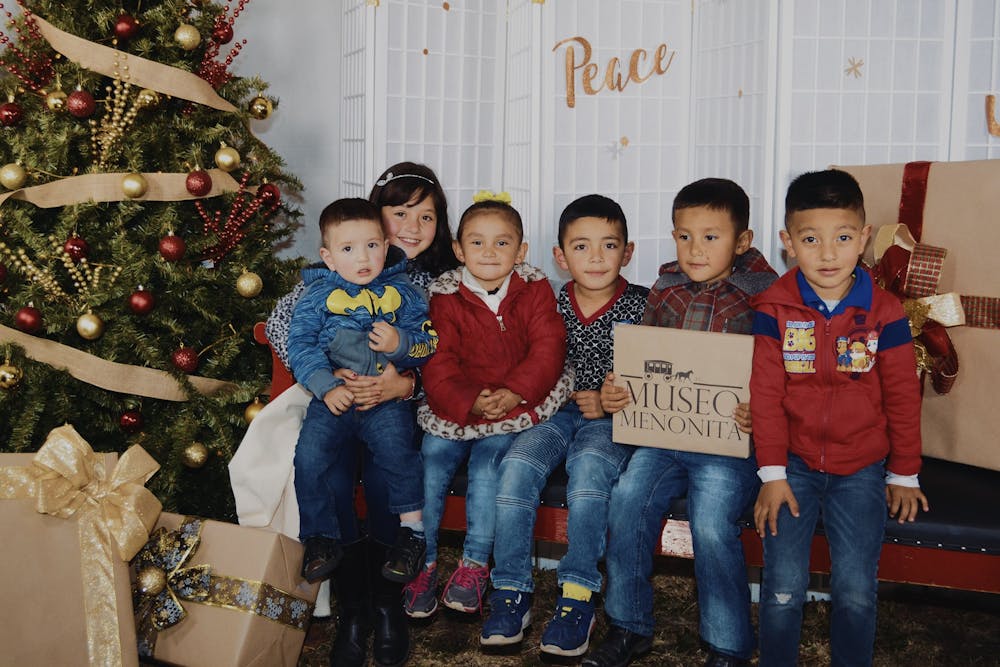
A holiday portrait after Chihuahua’s Parade of Lights, Dec. 7, 2019.
Courtesy of the Museo y Centro Cultural Menonita, Author provided
Helmut Reimer, general manager of the Microtel Inn & Suites, a local hotel that helped organize the festivities, told me he hoped the parade would “reverse” the image people have of “insecurity and ugly things” in Chihuahua.
Last year Chihuahua state had three times the number of murder as neighboring Sonora state, which has a similar population.
The Christmas parade is the latest of several local Mennonite projects in Chihuahua aimed at bringing together the peoples of northern Mexico to grapple with pervasive crime that disproportionately affects them all.
Because they traverse religious and ethnic borders, such efforts represent more than just a reaction to violence. They confirm that while Mennonites may dress, talk or pray differently than their neighbors, they are part of Chihuahua’s local community, too.
[Deep knowledge, daily. Sign up for The Conversation’s newsletter.]
Rebecca Janzen, Assistant Professor of Spanish and Comparative Literature, University of South Carolina
This article is republished from The Conversation under a Creative Commons license. Read the original article.
Next Post

January 8, 2020 What did the Romans do in the year 0? A fake theologian explains
Browse Our Archives
Select a Category Story of God Uncategorized
Select a Month September 2022 August 2022 January 2022 December 2021 August 2021 July 2021 February 2021 January 2021 January 2020 December 2019 November 2019 October 2019 September 2019 August 2019 July 2019 June 2019 May 2019 April 2019 March 2019 February 2019 January 2019 December 2018 November 2018 October 2018 September 2018 July 2018 June 2018 May 2018 April 2018 November 2017 October 2017 August 2017 June 2017 May 2017 April 2017 November 2016 October 2016 September 2016 July 2016 June 2016 May 2016 April 2016 March 2016 February 2016 January 2016 December 2015 November 2015 October 2015 September 2015 August 2015 July 2015 June 2015 May 2015 April 2015 March 2015 February 2015 January 2015 December 2014 October 2014 September 2014 July 2014 May 2014 April 2014 March 2014 February 2014 January 2014 September 2013 August 2013 July 2013 June 2013 May 2013 April 2013 March 2013 February 2013 January 2013 December 2012
Follow Us!
TAKE THE
Religious Wisdom Quiz
In the Parable of the Prodigal Son, what did the younger son demand?
Select your answer to see how you score.
Forgiveness The best robe A feast His inheritance
Related posts from Religion Now

Can your heart grow three sizes? A doctor...
The Humble Origins of 'Silent Night'
This Christmas Tell Your Children the Real Santa...

Offer the Other Cheek? The Risks of Listening...
TRENDING AT PATHEOS Religion News

Catholic Integralists believe that religious values – specifically Christian ones – should...

Electing A Virtuous President Would Make Immunity Irrelevant
Presidential immunity can bring with it many risks. So how can we...

Why The Olympic Games Are A ‘Civil Religious’...
Sporting events form a vital space where Americans display their 'civil religious...

After more than a decade of news, research updates, and insights on...

Q: Why do Southern Baptists and like-minded Protestants...
THE RELIGION GUY’S ANSWER: Why? Simple. Because they believe that’s what the...

THE QUESTION: Is gambling evil? THE RELIGION GUY’S ANSWER: Analysts anticipate a...
view all Religion News blogs
Ad-Free & Subscriber Log-In Subscription Support
- About Us
- 2026 Calendar
- Videos
- Podcasts
- Library of World Religions
- Faith In Media Tracker
- Advertise With Us
- Write for Us
- Privacy Policy
- Terms of Service
- Do Not Sell My Data
- Contact Us
- Radiant Digital
- Manage Newsletter Subscriptions
- Unsubscribe From Notifications
- Sitemap
Copyright 2008-2026, Patheos. All rights reserved.
Subscription Support Ad-Free & Subscriber Log-In
Follow Patheos