
BuddhistCatholicContemplativeEvangelicalGeneral ChristianHinduJewishLatter-day SaintMuslimNew VisionsProgressive Christian
Beliefs
- Buddhist
- Catholic
- Contemplative
- Evangelical
- General Christian
- Hindu
- Jewish
- Latter-day Saint
- More Voices
- Muslim
- New Visions
- Pagan
- Progressive Christian
Topics
- Religion News
- Food and Religion
- Sports and Religion
- Religious Art
- Religious Music and Entertainment
- Religious Events
- History and Religion
- Style and Religion
- Politics and Religion
- Women in Religion
- Recreation Outdoors and Religion
- Business Finance and Religion
- Careers Workplace and Religion
- Education and Religion
- Family Parenting and Religion
- Health Fitness and Religion
- Home and Religion
- Relationships and Religion
- Technology and Religion
- Travel and Religion
Columnists
- Buddhist Columnists
- Business Finance and Religion Columnists
- Careers Workplace and Religion Columnists
- Catholic Columnists
- Contemplative Columnists
- Education and Religion Columnists
- Evangelists Columnists
- Family Parenting and Religion Columnists
- General Christian Columnists
- Health Fitness and Religion Columnists
- Hindu Columnists
- History and Religion Columnists
- Home and Religion Columnists
- Jewish Columnists
- More Voices Columnists
- Latter Day Columnists
- Muslim Columnists
- New Visions Columnists
- Nonreligious Columnists
- Pagan Columnists
- Politics and Religion Columnists
- Progressive Columnists
- Recreation Outdoors and Religion Columnists
- Relationships and Religion Columnists
- Religion News Columnists
- Religious Art Columnists
- Religious Events Columnists
- Religious Music and Entertainment Columnists
- Sports and Religion Columnists
- Style and Religion Columnists
- Technology and Religion Columnists
- Travel and Religion Columnists
- Women in Religion Columnists
Resource Library
- 2026 Calendar
- Library of World Religions
- The 100 Most Holy Places on Earth
- Patheos Answers
- Podcasts
- Videos
- Faith Leaders Database
- Anglican Episcopalian
- Bahai
- Baptist
- Buddhism
- Christianity
- Confucianism
- Eastern Orthodoxy
- Hinduism
- Holiness and Pentecostal
- ISKCON
- Islam
- Judaism
- Lutheran
- Methodist
- The Church of Jesus Christ of Latter-day Saints
- New Age
- Paganism
- Presbytarian and Reformed
- Protestantism
- Religion Behind the Scenes
- Roman Catholic
- Scientology
- Shia Islam
- Sikhism
- Sufism
- Sunni Islam
- Taoism
- Zen
- See all religions
Research Tools
 Ad-Free & Subscriber Log-In Subscription Support
Ad-Free & Subscriber Log-In Subscription Support
Follow Patheos 

- Trending:
- Forgiveness
- |
- Marriage
- |
- Consciousness
- |
- Death Penalty
- |
- Election
- |
- Halloween

- Home
- Religion News
- The Struggle to Find Silence in the Ancient Monastic World—and Now
The Struggle to Find Silence in the Ancient Monastic World—and Now
Last updated on: June 12, 2019 at 9:27 am by The Conversation
The Struggle to Find Silence in the Ancient Monastic World—and Now 2019-06-12T09:27:57-04:00 The Conversation
Patheos Explore the world's faith through different perspectives on religion and spirituality! Patheos has the views of the prevalent religions and spiritualities of the world.
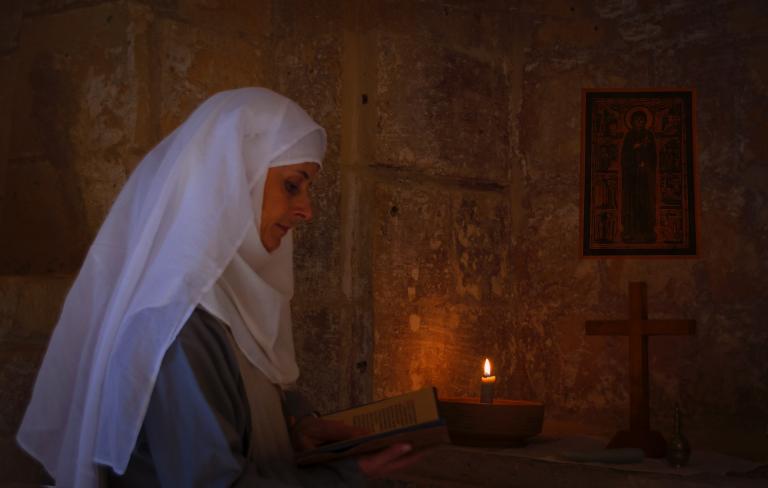
Monasticism developed, in part, because people were seeking silence. (Mario Mifsud)
By Kim Haines-Eitzen, Cornell University
In our contemporary world, noise pollution has reached dangerous levels.
The World Health Organization has argued that “excessive noise” is a serious threat to human health. Studies have shown that excessive exposure to noise not only causes hearing loss but also leads to heart disease, poor sleep and hypertension.
In some parts of the world, a mysterious “droning sound,” similar to a “a diesel engine idling nearby,” has been described as “torture” for the small percent of the population that can hear it.
I’m a scholar of early Christianity and my research shows that monasticism developed in part because people were seeking the solace of quiet places.
But for them, like us, it was a struggle.
Ancient philosophers on noise
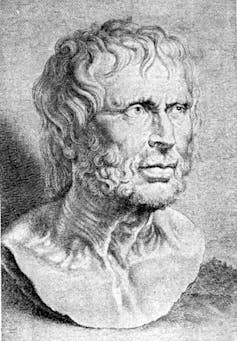
Roman Stoic philosopher Seneca.
Peter Paul Rubens
Ancient Greek and Roman philosophers frequently regarded noise as a serious distraction, one that challenged their ability to concentrate.
To give just one example: The Stoic philosopher Seneca described in great detail the noises coming from a bathhouse just below the room where he was writing, expressing his irritation at the distracting “babel” all around him. At the end of his letter, he says he has decided to withdraw to the country for quiet.
Noise and Christian monasticism
There were many reasons why Christian monasticism developed.
Ancient Christian writers, like John Cassian, claimed that the origins of monasticism lay in the examples set by the apostles of Jesus, who gave up everything to follow him.
Some modern scholars have argued that monasticism was a natural development following the early history of persecution of Christians, which shaped a view of suffering as a key way to show one’s dedication to the faith.
While the origins of monasticism are not entirely clear, scholars do know that Christian monks drew upon philosophical views about noise and distraction and, in some cases, chose to leave the cacophony of urban life for the wilderness. Even when they stayed in cities or villages, writings from this time period show that they were seeking a life free from the distractions and burdens of society.
Take, for example, the story of Paul, a young Christian in third-century Egypt, identified by his biographer, Jerome, as “the first hermit.”
Jerome says that Paul “amid thunders of persecution retired to a house at a considerable distance and in a more secluded spot.”
The story of Antony, a contemporary of Paul’s, is written by the Alexandrian bishop Athanasius, who describes how Antony was left burdened by caring for his sister after the death of his parents. Distracted by the crowds of neighbors demanding access to his parents’ wealth and property he chose to leave his village and embark on a life as a hermit.
Noise in the desert
Noise came in many forms. In “The Life of Antony,” for example, demons thunder, crash and hiss. Although the descriptions of such sounds might seem to be auditory hallucinations, the texts do regard them as real, not fictional.
Monastic rules and sayings instruct monks about the dangers of human speech, laughter, and even the noise of children in monasteries.
These texts emphasize the importance of silence in two forms: a quiet environment in which monks can concentrate and also refrain from too much speaking. Many of the sayings urge monks to “keep silent.”
Seeking silence
But even as these stories suggest that Christian monks were choosing solitude by going into the desert, the same stories show that silence was not to be found even in the remotest desert wilds.
As the reputation of Antony and other monks from Egypt spread around the Mediterranean, the stories of Antony complain that “the desert has become a city.”
Too many people, it seems, sought the wisdom of the hermits and created a distraction akin to city life by taking pilgrimages to see them.
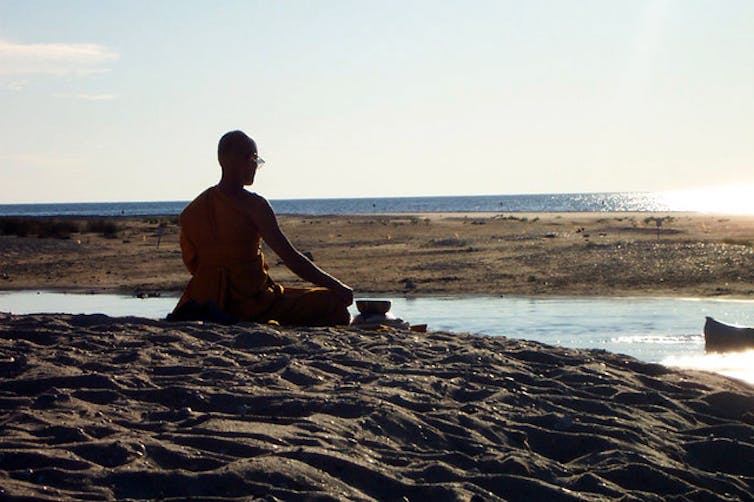
The quest for silence has been an eternal one.
Brian Ambrozy, CC BY-ND
The challenges of noise and distraction were, in fact, always part of the monastic life.
And so it remains to this day. One of the ways that monks and nuns have dealt with this challenge is by cultivating a sense of inner silence and inner stillness through practices like meditation, prayer and sitting in solitude.
In Greek, the language of the earliest Christian monastic texts, the word “hesychia” is used to describe the “interior stillness … that brings forth all the virtues” and over time it comes to be a central goal of Christian monasticism.
The ancient quest for silence can perhaps teach us how to respond to the challenges of our increasingly loud world and find our own silence.
[ Like what you’ve read? Want more? Sign up for The Conversation’s daily newsletter. ]
Kim Haines-Eitzen, Professor of Early Christianity, Cornell University
This article is republished from The Conversation under a Creative Commons license. Read the original article.
Previous Post

June 8, 2019
More Than One Religious View on Abortion—What Jewish Texts Say


Browse Our Archives
Select a Category Story of God Uncategorized
Select a Month September 2022 August 2022 January 2022 December 2021 August 2021 July 2021 February 2021 January 2021 January 2020 December 2019 November 2019 October 2019 September 2019 August 2019 July 2019 June 2019 May 2019 April 2019 March 2019 February 2019 January 2019 December 2018 November 2018 October 2018 September 2018 July 2018 June 2018 May 2018 April 2018 November 2017 October 2017 August 2017 June 2017 May 2017 April 2017 November 2016 October 2016 September 2016 July 2016 June 2016 May 2016 April 2016 March 2016 February 2016 January 2016 December 2015 November 2015 October 2015 September 2015 August 2015 July 2015 June 2015 May 2015 April 2015 March 2015 February 2015 January 2015 December 2014 October 2014 September 2014 July 2014 May 2014 April 2014 March 2014 February 2014 January 2014 September 2013 August 2013 July 2013 June 2013 May 2013 April 2013 March 2013 February 2013 January 2013 December 2012
Follow Us!
TAKE THE
Religious Wisdom Quiz
Who said, 'For the wages of sin is death, but the gift of God is eternal life'?
Select your answer to see how you score.
James Peter Paul John
Related posts from Religion Now

Truth is Narrow, but God’s Grace is Wide
Is Progressive Christianity Counterfeit Gospel?

Reviving the Divine Feminine with Beth Ames Swartz
TRENDING AT PATHEOS Religion News

Catholic Integralists believe that religious values – specifically Christian ones – should...

Electing A Virtuous President Would Make Immunity Irrelevant
Presidential immunity can bring with it many risks. So how can we...

Why The Olympic Games Are A ‘Civil Religious’...
Sporting events form a vital space where Americans display their 'civil religious...

After more than a decade of news, research updates, and insights on...

Q: Why do Southern Baptists and like-minded Protestants...
THE RELIGION GUY’S ANSWER: Why? Simple. Because they believe that’s what the...

THE QUESTION: Is gambling evil? THE RELIGION GUY’S ANSWER: Analysts anticipate a...
view all Religion News blogs
Ad-Free & Subscriber Log-In Subscription Support
- About Us
- 2026 Calendar
- Videos
- Podcasts
- Library of World Religions
- Faith In Media Tracker
- Advertise With Us
- Write for Us
- Privacy Policy
- Terms of Service
- Do Not Sell My Data
- Contact Us
- Radiant Digital
- Manage Newsletter Subscriptions
- Unsubscribe From Notifications
- Sitemap
Copyright 2008-2026, Patheos. All rights reserved.
Subscription Support Ad-Free & Subscriber Log-In
Follow Patheos