
BuddhistCatholicContemplativeEvangelicalGeneral ChristianHinduJewishLatter-day SaintMuslimNew VisionsProgressive Christian
Beliefs
- Buddhist
- Catholic
- Contemplative
- Evangelical
- General Christian
- Hindu
- Jewish
- Latter-day Saint
- More Voices
- Muslim
- New Visions
- Pagan
- Progressive Christian
Topics
- Religion News
- Food and Religion
- Sports and Religion
- Religious Art
- Religious Music and Entertainment
- Religious Events
- History and Religion
- Style and Religion
- Politics and Religion
- Women in Religion
- Recreation Outdoors and Religion
- Business Finance and Religion
- Careers Workplace and Religion
- Education and Religion
- Family Parenting and Religion
- Health Fitness and Religion
- Home and Religion
- Relationships and Religion
- Technology and Religion
- Travel and Religion
Columnists
- Buddhist Columnists
- Business Finance and Religion Columnists
- Careers Workplace and Religion Columnists
- Catholic Columnists
- Contemplative Columnists
- Education and Religion Columnists
- Evangelists Columnists
- Family Parenting and Religion Columnists
- General Christian Columnists
- Health Fitness and Religion Columnists
- Hindu Columnists
- History and Religion Columnists
- Home and Religion Columnists
- Jewish Columnists
- More Voices Columnists
- Latter Day Columnists
- Muslim Columnists
- New Visions Columnists
- Nonreligious Columnists
- Pagan Columnists
- Politics and Religion Columnists
- Progressive Columnists
- Recreation Outdoors and Religion Columnists
- Relationships and Religion Columnists
- Religion News Columnists
- Religious Art Columnists
- Religious Events Columnists
- Religious Music and Entertainment Columnists
- Sports and Religion Columnists
- Style and Religion Columnists
- Technology and Religion Columnists
- Travel and Religion Columnists
- Women in Religion Columnists
Resource Library
- 2026 Calendar
- Library of World Religions
- The 100 Most Holy Places on Earth
- Patheos Answers
- Podcasts
- Videos
- Faith Leaders Database
- Anglican Episcopalian
- Bahai
- Baptist
- Buddhism
- Christianity
- Confucianism
- Eastern Orthodoxy
- Hinduism
- Holiness and Pentecostal
- ISKCON
- Islam
- Judaism
- Lutheran
- Methodist
- The Church of Jesus Christ of Latter-day Saints
- New Age
- Paganism
- Presbytarian and Reformed
- Protestantism
- Religion Behind the Scenes
- Roman Catholic
- Scientology
- Shia Islam
- Sikhism
- Sufism
- Sunni Islam
- Taoism
- Zen
- See all religions
Research Tools
 Ad-Free & Subscriber Log-In Subscription Support
Ad-Free & Subscriber Log-In Subscription Support
Follow Patheos 

- Trending:
- Forgiveness
- |
- Marriage
- |
- Consciousness
- |
- Death Penalty
- |
- Election
- |
- Halloween

- Home
- Religion News
- Detaining Migrant Children at Military Bases Un-American? It’s Been Done Before
Detaining Migrant Children at Military Bases Un-American? It’s Been Done Before
Last updated on: June 18, 2019 at 12:02 pm by The Conversation
Detaining Migrant Children at Military Bases Un-American? It’s Been Done Before 2019-06-18T12:02:22-04:00 The Conversation
Patheos Explore the world's faith through different perspectives on religion and spirituality! Patheos has the views of the prevalent religions and spiritualities of the world.
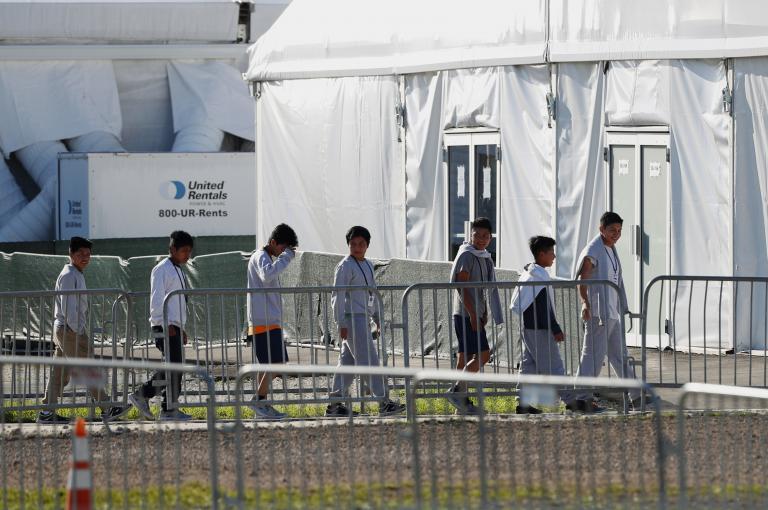
In this Feb. 19, 2019 file photo, children line up to enter a tent at the Homestead Temporary Shelter for Unaccompanied Children in Homestead, Fla. Immigrant advocates say the U.S. government is allowing migrant children at a Florida facility to languish in “prison-like conditions” after crossing the U.S.-Mexico border instead of releasing them promptly to family as required by federal rules. A court filing Friday, May 31, 2019 revealed conditions inside the Homestead, Florida, facility that has become the nation’s biggest location for detaining immigrant children. (AP Photo/Wilfredo Lee, File)
By Jana Lipman, Tulane University
Fort Sill, an army base in Oklahoma, will soon become a refugee camp. The Department of Health and Human Services expects the repurposed military facility to house up to 1,400 unaccompanied migrant children from Central America by early July.
Border agents apprehended 54,000 unaccompanied child migrants at the Mexico border last year alone. Typically, the government houses such children in temporary shelters and then places them with relatives already living in the United States. This means children can live with family and communities, rather than protective custody, as they wait for their asylum hearings.
This isn’t the first time the U.S. has housed kids at a military base, though. Fort Sill was used by President Barack Obama’s administration to shelter 1,800 Central American migrant children for four months in 2014.
Although the country hasn’t often had to cope with so many unaccompanied child migrants, my research on refugee camps in America reveals that the U.S. government has repeatedly turned to military bases to shelter unexpected – and often undesired – migrant populations. At different times throughout the 20th century, the federal government kept groups of people from Hungary, Vietnam, Cuba and Haiti on U.S. military bases.
The result can be either efficient immigration processing or a prolonged, confined and traumatic experience. It all hinges on the federal government’s refugee policy, its commitment to resettlement and on broader American views of the migrant population housed at the base.
1975: Vietnamese arrive to Fort Chaffee
Fort Chaffee, in Arkansas, is an informative example of the outside influences that can help or hurt the success of refugee camps in the U.S.
Established in 1941 as a military training camp, Fort Chaffee gained importance after the final U.S. withdrawal from Vietnam. It was one of several military bases selected to receive 120,000 South Vietnamese fleeing their country as the North Vietnamese marched into Saigon.
In April 1975, approximately 50,000 Vietnamese arrived in Fort Chaffee.
Then, as now, the sudden arrival of so many foreigners divided Americans. Some felt generosity and compassion toward the Vietnamese migrants; others expressed anti-refugee sentiments and fear of invasion.
“The people of Arkansas might as well realize what they are sacrificing, bringing these people over to this fertile country,” wrote one local man to Arkansas’ Southwest Times Record on May 4, 1975. “The day will come when there will be booby traps in the Ozarks.”
The letter writer, a Vietnam War veteran, saw the Vietnamese at Fort Chaffee as his enemy – not as U.S. allies who faced reprisals as a result of the United States’ war.
“[W]hen I went over there … I was going to keep them from getting closer to the United States,” he wrote. Instead, he added, “they almost beat me back here.”
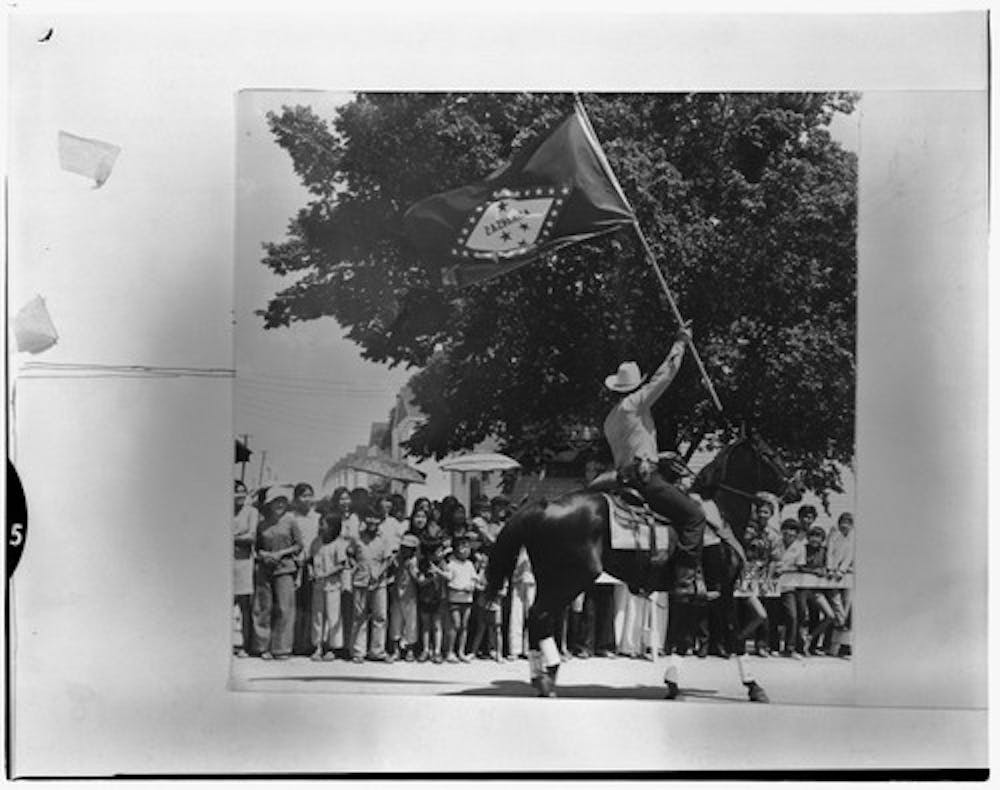
The South Vietnamese migrants housed at Fort Chaffee were resettled quickly.
Online Archive of California
Ford welcomes the Vietnamese at Fort Chaffee
President Gerald Ford and American military leaders felt responsible for their Vietnamese allies displaced by the U.S. war.
The federal government admitted Vietnamese outside regular immigration channels and worked to resettle them in the United States. Ford even visited Fort Chaffee to greet the new arrivals in August 1975.
“It’s really inspirational to see so many young people, old people and others getting an opportunity to be a part of America,” he said. “We’re proud of them and welcome them all here.”
Fort Chaffee offered English classes, basic cultural orientation lessons and spaces for religious worship to the Vietnamese held there. And the U.S. military worked with volunteer agencies to ensure they were quickly sponsored and resettled.
By December 1975, less than a year after their arrival, all 50,000 Vietnamese were living outside the base.
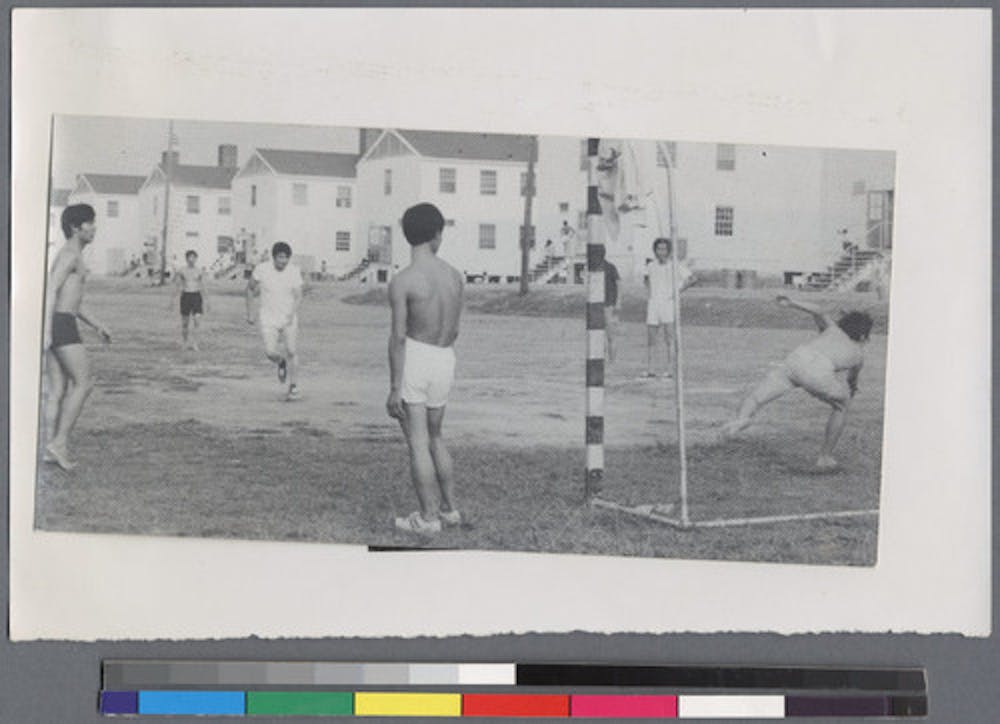
Vietnamese boys play soccer at Fort Chaffee, Ark., in 1975.
Online Archive of California
1980: Cubans harassed at Fort Chaffee
The base would be full of migrants again soon enough.
In 1980 approximately 100,000 people fled Cuba when President Fidel Castro – facing internal domestic pressure – briefly allowed people to leave the communist island from the Mariel Port.
Cubans from the Mariel Boatlift were more likely to be working-class and Cubans of color than the generation who fled after the 1959 Cuban Revolution. Along with political dissidents and those seeking better economic opportunities, Castro also forced “undesirables” off the island, including those deemed to be criminal, mentally ill or gay.
By flooding American shores with these highly stigmatized Cubans, Castro created a political problem for President Jimmy Carter.
Carter believed the U.S. had an obligation to “provide open heart and open arms to refugees seeking freedom from Communist domination and economic deprivation.”
But many Americans saw the new arrivals as dangerous and unwanted.
Bill Clinton, then the governor of Arkansas, warned federal officials that sending Cubans to Fort Chaffee would be unpopular and possibly volatile.
He was right. In May 1980, locals from around Fort Chaffee met the approximately 20,000 Cubans who arrived there with hostility. Ku Klux Klan members even protested outside the base and “rant[ed] about white power,” according to a 1980 People Magazine article.
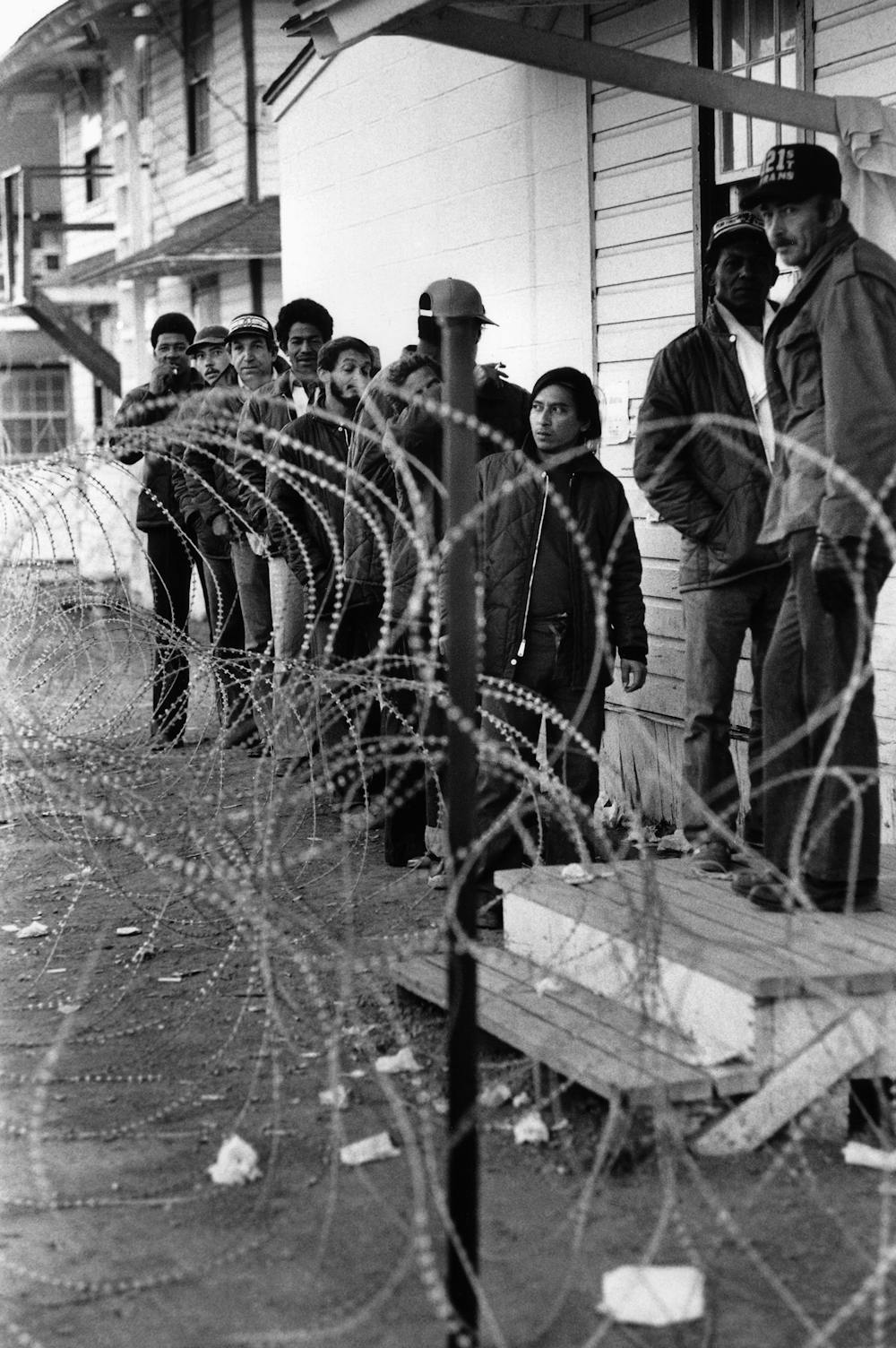
Cubans line up for processing before being sent to Fort Chaffee in 1980.
AP Photo/Paul Vathis
The Cubans sent to Fort Chaffee also resented their detention in what one government official called “a concentration camp atmosphere.” On June 1, 1980, hundreds of them protested and burned down base buildings. Many then walked off the base toward town.
The Cubans threw rocks and bottles, and fighting broke out. Dozens of Cubans and Arkansas state troopers were injured.
Since it was difficult to find sponsors for many of these Cubans, hundreds stayed at Fort Chaffee much longer than the Vietnamese – in some cases over a year.
Over time, life at the military base became more restrictive.
“It’s hard to describe the place as something other than a prison,” the Boston Globe reported in 1981. “There are guards, fences; Cubans can’t leave the perimeters.”
The roughly 400 Mariel Cubans who had not found sponsors by February 1982 were transferred to federal prisons. Some were later released; many others languished in prison in legal limbo.
Refugee camp or military prison?
The history of Fort Chaffee shows that it’s risky to house refugee populations on a military base.
Executed with compassion and the promise of resettlement, it can facilitate shelter, social services and a quick transition.
Done badly, when anti-refugee sentiment is high, a military base can become prison-like – a place where migrants are confined behind barbed wire, with unknown release dates.
The Trump administration’s stated policy toward refugees is to deny them asylum and deport them as soon as possible. That includes children.
It is unclear whether the young migrants sent to Fort Sill will have access to lawyers, education or social services.
In this political context, warehousing children at a military base seems ripe for lawsuits, unanticipated consequences and trauma for the children trapped there.
[ Deep knowledge, daily. Sign up for The Conversation’s newsletter. ]
Jana Lipman, Associate Professor of History, Tulane University
This article is republished from The Conversation under a Creative Commons license. Read the original article.
Previous Post
June 12, 2019
The Struggle to Find Silence in the Ancient Monastic World—and Now
Browse Our Archives
Select a Category Story of God Uncategorized
Select a Month September 2022 August 2022 January 2022 December 2021 August 2021 July 2021 February 2021 January 2021 January 2020 December 2019 November 2019 October 2019 September 2019 August 2019 July 2019 June 2019 May 2019 April 2019 March 2019 February 2019 January 2019 December 2018 November 2018 October 2018 September 2018 July 2018 June 2018 May 2018 April 2018 November 2017 October 2017 August 2017 June 2017 May 2017 April 2017 November 2016 October 2016 September 2016 July 2016 June 2016 May 2016 April 2016 March 2016 February 2016 January 2016 December 2015 November 2015 October 2015 September 2015 August 2015 July 2015 June 2015 May 2015 April 2015 March 2015 February 2015 January 2015 December 2014 October 2014 September 2014 July 2014 May 2014 April 2014 March 2014 February 2014 January 2014 September 2013 August 2013 July 2013 June 2013 May 2013 April 2013 March 2013 February 2013 January 2013 December 2012
Follow Us!
TAKE THE
Religious Wisdom Quiz
What does "Sheol," often found in Psalms, mean?
Select your answer to see how you score.
Above the mountain Blessing The grave or abode of the dead Eternal light
Related posts from Religion Now
More Central American Migrants Take Shelter in Churches,...
Religious Communities: Welcoming the "One-Percent"

Truth is Narrow, but God’s Grace is Wide
Is Progressive Christianity Counterfeit Gospel?
TRENDING AT PATHEOS Religion News

Catholic Integralists believe that religious values – specifically Christian ones – should...

Electing A Virtuous President Would Make Immunity Irrelevant
Presidential immunity can bring with it many risks. So how can we...

Why The Olympic Games Are A ‘Civil Religious’...
Sporting events form a vital space where Americans display their 'civil religious...

After more than a decade of news, research updates, and insights on...

Q: Why do Southern Baptists and like-minded Protestants...
THE RELIGION GUY’S ANSWER: Why? Simple. Because they believe that’s what the...

THE QUESTION: Is gambling evil? THE RELIGION GUY’S ANSWER: Analysts anticipate a...
view all Religion News blogs
Ad-Free & Subscriber Log-In Subscription Support
- About Us
- 2026 Calendar
- Videos
- Podcasts
- Library of World Religions
- Faith In Media Tracker
- Advertise With Us
- Write for Us
- Privacy Policy
- Terms of Service
- Do Not Sell My Data
- Contact Us
- Radiant Digital
- Manage Newsletter Subscriptions
- Unsubscribe From Notifications
- Sitemap
Copyright 2008-2026, Patheos. All rights reserved.
Subscription Support Ad-Free & Subscriber Log-In
Follow Patheos