
BuddhistCatholicContemplativeEvangelicalGeneral ChristianHinduJewishLatter-day SaintMuslimNew VisionsProgressive Christian
Beliefs
- Buddhist
- Catholic
- Contemplative
- Evangelical
- General Christian
- Hindu
- Jewish
- Latter-day Saint
- More Voices
- Muslim
- New Visions
- Pagan
- Progressive Christian
Topics
- Religion News
- Food and Religion
- Sports and Religion
- Religious Art
- Religious Music and Entertainment
- Religious Events
- History and Religion
- Style and Religion
- Politics and Religion
- Women in Religion
- Recreation Outdoors and Religion
- Business Finance and Religion
- Careers Workplace and Religion
- Education and Religion
- Family Parenting and Religion
- Health Fitness and Religion
- Home and Religion
- Relationships and Religion
- Technology and Religion
- Travel and Religion
Columnists
- Buddhist Columnists
- Business Finance and Religion Columnists
- Careers Workplace and Religion Columnists
- Catholic Columnists
- Contemplative Columnists
- Education and Religion Columnists
- Evangelists Columnists
- Family Parenting and Religion Columnists
- General Christian Columnists
- Health Fitness and Religion Columnists
- Hindu Columnists
- History and Religion Columnists
- Home and Religion Columnists
- Jewish Columnists
- More Voices Columnists
- Latter Day Columnists
- Muslim Columnists
- New Visions Columnists
- Nonreligious Columnists
- Pagan Columnists
- Politics and Religion Columnists
- Progressive Columnists
- Recreation Outdoors and Religion Columnists
- Relationships and Religion Columnists
- Religion News Columnists
- Religious Art Columnists
- Religious Events Columnists
- Religious Music and Entertainment Columnists
- Sports and Religion Columnists
- Style and Religion Columnists
- Technology and Religion Columnists
- Travel and Religion Columnists
- Women in Religion Columnists
Resource Library
- 2026 Calendar
- Library of World Religions
- The 100 Most Holy Places on Earth
- Patheos Answers
- Podcasts
- Videos
- Faith Leaders Database
- Anglican Episcopalian
- Bahai
- Baptist
- Buddhism
- Christianity
- Confucianism
- Eastern Orthodoxy
- Hinduism
- Holiness and Pentecostal
- ISKCON
- Islam
- Judaism
- Lutheran
- Methodist
- The Church of Jesus Christ of Latter-day Saints
- New Age
- Paganism
- Presbytarian and Reformed
- Protestantism
- Religion Behind the Scenes
- Roman Catholic
- Scientology
- Shia Islam
- Sikhism
- Sufism
- Sunni Islam
- Taoism
- Zen
- See all religions
Research Tools
 Ad-Free & Subscriber Log-In Subscription Support
Ad-Free & Subscriber Log-In Subscription Support
Follow Patheos 

- Trending:
- Forgiveness
- |
- Marriage
- |
- Consciousness
- |
- Death Penalty
- |
- Election
- |
- Halloween

- Home
- Religion News
- Pete Buttigieg Reviving Progressive Ideals of the Social Gospel Movement
Pete Buttigieg Reviving Progressive Ideals of the Social Gospel Movement
Last updated on: April 17, 2019 at 3:47 pm by The Conversation
Pete Buttigieg Reviving Progressive Ideals of the Social Gospel Movement 2019-04-17T15:47:39-04:00 The Conversation
Patheos Explore the world's faith through different perspectives on religion and spirituality! Patheos has the views of the prevalent religions and spiritualities of the world.

South Bend Mayor Pete Buttigieg announces that he will seek the Democratic presidential nomination during a rally, Sunday, April 14, 2019, in South Bend, Ind. (AP Photo/Darron Cummings)
David Mislin, Temple University
In recent weeks, Democratic presidential hopeful Pete Buttigieg has captured wide media attention.
One reason is that Buttigieg is the first openly gay presidential candidate. Another is that he has been unguarded in speaking about his religious beliefs, arguing that his faith shapes his politics.
In a recent interview, Buttigieg said that “Christian faith” can lead one “in a progressive direction.” He has also argued that Christianity teaches “skepticism of the wealthy and the powerful and the established” while elsewhere expressing concern that in the U.S. “concentrated wealth has begun to turn into concentrated power.”
These arguments are all the more striking since Buttigieg is from Indiana. According to a 2014 Pew survey, twice as many of the state’s voters identify as conservative than as liberal. Moreover, self-identified conservatives significantly outnumber liberals among Indiana Christians. It might seem that Buttigieg’s convictions are at odds with the beliefs of many people in his state.
A century ago, however, views such as Buttigieg’s flourished in the Midwest.
A progressive religious movement
As a historian of U.S. religion, I have studied the vibrant period for religious liberalism in the early 1900s. Indiana and nearby Midwestern states were at the center of a movement – the Social Gospel movement – that linked Christianity with progressive politics.
The movement gained wide popularity in American Protestantism at the beginning of the 20th century. Its proponents proclaimed the need to improve the world rather than focusing on being saved in the next life, which was the common message espoused in most U.S. churches.
One exemplar of the Midwestern roots of the Social Gospel was the Methodist clergyman Francis J. McConnell, who became known as an advocate for progressive policies.
McConnell grew up in a small-town in Ohio before attending Ohio Wesleyan University. From 1909 to 1912, he served as president of DePauw University in central Indiana.
While there, he published a book that made arguments similar to Buttigieg’s belief that faith should inspire social action. McConnell insisted, “The moral impulse calls for the betterment of all the conditions of human living.”
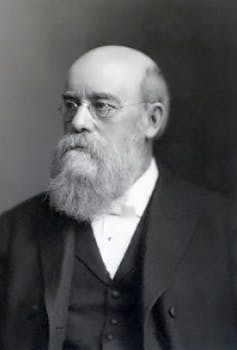
Washington Gladden.
Ohio History Central
Historian Susan Curtis writes that McConnell “participated in the promotion of an evolving welfare state.”
There were other prominent Social Gospel proponents who lived and worked across the Midwest at the time. From his Columbus, Ohio, church, Washington Gladden became famous for urging greater protection for workers and the poor. Further west, in Kansas, the minister Charles Sheldon published the book, “In His Steps,” in 1896. It urged Christians to improve the lives of those around them.
The Social Gospel — a religious challenge to big business
It wasn’t just the presence of these leaders in the region – more important was the resonance of the message of the Social Gospel there. Small cities and towns in the Midwest were the heartland of the Social Gospel.
The Social Gospel’s critique of big business resonated in communities throughout the Midwest.
The movement emerged in response to the development of massive national corporations in the late 19th century. These companies consolidated wealth and power in large cities, often quite distant from Midwestern communities.
Demands for a social safety net for workers were rising in places like Columbus and Indianapolis as much as in larger metropolises like New York or Philadelphia.
These leaders urged the creation of a social safety net to provide a “living wage” for all workers. They also advocated increased government oversight of corporations, which they believed had grown too large. At a time when many churches supported big business, this was a counter-cultural position.
Lecturing back in his home state of Ohio in 1912, McConnell likened modern “corporate kings” to the absolute monarchs of previous centuries. Similar to rulers of earlier times, corporate titans exerted great power at a distance and could inflict harm.
McConnell believed organized Christianity could inspire people to challenge big business. “Corporations thrive best morally when they enjoy the full light of publicity,” he wrote.
Like Buttigieg, who argues that his Christian belief makes him skeptical of the effects of concentrated wealth, these Midwesterners saw Christianity as the antidote to distant corporate power.
New life for an old message

Pete Buttigieg speaking about his presidential run.
AP Photo/Richard Shiro
Over the last few years, observers have noted the resurgence of a religious left inspired by the ideals of the Social Gospel.
With Pete Buttigieg, the religious left has its most prominent political leader to date – and from the part of the country that was historically important for its emergence.
David Mislin, Assistant Professor of Intellectual Heritage, Temple University
This article is republished from The Conversation under a Creative Commons license. Read the original article.
Previous Post

April 16, 2019
Why Are We so Moved by the Plight of the Notre Dame?
Browse Our Archives
Select a Category Story of God Uncategorized
Select a Month September 2022 August 2022 January 2022 December 2021 August 2021 July 2021 February 2021 January 2021 January 2020 December 2019 November 2019 October 2019 September 2019 August 2019 July 2019 June 2019 May 2019 April 2019 March 2019 February 2019 January 2019 December 2018 November 2018 October 2018 September 2018 July 2018 June 2018 May 2018 April 2018 November 2017 October 2017 August 2017 June 2017 May 2017 April 2017 November 2016 October 2016 September 2016 July 2016 June 2016 May 2016 April 2016 March 2016 February 2016 January 2016 December 2015 November 2015 October 2015 September 2015 August 2015 July 2015 June 2015 May 2015 April 2015 March 2015 February 2015 January 2015 December 2014 October 2014 September 2014 July 2014 May 2014 April 2014 March 2014 February 2014 January 2014 September 2013 August 2013 July 2013 June 2013 May 2013 April 2013 March 2013 February 2013 January 2013 December 2012
Follow Us!
TAKE THE
Religious Wisdom Quiz
Which city was destroyed by fire and brimstone along with Gomorrah?
Select your answer to see how you score.
Babylon Nineveh Sodom Jericho
Related posts from Religion Now

Truth is Narrow, but God’s Grace is Wide
Is Progressive Christianity Counterfeit Gospel?


Reviving the Divine Feminine with Beth Ames Swartz
TRENDING AT PATHEOS Religion News

Catholic Integralists believe that religious values – specifically Christian ones – should...

Electing A Virtuous President Would Make Immunity Irrelevant
Presidential immunity can bring with it many risks. So how can we...

Why The Olympic Games Are A ‘Civil Religious’...
Sporting events form a vital space where Americans display their 'civil religious...

After more than a decade of news, research updates, and insights on...

Q: Why do Southern Baptists and like-minded Protestants...
THE RELIGION GUY’S ANSWER: Why? Simple. Because they believe that’s what the...

THE QUESTION: Is gambling evil? THE RELIGION GUY’S ANSWER: Analysts anticipate a...
view all Religion News blogs
Ad-Free & Subscriber Log-In Subscription Support
- About Us
- 2026 Calendar
- Videos
- Podcasts
- Library of World Religions
- Faith In Media Tracker
- Advertise With Us
- Write for Us
- Privacy Policy
- Terms of Service
- Do Not Sell My Data
- Contact Us
- Radiant Digital
- Manage Newsletter Subscriptions
- Unsubscribe From Notifications
- Sitemap
Copyright 2008-2026, Patheos. All rights reserved.
Subscription Support Ad-Free & Subscriber Log-In
Follow Patheos