
BuddhistCatholicContemplativeEvangelicalGeneral ChristianHinduJewishLatter-day SaintMuslimNew VisionsProgressive Christian
Beliefs
- Buddhist
- Catholic
- Contemplative
- Evangelical
- General Christian
- Hindu
- Jewish
- Latter-day Saint
- More Voices
- Muslim
- New Visions
- Pagan
- Progressive Christian
Topics
- Religion News
- Food and Religion
- Sports and Religion
- Religious Art
- Religious Music and Entertainment
- Religious Events
- History and Religion
- Style and Religion
- Politics and Religion
- Women in Religion
- Recreation Outdoors and Religion
- Business Finance and Religion
- Careers Workplace and Religion
- Education and Religion
- Family Parenting and Religion
- Health Fitness and Religion
- Home and Religion
- Relationships and Religion
- Technology and Religion
- Travel and Religion
Columnists
- Buddhist Columnists
- Business Finance and Religion Columnists
- Careers Workplace and Religion Columnists
- Catholic Columnists
- Contemplative Columnists
- Education and Religion Columnists
- Evangelists Columnists
- Family Parenting and Religion Columnists
- General Christian Columnists
- Health Fitness and Religion Columnists
- Hindu Columnists
- History and Religion Columnists
- Home and Religion Columnists
- Jewish Columnists
- More Voices Columnists
- Latter Day Columnists
- Muslim Columnists
- New Visions Columnists
- Nonreligious Columnists
- Pagan Columnists
- Politics and Religion Columnists
- Progressive Columnists
- Recreation Outdoors and Religion Columnists
- Relationships and Religion Columnists
- Religion News Columnists
- Religious Art Columnists
- Religious Events Columnists
- Religious Music and Entertainment Columnists
- Sports and Religion Columnists
- Style and Religion Columnists
- Technology and Religion Columnists
- Travel and Religion Columnists
- Women in Religion Columnists
Resource Library
- 2026 Calendar
- Library of World Religions
- The 100 Most Holy Places on Earth
- Patheos Answers
- Podcasts
- Videos
- Faith Leaders Database
- Anglican Episcopalian
- Bahai
- Baptist
- Buddhism
- Christianity
- Confucianism
- Eastern Orthodoxy
- Hinduism
- Holiness and Pentecostal
- ISKCON
- Islam
- Judaism
- Lutheran
- Methodist
- The Church of Jesus Christ of Latter-day Saints
- New Age
- Paganism
- Presbytarian and Reformed
- Protestantism
- Religion Behind the Scenes
- Roman Catholic
- Scientology
- Shia Islam
- Sikhism
- Sufism
- Sunni Islam
- Taoism
- Zen
- See all religions
Research Tools
 Ad-Free & Subscriber Log-In Subscription Support
Ad-Free & Subscriber Log-In Subscription Support
Follow Patheos 

- Trending:
- Forgiveness
- |
- Marriage
- |
- Consciousness
- |
- Death Penalty
- |
- Election
- |
- Halloween

- Home
- Religion News
- For Father’s Day, Let’s Discuss How Men Can Help Women be Less Vulnerable
For Father’s Day, Let’s Discuss How Men Can Help Women be Less Vulnerable
Last updated on: June 15, 2018 at 10:53 am by Guest Contributor
For Father’s Day, Let’s Discuss How Men Can Help Women be Less Vulnerable 2018-06-15T10:53:20-04:00 Guest Contributor
Patheos Explore the world's faith through different perspectives on religion and spirituality! Patheos has the views of the prevalent religions and spiritualities of the world.
 By Dan Haseltine
There are few areas of life where a man should feel as slippery-footed as when he is discussing topics related to women. Men, historically, even with an abundance of resources—from tabloid magazine articles to physiological and psychological books—have been utterly confounded.
The task of writing about women is {such} a scary one that {in trying to} help us understand the role we play in serving vulnerable women and children around the world, I am going to attempt to stay out of the burning center of the discussion and stay closer to the shade trees on the fringe.
On a human level, which is where we should always be having this conversation, vulnerability is another way of saying we have a weakness. Perhaps we have a soft spot on our underbelly where our scales have fallen, where a marksman could inflict a devastating blow. As I see it, maybe our weakness is not our own skin but, rather, a part of our culture. Could a person’s weakness, a woman’s point of vulnerability, be another person?
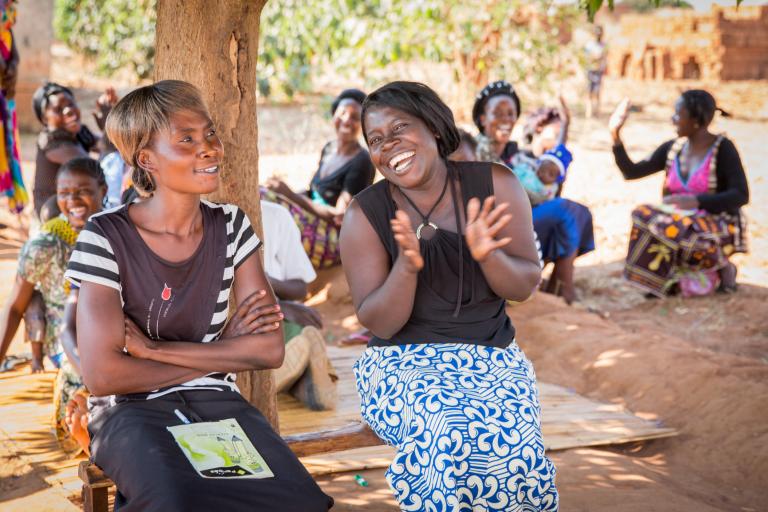
If you have known any East African women, you would probably have the same difficulty as me in finding any weakness or vulnerability in them. They are beautiful and strong, tenacious, creative and courageous. My lexicon of glowing adjectives would run dry before I achieved the fullness of what the nearly goddess-like women of East Africa are like in my own eyes. I have watched them carry children and cinderblocks up mountains. I have watched them toil in the unforgiving sun, all the hours of the day, planting sugarcane and corn and then dancing the night away in joyous laughter. I have experienced their leadership as they have forged the path to clean water and better health and hygiene for their children and families. Even in sickness, I have watched women mix concrete and build bio-sand filters for others in their villages. Have I hyped them enough?
You see, when I think about women and children in those communities of Africa, it is so hard for me to see them as vulnerable. At least, it is hard to consider their particular vulnerability to be something coming from within them, which brings me back to the shade on the fringe of the community. There are people in the shade we must consider.
If you have spent any time in Kenya or Rwanda or Zambia or Zimbabwe or Uganda, or any country in the developing east side of Africa, you have probably noticed that a lot of the men are like lions. They watch over the pride from the shade of the acacia tree.
The first time I set foot on African soil, it was obvious that there was a cultural understanding, different from the Western one I was accustomed to, regarding a man’s place in the work of the community. In most of the villages I visited, I was greeted by women who were a part of leadership teams who established development plans for their communities. I realized early on that these women were the brawn and the brains of the operation.
We would gather under an old tree and drink warm orange Fanta and talk about why clean water and hygiene mattered to them. With the exception of a few elders, there were only ever a few men in the mix. I watched children carrying massive water jugs back and forth from the river. I watched women cutting sugarcane, tobacco, and maize, while men lounged under trees, drank, and told stories to each other. In fact, the first time I carried water from a muddy watering hole, I was laughed at by a line of men who had come to observe the spectacle of men carrying water. After all, only women and children did that.
Maybe it is old-fashioned, but there is something in the heart of a man that makes him feel like a failure if he is not able to provide for his family. I know that those men watching me that day had traveled a long way by foot, looking for employment. Looking but never finding. So I guess, if I reached, I could empathize with their story. The inability to provide is not just a Western form of emasculation. Economies fail. A man’s vulnerable soul is preyed upon by circumstances he is unprepared to defend against. And sometimes the cultures that grow out of the frustration of failure become a problem, especially for women and children.
But the truth is, those same men who have no employment and who have lost a sense of direction play one of the most significant roles in the growth and health of their communities. The way men treat women always has a profound effect on the health and development of the world they live in.
Men have a role in the story of women who are deemed “vulnerable.” Women are vulnerable to men who have grown up in a culture that does not value the sexual health of women and girls. Women are vulnerable to the men who perpetrate rape or who decide they do not want to wear a condom during intercourse. Women are vulnerable to men who do not have any cultural guardrails preventing them from sexually abusing children. Women are vulnerable to men who do not respect the bodies of women and believe women to be property. Women are vulnerable to men who act out their frustrations through sexual misconduct. Women are vulnerable to men who consider themselves superior to women.
I should not go much farther into this essay without acknowledging that not all men in eastern Africa are like this. It would be a gross generalization to put all men in this category (however true it would be to imply that men, in general, have a bit of a superiority complex). That is for another conversation…
So if there are cultural norms that perpetuate violence toward women, what role can men play in changing that culture? What role can we play in the support of women’s health and safety? Perhaps it is not such a paradoxical idea that we could lead by serving.
This piece is excerpted with permission from Zondervan Publishing from the recently-released “Mother & Child Project: Raising our Voices for Health and Hope,” a compilation on global maternal and child health issues.

About Dan Haseltine
Dan Haseltine is the lead singer of the band Jars of Clay and a co-founder of Blood:Water Mission, which aims to provide clean drinking water and HIV/AIDS treatments to people in underdeveloped parts of the world. You can read more about the author here.
Previous Post

June 9, 2018
Could This Woman Bring Down The Southern Baptist Convention?
Next Post

June 26, 2018 Do Not Tolerate the Intolerable: Public Shaming Can Be a Justice Action
Browse Our Archives
Select a Category Story of God Uncategorized
Select a Month September 2022 August 2022 January 2022 December 2021 August 2021 July 2021 February 2021 January 2021 January 2020 December 2019 November 2019 October 2019 September 2019 August 2019 July 2019 June 2019 May 2019 April 2019 March 2019 February 2019 January 2019 December 2018 November 2018 October 2018 September 2018 July 2018 June 2018 May 2018 April 2018 November 2017 October 2017 August 2017 June 2017 May 2017 April 2017 November 2016 October 2016 September 2016 July 2016 June 2016 May 2016 April 2016 March 2016 February 2016 January 2016 December 2015 November 2015 October 2015 September 2015 August 2015 July 2015 June 2015 May 2015 April 2015 March 2015 February 2015 January 2015 December 2014 October 2014 September 2014 July 2014 May 2014 April 2014 March 2014 February 2014 January 2014 September 2013 August 2013 July 2013 June 2013 May 2013 April 2013 March 2013 February 2013 January 2013 December 2012
Follow Us!
TAKE THE
Religious Wisdom Quiz
What Christian group refers to their leaders as "General Superintendents"?
Select your answer to see how you score.
Catholic Nazarene Methodist Orthodox
Related posts from Religion Now

Truth is Narrow, but God’s Grace is Wide
Is Progressive Christianity Counterfeit Gospel?


Reviving the Divine Feminine with Beth Ames Swartz
TRENDING AT PATHEOS Religion News

Catholic Integralists believe that religious values – specifically Christian ones – should...

Electing A Virtuous President Would Make Immunity Irrelevant
Presidential immunity can bring with it many risks. So how can we...

Why The Olympic Games Are A ‘Civil Religious’...
Sporting events form a vital space where Americans display their 'civil religious...

After more than a decade of news, research updates, and insights on...

Q: Why do Southern Baptists and like-minded Protestants...
THE RELIGION GUY’S ANSWER: Why? Simple. Because they believe that’s what the...

THE QUESTION: Is gambling evil? THE RELIGION GUY’S ANSWER: Analysts anticipate a...
view all Religion News blogs
Ad-Free & Subscriber Log-In Subscription Support
- About Us
- 2026 Calendar
- Videos
- Podcasts
- Library of World Religions
- Faith In Media Tracker
- Advertise With Us
- Write for Us
- Privacy Policy
- Terms of Service
- Do Not Sell My Data
- Contact Us
- Radiant Digital
- Manage Newsletter Subscriptions
- Unsubscribe From Notifications
- Sitemap
Copyright 2008-2026, Patheos. All rights reserved.
Subscription Support Ad-Free & Subscriber Log-In
Follow Patheos