
BuddhistCatholicContemplativeEvangelicalGeneral ChristianHinduJewishLatter-day SaintMuslimNew VisionsProgressive Christian
Beliefs
- Buddhist
- Catholic
- Contemplative
- Evangelical
- General Christian
- Hindu
- Jewish
- Latter-day Saint
- More Voices
- Muslim
- New Visions
- Pagan
- Progressive Christian
Topics
- Religion News
- Food and Religion
- Sports and Religion
- Religious Art
- Religious Music and Entertainment
- Religious Events
- History and Religion
- Style and Religion
- Politics and Religion
- Women in Religion
- Recreation Outdoors and Religion
- Business Finance and Religion
- Careers Workplace and Religion
- Education and Religion
- Family Parenting and Religion
- Health Fitness and Religion
- Home and Religion
- Relationships and Religion
- Technology and Religion
- Travel and Religion
Columnists
- Buddhist Columnists
- Business Finance and Religion Columnists
- Careers Workplace and Religion Columnists
- Catholic Columnists
- Contemplative Columnists
- Education and Religion Columnists
- Evangelists Columnists
- Family Parenting and Religion Columnists
- General Christian Columnists
- Health Fitness and Religion Columnists
- Hindu Columnists
- History and Religion Columnists
- Home and Religion Columnists
- Jewish Columnists
- More Voices Columnists
- Latter Day Columnists
- Muslim Columnists
- New Visions Columnists
- Nonreligious Columnists
- Pagan Columnists
- Politics and Religion Columnists
- Progressive Columnists
- Recreation Outdoors and Religion Columnists
- Relationships and Religion Columnists
- Religion News Columnists
- Religious Art Columnists
- Religious Events Columnists
- Religious Music and Entertainment Columnists
- Sports and Religion Columnists
- Style and Religion Columnists
- Technology and Religion Columnists
- Travel and Religion Columnists
- Women in Religion Columnists
Resource Library
- 2026 Calendar
- Library of World Religions
- The 100 Most Holy Places on Earth
- Patheos Answers
- Podcasts
- Videos
- Faith Leaders Database
- Anglican Episcopalian
- Bahai
- Baptist
- Buddhism
- Christianity
- Confucianism
- Eastern Orthodoxy
- Hinduism
- Holiness and Pentecostal
- ISKCON
- Islam
- Judaism
- Lutheran
- Methodist
- The Church of Jesus Christ of Latter-day Saints
- New Age
- Paganism
- Presbytarian and Reformed
- Protestantism
- Religion Behind the Scenes
- Roman Catholic
- Scientology
- Shia Islam
- Sikhism
- Sufism
- Sunni Islam
- Taoism
- Zen
- See all religions
Research Tools
 Ad-Free & Subscriber Log-In Subscription Support
Ad-Free & Subscriber Log-In Subscription Support
Follow Patheos 

- Trending:
- Forgiveness
- |
- Marriage
- |
- Consciousness
- |
- Death Penalty
- |
- Election
- |
- Halloween

- Home
- Religion News
- The Idea of God Beyond Religion
The Idea of God Beyond Religion
Last updated on: May 2, 2018 at 11:12 am by Guest Contributor
The Idea of God Beyond Religion 2018-05-02T11:12:39-04:00 Guest Contributor
Patheos Explore the world's faith through different perspectives on religion and spirituality! Patheos has the views of the prevalent religions and spiritualities of the world.
 Polls show that “spiritual but not religious” is becoming an increasingly popular option in the United States. According to the Pew Research Center, 27 percent of the population now fall into this category, up 8 percent from 2012.
Whether this is good or bad depends on your point of view. According to some commentators, mere spirituality is an empty position that appeals most to people who are preoccupied with believing niceties and unable to bear the demands that religion makes. Others, including me, think exploring spirituality beyond religion is a necessary step if we are to collectively realize more coherent and plausible spiritual worldviews, and that it should be actively encouraged.
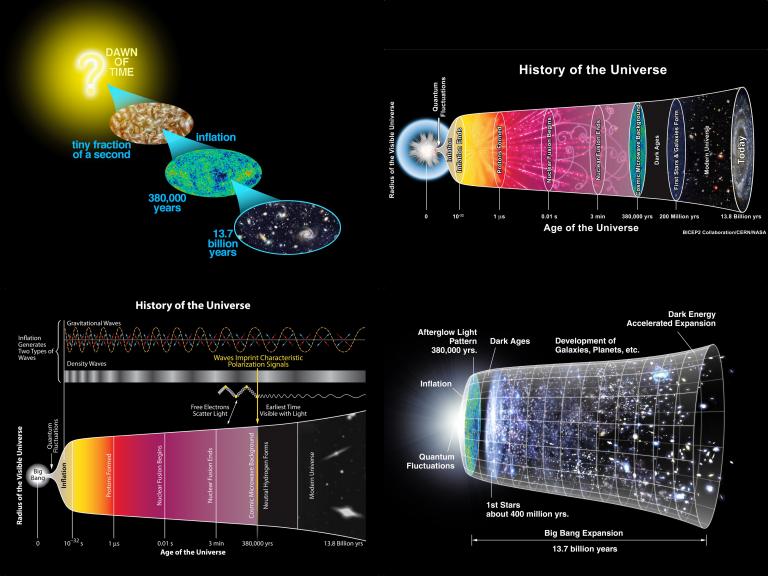
The fact is that God is not any one, single idea, but a family of different hypotheses connected by a common theme. This is not a unique property of the idea of God. For example, there are literally hundreds of different versions of the theory of cosmological inflation—the idea that the early universe underwent an extremely brief moment of exponentially accelerating expansion. Discovering that one of these models is false doesn’t necessarily tell you anything about the truth or falsehood of the many others.
The idea of God is similar. There are many different ways in which to model the divine, and having reasons to doubt one version does not negate the possibility that truth sits somewhere among the remaining ones.
Religions have historically had the loudest voices over what God is, so it’s not surprising that religious accounts have predominated human thought.
Core claims about God in traditional Christianity include that he once lived on Earth as Jesus, that Jesus’s crucifixion made possible our redemption from sin, and that he will ultimately judge the lives of everyone before separating us between heaven and hell.
Islam tells a different story at several theological junctures. For example, while Islam agrees that God will judge people for how they live, it denies that he ever lived as Jesus, and does not see all humans as sinful merely because of what Adam and Eve did.
The Start of Something?
The thing to note about these accounts is that they involve a large number of specific claims about God, and not one of them is essential to the very idea of a divine being. It is in no sense necessary to believe that God judges and punishes, or engages in acts of revelation to get a message out to humanity, or is preoccupied with spiritual wrongdoings known as “sin.”
Thousands of years of religion have normalized the association of these ideas with divinity, but you can easily believe in the existence of a divine being without also believing in these religious accompaniments.
Of course, religions claim it’s important to believe as they teach, even if faith is needed to bridge the gap. However, does it really make sense that God would seek to convey crucial messages to humanity on the say-so of specific individuals? Or through books compiled in highly unlikely ways? Does it really make sense that God would seek to be acknowledged and worshipped, or regulate what people can and can’t do?
It is reasonable to doubt accounts of God that depend on claims like this. Religions should be seen in the same light as early theories about the cosmos or the causes of disease. While we can appreciate them as first attempts to understand a bewildering and complex universe, they are also the kinds of explanations you would expect to arise when so little about the world was known.
Happily, just as with the failure of a particular scientific model for cosmological inflation, the failure of a religion to provide a plausible and coherent account of God does not indicate that doing so is impossible.
This is why the increasing tendency of people in the United States to avoid identifying as religious may be the start of something positive, for it opens the door to new and interesting collective explorations of the idea of God.
Timothy Rowe is a philosopher and writer. His website is atheoryofus.net, and you can catch him on Twitter at @TimothyRowe.
Previous Post

November 9, 2017
How We Use Faith in the Face of Fear
Next Post
May 23, 2018 The Met’s Catholic "Fashion" and the Muslim Imagination
Browse Our Archives
Select a Category Story of God Uncategorized
Select a Month September 2022 August 2022 January 2022 December 2021 August 2021 July 2021 February 2021 January 2021 January 2020 December 2019 November 2019 October 2019 September 2019 August 2019 July 2019 June 2019 May 2019 April 2019 March 2019 February 2019 January 2019 December 2018 November 2018 October 2018 September 2018 July 2018 June 2018 May 2018 April 2018 November 2017 October 2017 August 2017 June 2017 May 2017 April 2017 November 2016 October 2016 September 2016 July 2016 June 2016 May 2016 April 2016 March 2016 February 2016 January 2016 December 2015 November 2015 October 2015 September 2015 August 2015 July 2015 June 2015 May 2015 April 2015 March 2015 February 2015 January 2015 December 2014 October 2014 September 2014 July 2014 May 2014 April 2014 March 2014 February 2014 January 2014 September 2013 August 2013 July 2013 June 2013 May 2013 April 2013 March 2013 February 2013 January 2013 December 2012
Follow Us!
TAKE THE
Religious Wisdom Quiz
Who wrote the most books in the New Testament?
Select your answer to see how you score.
John Paul Peter Luke
Related posts from Religion Now
Karl Marx vs. Apostle Paul: Where do Americans...

Who's Responsible for Religious Literacy Education?

Are Religion Courses Harmful to Faith?

Truth is Narrow, but God’s Grace is Wide
TRENDING AT PATHEOS Religion News

Catholic Integralists believe that religious values – specifically Christian ones – should...

Electing A Virtuous President Would Make Immunity Irrelevant
Presidential immunity can bring with it many risks. So how can we...

Why The Olympic Games Are A ‘Civil Religious’...
Sporting events form a vital space where Americans display their 'civil religious...

After more than a decade of news, research updates, and insights on...

Q: Why do Southern Baptists and like-minded Protestants...
THE RELIGION GUY’S ANSWER: Why? Simple. Because they believe that’s what the...

THE QUESTION: Is gambling evil? THE RELIGION GUY’S ANSWER: Analysts anticipate a...
view all Religion News blogs
Ad-Free & Subscriber Log-In Subscription Support
- About Us
- 2026 Calendar
- Videos
- Podcasts
- Library of World Religions
- Faith In Media Tracker
- Advertise With Us
- Write for Us
- Privacy Policy
- Terms of Service
- Do Not Sell My Data
- Contact Us
- Radiant Digital
- Manage Newsletter Subscriptions
- Unsubscribe From Notifications
- Sitemap
Copyright 2008-2026, Patheos. All rights reserved.
Subscription Support Ad-Free & Subscriber Log-In
Follow Patheos