
BuddhistCatholicContemplativeEvangelicalGeneral ChristianHinduJewishLatter-day SaintMuslimNew VisionsProgressive Christian
Beliefs
- Buddhist
- Catholic
- Contemplative
- Evangelical
- General Christian
- Hindu
- Jewish
- Latter-day Saint
- More Voices
- Muslim
- New Visions
- Pagan
- Progressive Christian
Topics
- Religion News
- Food and Religion
- Sports and Religion
- Religious Art
- Religious Music and Entertainment
- Religious Events
- History and Religion
- Style and Religion
- Politics and Religion
- Women in Religion
- Recreation Outdoors and Religion
- Business Finance and Religion
- Careers Workplace and Religion
- Education and Religion
- Family Parenting and Religion
- Health Fitness and Religion
- Home and Religion
- Relationships and Religion
- Technology and Religion
- Travel and Religion
Columnists
- Buddhist Columnists
- Business Finance and Religion Columnists
- Careers Workplace and Religion Columnists
- Catholic Columnists
- Contemplative Columnists
- Education and Religion Columnists
- Evangelists Columnists
- Family Parenting and Religion Columnists
- General Christian Columnists
- Health Fitness and Religion Columnists
- Hindu Columnists
- History and Religion Columnists
- Home and Religion Columnists
- Jewish Columnists
- More Voices Columnists
- Latter Day Columnists
- Muslim Columnists
- New Visions Columnists
- Nonreligious Columnists
- Pagan Columnists
- Politics and Religion Columnists
- Progressive Columnists
- Recreation Outdoors and Religion Columnists
- Relationships and Religion Columnists
- Religion News Columnists
- Religious Art Columnists
- Religious Events Columnists
- Religious Music and Entertainment Columnists
- Sports and Religion Columnists
- Style and Religion Columnists
- Technology and Religion Columnists
- Travel and Religion Columnists
- Women in Religion Columnists
Resource Library
- 2026 Calendar
- Library of World Religions
- The 100 Most Holy Places on Earth
- Patheos Answers
- Podcasts
- Videos
- Faith Leaders Database
- Anglican Episcopalian
- Bahai
- Baptist
- Buddhism
- Christianity
- Confucianism
- Eastern Orthodoxy
- Hinduism
- Holiness and Pentecostal
- ISKCON
- Islam
- Judaism
- Lutheran
- Methodist
- The Church of Jesus Christ of Latter-day Saints
- New Age
- Paganism
- Presbytarian and Reformed
- Protestantism
- Religion Behind the Scenes
- Roman Catholic
- Scientology
- Shia Islam
- Sikhism
- Sufism
- Sunni Islam
- Taoism
- Zen
- See all religions
Research Tools
 Ad-Free & Subscriber Log-In Subscription Support
Ad-Free & Subscriber Log-In Subscription Support
Follow Patheos 

- Trending:
- Forgiveness
- |
- Marriage
- |
- Consciousness
- |
- Death Penalty
- |
- Election
- |
- Halloween

- Home
- Religion News
- Binding Up This Nation’s Wounds
Binding Up This Nation’s Wounds
Last updated on: August 25, 2017 at 2:09 pm by Guest Contributor
Binding Up This Nation’s Wounds 2017-08-25T14:09:53-04:00 Guest Contributor
Patheos Explore the world's faith through different perspectives on religion and spirituality! Patheos has the views of the prevalent religions and spiritualities of the world.
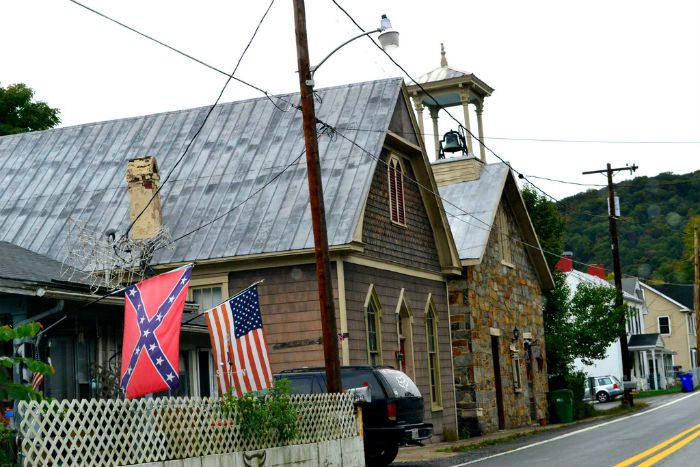
Earlier this year, a reporter asked the great General James Mattis what threats worried him most. Mattis, whose job as U.S. Secretary of Defense is to protect us from a nuclear North Korea, radical Islamic terrorism, and an ever-encroaching Russia, had a surprising response.
“The lack of political unity in America. The lack of a fundamental friendliness,” he said. He went on to add, “[i]f you lose any sense of being part of something bigger, then why should you care about your fellow man?”
CC/Flickr.com
His remarkable observation, which came well before the terrible recent events in Charlottesville, echoed President Lincoln’s statement that, “America will never be destroyed from the outside. If we falter and lose our freedoms, it will be because we destroyed ourselves.”
Mattis and Lincoln express an essential truth about this great country. We can and have achieved remarkable things together, when we understand our commonality as Americans and work to the same ends. Alternatively, however, when we encourage hatred and sow seeds of discord and division, we put all in jeopardy.
Our country is experiencing far too much of this discord and division. As was the case for many Americans, as our family saw the events in Charlottesville unfold, we felt it deeply and personally. Just last year, we were there on the University of Virginia’s “grounds” celebrating our daughter’s graduation, walking freely around the campus, enjoying the lively and culminating festivities with families of all heritages. This was a shining example of this public space being experienced by all for a common good, and a celebration of shared success.
Thirty-three years ago at the University of Pennsylvania, I met and fell in love with my wife Jean, the daughter of Chinese immigrants. Jean has always told our four children she is the product of the great American Dream. Her parents left China with just one suitcase, no money, and no home to greet them on the other side. Yet, they managed to establish a profession, a home, and raise three successful children, sending them to the finest universities and graduate schools.
At Penn, in addition to meeting my wonderful wife, I was fortunate to evolve meaningful relationships with people of all colors and backgrounds, and particularly in the campus African-American community. I joined the university’s very active and inspiring gospel choir, and given my deep friendships in the black community, decided to pledge Alpha Phi Alpha (the first of all black fraternities, and the fraternity of Dr. Martin Luther King, Jr. and Senator Edward Brooke, among many other great men). As you might imagine, a white guy joining a black fraternity raised some eyebrows, but it transformed me. The experience of marrying into one racial heritage and investing deeply in the brotherhood of another, laid a foundation for the last three decades of our family’s life. We can’t help but see ourselves as part of a beautiful American mosaic, where we all participate fully and truly benefit from the distinctive experiences of people of all heritages.
That’s one of the many reasons the events in Charlottesville were so deeply disturbing. Seeing those terrible and violent visuals, I imagined returning to a place that my mixed-race family and my sisters and brothers of color wouldn’t be welcome. And I know that my feelings are of so little consequence in comparison to those of so many in this country, who feel this in profoundly greater ways than I do.
Following the violence and awful symbolism of that day, we have all been forced to revisit some of our deepest historic wounds, given the lack of moral clarity and leadership in response. Though my opposition to the rise of President Trump in 2016 was well established, in our country we hope and pray for our leaders to rise to their greatest heights in office. And so, I observed with great sadness the comments from the Oval Office, which led to even greater fear, mourning and division across the land.
How do we respond?
First, we should cross lines of division and stand with people of different colors, heritage, and experience. For our family’s part, we will continue to lean into our role across our region and state, building friendships and partnerships in the varying communities. We have hosted leaders from the African-American, Latino-American, Asian-American church and business communities in the past. After the experience of this terrible week, we look forward to a previously scheduled retreat weekend we are hosting in October with such leaders and their spouses.
Second, we should use the imagination and resources available to us. As we partner with a series of businesses and sponsor various not-for-profits in the digital media and film-making space, we would like to advance the discussion by launching a film competition and prize for emerging filmmakers and minority voices who are creating visual works of art on topics of race, oppression, discrimination, struggle, and justice. We seek to give voice to these important stories in our efforts to promote equality, peace, and unity for all people.
And lastly, we should provide moral and spiritual leadership in whatever ways we can, in whatever spaces are available to us.
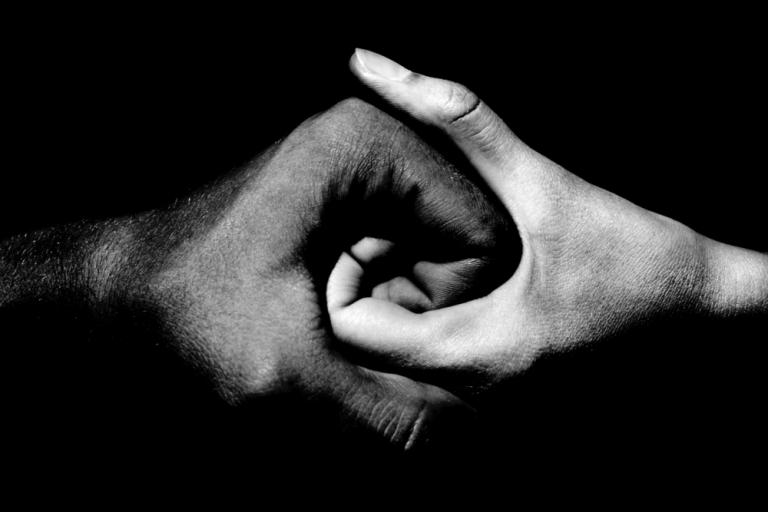
One of my dearest advisors is Reverend Hurmon Hamilton, a very wise minister, formerly of Boston’s historic Roxbury Presbyterian Church, and now presiding in a church elsewhere. He likes to say “pain knows no color.” He’s right. The pain is different, sourced in different places, coming from different spaces, and certainly not all equal (America’s racial history declares that), but it is assuredly present and common to all of us, as Americans and as people.
With this in mind, I recall one last great Lincoln quotation, from his second inaugural address as the end of the Civil War neared. When he asked the people to convey “malice toward none, and charity to all” the end objective was to “bind up this nation’s wounds.”
May we find the courage to do the same today.
Special to Patheos from John Kingston, who is running for U.S. Senate in Massachusetts.

Next Post
October 6, 2017 Kneeling in Silence: Colin Kaepernick and the Religious Rejoinder to Trump
Browse Our Archives
Select a Category Story of God Uncategorized
Select a Month September 2022 August 2022 January 2022 December 2021 August 2021 July 2021 February 2021 January 2021 January 2020 December 2019 November 2019 October 2019 September 2019 August 2019 July 2019 June 2019 May 2019 April 2019 March 2019 February 2019 January 2019 December 2018 November 2018 October 2018 September 2018 July 2018 June 2018 May 2018 April 2018 November 2017 October 2017 August 2017 June 2017 May 2017 April 2017 November 2016 October 2016 September 2016 July 2016 June 2016 May 2016 April 2016 March 2016 February 2016 January 2016 December 2015 November 2015 October 2015 September 2015 August 2015 July 2015 June 2015 May 2015 April 2015 March 2015 February 2015 January 2015 December 2014 October 2014 September 2014 July 2014 May 2014 April 2014 March 2014 February 2014 January 2014 September 2013 August 2013 July 2013 June 2013 May 2013 April 2013 March 2013 February 2013 January 2013 December 2012
Follow Us!
TAKE THE
Religious Wisdom Quiz
What did Jesus do right after being baptized?
Select your answer to see how you score.
Visited the temple Returned to Galilee Started preaching Went into the wilderness
Related posts from Religion Now

The Power of Modern Media – Combating Bigotry...
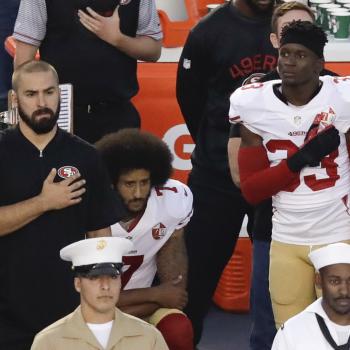
Kneeling in Silence: Colin Kaepernick and the Religious...

The Rise of Virtue Signaling: The New Put-down...
TRENDING AT PATHEOS Religion News

Catholic Integralists believe that religious values – specifically Christian ones – should...

Electing A Virtuous President Would Make Immunity Irrelevant
Presidential immunity can bring with it many risks. So how can we...

Why The Olympic Games Are A ‘Civil Religious’...
Sporting events form a vital space where Americans display their 'civil religious...

After more than a decade of news, research updates, and insights on...

Q: Why do Southern Baptists and like-minded Protestants...
THE RELIGION GUY’S ANSWER: Why? Simple. Because they believe that’s what the...

THE QUESTION: Is gambling evil? THE RELIGION GUY’S ANSWER: Analysts anticipate a...
view all Religion News blogs
Ad-Free & Subscriber Log-In Subscription Support
- About Us
- 2026 Calendar
- Videos
- Podcasts
- Library of World Religions
- Faith In Media Tracker
- Advertise With Us
- Write for Us
- Privacy Policy
- Terms of Service
- Do Not Sell My Data
- Contact Us
- Radiant Digital
- Manage Newsletter Subscriptions
- Unsubscribe From Notifications
- Sitemap
Copyright 2008-2026, Patheos. All rights reserved.
Subscription Support Ad-Free & Subscriber Log-In
Follow Patheos