
BuddhistCatholicContemplativeEvangelicalGeneral ChristianHinduJewishLatter-day SaintMuslimNew VisionsProgressive Christian
Beliefs
- Buddhist
- Catholic
- Contemplative
- Evangelical
- General Christian
- Hindu
- Jewish
- Latter-day Saint
- More Voices
- Muslim
- New Visions
- Pagan
- Progressive Christian
Topics
- Religion News
- Food and Religion
- Sports and Religion
- Religious Art
- Religious Music and Entertainment
- Religious Events
- History and Religion
- Style and Religion
- Politics and Religion
- Women in Religion
- Recreation Outdoors and Religion
- Business Finance and Religion
- Careers Workplace and Religion
- Education and Religion
- Family Parenting and Religion
- Health Fitness and Religion
- Home and Religion
- Relationships and Religion
- Technology and Religion
- Travel and Religion
Columnists
- Buddhist Columnists
- Business Finance and Religion Columnists
- Careers Workplace and Religion Columnists
- Catholic Columnists
- Contemplative Columnists
- Education and Religion Columnists
- Evangelists Columnists
- Family Parenting and Religion Columnists
- General Christian Columnists
- Health Fitness and Religion Columnists
- Hindu Columnists
- History and Religion Columnists
- Home and Religion Columnists
- Jewish Columnists
- More Voices Columnists
- Latter Day Columnists
- Muslim Columnists
- New Visions Columnists
- Nonreligious Columnists
- Pagan Columnists
- Politics and Religion Columnists
- Progressive Columnists
- Recreation Outdoors and Religion Columnists
- Relationships and Religion Columnists
- Religion News Columnists
- Religious Art Columnists
- Religious Events Columnists
- Religious Music and Entertainment Columnists
- Sports and Religion Columnists
- Style and Religion Columnists
- Technology and Religion Columnists
- Travel and Religion Columnists
- Women in Religion Columnists
Resource Library
- 2026 Calendar
- Library of World Religions
- The 100 Most Holy Places on Earth
- Patheos Answers
- Podcasts
- Videos
- Faith Leaders Database
- Anglican Episcopalian
- Bahai
- Baptist
- Buddhism
- Christianity
- Confucianism
- Eastern Orthodoxy
- Hinduism
- Holiness and Pentecostal
- ISKCON
- Islam
- Judaism
- Lutheran
- Methodist
- The Church of Jesus Christ of Latter-day Saints
- New Age
- Paganism
- Presbytarian and Reformed
- Protestantism
- Religion Behind the Scenes
- Roman Catholic
- Scientology
- Shia Islam
- Sikhism
- Sufism
- Sunni Islam
- Taoism
- Zen
- See all religions
Research Tools
 Ad-Free & Subscriber Log-In Subscription Support
Ad-Free & Subscriber Log-In Subscription Support
Follow Patheos 

- Trending:
- Forgiveness
- |
- Marriage
- |
- Consciousness
- |
- Death Penalty
- |
- Election
- |
- Halloween

- Home
- Religion News
- Israel Envy and Trump’s Wall
Israel Envy and Trump’s Wall
Last updated on: October 11, 2016 at 9:50 am by Guest Contributor
Israel Envy and Trump’s Wall 2016-10-11T09:50:37-04:00 Guest Contributor
Patheos Explore the world's faith through different perspectives on religion and spirituality! Patheos has the views of the prevalent religions and spiritualities of the world.
By Shalom Goldman.
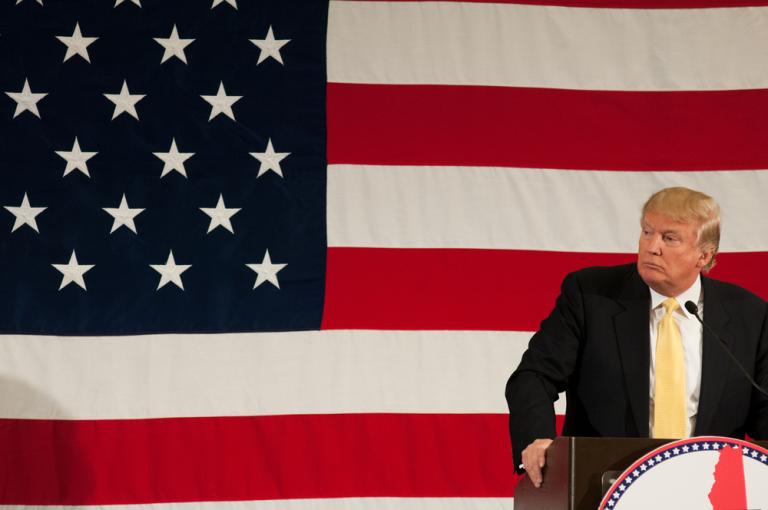
Andrew Cline / Shutterstock.com
In the current presidential campaign, Republicans and Democrats seem to be competing with each other to proclaim their “pro-Israel” stances. In a March address to AIPAC Hillary Clinton said, “I feel so strongly that America can’t ever be neutral when it comes to Israel’s security or survival.” Clinton was not introducing a new idea into the presidential campaign; “pro-Israel” statements are a necessary part of many, if not most, political campaigns in the U.S. And these statements reflect what pollsters tell politicians: the majority of their constituents, wherever in the country they are, have a positive view of the State of Israel. And, as a corollary, they express a negative view of the Arab states. This majority may be larger or smaller depending upon the location; but overall, and consistently over the past fifty years, 60 percent or more of Americans express support for the Jewish State.
We might call this long term political phenomenon—shared by most Americans and by both major political parties—“Israel admiration.” But the Trump campaign, as it channels the deepest fears and aspirations of many Americans, has tapped into potent and related American phenomenon: “Israel envy.”
In this mode of thought, the U.S., a weakened world-power, has lost its political will and the ability to deploy its unparalleled military power. America can only recover its will and power by emulating a “small and spunky nation,” Israel. While American power is sapped by dissent and liberalism, Israel unified and determined grows stronger.
While Israel envy was expressed by a few American political and military figures in the 1950s and early ’60s, it became a widespread phenomenon in the second half of the 1960s. The escalation of U.S. involvement in Vietnam and the Israeli victory in the 1967 War were the major factors.
Approving mention of Israel was often deployed when military hawks called for an “Israeli” approach to the war in Vietnam. What that “Israeli” approach was and how it might work was never articulated clearly. In its crudest form it was simply that the U.S. must “kick ass.” But as some of LBJ’s advisors were frustrated by U.S. military failures in Southeast Asia and enraged by domestic opposition to the war, they saw Israel as a potent counter-example to American frustration and failure. And if invoking the Israeli example could dampen opposition to the war, it might be worth the effort.
LBJ himself, a life-long admirer and supporter of Israel and its policies, was encouraged in this Israel-envy by his close friend the novelist John Steinbeck. Unlike most American writers, artists, and academicians Steinbeck was a supporter of America’s war in Vietnam. Concerning Israel, Steinbeck, unlike LBJ, had no strong opinions. But that was to change when Steinbeck accepted an invitation to visit the country.
In March 1966, Steinbeck and his wife Elaine spent a few weeks in Israel as a guest of the government. In Israel, he wrote, “I see no sign of weariness.” He contrasted Israel’s energy—”with which it boils and burbles, squirms and gallops”—with the lassitude he found among America’s youth. “When I left the U.S.,” he wrote in a letter from Tel Aviv, “American youth were “burning draft cards because the war in Vietnam was intolerable.” Steinbeck contrasted this draft-dodging with the eagerness for military service he reported encountering among Israeli youth. When he returned to the U.S. and met with LBJ at the White House, Steinbeck was even more determined to stiffen LBJ’s resolve to “get tough” in Vietnam. His trip to Israel, Steinbeck said, had made him even more of an American patriot.
In 1966, the same year that the Steinbecks were wowed by Israel and its military preparedness and martial spirit, one of the avatars of that spirit, General Moshe Dayan, went to Vietnam as a correspondent for Maariv, the largest circulation Israeli newspaper of the time. Contrary to the illusions of American pundits besotted with their notions of Israel’s military prowess, Dayan, after spending two weeks with American and South Vietnamese forces, saw no way for the U.S.—or any other force—to win the war.
This was before the 1967 War, the “war that changed the Middle East.” After the Israeli victory, Israel admiration grew even greater, and with it a sense of Israel envy among those disappointed in American policies.
The half-century anniversary of the 1967 war is fast approaching, and in the intervening decades Israel envy has increased to the point where it has become a staple of American political discourse, especially, but not exclusively, among social and political conservatives.
And that brings us back to the current moment in the presidential campaign.
On September 26th, in a speech that sought to justify his often-ridiculed call to “build a wall” with Mexico, Trump invoked the “successful” Israeli wall that seals off the Palestinians. Trump reported that in his private, but highly-publicized, conversation with Prime Minister Netanyahu, they discussed at length “Israel’s successful experience with a security fence that helped secure its borders.”
In the same spirit of invoking the use of force without considering its military efficacy or long-term consequences, Trump has said that if elected president, he would “bomb the shit out of ISIS.” Like a lot of what Trump says about his plans, this doesn’t strike intelligent observers as a clear statement of foreign policy. But like the phrase “kicking ass,” “bombing the shit of of ISIS” seems to resonate with many in the U.S., and perhaps not surprisingly, it resonates with many who call themselves “pro-Israel.” As Politico noted a few months back, these Trump statements resonate with those Israelis polled about who they would vote for if they could participate in the U.S. elections. As reporter Gregg Carlstom wrote, “this might be the most surprising poll from a wild, unpredictable 2106 campaign: One in four Israeli Jews would vote for Donald Trump” and, noted the Politico reporter dryly, “Trump’s negative comments about Muslims don’t hurt him in Israel either.”
Shalom Goldman is professor of religion at Middlebury College. He has authored numerous books, including Zeal for Zion: Christians, Jews, and the Promised Land and God’s Sacred Tongue: Hebrew and the American Imagination. His most recent book, Jewish-Christian Difference and Modern Jewish Identity, has recently been featured in the Patheos Book Club.
Previous Post

September 27, 2016
Who's Responsible for Religious Literacy Education?
Next Post
October 25, 2016 Diwali and the Election: Truth, Light, and Meaning in the Voting Booth
Recent Comments
Browse Our Archives
Select a Category Story of God Uncategorized
Select a Month September 2022 August 2022 January 2022 December 2021 August 2021 July 2021 February 2021 January 2021 January 2020 December 2019 November 2019 October 2019 September 2019 August 2019 July 2019 June 2019 May 2019 April 2019 March 2019 February 2019 January 2019 December 2018 November 2018 October 2018 September 2018 July 2018 June 2018 May 2018 April 2018 November 2017 October 2017 August 2017 June 2017 May 2017 April 2017 November 2016 October 2016 September 2016 July 2016 June 2016 May 2016 April 2016 March 2016 February 2016 January 2016 December 2015 November 2015 October 2015 September 2015 August 2015 July 2015 June 2015 May 2015 April 2015 March 2015 February 2015 January 2015 December 2014 October 2014 September 2014 July 2014 May 2014 April 2014 March 2014 February 2014 January 2014 September 2013 August 2013 July 2013 June 2013 May 2013 April 2013 March 2013 February 2013 January 2013 December 2012
Follow Us!
TAKE THE
Religious Wisdom Quiz
What does "Nazareth" mean?
Select your answer to see how you score.
Branch Star Gift Light
Related posts from Religion Now

Truth is Narrow, but God’s Grace is Wide

Is Progressive Christianity Counterfeit Gospel?


Reviving the Divine Feminine with Beth Ames Swartz
TRENDING AT PATHEOS Religion News

Catholic Integralists believe that religious values – specifically Christian ones – should...

Electing A Virtuous President Would Make Immunity Irrelevant
Presidential immunity can bring with it many risks. So how can we...

Why The Olympic Games Are A ‘Civil Religious’...
Sporting events form a vital space where Americans display their 'civil religious...

After more than a decade of news, research updates, and insights on...

Q: Why do Southern Baptists and like-minded Protestants...
THE RELIGION GUY’S ANSWER: Why? Simple. Because they believe that’s what the...

THE QUESTION: Is gambling evil? THE RELIGION GUY’S ANSWER: Analysts anticipate a...
view all Religion News blogs
Ad-Free & Subscriber Log-In Subscription Support
- About Us
- 2026 Calendar
- Videos
- Podcasts
- Library of World Religions
- Faith In Media Tracker
- Advertise With Us
- Write for Us
- Privacy Policy
- Terms of Service
- Do Not Sell My Data
- Contact Us
- Radiant Digital
- Manage Newsletter Subscriptions
- Unsubscribe From Notifications
- Sitemap
Copyright 2008-2026, Patheos. All rights reserved.
Subscription Support Ad-Free & Subscriber Log-In
Follow Patheos