
BuddhistCatholicContemplativeEvangelicalGeneral ChristianHinduJewishLatter-day SaintMuslimNew VisionsProgressive Christian
Beliefs
- Buddhist
- Catholic
- Contemplative
- Evangelical
- General Christian
- Hindu
- Jewish
- Latter-day Saint
- More Voices
- Muslim
- New Visions
- Pagan
- Progressive Christian
Topics
- Religion News
- Food and Religion
- Sports and Religion
- Religious Art
- Religious Music and Entertainment
- Religious Events
- History and Religion
- Style and Religion
- Politics and Religion
- Women in Religion
- Recreation Outdoors and Religion
- Business Finance and Religion
- Careers Workplace and Religion
- Education and Religion
- Family Parenting and Religion
- Health Fitness and Religion
- Home and Religion
- Relationships and Religion
- Technology and Religion
- Travel and Religion
Columnists
- Buddhist Columnists
- Business Finance and Religion Columnists
- Careers Workplace and Religion Columnists
- Catholic Columnists
- Contemplative Columnists
- Education and Religion Columnists
- Evangelists Columnists
- Family Parenting and Religion Columnists
- General Christian Columnists
- Health Fitness and Religion Columnists
- Hindu Columnists
- History and Religion Columnists
- Home and Religion Columnists
- Jewish Columnists
- More Voices Columnists
- Latter Day Columnists
- Muslim Columnists
- New Visions Columnists
- Nonreligious Columnists
- Pagan Columnists
- Politics and Religion Columnists
- Progressive Columnists
- Recreation Outdoors and Religion Columnists
- Relationships and Religion Columnists
- Religion News Columnists
- Religious Art Columnists
- Religious Events Columnists
- Religious Music and Entertainment Columnists
- Sports and Religion Columnists
- Style and Religion Columnists
- Technology and Religion Columnists
- Travel and Religion Columnists
- Women in Religion Columnists
Resource Library
- 2026 Calendar
- Library of World Religions
- The 100 Most Holy Places on Earth
- Patheos Answers
- Podcasts
- Videos
- Faith Leaders Database
- Anglican Episcopalian
- Bahai
- Baptist
- Buddhism
- Christianity
- Confucianism
- Eastern Orthodoxy
- Hinduism
- Holiness and Pentecostal
- ISKCON
- Islam
- Judaism
- Lutheran
- Methodist
- The Church of Jesus Christ of Latter-day Saints
- New Age
- Paganism
- Presbytarian and Reformed
- Protestantism
- Religion Behind the Scenes
- Roman Catholic
- Scientology
- Shia Islam
- Sikhism
- Sufism
- Sunni Islam
- Taoism
- Zen
- See all religions
Research Tools
 Ad-Free & Subscriber Log-In Subscription Support
Ad-Free & Subscriber Log-In Subscription Support
Follow Patheos 

- Trending:
- Forgiveness
- |
- Marriage
- |
- Consciousness
- |
- Death Penalty
- |
- Election
- |
- Halloween

- Home
- Religion News
- Brexit: What Happened? And What’s Next?
Brexit: What Happened? And What’s Next?
Last updated on: June 27, 2016 at 4:59 pm by Guest Contributor
Brexit: What Happened? And What’s Next? 2016-06-27T16:59:48-04:00 Guest Contributor
Patheos Explore the world's faith through different perspectives on religion and spirituality! Patheos has the views of the prevalent religions and spiritualities of the world.
By David Binder.
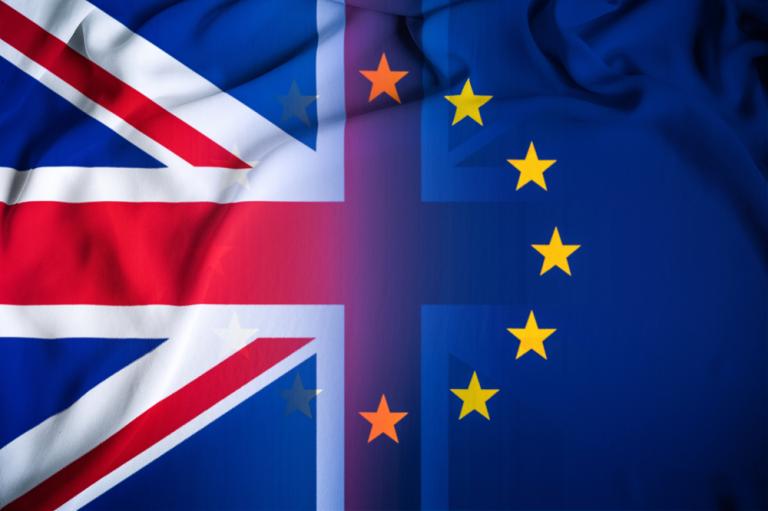
A day is a long time in politics.
At 10pm Thursday, 23 June, polling stations closed in regard to a UK-wide referendum of the UK’s membership of the European Union (EU).
In the words of The Clash: Would we stay or would we go?
The polls, betting markets, conventional wisdom, and even Nigel Farage (arguably the leading figure of the ‘Leave’ campaign) all indicated that we would vote to remain in the EU. How wrong they all were! By Friday morning, by a percentage of 52 to 48, Britain had made a decision that would send shockwaves throughout much of the world.
Brexit was the verdict, and barring a very unlikely second referendum, Article 50 will be invoked, and the two year (or perhaps longer) process to leave the EU club will begin in earnest.
It’s amusing that despite being asked to take on responsibility for such a monumental decision, relatively few people know that much about what the EU is or what it does. This is reflected in the fact that the second most Googled term by Brits on Friday, 24 June (a day after the referendum) was: ‘What is the EU?’ Let me explain.
In a nutshell, the EU is a collection of twenty-eight member states that originated (with just six nations) in a 1950 movement to ensure peace in a divided continent after the conclusion of WW2. In its current guise, it is comprised of four institutions: the European Commission, the European Parliament, the European Council, and the European Court of Justice. These institutions have a number of functions that markedly affect each EU member state, from politics, to law making, and to trade (the EU is the UK’s largest trading partner for example).
So, why did so many (around 17.5 million) vote for Brexit?
There are probably a whole host of reasons.
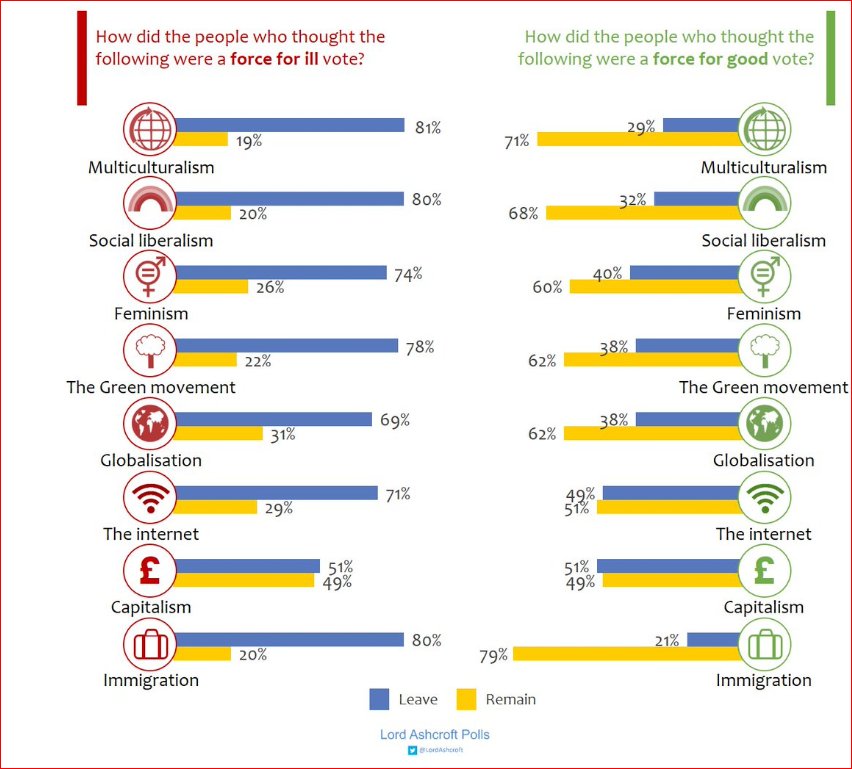
Post-voting research shows that most in favour of remaining view social phenomena such as immigration, globalisation, multi-culturalism, and feminism in a predominantly positive light whilst the majority of those in favour of Brexit predominantly see them as the opposite. Therefore, it could be that those who see these concepts as negative, also see them as key bastions of the EU project. In addition, the idea of gaining back control from an unelected and out-of-touch elite was pertinent in many voter’s minds. In sum, the EU is seen by many as anti-democratic.
There’s also evidence to suggest that those who have been ‘left behind’ by the economic neo-liberal policies of the 1980s onwards tended to vote for Brexit. If true, then the remain campaign’s key warning that citizens would be worse off economically was always likely to have little traction. Indeed, old industrial areas such as those in the North of England which have seen pronounced economic decline in the last thirty years or so strongly voted in favour of Brexit.
Indeed, striking parallels can be drawn here between what’s going on in the UK and in the USA. Voters, feeling let down vis-à-vis the above social and economic realities, are increasingly turning to anti-establishment messages and candidates. The success stories of the leave campaign (which was seen as the anti-establishment side) and Donald Trump are two cases in point.
Back to the matter at hand, uncertainty reigns. The markets and the British pound are in sharp decline, thousands of jobs are seemingly under threat, the world of social media is in uproar, and talk of the UK breaking up altogether is in full swing.
There is then, much for UK Christians to be understandably concerned about. Yet I believe whatever the short, medium, and long term consequences of Brexit, Christians have nothing to fear.
I say this as someone who openly voted to remain in the EU. I believe we heavily rely on the EU for trade. More importantly though, I feel that there are strong gospel imperatives at play; being a member of the EU means that mission work, church planting, and the movement of individual Christians abroad is relatively straightforward. Being outside, however, means that Brits may be subject to extra layers of paperwork, bureaucracy, and domestic immigration rules. And yet I appreciate that many of my Christian brothers and sisters voted to leave, and they may well be correct on the matter! That’s okay, they’re still my friends!
While it’s right that Christians be active in voting for good government according to biblical priorities, God does not need our help; he is not waving his hands around in a blind panic saying, ‘Oh no, they’ve voted for Brexit, my plans to build my Church in Europe are in tatters!’ No, God has known since the beginning of time how this vote was going to go. Further, at times like this, it’s crucial we realise and rejoice in the fact that nothing can stop God’s plans to build his church in Europe and beyond, unite all things under the rule of his son Jesus and to build his people up in Christlikeness.
This isn’t to say that the fallout from Brexit won’t cause negativity and strife; our living standards could fall and/or we could lose our jobs. Alternatively, things may not change that much. At this point it is simply impossible to say. Let’s say the worst does happen though and the UK economy does suffer badly in the coming days, weeks, and months and we personally lose out significantly. This will cause hardship and suffering, yes, but my hope and prayer is that such circumstances will drive us more to Christ, the treasure we have in him, and help us long for our perfect eternal future. Christians should also be comforted that God has promised to give us what we need to get through every day. Hence, if Brexit drives Christians away from seeking security in the things of this world and more in the above truths, then it will have done a good thing.
I’ve also been struck by the strength of feeling following the result, from both sides. On the remain side, many (including Christians) have expressed views likening leave voters to idiots, racists, Nazis, and such like, while leavers (again, including Christians) have told remainers to essentially shut up, stop complaining, and respect the democratic process. I wonder whether such vitriol in both sides indicates within us (and I very much include myself here) an idolatrous attitude toward the things of this world, politics, our way of life, our living standards, democracy even. Sure, such things can be seen as good gifts from God, but as Christians, instead of gnashing our teeth and shouting at each other when such things are apparently lost, we should be reminding ourselves of what really matters.
The strength of feeling on both sides and social media, where people can vent their spleens uninhibited, can help create conditions for unhelpful divisiveness. It’s at times like this where we really need to be reminding ourselves that we have far more in common than not. That is, we’ve been brought together as a people not because of our political views, outlooks on life, or whatever else but because we’ve all been given the free gift of salvation, repentance, and faith in our Lord Jesus Christ. Such a reality should provoke an attitude (both online and in the ‘real world’) of honesty, yes, but also of love, humility, service, and unity in the Gospel (Jesus Christ is Lord) and Word.
Brexit has provoked new levels of uncertainty in the UK and beyond, and with the US presidential election on the horizon, it may not be the last world event to do so! Yet, whatever happens, Christians know that they have a loving father who is in total control of all things and is working everything for the good of his children, that we may become more like Jesus. Let’s remember this in the coming weeks and months.
 David Binder is a London-based journalist and freelance writer specialising in Christianity, discipleship, politics, various areas of social policy, and more. He tweets at @davidpaulbinder and more examples of his work can be read here: https://www.clippings.me/davidbinder.
Previous Post

June 24, 2016
(Culture) War Is a Force That Gives Us Meaning
Next Post

June 28, 2016 Do People Still Worship Baal?
Browse Our Archives
Select a Category Story of God Uncategorized
Select a Month September 2022 August 2022 January 2022 December 2021 August 2021 July 2021 February 2021 January 2021 January 2020 December 2019 November 2019 October 2019 September 2019 August 2019 July 2019 June 2019 May 2019 April 2019 March 2019 February 2019 January 2019 December 2018 November 2018 October 2018 September 2018 July 2018 June 2018 May 2018 April 2018 November 2017 October 2017 August 2017 June 2017 May 2017 April 2017 November 2016 October 2016 September 2016 July 2016 June 2016 May 2016 April 2016 March 2016 February 2016 January 2016 December 2015 November 2015 October 2015 September 2015 August 2015 July 2015 June 2015 May 2015 April 2015 March 2015 February 2015 January 2015 December 2014 October 2014 September 2014 July 2014 May 2014 April 2014 March 2014 February 2014 January 2014 September 2013 August 2013 July 2013 June 2013 May 2013 April 2013 March 2013 February 2013 January 2013 December 2012
Follow Us!
TAKE THE
Religious Wisdom Quiz
What does "Nazareth" mean?
Select your answer to see how you score.
Branch Star Gift Light
Related posts from Religion Now
Kneeling in Silence: Colin Kaepernick and the Religious...
Binding Up This Nation’s Wounds

The Rise of Virtue Signaling: The New Put-down...

TRENDING AT PATHEOS Religion News

Catholic Integralists believe that religious values – specifically Christian ones – should...

Electing A Virtuous President Would Make Immunity Irrelevant
Presidential immunity can bring with it many risks. So how can we...

Why The Olympic Games Are A ‘Civil Religious’...
Sporting events form a vital space where Americans display their 'civil religious...

After more than a decade of news, research updates, and insights on...

Q: Why do Southern Baptists and like-minded Protestants...
THE RELIGION GUY’S ANSWER: Why? Simple. Because they believe that’s what the...

THE QUESTION: Is gambling evil? THE RELIGION GUY’S ANSWER: Analysts anticipate a...
view all Religion News blogs
Ad-Free & Subscriber Log-In Subscription Support
- About Us
- 2026 Calendar
- Videos
- Podcasts
- Library of World Religions
- Faith In Media Tracker
- Advertise With Us
- Write for Us
- Privacy Policy
- Terms of Service
- Do Not Sell My Data
- Contact Us
- Radiant Digital
- Manage Newsletter Subscriptions
- Unsubscribe From Notifications
- Sitemap
Copyright 2008-2026, Patheos. All rights reserved.
Subscription Support Ad-Free & Subscriber Log-In
Follow Patheos