
BuddhistCatholicContemplativeEvangelicalGeneral ChristianHinduJewishLatter-day SaintMuslimNew VisionsProgressive Christian
Beliefs
- Buddhist
- Catholic
- Contemplative
- Evangelical
- General Christian
- Hindu
- Jewish
- Latter-day Saint
- More Voices
- Muslim
- New Visions
- Pagan
- Progressive Christian
Topics
- Religion News
- Food and Religion
- Sports and Religion
- Religious Art
- Religious Music and Entertainment
- Religious Events
- History and Religion
- Style and Religion
- Politics and Religion
- Women in Religion
- Recreation Outdoors and Religion
- Business Finance and Religion
- Careers Workplace and Religion
- Education and Religion
- Family Parenting and Religion
- Health Fitness and Religion
- Home and Religion
- Relationships and Religion
- Technology and Religion
- Travel and Religion
Columnists
- Buddhist Columnists
- Business Finance and Religion Columnists
- Careers Workplace and Religion Columnists
- Catholic Columnists
- Contemplative Columnists
- Education and Religion Columnists
- Evangelists Columnists
- Family Parenting and Religion Columnists
- General Christian Columnists
- Health Fitness and Religion Columnists
- Hindu Columnists
- History and Religion Columnists
- Home and Religion Columnists
- Jewish Columnists
- More Voices Columnists
- Latter Day Columnists
- Muslim Columnists
- New Visions Columnists
- Nonreligious Columnists
- Pagan Columnists
- Politics and Religion Columnists
- Progressive Columnists
- Recreation Outdoors and Religion Columnists
- Relationships and Religion Columnists
- Religion News Columnists
- Religious Art Columnists
- Religious Events Columnists
- Religious Music and Entertainment Columnists
- Sports and Religion Columnists
- Style and Religion Columnists
- Technology and Religion Columnists
- Travel and Religion Columnists
- Women in Religion Columnists
Resource Library
- 2026 Calendar
- Library of World Religions
- The 100 Most Holy Places on Earth
- Patheos Answers
- Podcasts
- Videos
- Faith Leaders Database
- Anglican Episcopalian
- Bahai
- Baptist
- Buddhism
- Christianity
- Confucianism
- Eastern Orthodoxy
- Hinduism
- Holiness and Pentecostal
- ISKCON
- Islam
- Judaism
- Lutheran
- Methodist
- The Church of Jesus Christ of Latter-day Saints
- New Age
- Paganism
- Presbytarian and Reformed
- Protestantism
- Religion Behind the Scenes
- Roman Catholic
- Scientology
- Shia Islam
- Sikhism
- Sufism
- Sunni Islam
- Taoism
- Zen
- See all religions
Research Tools
 Ad-Free & Subscriber Log-In Subscription Support
Ad-Free & Subscriber Log-In Subscription Support
Follow Patheos 

- Trending:
- Forgiveness
- |
- Marriage
- |
- Consciousness
- |
- Death Penalty
- |
- Election
- |
- Halloween

- Home
- Religion News
- Morgan Connects to God, But Is There More?
Morgan Connects to God, But Is There More?
Last updated on: April 18, 2016 at 1:54 pm by Guest Contributor
Morgan Connects to God, But Is There More? 2016-04-18T13:54:26-04:00 Guest Contributor
Patheos Explore the world's faith through different perspectives on religion and spirituality! Patheos has the views of the prevalent religions and spiritualities of the world.
By Brian Pennington.
I know he didn’t mean to, but last night, Morgan Freeman tripped over one of my major pet peeves. Not once, but a dozen times. All professors have them—pet peeves about things students routinely say or write that just set us off because they touch on some widespread misunderstanding of a concept or misuse of a phrase that drives us crazy. One of my grammatical pet peeves, for example, is “based off,” as in, “The movie was based off of the book.” A voice explodes in my head when I hear it: “It’s a structural metaphor! If there is a base, then a thing can only go ON it, not OFF it!” And don’t even get me started about “relatable.”
But I digress before I have even started. In last night’s third episode of the National Geographic Channel’s “The Story of God,” Morgan Freeman hit one of my major pet peeves: he described the objective of various religious behaviors as an attempt to “connect to God.” I hear this phrase a lot from students and others who are explaining what they think religion is about, and it always strikes me as empty, even lazy. Morgan used it repeatedly last night. Over and over. Each one felt like a personal betrayal: how could you, Morgan?
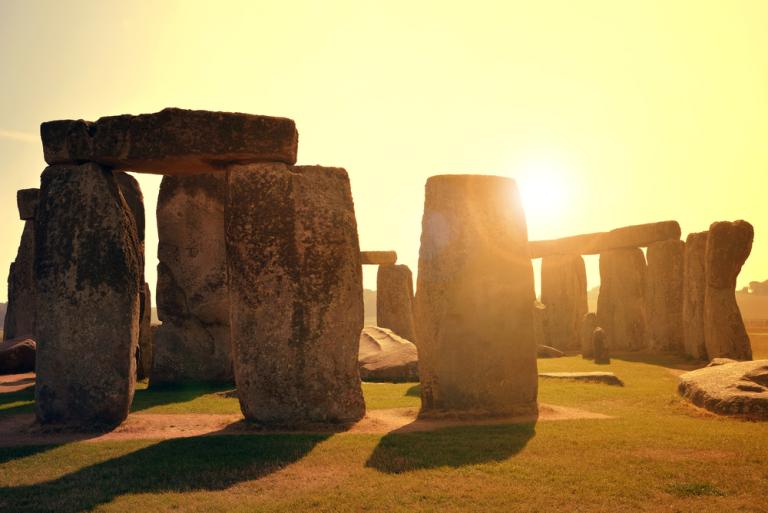
Last night’s episode, “Who is God?” was intended to address a couple of basic questions about the world’s religious traditions. Freeman put it this way: “Is there some universal concept of God [we] all share? Or is God fundamentally different to people of different faiths?” These are perfectly good questions, worthy of serious deliberation, and to the extent the episode pursued them, it did a passably good job: we were introduced to the Hindu conception of a divine force manifest in many deities of various forms and genders; we considered historical precursors to the Abrahamic monotheisms in Stonehenge and in Akhenaten’s Egypt, and we observed portions of a Navaho female puberty rite in which God enters the body of a human. Cool.
But in every single case, Morgan seemed preoccupied with a different question he hadn’t been completely upfront with us about: how does an individual in each of these traditions “connect” to God, and how relatively easy or hard is it to do so? When, as in Hinduism, God is an “idol,” he observes at one point, God is everywhere easily available and thus easy to connect to. When God is an invisible and distant entity, it’s harder to connect to him. (The fact that in such cases it’s always a him didn’t even seem to occur to Morgan.) If the goal is to understand how religion functions in the social order and how religions think and act differently from one another, this line of inquiry is misleading in a number of ways.
The first and most obvious one I won’t belabor: it presumes the presence or existence of some superhuman force and the need or desire of individuals to “connect” to it. It’s a theological question masquerading as an objective one. Second and more troublesome, however, is that it sets up a hierarchy of good and not-so-good religion. It forcefully implies that the purpose of religion is to allow the individual to develop a personal relationship with a divine entity who is, by that very model, also something of a person. If a religion does this well, by making God easily available, it succeeds in the presumed purpose of religion. If it keeps god distant and inaccessible to me and my needs, well, then it fails.
And here we begin to see a third and even more insidious deception this question of “connection” performs: the criterion for judging a religion’s worth is its serviceability to the autonomous, neo-liberal individual pursuing his or her own purpose and meaning in life, seeking satisfaction of his or her own individual desires in a capitalistic marketplace of religious options. It is a notion of religious life as consumerism, one that is profoundly individualistic and interior.
The question of how any religion enables a “connection” to the deity captures perfectly the concerns of the “spiritual-but-not-religious” set I discussed in my first blog post on “The Story of God.” As the episode’s closing monologue approaches and Freeman shifts from his Dogged Spiritual Explorer persona to the Voice of God persona, he concludes that Hinduism is profound and transformative because it allows me to coin my own personal version of God. But as it turns out, so is Joel Osteen’s prosperity gospel megachurch ministry because it gathers 10,000 people into a stadium rock every Sunday where they can “each of their own personal experience of God.”
If it’s about me, if it confirms my personal self-worth, if I can connect to some cosmic force that thereby ratifies my post-modern quest without challenging my choices or ideas too much—that’s good religion.
What gets lost when we think that religion is primarily about God and that all religion tries to “connect” with God (whatever that means)?
Take, for example, Morgan’s conversation with his archaeologist hosts at Stonehenge, who, told him about evidence they collected using ground-penetrating radar that revealed the presence of a prior shrine beneath Stonehenge. Presumably constructed by a different group of people, that shrine had faced away from, rather than toward the sun as Stonehenge did. The builders of Stonehenge crushed that previous monument and perhaps the society that built it to erect their own sun-worshipping shrine right on top of it and, one can only conclude, assert their own domination of the people they just suppressed.
But Morgan never saw it. Fixated on the question of God, he overlooked the fact that religion has social and political uses—that religion, perhaps, even distracts from noticing its social and political intention. Marveling at the builders’ profound monotheistic intuitions about the existence of a single divine being that they identified with the sun, he ignored the evidence right before him that screamed the violent suppression of a different group with a different God.
Gods are important to religion, but focusing on who God is can be a way of overlooking what we do with God. It’s about a lot more than just connection.
Image courtesy of Shutterstock
Previous Post

April 11, 2016
Trump, Nietzsche, and the Jewish Tradition
Next Post

April 18, 2016 Why I Got Arrested at the U.S. Capitol
Recent Comments
Browse Our Archives
Select a Category Story of God Uncategorized
Select a Month September 2022 August 2022 January 2022 December 2021 August 2021 July 2021 February 2021 January 2021 January 2020 December 2019 November 2019 October 2019 September 2019 August 2019 July 2019 June 2019 May 2019 April 2019 March 2019 February 2019 January 2019 December 2018 November 2018 October 2018 September 2018 July 2018 June 2018 May 2018 April 2018 November 2017 October 2017 August 2017 June 2017 May 2017 April 2017 November 2016 October 2016 September 2016 July 2016 June 2016 May 2016 April 2016 March 2016 February 2016 January 2016 December 2015 November 2015 October 2015 September 2015 August 2015 July 2015 June 2015 May 2015 April 2015 March 2015 February 2015 January 2015 December 2014 October 2014 September 2014 July 2014 May 2014 April 2014 March 2014 February 2014 January 2014 September 2013 August 2013 July 2013 June 2013 May 2013 April 2013 March 2013 February 2013 January 2013 December 2012
Follow Us!
TAKE THE
Religious Wisdom Quiz
What does "Bethel" (where Jacob dreamed) mean?
Select your answer to see how you score.
God's Blessing Mountain of Light Field of Vision House of God
Related posts from Religion Now

Morgan Freeman's Apocalypse: Lifting the Veil
National Geographic Channel Debuts a Very Familiar “Story...

Truth is Narrow, but God’s Grace is Wide
Is Progressive Christianity Counterfeit Gospel?
TRENDING AT PATHEOS Religion News

Catholic Integralists believe that religious values – specifically Christian ones – should...

Electing A Virtuous President Would Make Immunity Irrelevant
Presidential immunity can bring with it many risks. So how can we...

Why The Olympic Games Are A ‘Civil Religious’...
Sporting events form a vital space where Americans display their 'civil religious...

After more than a decade of news, research updates, and insights on...

Q: Why do Southern Baptists and like-minded Protestants...
THE RELIGION GUY’S ANSWER: Why? Simple. Because they believe that’s what the...

THE QUESTION: Is gambling evil? THE RELIGION GUY’S ANSWER: Analysts anticipate a...
view all Religion News blogs
Ad-Free & Subscriber Log-In Subscription Support
- About Us
- 2026 Calendar
- Videos
- Podcasts
- Library of World Religions
- Faith In Media Tracker
- Advertise With Us
- Write for Us
- Privacy Policy
- Terms of Service
- Do Not Sell My Data
- Contact Us
- Radiant Digital
- Manage Newsletter Subscriptions
- Unsubscribe From Notifications
- Sitemap
Copyright 2008-2026, Patheos. All rights reserved.
Subscription Support Ad-Free & Subscriber Log-In
Follow Patheos