
BuddhistCatholicContemplativeEvangelicalGeneral ChristianHinduJewishLatter-day SaintMuslimNew VisionsProgressive Christian
Beliefs
- Buddhist
- Catholic
- Contemplative
- Evangelical
- General Christian
- Hindu
- Jewish
- Latter-day Saint
- More Voices
- Muslim
- New Visions
- Pagan
- Progressive Christian
Topics
- Religion News
- Food and Religion
- Sports and Religion
- Religious Art
- Religious Music and Entertainment
- Religious Events
- History and Religion
- Style and Religion
- Politics and Religion
- Women in Religion
- Recreation Outdoors and Religion
- Business Finance and Religion
- Careers Workplace and Religion
- Education and Religion
- Family Parenting and Religion
- Health Fitness and Religion
- Home and Religion
- Relationships and Religion
- Technology and Religion
- Travel and Religion
Columnists
- Buddhist Columnists
- Business Finance and Religion Columnists
- Careers Workplace and Religion Columnists
- Catholic Columnists
- Contemplative Columnists
- Education and Religion Columnists
- Evangelists Columnists
- Family Parenting and Religion Columnists
- General Christian Columnists
- Health Fitness and Religion Columnists
- Hindu Columnists
- History and Religion Columnists
- Home and Religion Columnists
- Jewish Columnists
- More Voices Columnists
- Latter Day Columnists
- Muslim Columnists
- New Visions Columnists
- Nonreligious Columnists
- Pagan Columnists
- Politics and Religion Columnists
- Progressive Columnists
- Recreation Outdoors and Religion Columnists
- Relationships and Religion Columnists
- Religion News Columnists
- Religious Art Columnists
- Religious Events Columnists
- Religious Music and Entertainment Columnists
- Sports and Religion Columnists
- Style and Religion Columnists
- Technology and Religion Columnists
- Travel and Religion Columnists
- Women in Religion Columnists
Resource Library
- 2026 Calendar
- Library of World Religions
- The 100 Most Holy Places on Earth
- Patheos Answers
- Podcasts
- Videos
- Faith Leaders Database
- Anglican Episcopalian
- Bahai
- Baptist
- Buddhism
- Christianity
- Confucianism
- Eastern Orthodoxy
- Hinduism
- Holiness and Pentecostal
- ISKCON
- Islam
- Judaism
- Lutheran
- Methodist
- The Church of Jesus Christ of Latter-day Saints
- New Age
- Paganism
- Presbytarian and Reformed
- Protestantism
- Religion Behind the Scenes
- Roman Catholic
- Scientology
- Shia Islam
- Sikhism
- Sufism
- Sunni Islam
- Taoism
- Zen
- See all religions
Research Tools
 Ad-Free & Subscriber Log-In Subscription Support
Ad-Free & Subscriber Log-In Subscription Support
Follow Patheos 

- Trending:
- Forgiveness
- |
- Marriage
- |
- Consciousness
- |
- Death Penalty
- |
- Election
- |
- Halloween

- Home
- Religion News
- An Alum’s Personal Reflection on the Wheaton/Hawkins Imbroglio
An Alum’s Personal Reflection on the Wheaton/Hawkins Imbroglio
Last updated on: February 29, 2016 at 4:59 pm by Guest Contributor
An Alum’s Personal Reflection on the Wheaton/Hawkins Imbroglio 2016-02-29T16:59:47-05:00 Guest Contributor
Patheos Explore the world's faith through different perspectives on religion and spirituality! Patheos has the views of the prevalent religions and spiritualities of the world.
By John Scanzoni.
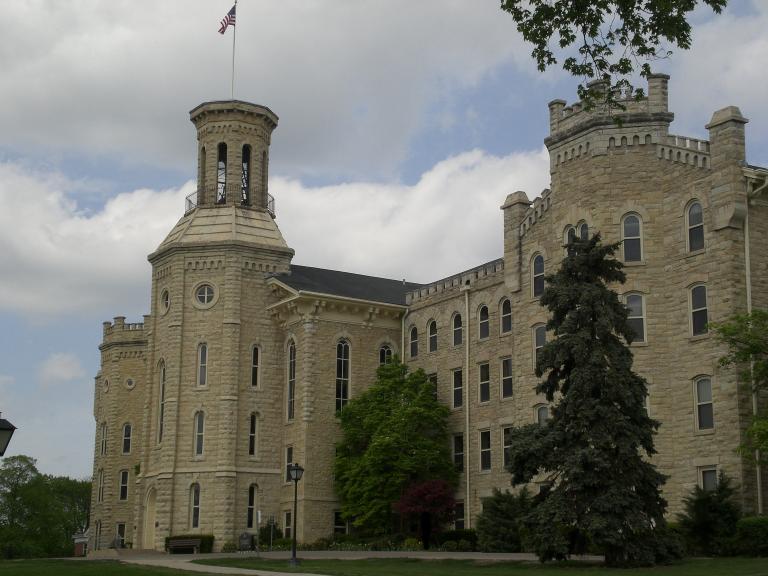
Christianity Today editor Mark Galli observed that the dispute between Wheaton College and Professor Larycia Hawkins should be resolved through “careful parsing.” He’d hoped that thinking through core biblical issues would enable the parties to arrive at an accord permitting Hawkins to remain on the faculty and the College to maintain its integrity. The eventual resolution, however, was the parties going their separate ways.
Prior to enrolling at Wheaton I was fundamentalist. Fundamentalists are Christians typically wary of parsing scripture lest they cogitate “too far and fall off the deep end.” But at Wheaton, I encountered evangelicals—Christians not suspicious of critical thought. Quite the contrary, they saw it as one means to nurture their faith and make Christianity relevant, and I morphed into being evangelical. My most vivid recollection of Wheaton is energetic professors coaching eager students on the fine art of parsing; rethinking became a mind-set we applied not only to course topics, but to matters of faith and practice in general. If we carried our critical analyses “too far,” others might accuse us of assaulting the inerrancy of scripture or, worse yet, question whether we were truly “saved” and thus in peril of hell. But we’d gotten hooked on the “wine of the mind,” as one prof characterized it, and kept on parsing.
Periodically, a prof admitted s/he made the administration’s “suspect-faculty” list because of something said in class that didn’t quite mesh with scripture “but,” they impishly assured us, “my job is safe because donors haven’t heard of it.” Then and now—as Hawkins’s case illustrates—the key to a Wheaton prof’s employment is, first, how far does their parsing stray from scripture and, second, if it does stray “too far” is it shielded from outsiders?
Bernard Ramm’s 1955 The Christian View of Science and Scripture was an early example of evangelicals doing creative parsing to make faith relevant to society. Ramm was among that cohort of post-WWII scholars who grew up fundamentalist, earned graduate degrees at elite institutions, made parsing a way of life, and discarded the label fundamentalist in favor of “evangelical.” The larger society viewed fundamentalists as obscurantist because of their biblical literalism, and educated evangelicals were on mission to rethink scripture to demonstrate that Christian faith is intellectually compelling. (See Smith’s Christ and the Modern Mind, 1972.)
Unlike fundamentalists, who typically viewed science as antithetical to scripture, Ramm parsed scripture aggressively to support his thesis that Christianity and science are compatible. But theologian James Barr alleged that Ramm had in fact “twisted… the biblical material… to bring it into accord with science” (James Barr, Fundamentalism, 1977; italics added). Most fundamentalists and some evangelicals concurred, angrily charging that Ramm carried his parsing way too far; his “twisting” bordered on assaulting biblical inerrancy. There seems little doubt that had Ramm been a Wheaton prof, he would have been fired, but students would have loved him and been excited by his challenges to Received Wisdom. They would have been on his side and so would faculty—just as many Wheaton students and faculty today voiced their support for Hawkins.
The risks of parsing “too far” were on my mind when, after graduate school, Wheaton invited me to join their sociology faculty. I was uneasy during my recruiting visit, and it struck me that the feature I’d loved most about Wheaton was the thing that could get me fired and so, reluctantly, I declined their invitation. My intuition was later vindicated when I presented a paper parsing abortion at a Christian conference, and experienced what “suspect” Wheaton professors must suffer. During the Q&A, an evangelical theologian called my faith into question and accused me of vitiating scripture because of my “prochoice” conclusions. His vitriol brought tears to my eyes, a painful experience indeed.
During the years since graduation, I’ve encountered other Wheaton alumni and mused with them on how exhilarating it was to learn to think and thus escape the stultifying confines of fundamentalism. Nonetheless, we reminded ourselves that thinking can be perilous because, sooner or later, what’s to prevent us from asking why, having come this far on our spiritual journey, we should stop now? Having morphed beyond fundamentalism, is it inconceivable that we might perhaps cogitate “too much” and start morphing beyond evangelicalism? Eventually, I myself undertook that spiritual journey, morphing into “post-evangelical” or “progressive person of faith.” Several other alumni acknowledged they’re on the same path; but I’ve also met a few others who’ve edged beyond faith into quite a different place altogether—agnostic.
Fast-forward to the 2010s and, among younger evangelicals like Hawkins, parsing is seen as more urgent than ever before. Rethinking scripture in the interest of social justice, as did Hawkins, is now an irresistible passion among younger evangelicals—a necessity as insistent as breathing.
Deborah Jian Lee captures that passion in Rescuing Jesus: How People of Color, Women & Queer Christians are Reclaiming Evangelicalism. Lee describes evangelicals struggling to balance biblical inerrancy with the demand to recast the social issues cited in her book’s title. Intriguingly, Lee acknowledges that she herself is now morphing beyond evangelicalism. Reading between the lines, I sensed that a major impetus for her journey is weariness and frustration over endlessly “twisting” scripture while attempting futilely to mesh the complexities of race, gender, and homosexuality with the doctrine of inerrancy. Like many post-evangelicals, Lee evidently concluded she could more effectively engage those and other problematic issues simply as a person of faith.
Analogous to the characters in Lee’s book, Hawkins pushed the parsing envelope but, unlike my professors and, I suspect, a number of her colleagues, Hawkins went public. She did not, apparently, foresee the vitriol from the constituency alleging she’d “twisted” scripture way too far. Hence, it seems fair to ask whether Hawkins might now be pondering whether, like Lee’s characters, to continue pursuing social justice within the evangelical pale or, like Lee herself and others of us, to seek justice within an alternative venue. Stay tuned.
 John Scanzoni received his B.A (sociology) from Wheaton College and his Ph.D. (sociology) from the University of Oregon. He was on the faculty at Indiana University-Bloomington, and at University of North Carolina-Greensboro, and is currently Professor Emeritus of Sociology and Criminology & Law at University of Florida-Gainesville. He has published a number of books, the most recent of which is a critique of the Religious Right from the standpoint of contemporary social science data and theory (Healthy American Families—a Progressive Alternative to the Religious Right*,* Praeger/2010). Among his many articles are those connecting insights from social science with current religious and social issues—the most recent of which is “A Bump on the Path towards Rare Abortions” (Best Thinking Digest, 20 December 2015).
Previous Post

February 24, 2016
How Much Does Race Matter? A Conversation About the Obama Presidency
Next Post
March 1, 2016 "Covenant and Controversy": Examining the Christian Roots of Anti-Semitism
Browse Our Archives
Select a Category Story of God Uncategorized
Select a Month September 2022 August 2022 January 2022 December 2021 August 2021 July 2021 February 2021 January 2021 January 2020 December 2019 November 2019 October 2019 September 2019 August 2019 July 2019 June 2019 May 2019 April 2019 March 2019 February 2019 January 2019 December 2018 November 2018 October 2018 September 2018 July 2018 June 2018 May 2018 April 2018 November 2017 October 2017 August 2017 June 2017 May 2017 April 2017 November 2016 October 2016 September 2016 July 2016 June 2016 May 2016 April 2016 March 2016 February 2016 January 2016 December 2015 November 2015 October 2015 September 2015 August 2015 July 2015 June 2015 May 2015 April 2015 March 2015 February 2015 January 2015 December 2014 October 2014 September 2014 July 2014 May 2014 April 2014 March 2014 February 2014 January 2014 September 2013 August 2013 July 2013 June 2013 May 2013 April 2013 March 2013 February 2013 January 2013 December 2012
Follow Us!
TAKE THE
Religious Wisdom Quiz
Which Christian season is marked by purple, penance, and preparation before Easter?
Select your answer to see how you score.
Feast of All Saints Advent Epiphany Lent
Related posts from Religion Now

Truth is Narrow, but God’s Grace is Wide
Is Progressive Christianity Counterfeit Gospel?


Reviving the Divine Feminine with Beth Ames Swartz
TRENDING AT PATHEOS Religion News

Catholic Integralists believe that religious values – specifically Christian ones – should...

Electing A Virtuous President Would Make Immunity Irrelevant
Presidential immunity can bring with it many risks. So how can we...

Why The Olympic Games Are A ‘Civil Religious’...
Sporting events form a vital space where Americans display their 'civil religious...

After more than a decade of news, research updates, and insights on...

Q: Why do Southern Baptists and like-minded Protestants...
THE RELIGION GUY’S ANSWER: Why? Simple. Because they believe that’s what the...

THE QUESTION: Is gambling evil? THE RELIGION GUY’S ANSWER: Analysts anticipate a...
view all Religion News blogs
Ad-Free & Subscriber Log-In Subscription Support
- About Us
- 2026 Calendar
- Videos
- Podcasts
- Library of World Religions
- Faith In Media Tracker
- Advertise With Us
- Write for Us
- Privacy Policy
- Terms of Service
- Do Not Sell My Data
- Contact Us
- Radiant Digital
- Manage Newsletter Subscriptions
- Unsubscribe From Notifications
- Sitemap
Copyright 2008-2026, Patheos. All rights reserved.
Subscription Support Ad-Free & Subscriber Log-In
Follow Patheos