
BuddhistCatholicContemplativeEvangelicalGeneral ChristianHinduJewishLatter-day SaintMuslimNew VisionsProgressive Christian
Beliefs
- Buddhist
- Catholic
- Contemplative
- Evangelical
- General Christian
- Hindu
- Jewish
- Latter-day Saint
- More Voices
- Muslim
- New Visions
- Pagan
- Progressive Christian
Topics
- Religion News
- Food and Religion
- Sports and Religion
- Religious Art
- Religious Music and Entertainment
- Religious Events
- History and Religion
- Style and Religion
- Politics and Religion
- Women in Religion
- Recreation Outdoors and Religion
- Business Finance and Religion
- Careers Workplace and Religion
- Education and Religion
- Family Parenting and Religion
- Health Fitness and Religion
- Home and Religion
- Relationships and Religion
- Technology and Religion
- Travel and Religion
Columnists
- Buddhist Columnists
- Business Finance and Religion Columnists
- Careers Workplace and Religion Columnists
- Catholic Columnists
- Contemplative Columnists
- Education and Religion Columnists
- Evangelists Columnists
- Family Parenting and Religion Columnists
- General Christian Columnists
- Health Fitness and Religion Columnists
- Hindu Columnists
- History and Religion Columnists
- Home and Religion Columnists
- Jewish Columnists
- More Voices Columnists
- Latter Day Columnists
- Muslim Columnists
- New Visions Columnists
- Nonreligious Columnists
- Pagan Columnists
- Politics and Religion Columnists
- Progressive Columnists
- Recreation Outdoors and Religion Columnists
- Relationships and Religion Columnists
- Religion News Columnists
- Religious Art Columnists
- Religious Events Columnists
- Religious Music and Entertainment Columnists
- Sports and Religion Columnists
- Style and Religion Columnists
- Technology and Religion Columnists
- Travel and Religion Columnists
- Women in Religion Columnists
Resource Library
- 2026 Calendar
- Library of World Religions
- The 100 Most Holy Places on Earth
- Patheos Answers
- Podcasts
- Videos
- Faith Leaders Database
- Anglican Episcopalian
- Bahai
- Baptist
- Buddhism
- Christianity
- Confucianism
- Eastern Orthodoxy
- Hinduism
- Holiness and Pentecostal
- ISKCON
- Islam
- Judaism
- Lutheran
- Methodist
- The Church of Jesus Christ of Latter-day Saints
- New Age
- Paganism
- Presbytarian and Reformed
- Protestantism
- Religion Behind the Scenes
- Roman Catholic
- Scientology
- Shia Islam
- Sikhism
- Sufism
- Sunni Islam
- Taoism
- Zen
- See all religions
Research Tools
 Ad-Free & Subscriber Log-In Subscription Support
Ad-Free & Subscriber Log-In Subscription Support
Follow Patheos 

- Trending:
- Forgiveness
- |
- Marriage
- |
- Consciousness
- |
- Death Penalty
- |
- Election
- |
- Halloween

- Home
- Religion News
- Infant Mortality Disparity in the Developing World
Infant Mortality Disparity in the Developing World
Last updated on: November 11, 2015 at 11:57 am by Guest Contributor
Infant Mortality Disparity in the Developing World 2015-11-11T11:57:56-05:00 Guest Contributor
Patheos Explore the world's faith through different perspectives on religion and spirituality! Patheos has the views of the prevalent religions and spiritualities of the world.
By Dr. David Vanderpool, M.D.
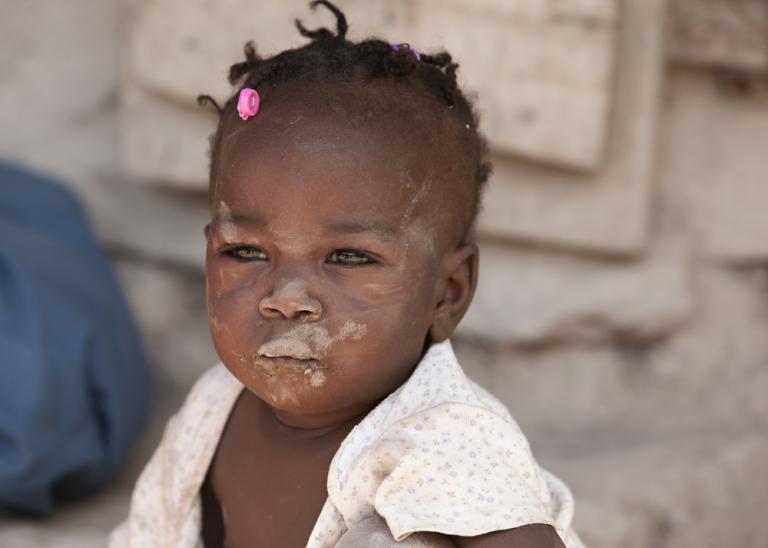
As a surgeon practicing in the U.S., I rarely encountered the issue of infant mortality. While I occasionally saw babies die in the U.S., the overwhelming resources we have at our disposal fortunately made this a rare event. However, after I was called to sell my surgical practice and permanently moved to Haiti, the poorest country in the Western Hemisphere, infant mortality became a desperate daily struggle.
Defined as death within the first year of life, infant mortality is an overwhelmingly devastating event for families, communities and society as a whole. The U.S., with all of its resources, has an unenviable infant mortality rate of six deaths per 1000 live births, a relatively poor ranking among the world’s developed countries. This exists for a number of reasons including socio-economic inequalities in healthcare access as well as differences in the definition of live birth.
However, the data in developing countries reflects a much darker vista. Oftentimes babies die at a rate 10 to 100 fold that of developed nations. In Haiti, for example, infant mortality, though improved over the last decade, is still almost 10 times that of the U.S. Tragically, the causes of many of these deaths were successfully addressed many years ago within the borders of the more resource-rich countries, but not here, where daily survival is still a struggle.
People like Yvonne* remind us of the continued desperation so many individuals face. A storm had destroyed the remnants of her mud and stick shack, and soon the rain and wind unabatedly ravaged her family. A single mother of seven, she had sacrificed her own meals to feed her living children. As a result, she had no milk to feed her new baby girl. Having previously lost five children to starvation and disease, she knew all too well what lay ahead for this new child. She took the baby to the orphanage in the adjacent village, hoping it would provide the care for her baby that she couldn’t. The kind face at the front door explained that the orphanage was full and couldn’t take the child. Her worst fears realized, she walked into the darkness, picked up a rock and tragically ended her baby’s suffering.
Though shocking to those in the developed world, and to those of us who value all life as God does, Yvonne’s story is far too common in resource-poor countries. The ongoing disparity in infant mortality between rich and poor countries is a scourge that tragically highlights the human element to these cold statistics.
How is it possible in the 21st century that two countries separated by a mere 90-minute flight can experience such a wide gulf in such a life-and-death issue? To understand the causes of infant mortality is to understand the solutions.
High infant mortality rates revolve around the same issue that is at the root of most problems in the developing world – extreme poverty.
Those who live on less than $1.25 per day suffer privations unimaginable in the U.S. These individuals lack sufficient food to curb their constant gnawing hunger. They quench their thirst with foul-smelling, bacteria-laden water. No access to basic medical care means they suffer and die from easily curable diseases. They often are illiterate and practice destructive cultural norms that only serve to deepen their despair.
These factors were eliminated in the developed world long ago, so it is to these nations we can look for historical context and solutions.
Food is the most basic lifesaving provision, and it’s vitally important pregnant women receive balanced daily nutrition and vitamins. Teaching sustainable farming techniques will help these individuals provide for themselves long-term. With a healthy food supply, mothers will have milk to nourish their babies through that crucial first year.
Two billion people still do not have access to clean water, with most diarrheal diseases affecting infants stemming from this lack. Water purification techniques have become simpler and cheaper; clean water should be everyone’s right.
Affordable healthcare, including routine vaccinations, early detection and proper treatment of common childhood diseases, would significantly reduce infant mortality. Providing women with a clean hospital environment and well-trained medical personnel reduces deaths due to obstructed births.
Finally, practical seminars to educate women about maternal-child health will prevent unnecessary deaths due to dysfunctional cultural norms – many of these running directly counter to a Judeo-Christian belief system. As much as education can do to address physical factors, we also must help these individuals experience a heart change – new life in Christ – to free them from the bondage to sin and dangerous traditions.
Any preventable death is tragic, and we as Christians are called to share our abundant resources to improve the lives of the world’s most vulnerable. By focusing our resources in areas where they can be most effective, we are being wise stewards of the abundances with which we have been blessed. And by caring for these vulnerable populations, we are obeying God’s call to care for the widows and orphans, by intervening to prevent needless deaths of parents and children.
*Name has been changed to protect privacy
Dr. David Vanderpool, a trauma surgeon living in Thomazeau, Haiti, is the founder of LiveBeyond, a faith-based, humanitarian organization dedicated to improving the lives of the poor in Haiti.
Photo credit: Michelle D. Milliman / Shutterstock.com
Previous Post

October 9, 2015
Chicago Jains Celebrate Annual Fast for Self, Neighbor, and the World
Next Post
November 11, 2015 Mormon Homophobia and the Unintended Theological Crisis
Browse Our Archives
Select a Category Story of God Uncategorized
Select a Month September 2022 August 2022 January 2022 December 2021 August 2021 July 2021 February 2021 January 2021 January 2020 December 2019 November 2019 October 2019 September 2019 August 2019 July 2019 June 2019 May 2019 April 2019 March 2019 February 2019 January 2019 December 2018 November 2018 October 2018 September 2018 July 2018 June 2018 May 2018 April 2018 November 2017 October 2017 August 2017 June 2017 May 2017 April 2017 November 2016 October 2016 September 2016 July 2016 June 2016 May 2016 April 2016 March 2016 February 2016 January 2016 December 2015 November 2015 October 2015 September 2015 August 2015 July 2015 June 2015 May 2015 April 2015 March 2015 February 2015 January 2015 December 2014 October 2014 September 2014 July 2014 May 2014 April 2014 March 2014 February 2014 January 2014 September 2013 August 2013 July 2013 June 2013 May 2013 April 2013 March 2013 February 2013 January 2013 December 2012
Follow Us!
TAKE THE
Religious Wisdom Quiz
What did Lamentations describe happening to Jerusalem?
Select your answer to see how you score.
Its prosperity Its blessing and expansion Its destruction and mourning Its rebuilding
Related posts from Religion Now

Who's Responsible for Religious Literacy Education?

Orphan Awareness Month: Moving Beyond Awareness
Global Poverty and Local Religiosity
TRENDING AT PATHEOS Religion News

Catholic Integralists believe that religious values – specifically Christian ones – should...

Electing A Virtuous President Would Make Immunity Irrelevant
Presidential immunity can bring with it many risks. So how can we...

Why The Olympic Games Are A ‘Civil Religious’...
Sporting events form a vital space where Americans display their 'civil religious...

After more than a decade of news, research updates, and insights on...

Q: Why do Southern Baptists and like-minded Protestants...
THE RELIGION GUY’S ANSWER: Why? Simple. Because they believe that’s what the...

THE QUESTION: Is gambling evil? THE RELIGION GUY’S ANSWER: Analysts anticipate a...
view all Religion News blogs
Ad-Free & Subscriber Log-In Subscription Support
- About Us
- 2026 Calendar
- Videos
- Podcasts
- Library of World Religions
- Faith In Media Tracker
- Advertise With Us
- Write for Us
- Privacy Policy
- Terms of Service
- Do Not Sell My Data
- Contact Us
- Radiant Digital
- Manage Newsletter Subscriptions
- Unsubscribe From Notifications
- Sitemap
Copyright 2008-2026, Patheos. All rights reserved.
Subscription Support Ad-Free & Subscriber Log-In
Follow Patheos