
BuddhistCatholicContemplativeEvangelicalGeneral ChristianHinduJewishLatter-day SaintMuslimNew VisionsProgressive Christian
Beliefs
- Buddhist
- Catholic
- Contemplative
- Evangelical
- General Christian
- Hindu
- Jewish
- Latter-day Saint
- More Voices
- Muslim
- New Visions
- Pagan
- Progressive Christian
Topics
- Religion News
- Food and Religion
- Sports and Religion
- Religious Art
- Religious Music and Entertainment
- Religious Events
- History and Religion
- Style and Religion
- Politics and Religion
- Women in Religion
- Recreation Outdoors and Religion
- Business Finance and Religion
- Careers Workplace and Religion
- Education and Religion
- Family Parenting and Religion
- Health Fitness and Religion
- Home and Religion
- Relationships and Religion
- Technology and Religion
- Travel and Religion
Columnists
- Buddhist Columnists
- Business Finance and Religion Columnists
- Careers Workplace and Religion Columnists
- Catholic Columnists
- Contemplative Columnists
- Education and Religion Columnists
- Evangelists Columnists
- Family Parenting and Religion Columnists
- General Christian Columnists
- Health Fitness and Religion Columnists
- Hindu Columnists
- History and Religion Columnists
- Home and Religion Columnists
- Jewish Columnists
- More Voices Columnists
- Latter Day Columnists
- Muslim Columnists
- New Visions Columnists
- Nonreligious Columnists
- Pagan Columnists
- Politics and Religion Columnists
- Progressive Columnists
- Recreation Outdoors and Religion Columnists
- Relationships and Religion Columnists
- Religion News Columnists
- Religious Art Columnists
- Religious Events Columnists
- Religious Music and Entertainment Columnists
- Sports and Religion Columnists
- Style and Religion Columnists
- Technology and Religion Columnists
- Travel and Religion Columnists
- Women in Religion Columnists
Resource Library
- 2026 Calendar
- Library of World Religions
- The 100 Most Holy Places on Earth
- Patheos Answers
- Podcasts
- Videos
- Faith Leaders Database
- Anglican Episcopalian
- Bahai
- Baptist
- Buddhism
- Christianity
- Confucianism
- Eastern Orthodoxy
- Hinduism
- Holiness and Pentecostal
- ISKCON
- Islam
- Judaism
- Lutheran
- Methodist
- The Church of Jesus Christ of Latter-day Saints
- New Age
- Paganism
- Presbytarian and Reformed
- Protestantism
- Religion Behind the Scenes
- Roman Catholic
- Scientology
- Shia Islam
- Sikhism
- Sufism
- Sunni Islam
- Taoism
- Zen
- See all religions
Research Tools
 Ad-Free & Subscriber Log-In Subscription Support
Ad-Free & Subscriber Log-In Subscription Support
Follow Patheos 

- Trending:
- Forgiveness
- |
- Marriage
- |
- Consciousness
- |
- Death Penalty
- |
- Election
- |
- Halloween

- Home
- Religion News
- A Jump Start for Sustained Peacebuilding
A Jump Start for Sustained Peacebuilding
Last updated on: June 3, 2015 at 3:48 pm by Guest Contributor
A Jump Start for Sustained Peacebuilding 2015-06-03T15:48:25-04:00 Guest Contributor
Patheos Explore the world's faith through different perspectives on religion and spirituality! Patheos has the views of the prevalent religions and spiritualities of the world.
By Rev. Robert Chase
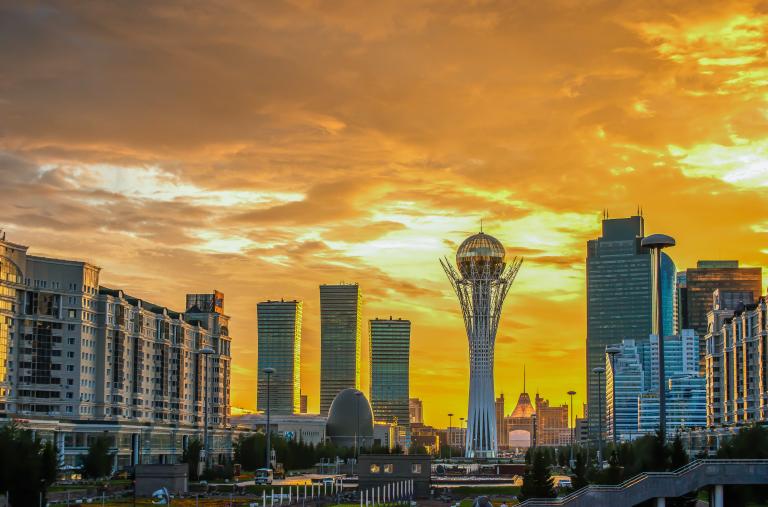
Astana, Kazakhstan Photo by Nutexzles, Shutterstock
For most Americans, Kazakhstan seems like a faraway place, indeed. But Americans can be quite myopic, blind to much of what goes on in the world beyond its borders. Actually, from a world perspective, Kazakhstan is right in the center of things. Located on the old silk route, straddling Asia and Europe, Kazakhstan is home to well over 100 ethnic groups, a wide variety of cultural expressions and religions.
By relinquishing its Soviet stockpile of nuclear weapons in 1995, Kazakhstan firmly declared itself as a nation in search of nuclear non-proliferation and global peacebuilding, and so it is a fitting place for gatherings that promote the things that make for peace, including cultural diversity and religious pluralism. Under the leadership of President Nursultan Nazarbayev, the nation’s commitment to interreligious harmony is highlighted every three years at the Congress of Leaders of World and Traditional Religions; the fifth such gathering of which will take place June 10-11 in the capital city, Astana.
Two important things happen at the Congress. First, people from different cultures and countries come together to seek concrete ways of building peace, justice, and understanding across national borders. Sadly, in a day when political extremists dominate the headlines, this does not happen as often as we would hope. Secondly, people come together across lines of faith. Muslims, Christians, and Jews; Buddhists, Hindus, and Jains; Zoroastrians and native spiritualists discuss how religious leaders might influence governments and societies, infusing political and economic policies with the ways that promote global security and interreligious understanding.
Cynics may ask: why bother? Why get together in endless dialogues laced with diplomatic niceties, where nothing of substance is actually discussed? How does it benefit you? And more importantly, how does it benefit the world?
Two answers come to me: the first is brief, so simple that it is often overlooked. As long as we are talking together, we are not shooting at each other. As long as we take the time to get to know “the other” at a deep level, it becomes harder to isolate and aggregate an entire people—a nationality, a race, a culture, a religion—and demonize them.
The second answer is drawn from an actual example of an effort underway among religious leaders from Pakistan and the U.S.—two nations not particularly known for their harmonious relations. Since 2011, multifaith members of the U.S.-Pakistan Interreligious Consortium (UPIC) have gathered on four separate occasions (three times in Pakistan) to build relationships, shatter stereotypes and, together, create and implement an action agenda that seeks to reduce tensions between the two countries.
American-Pakistani relations are filled with mistrust, misunderstanding, violence and fear, and yet UPIC has produced positive outcomes. Lasting relationships, educational exchanges between scholars and students, studies of ancient texts between Jews and Muslims, and media outreach to change public perceptions have been only some of the outcomes of this project. As religious leaders gather in June in Astana, their challenge will be to experience the Congress not as an end in itself, but as a launch pad for sustained change, using religion—which so many say is a source of division—as the instrument that makes for a lasting peace in our violence-plagued world.
Rev. Robert Chase is Founding Director of Intersections International. Prior to Intersections, Chase served as Director of Communication for the one million member United Church of Christ, and was founder and President of Creative Connections in Media, a full-service communications company based in Rhinebeck, NY. He is an author and an award-winning video producer/director with more than 100 productions to his credit.
Rev. Chase is an ordained minister in the United Church of Christ. He earned a Master of Divinity Magna cum Laude from New Brunswick (N.J.) Theological Seminary, and a B.A. with honors in Political Science from the University of Pennsylvania.
Previous Post

May 13, 2015
Why Christians Should Stand With Israel
Next Post
June 22, 2015 An Exploration into the Evangelical Obsession with the Unborn
Browse Our Archives
Select a Category Story of God Uncategorized
Select a Month September 2022 August 2022 January 2022 December 2021 August 2021 July 2021 February 2021 January 2021 January 2020 December 2019 November 2019 October 2019 September 2019 August 2019 July 2019 June 2019 May 2019 April 2019 March 2019 February 2019 January 2019 December 2018 November 2018 October 2018 September 2018 July 2018 June 2018 May 2018 April 2018 November 2017 October 2017 August 2017 June 2017 May 2017 April 2017 November 2016 October 2016 September 2016 July 2016 June 2016 May 2016 April 2016 March 2016 February 2016 January 2016 December 2015 November 2015 October 2015 September 2015 August 2015 July 2015 June 2015 May 2015 April 2015 March 2015 February 2015 January 2015 December 2014 October 2014 September 2014 July 2014 May 2014 April 2014 March 2014 February 2014 January 2014 September 2013 August 2013 July 2013 June 2013 May 2013 April 2013 March 2013 February 2013 January 2013 December 2012
Follow Us!
TAKE THE
Religious Wisdom Quiz
What did Lamentations describe happening to Jerusalem?
Select your answer to see how you score.
Its prosperity Its blessing and expansion Its destruction and mourning Its rebuilding
Related posts from Religion Now

Offer the Other Cheek? The Risks of Listening...

Truth is Narrow, but God’s Grace is Wide
Is Progressive Christianity Counterfeit Gospel?
TRENDING AT PATHEOS Religion News

Catholic Integralists believe that religious values – specifically Christian ones – should...

Electing A Virtuous President Would Make Immunity Irrelevant
Presidential immunity can bring with it many risks. So how can we...

Why The Olympic Games Are A ‘Civil Religious’...
Sporting events form a vital space where Americans display their 'civil religious...

After more than a decade of news, research updates, and insights on...

Q: Why do Southern Baptists and like-minded Protestants...
THE RELIGION GUY’S ANSWER: Why? Simple. Because they believe that’s what the...

THE QUESTION: Is gambling evil? THE RELIGION GUY’S ANSWER: Analysts anticipate a...
view all Religion News blogs
Ad-Free & Subscriber Log-In Subscription Support
- About Us
- 2026 Calendar
- Videos
- Podcasts
- Library of World Religions
- Faith In Media Tracker
- Advertise With Us
- Write for Us
- Privacy Policy
- Terms of Service
- Do Not Sell My Data
- Contact Us
- Radiant Digital
- Manage Newsletter Subscriptions
- Unsubscribe From Notifications
- Sitemap
Copyright 2008-2026, Patheos. All rights reserved.
Subscription Support Ad-Free & Subscriber Log-In
Follow Patheos