
BuddhistCatholicContemplativeEvangelicalGeneral ChristianHinduJewishLatter-day SaintMuslimNew VisionsProgressive Christian
Beliefs
- Buddhist
- Catholic
- Contemplative
- Evangelical
- General Christian
- Hindu
- Jewish
- Latter-day Saint
- More Voices
- Muslim
- New Visions
- Pagan
- Progressive Christian
Topics
- Religion News
- Food and Religion
- Sports and Religion
- Religious Art
- Religious Music and Entertainment
- Religious Events
- History and Religion
- Style and Religion
- Politics and Religion
- Women in Religion
- Recreation Outdoors and Religion
- Business Finance and Religion
- Careers Workplace and Religion
- Education and Religion
- Family Parenting and Religion
- Health Fitness and Religion
- Home and Religion
- Relationships and Religion
- Technology and Religion
- Travel and Religion
Columnists
- Buddhist Columnists
- Business Finance and Religion Columnists
- Careers Workplace and Religion Columnists
- Catholic Columnists
- Contemplative Columnists
- Education and Religion Columnists
- Evangelists Columnists
- Family Parenting and Religion Columnists
- General Christian Columnists
- Health Fitness and Religion Columnists
- Hindu Columnists
- History and Religion Columnists
- Home and Religion Columnists
- Jewish Columnists
- More Voices Columnists
- Latter Day Columnists
- Muslim Columnists
- New Visions Columnists
- Nonreligious Columnists
- Pagan Columnists
- Politics and Religion Columnists
- Progressive Columnists
- Recreation Outdoors and Religion Columnists
- Relationships and Religion Columnists
- Religion News Columnists
- Religious Art Columnists
- Religious Events Columnists
- Religious Music and Entertainment Columnists
- Sports and Religion Columnists
- Style and Religion Columnists
- Technology and Religion Columnists
- Travel and Religion Columnists
- Women in Religion Columnists
Resource Library
- 2026 Calendar
- Library of World Religions
- The 100 Most Holy Places on Earth
- Patheos Answers
- Podcasts
- Videos
- Faith Leaders Database
- Anglican Episcopalian
- Bahai
- Baptist
- Buddhism
- Christianity
- Confucianism
- Eastern Orthodoxy
- Hinduism
- Holiness and Pentecostal
- ISKCON
- Islam
- Judaism
- Lutheran
- Methodist
- The Church of Jesus Christ of Latter-day Saints
- New Age
- Paganism
- Presbytarian and Reformed
- Protestantism
- Religion Behind the Scenes
- Roman Catholic
- Scientology
- Shia Islam
- Sikhism
- Sufism
- Sunni Islam
- Taoism
- Zen
- See all religions
Research Tools
 Ad-Free & Subscriber Log-In Subscription Support
Ad-Free & Subscriber Log-In Subscription Support
Follow Patheos 

- Trending:
- Forgiveness
- |
- Marriage
- |
- Consciousness
- |
- Death Penalty
- |
- Election
- |
- Halloween

- Home
- Religion News
- Are Religion Courses Harmful to Faith?
Are Religion Courses Harmful to Faith?
Last updated on: April 21, 2014 at 3:18 pm by Guest Contributor
Are Religion Courses Harmful to Faith? 2014-04-21T15:18:30-04:00 Guest Contributor
Patheos Explore the world's faith through different perspectives on religion and spirituality! Patheos has the views of the prevalent religions and spiritualities of the world.
By Todd Green
Yes. There’s no use in beating around the bush. Whether one firmly believes that Christianity alone contains Truth with a capital “T,” or thinks that God’s nature or existence is a settled matter, there is always the possibility that the academic study of religion will rattle the foundations of one’s faith. Religion courses, indeed, can be hazardous to one’s spiritual health.
We religion professors are aware of these risks. We are also aware that on many college campuses, folks debate the pros and cons of studying religion in an academic setting. I recognize that not everyone on our own campus believes that the religion department is engaged in a beneficial task. A few people may even think that what we do is dangerous, that our department should focus on reinforcing orthodox Christian beliefs and should leave the business of critical thinking to other academic departments. I hear these concerns and, at one level, I can appreciate what drives them. Faith is something that is deeply personal. It touches on the core of our identity. I understand the desire to want to protect and defend it.
But what sort of faith is actually at risk in religion courses? Is it a faith that requires absolute certainty? Is it a faith that cannot survive unless it is shielded from critical inquiry and diverse viewpoints? Is it a faith that avoids questions and doubts about what we believe and why we believe it? If that is what we mean by faith, then I ask: Should such a faith survive?
I want to challenge the assumption that faith as outlined above is inherently positive and something that we should have, whereas doubt is inherently negative and something that we should avoid. Why do I reject this assumption? History. As a religious historian, I can assure you that there are plenty of examples of people committing atrocities or embracing dangerous beliefs under the auspices of faith. Let us not forget that people who believed in Jesus Christ as Lord and Savior created the Inquisition, executed tens of thousands of women (and men) suspected of witchcraft, oversaw the Atlantic slave trade, defended slavery as a Christian obligation, lynched African Americans, colonized “natives” the world over, and participated in projects of genocide. Let us also remember that Martin Luther King, Jr., wrote his “Letter from a Birmingham Jail” primarily to Christian clergy and other white Christians who loved Jesus and put their hope in him for salvation but who stood on the sidelines of history and did nothing to challenge the systemic oppression of African Americans under Jim Crow laws. And this list does not even begin to account for the ongoing ways that people of faith support systems and structures that perpetuate racism, misogyny, economic injustice, and the exploitation of other human beings and the natural world.
I know, I know. This is not the full story of Christianity. True. But my point is that faith in itself, or at least faith defined as the opposite of doubt, is not a self-evident good. One can have faith and still engage in destructive and dehumanizing behavior. One can have faith and still hate one’s neighbor. One can love Jesus and still be a scoundrel!
Defending faith without asking critical questions about what it is we have faith in, and what that faith means for our neighbors and the world around us – that is the greatest danger. Paul Tillich reminds us that faith is our “ultimate concern.” But he also reminds us that we must be careful in determining what the object of our ultimate concern is lest our god proves to be a demon that threatens our very being.
It’s not my job to promote “orthodoxy” or the superiority of one religious tradition over against others. I really do not care whether my students accept Jesus Christ as Lord, recite the Islamic shahada, take refuge in the Buddha (and the Dharma and the Sangha), or reject religion altogether. It is my job to encourage students to engage in critical thinking, to wrestle with complex historical and philosophical questions, to reflect on their own existential commitments, and to expand their conversation partners by exposing them to diverse voices across a variety of religious traditions.
I cannot control the outcome of this process. My hope is simply that students will reflect more critically and deeply on what they do and do not have faith in and why. Yes, if they do this, a certain type of faith may wither and die. So be it. As history reminds us, not all kinds of faith should survive. And not all doubts mean the end of faith – sometimes, they are just the beginning of it.
 Todd Green, assistant professor of religion at Luther College, teaches primarily in the areas of European and American religious history. His research interests include secularization, Islamophobia, and interreligious dialogue. He has published peer-reviewed articles on these topics and is the author of Responding to Secularization: The Deaconess Movement in Nineteenth-Century Sweden. He is currently working on a book for Fortress Press that provides a historical survey of Islamophobia in Europe and North America. Green is also a contributor to the Religion section of the Huffington Post.
Previous Post

April 8, 2014
World Vision and the Distant Dream of Christian Unity
Next Post

April 28, 2014 Together Fighting Hatred and Intolerance
Recent Comments
Browse Our Archives
Select a Category Story of God Uncategorized
Select a Month September 2022 August 2022 January 2022 December 2021 August 2021 July 2021 February 2021 January 2021 January 2020 December 2019 November 2019 October 2019 September 2019 August 2019 July 2019 June 2019 May 2019 April 2019 March 2019 February 2019 January 2019 December 2018 November 2018 October 2018 September 2018 July 2018 June 2018 May 2018 April 2018 November 2017 October 2017 August 2017 June 2017 May 2017 April 2017 November 2016 October 2016 September 2016 July 2016 June 2016 May 2016 April 2016 March 2016 February 2016 January 2016 December 2015 November 2015 October 2015 September 2015 August 2015 July 2015 June 2015 May 2015 April 2015 March 2015 February 2015 January 2015 December 2014 October 2014 September 2014 July 2014 May 2014 April 2014 March 2014 February 2014 January 2014 September 2013 August 2013 July 2013 June 2013 May 2013 April 2013 March 2013 February 2013 January 2013 December 2012
Follow Us!
TAKE THE
Religious Wisdom Quiz
Who did Joseph eventually forgive and provide for in Egypt?
Select your answer to see how you score.
Pharaoh Potiphar His brothers His captors
Related posts from Religion Now

Karl Marx vs. Apostle Paul: Where do Americans...

The Idea of God Beyond Religion
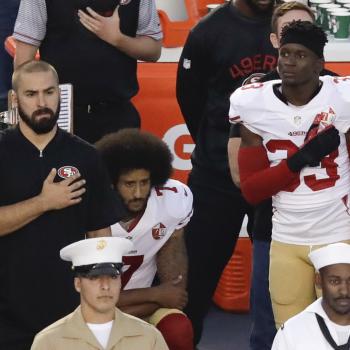
Kneeling in Silence: Colin Kaepernick and the Religious...

The Invisible Classroom: Seeing Religion’s Importance to 21st...
TRENDING AT PATHEOS Religion News

Catholic Integralists believe that religious values – specifically Christian ones – should...

Electing A Virtuous President Would Make Immunity Irrelevant
Presidential immunity can bring with it many risks. So how can we...

Why The Olympic Games Are A ‘Civil Religious’...
Sporting events form a vital space where Americans display their 'civil religious...

After more than a decade of news, research updates, and insights on...

Q: Why do Southern Baptists and like-minded Protestants...
THE RELIGION GUY’S ANSWER: Why? Simple. Because they believe that’s what the...

THE QUESTION: Is gambling evil? THE RELIGION GUY’S ANSWER: Analysts anticipate a...
view all Religion News blogs
Ad-Free & Subscriber Log-In Subscription Support
- About Us
- 2026 Calendar
- Videos
- Podcasts
- Library of World Religions
- Faith In Media Tracker
- Advertise With Us
- Write for Us
- Privacy Policy
- Terms of Service
- Do Not Sell My Data
- Contact Us
- Radiant Digital
- Manage Newsletter Subscriptions
- Unsubscribe From Notifications
- Sitemap
Copyright 2008-2026, Patheos. All rights reserved.
Subscription Support Ad-Free & Subscriber Log-In
Follow Patheos