
BuddhistCatholicContemplativeEvangelicalGeneral ChristianHinduJewishLatter-day SaintMuslimNew VisionsProgressive Christian
Beliefs
- Buddhist
- Catholic
- Contemplative
- Evangelical
- General Christian
- Hindu
- Jewish
- Latter-day Saint
- More Voices
- Muslim
- New Visions
- Pagan
- Progressive Christian
Topics
- Religion News
- Food and Religion
- Sports and Religion
- Religious Art
- Religious Music and Entertainment
- Religious Events
- History and Religion
- Style and Religion
- Politics and Religion
- Women in Religion
- Recreation Outdoors and Religion
- Business Finance and Religion
- Careers Workplace and Religion
- Education and Religion
- Family Parenting and Religion
- Health Fitness and Religion
- Home and Religion
- Relationships and Religion
- Technology and Religion
- Travel and Religion
Columnists
- Buddhist Columnists
- Business Finance and Religion Columnists
- Careers Workplace and Religion Columnists
- Catholic Columnists
- Contemplative Columnists
- Education and Religion Columnists
- Evangelists Columnists
- Family Parenting and Religion Columnists
- General Christian Columnists
- Health Fitness and Religion Columnists
- Hindu Columnists
- History and Religion Columnists
- Home and Religion Columnists
- Jewish Columnists
- More Voices Columnists
- Latter Day Columnists
- Muslim Columnists
- New Visions Columnists
- Nonreligious Columnists
- Pagan Columnists
- Politics and Religion Columnists
- Progressive Columnists
- Recreation Outdoors and Religion Columnists
- Relationships and Religion Columnists
- Religion News Columnists
- Religious Art Columnists
- Religious Events Columnists
- Religious Music and Entertainment Columnists
- Sports and Religion Columnists
- Style and Religion Columnists
- Technology and Religion Columnists
- Travel and Religion Columnists
- Women in Religion Columnists
Resource Library
- 2026 Calendar
- Library of World Religions
- The 100 Most Holy Places on Earth
- Patheos Answers
- Podcasts
- Videos
- Faith Leaders Database
- Anglican Episcopalian
- Bahai
- Baptist
- Buddhism
- Christianity
- Confucianism
- Eastern Orthodoxy
- Hinduism
- Holiness and Pentecostal
- ISKCON
- Islam
- Judaism
- Lutheran
- Methodist
- The Church of Jesus Christ of Latter-day Saints
- New Age
- Paganism
- Presbytarian and Reformed
- Protestantism
- Religion Behind the Scenes
- Roman Catholic
- Scientology
- Shia Islam
- Sikhism
- Sufism
- Sunni Islam
- Taoism
- Zen
- See all religions
Research Tools
 Ad-Free & Subscriber Log-In Subscription Support
Ad-Free & Subscriber Log-In Subscription Support
Follow Patheos 

- Trending:
- Forgiveness
- |
- Marriage
- |
- Consciousness
- |
- Death Penalty
- |
- Election
- |
- Halloween

- Home
- Religion News
- The Scholars: An Alternative Story about Wendy Doniger and “The Hindus”
The Scholars: An Alternative Story about Wendy Doniger and “The Hindus”
Last updated on: February 19, 2014 at 5:49 pm by Guest Contributor
The Scholars: An Alternative Story about Wendy Doniger and “The Hindus” 2014-02-19T17:49:28-05:00 Guest Contributor
Patheos Explore the world's faith through different perspectives on religion and spirituality! Patheos has the views of the prevalent religions and spiritualities of the world.
By Vamsee Juluri
Imagine this:
A book called The Women, written by a man who claims to be an expert on women.
A book called The Poor, written by a millionaire who read a few books on poverty (written mostly by other rich people).
A book called The Gays, written by a heterosexual who insists he loves them even if his subjects say he is quite homophobic.
Now consider a book called The Hindus. It is written not by someone who grew up as a Hindu, in a Hindu household, or presumably, anything like a living Hindu cultural environment. It contains factual errors, as well as numerous arguably dubious interpretations. It appears to Hindu readers to be skewed, distorted, and even bizarre; even if one generously concedes that it is after all subtitled as an “alternative” history.
It may well have been the case that such a book would have been taken just about as seriously as a book called The Women by a pompous man who didn’t know better or The Poor by a one-percenter with no empathy at all.
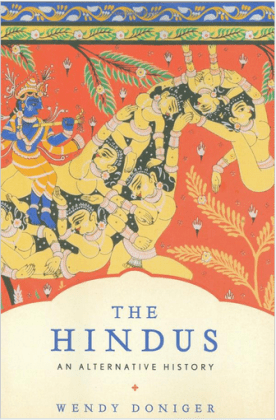 But it isn’t. The Hindus is the name of a real book, and has won the admiration and praise of real critics, writers, activists, and scholars. Is it a work of scholarship? To a certain extent, it is. It contains more references than most students of Hinduism, or even practicing Hindus, would be aware of (though its author compares the task of looking at endnotes to dogs sniffing each others’ backsides in a rather irreverent and un-Hindu perspective on learning). It makes some good points, in theory, for tolerance, diversity, and recognizing the margins of history (though, like margin notes, many of these points are also made in a slightly zigzag fashion rather than in conformity to normal standards of academic writing). But the simplest reason that a book called The Hindus has been acclaimed as a work of great scholarship despite its flaws is perhaps because of its accident of privilege, of nationality, of class, and of race.
To paraphrase Edward Said, very simply, it does to Hindus what Hindus cannot do to the “scholars” who write about them. Except that when they do try, they often end up looking, sounding, and sometimes, on rare occasion, really acting too much like barbaric religious fundamentalists. The Hindus who try are probably law-abiding professionals and family members, devout, engaged, and increasingly assertive about their right to their own stories and representations. They are, in America at least, religious and cultural minorities. They feel doubly aggrieved: by their past, which bears the marks of their denigration by those of a different race, nationality, and religion during colonialism; and by the present, where the promise of an equal, respectful society seems to be ever elusive when it comes to their faith, and their faith alone. They write angry emails. They sometimes throw eggs. A few call for worse things. They obviously span the spectrum of politics, ethics, and propriety.
But then, there are also Hindus who throw no eggs, send no anger, and advocate no disenfranchisement of minorities in India. They do, however, decline to celebrate a lie. They refuse to participate in the oblivious celebration of racial, national, and class privilege that denies them their own voice. They do not share the academic and literary elite’s admiration for a book like The Hindus. However, they too are supporting Professor Doniger’s right to be published, even as they are maintaining their stand that they also have a right to debate that which she publishes. They are the future of Hinduism, and indeed a better world too; not those who blindly ban books, and also not those who blindly worship a flawed work without recognizing and critiquing the profound privileges that have helped elevate that work beyond its flaws to international celebration.
Simply put, we can all have our bumper sticker moments now that the answer to a book you disagree with is not a ban on the book but still more books. Writers, publishers, and readers would all love that. But the fact remains that not everyone gets anything remotely resembling equal time or shelf-space as a book backed by five hundred years of colonial and post-colonial privilege.
At least in an Indian bookstore, you will find dozens of books on Hinduism as Hindus (or “the Hindus” if you will) see it, live it, and indeed critically shape it, from one generation to another. You will see traditional compilations of the Vedas and Upanishads, and newer and new-age-ier explorations of what the myths all mean to the modern Indian soul. You will see books on Hinduism and Buddhism and Islam and Sikhism and Jainism and Islam and Christianity. You will see India and the world in its microcosm. You will not miss anything because of the presence of one experimental hippy-trippy toke-toke giggle-giggle sprawl in there. It needs no ban.
But it is in America, this bastion of privilege, and possibility, this dream of the world, that the real consequences of misrepresentation play out. You will find in all your bookstores and journals and hallowed pulpits, that “alternative” story often becoming the only story. There is no room here for Hindus, only an “expert” on “the Hindus.” Look at the India shelves. Look at the op-ed pages of the papers of record. You will see no Hindus except by token of name perhaps. You will find top of the line seculars who will equate any critique of racism and orientalism against Hindus with Hindu fundamentalism.
You will find, reflected back and forth in the words of the four or five authors who have been chosen to portray 1.5 billion people to America, the same malignant fantasy as the old colonizers about Hinduism. It is mitigated, perhaps, by a streak of anti-colonial idealism, a great anguish for the poor, the minorities, the oppressed of the world.
But their view of Hinduism is limited. They either did not know it in their lives, or knew no affection for it. They hallucinate a bogeyman in it and blame it for all of India’s ills, with a straight face. They think that when Hindus get angry it is because of their “mythology” and when others kill people it is because they are poor and oppressed. They think that Hinduism has nothing good in it, just borrowed from other faiths. They think that Hinduism has been responsible for every bad thing in India, and then also think that Hinduism doesn’t really exist. They have no clue. And if they did not have the privilege that Hinduphobic orientalism has given them, their lack of academic depth and integrity would have been called out a million times over by now. There is no mainstream history of “the Hindus” in hegemonic center stage in North America. There is just one “alternative,” which makes little sense, frankly, even as an alternative. It is just an old hegemony by a disingenuously counter-hegemonic name, and has nothing to with Hindus.
But those who are today merely silenced and fantasized about as “the Hindus” will one day have their history, and their own alternatives too. For the Hindus already have their own liberalism, secularism, and pluralism, way beyond the watered down double-standard versions offered by the self-appointed prophets of the same. They will welcome debate, dissent, and a reasonable criticism of their own ways, from within and without. They have, after all, not traditionally found a need to defend their philosophies or beliefs with walls of privilege, of a theocratic or secular kind. They will do what Hindus have done best, which is to live well with others, and even better with others’ diverse visions of God.
They will also assert what religion is really about in time, even if the present moment seems to bear mainly the voices of those “Hindu nationalists” who include both more and less than what they are made out to be. They will take Hindu and nation beyond the limits of both. They will restore the love in religion, and the truth. They will welcome and celebrate the scholars and critics both from within and outside its traditional and geographical folds. They will make sure that a book about the Hindus will have at least something to do with the Hindu religion, as in a group of people and their ways of engaging with the divine, as opposed to merely throwing about their alleged recipes for human sacrifice, dismemberment, and oppression. The Hindus will live, let live, and most of all, they will now speak.
It is The Scholars who will have to learn to listen.
 Vamsee Juluri is a novelist and professor of media studies at the University of San Francisco. His research interest is in the globalization of media audiences with an emphasis on Indian television and cinema, mythology, religion, violence and Gandhian philosophy. He is the author of three books: Becoming a Global Audience: Longing and Belonging in Indian Music Television (Peter Lang, 2003/Orient Longman, 2005), The Mythologist: A Novel (Penguin India, 2010) and most recently, Bollywood Nation: India through its Cinema (Penguin India, 2013). His work has been published in scholarly journals and he has also written numerous op-eds and feature articles for the San Francisco Chronicle, Times of India, Open Magazine, India-West, and Hinduism Today, among other publications.
Previous Post

February 10, 2014
The ExGay Deception and God's Grace
Next Post
March 5, 2014 Schism among the Dawoodi Bohras
Browse Our Archives
Select a Category Story of God Uncategorized
Select a Month September 2022 August 2022 January 2022 December 2021 August 2021 July 2021 February 2021 January 2021 January 2020 December 2019 November 2019 October 2019 September 2019 August 2019 July 2019 June 2019 May 2019 April 2019 March 2019 February 2019 January 2019 December 2018 November 2018 October 2018 September 2018 July 2018 June 2018 May 2018 April 2018 November 2017 October 2017 August 2017 June 2017 May 2017 April 2017 November 2016 October 2016 September 2016 July 2016 June 2016 May 2016 April 2016 March 2016 February 2016 January 2016 December 2015 November 2015 October 2015 September 2015 August 2015 July 2015 June 2015 May 2015 April 2015 March 2015 February 2015 January 2015 December 2014 October 2014 September 2014 July 2014 May 2014 April 2014 March 2014 February 2014 January 2014 September 2013 August 2013 July 2013 June 2013 May 2013 April 2013 March 2013 February 2013 January 2013 December 2012
Follow Us!
TAKE THE
Religious Wisdom Quiz
What order did the four beasts that rose from the sea in Daniel's vision appear?
Select your answer to see how you score.
Lion with eagle's wings, bear, leopard, terrifying beast with iron teeth Terrifying beast with iron teeth, lion with eagle's wings, leopard, bear Bear, lion with eagle's wings, terrifying beast with iron teeth, leopard Leopard, bear, lion with eagle's wings, terrifying beast with iron teeth
Related posts from Religion Now

Kneeling in Silence: Colin Kaepernick and the Religious...


Diwali and the Election: Truth, Light, and Meaning...

TRENDING AT PATHEOS Religion News

Catholic Integralists believe that religious values – specifically Christian ones – should...

Electing A Virtuous President Would Make Immunity Irrelevant
Presidential immunity can bring with it many risks. So how can we...

Why The Olympic Games Are A ‘Civil Religious’...
Sporting events form a vital space where Americans display their 'civil religious...

After more than a decade of news, research updates, and insights on...

Q: Why do Southern Baptists and like-minded Protestants...
THE RELIGION GUY’S ANSWER: Why? Simple. Because they believe that’s what the...

THE QUESTION: Is gambling evil? THE RELIGION GUY’S ANSWER: Analysts anticipate a...
view all Religion News blogs
Ad-Free & Subscriber Log-In Subscription Support
- About Us
- 2026 Calendar
- Videos
- Podcasts
- Library of World Religions
- Faith In Media Tracker
- Advertise With Us
- Write for Us
- Privacy Policy
- Terms of Service
- Do Not Sell My Data
- Contact Us
- Radiant Digital
- Manage Newsletter Subscriptions
- Unsubscribe From Notifications
- Sitemap
Copyright 2008-2026, Patheos. All rights reserved.
Subscription Support Ad-Free & Subscriber Log-In
Follow Patheos