
BuddhistCatholicContemplativeEvangelicalGeneral ChristianHinduJewishLatter-day SaintMuslimNew VisionsProgressive Christian
Beliefs
- Buddhist
- Catholic
- Contemplative
- Evangelical
- General Christian
- Hindu
- Jewish
- Latter-day Saint
- More Voices
- Muslim
- New Visions
- Pagan
- Progressive Christian
Topics
- Religion News
- Food and Religion
- Sports and Religion
- Religious Art
- Religious Music and Entertainment
- Religious Events
- History and Religion
- Style and Religion
- Politics and Religion
- Women in Religion
- Recreation Outdoors and Religion
- Business Finance and Religion
- Careers Workplace and Religion
- Education and Religion
- Family Parenting and Religion
- Health Fitness and Religion
- Home and Religion
- Relationships and Religion
- Technology and Religion
- Travel and Religion
Columnists
- Buddhist Columnists
- Business Finance and Religion Columnists
- Careers Workplace and Religion Columnists
- Catholic Columnists
- Contemplative Columnists
- Education and Religion Columnists
- Evangelists Columnists
- Family Parenting and Religion Columnists
- General Christian Columnists
- Health Fitness and Religion Columnists
- Hindu Columnists
- History and Religion Columnists
- Home and Religion Columnists
- Jewish Columnists
- More Voices Columnists
- Latter Day Columnists
- Muslim Columnists
- New Visions Columnists
- Nonreligious Columnists
- Pagan Columnists
- Politics and Religion Columnists
- Progressive Columnists
- Recreation Outdoors and Religion Columnists
- Relationships and Religion Columnists
- Religion News Columnists
- Religious Art Columnists
- Religious Events Columnists
- Religious Music and Entertainment Columnists
- Sports and Religion Columnists
- Style and Religion Columnists
- Technology and Religion Columnists
- Travel and Religion Columnists
- Women in Religion Columnists
Resource Library
- 2026 Calendar
- Library of World Religions
- The 100 Most Holy Places on Earth
- Patheos Answers
- Podcasts
- Videos
- Faith Leaders Database
- Anglican Episcopalian
- Bahai
- Baptist
- Buddhism
- Christianity
- Confucianism
- Eastern Orthodoxy
- Hinduism
- Holiness and Pentecostal
- ISKCON
- Islam
- Judaism
- Lutheran
- Methodist
- The Church of Jesus Christ of Latter-day Saints
- New Age
- Paganism
- Presbytarian and Reformed
- Protestantism
- Religion Behind the Scenes
- Roman Catholic
- Scientology
- Shia Islam
- Sikhism
- Sufism
- Sunni Islam
- Taoism
- Zen
- See all religions
Research Tools
 Ad-Free & Subscriber Log-In Subscription Support
Follow Patheos 

- Trending:
- Advent
- |
- Forgiveness
- |
- Thanksgiving
- |
- Election
- |
- Seasonal Holidays
- |
- Marriage

- Home
- New Visions
- Women in Religion
- The Spirit World Is the Real World: God In The Every Day
The Spirit World Is the Real World: God In The Every Day
Last updated on: May 27, 2026 at 6:27 pm by Tricia Gates Brown
The Spirit World Is the Real World: God In The Every Day 2026-05-27T18:27:54-07:00 Tricia Gates Brown
Patheos Explore the world's faith through different perspectives on religion and spirituality! Patheos has the views of the prevalent religions and spiritualities of the world.

How would seeing the world as enchanted with spirit, or imbued through and through with God, change how we operate daily, how we live in this world? {Photo by Maria Dashkova for Scopio}
A Monk’s Wisdom on Body and Spirit
I sit with Brother Martin Gonzales, over sixty years a monk and reflecting on the nearness of life’s end. It is 2019. We are at Our Lady of Guadalupe Trappist Abbey on a summer day when the perfume of magnolias stretches across the way and birds sing, as he reiterates words he likes to share: “I don’t care what anyone says, but the spirit world is the real world. Just think about your life. I mean, at one point you weren’t. Just think about that, because most people don’t. At one point, you weren’t. And you have this spirit….” Here he talks about the body as different from spirit, referring to our collection of cells constantly dying and changing, transforming us from youthful to elderly; the cells that started with our parents. “Your parents made you,” he continues, “but the spirit part of you came from somewhere else. They didn’t give it to you.”
Jacob’s Dream and the Stairway Between Heaven and Earth
In the story of “Jacob and the angels,” Jacob journeys on the road from Beersheba to Haran when he stops to camp. As he sleeps, he dreams of a stairway connecting heaven and earth, with spirit-beings traversing the rungs of the ladder—up and down. Then God speaks to him of the relationship God has with Jacob’s people, reminding him how they will thrive. Beside himself with terror and wonder, Jacob wakes. He exclaims, “Surely the Lord is in this place—and I did not know it! … How awesome is this place! This is none other than the house of God [Beth-El], and this is the gate of heaven” (Gen 28:16-17). He builds a pillar-altar at the site to mark the “house of God.”
The Bible as a Story of Humanity’s Dawning Awareness of God
The collection of stories that is the Bible is also, in its anthological form, a meta-narrative chronicling a movement of human understandings of God. At its core, this movement is the slow drawing-close of God, with views of God as remote/above/far away gradually giving way to understandings of God as not only near but also within, or in-herent in creation. Christian theologians who later reflect on the story will come to see the soul as the “house of God,” and the Christ as the very essence of God seeded throughout creation and brought to awareness through the intuition of this man named Jesus, who came to recognize it in himself and surrender to it, and thus to speak and act as one with God. It is truly a remarkable progression!
How Jacob Both Glimpses and Misses the Point
Our tale of Jacob at Bethel, and the revelation of his dream, marks one breakthrough step of understanding in that long arc of breakthroughs. As the dream shows Jacob, God is right there with him. Before this “he didn’t know it!” One could say he quickly misses the point when he sets up a pillar-altar and names the site “Bethel” (House of God). But it is one starting place. And because Jacob as a character represents the human ego-preserving tendencies so perfectly, we almost need him to miss the point. It is what his character does. Yet in that juncture, we nonetheless move on from understandings of God as remote and distant.
God Didn’t Change — People Did
Some might say the biblical arc chronicles changes in God’s relations with humanity, and that the arc culminates in God’s act of coming near. This view comports with understandings of the Bible as God’s very words transcribed by humans. But I don’t see it this way. The Bible is written by people, and the arc of the book reveals the arc of their dawning awareness. God doesn’t change; people do. The presence of God didn’t change with Jesus, it was always “right here.” It was always in-herent. The spirit did not “come down” in one particular place at the event we call Pentecost, the spirit was always present everywhere. But at Pentecost, eyes were opened.
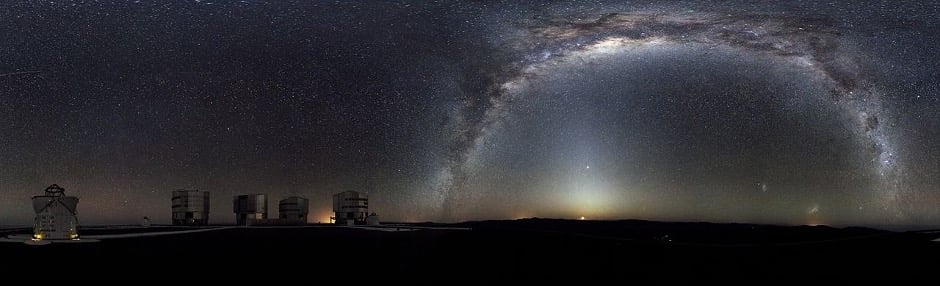
Without the story, people are tragically unaware and unrooted. {CC: Wikimedia Commons}
What If We Saw the Whole World as Enchanted With Spirit?
How would seeing the world as enchanted with spirit, or imbued through and through with God, change how we operate on a daily basis, how we live in this world? It seems that when we have experiences of God’s presence, we are often surprised. Like Jacob we say: God is here and I didn’t know it! Like Jacob, we want to build “altars” on those places. We tell the story, or cherish the memory, consecrating that moment in time, instead of recognizing that all of time is consecrated, and what set those times apart was the opening of our eyes. All of time is holy—because God is both alongside us and within us. How would seeing this change the way we participate in meetings at work, or fold the laundry, or cut and eat the bell pepper, or relax with a story or a companion come evening, or interact with those in need? So much of the time we are like Jacob: trudging along, waging our little battles, then we are “out of nowhere” bombarded by spirit. We are reminded that God is right here. And sometimes we are faced with the power of God-disguised-as-man, so we wrestle him and hang on to our agendas until we are so broken and out of joint that we think God blessed us for our tenacity (Gen 32:22-32). When all along, we were already blessed.
The Tragedy of Living Without a Meta-Story
Often when I look out on certain situations or people, I perceive the lack of a meta-story telling them about this enchantment, telling them they are the very seat of God—an integral part of God. And without the story, people are tragically unaware and unrooted. Like Jacob, God is right with them and they “didn’t know it.” We don’t know who we are, or what it means to live a good life, or what life even amounts to. On the whole, modern people trudge along like what we see with our unskilled eyes is the whole story, when it isn’t the half. I see this as a failure of many things, but perhaps most importantly, a failure of storytelling.
The Stories We Need to Start Telling Again
What stories might we take up and start to tell anew? Not stories employed like battle-axes to drive home three key points. But stories that enlarge our imaginations, ever so gradually equipping us to see how enchanted this whole world is, how enchanted we are. Once upon a time, you weren’t…
If you liked this article, please leave me a comment below; I am interested in your perspective. To support my writing, please subscribe and share with a friend!
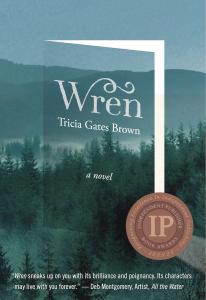
Wren, winner of a 2022 Independent Publishers Award Bronze Medal
Winner of the 2022 Independent Publisher Awards Bronze Medal for Regional Fiction; Finalist for the 2022 National Indie Excellence Awards. (2021) Paperback publication of Wren , a novel. “Insightful novel tackles questions of parenthood, marriage, and friendship with finesse and empathy … with striking descriptions of Oregon topography.” —Kirkus Reviews (2018) Audiobook publication of Wren.
Progressive Christian
Women in Religion
Religious Events

About Tricia Gates Brown
Tricia Gates Brown is a writer/editor in Oregon’s Willamette Valley whose debut novel Wren won a 2022 Independent Publishers Award Bronze Medal. Her second novel, Finding Something to Love, will be published in 2027 by Vine Leaves Press. She publishes widely in literary journals and holds a PhD from University of St. Andrews in Scotland. Aside from writing, she creates art from the home she shares with her spouse and a bevy of beloved cats. Her first collection of poetry, Of a Certain Age, will be published in Summer 2026 by Fernwood Press, and her second, Blessings, Curses, is forthcoming from the same. Read more at https://triciagatesbrown.net . You can read more about the author here.
Previous Post

May 17, 2026
How I Built a Poetry Collection Around Life Stages, Decades
Next Post

June 15, 2026 Holy Longing: What Our Restlessness Is Telling Us
Recent Comments
"What is prayer? Different people answer the question differently. "Prayer is all about attunement that ..."
The Many Forms of Prayer: What ..."
""I recently told someone 'I have a man,' instead of 'I am hungry' ..."Oh, what ..."
A Different Kind of Lent: Mindfulness, ..."
"Depending on the genre, music is known to offer multiple benefits to listeners and to ..."
Prayer as Heartful Listening: How Music ..."
"Christmas comes and Christmas goes. Waiting is certainly the right thing for getting further energized ..."
The Already and Not Yet: On ..."
Browse Our Archives
Select a Category Education Essay Excerpt Uncategorized
Select a Month October 2026 September 2026 August 2026 July 2026 June 2026 May 2026 April 2026 March 2026 February 2026 January 2026 December 2025 November 2025 October 2025 September 2025 August 2025 July 2025 June 2025 May 2025 April 2025 March 2025 February 2025 January 2025 December 2024 November 2024 October 2024 September 2024 August 2024 July 2024 June 2024 May 2024 April 2024 March 2024 February 2024 January 2024 December 2023 November 2023 October 2023 September 2023 August 2023 July 2023 June 2023 May 2023 April 2023 March 2023 February 2023 January 2023 December 2022 November 2022 October 2022 September 2022 August 2022 July 2022
Follow Us!
TAKE THE
Religious Wisdom Quiz
What does "Shiloh" mean in Hebrew?
Select your answer to see how you score.
God’s dwelling He whose it is Prince of peace The chosen one
Books by This Author Books by About Religion, Doubt and Why They Matter
Related posts from About Religion, Doubt and Why They Matter

The Grief of Healing: Being Found by the...
About Religion, Doubt and Why They Matter

Using Your Gifts Is Ministry: A Retired Deacon's...
About Religion, Doubt and Why They Matter

The Many Forms of Prayer: What Does it...
About Religion, Doubt and Why They Matter

In the Gloaming: What the Anti-Aging Movement Misses
About Religion, Doubt and Why They Matter
TRENDING AT PATHEOS New Visions

Reasons for Restraint: Ricardo Gonzalez, Florida and Dec...
The Morning of January 3 I begin with the dead. On the...

I published this column for Thanksgiving 2012 in the Deseret News....

For many years, Catholicism has been caught up in division over the...

'Statements of Faith' never get shorter
Nothing demonstrates a conservative commitment to faith and faithfulness like a "statement...

Michele's Reviews - Future Grace by John Piper
In God's Place, at God's Pace, by Future Grace Impatience is...

Bama Gramma's Blackout Christmas: the Power of Light...
Another Christmas Skit: I have an alter ego: Bama Gramma. She shows...
view all New Visions blogs
What Are Your Thoughts?leave a comment
Ad-Free & Subscriber Log-In Subscription Support
- About Us
- 2026 Calendar
- Videos
- Podcasts
- Library of World Religions
- Faith In Media Tracker
- Advertise With Us
- Write for Us
- Privacy Policy
- Terms of Service
- Do Not Sell My Data
- Contact Us
- Radiant Digital
- Manage Newsletter Subscriptions
- Unsubscribe From Notifications
- Sitemap
Copyright 2008-2026, Patheos, part of the Radiant Digital network of media brands. All rights reserved.
Subscription Support Ad-Free & Subscriber Log-In
Follow Patheos