
BuddhistCatholicContemplativeEvangelicalGeneral ChristianHinduJewishLatter-day SaintMuslimNew VisionsProgressive Christian
Beliefs
- Buddhist
- Catholic
- Contemplative
- Evangelical
- General Christian
- Hindu
- Jewish
- Latter-day Saint
- More Voices
- Muslim
- New Visions
- Pagan
- Progressive Christian
Topics
- Religion News
- Food and Religion
- Sports and Religion
- Religious Art
- Religious Music and Entertainment
- Religious Events
- History and Religion
- Style and Religion
- Politics and Religion
- Women in Religion
- Recreation Outdoors and Religion
- Business Finance and Religion
- Careers Workplace and Religion
- Education and Religion
- Family Parenting and Religion
- Health Fitness and Religion
- Home and Religion
- Relationships and Religion
- Technology and Religion
- Travel and Religion
Columnists
- Buddhist Columnists
- Business Finance and Religion Columnists
- Careers Workplace and Religion Columnists
- Catholic Columnists
- Contemplative Columnists
- Education and Religion Columnists
- Evangelists Columnists
- Family Parenting and Religion Columnists
- General Christian Columnists
- Health Fitness and Religion Columnists
- Hindu Columnists
- History and Religion Columnists
- Home and Religion Columnists
- Jewish Columnists
- More Voices Columnists
- Latter Day Columnists
- Muslim Columnists
- New Visions Columnists
- Nonreligious Columnists
- Pagan Columnists
- Politics and Religion Columnists
- Progressive Columnists
- Recreation Outdoors and Religion Columnists
- Relationships and Religion Columnists
- Religion News Columnists
- Religious Art Columnists
- Religious Events Columnists
- Religious Music and Entertainment Columnists
- Sports and Religion Columnists
- Style and Religion Columnists
- Technology and Religion Columnists
- Travel and Religion Columnists
- Women in Religion Columnists
Resource Library
- 2026 Calendar
- Library of World Religions
- The 100 Most Holy Places on Earth
- Patheos Answers
- Podcasts
- Videos
- Faith Leaders Database
- Anglican Episcopalian
- Bahai
- Baptist
- Buddhism
- Christianity
- Confucianism
- Eastern Orthodoxy
- Hinduism
- Holiness and Pentecostal
- ISKCON
- Islam
- Judaism
- Lutheran
- Methodist
- The Church of Jesus Christ of Latter-day Saints
- New Age
- Paganism
- Presbytarian and Reformed
- Protestantism
- Religion Behind the Scenes
- Roman Catholic
- Scientology
- Shia Islam
- Sikhism
- Sufism
- Sunni Islam
- Taoism
- Zen
- See all religions
Research Tools
 Ad-Free & Subscriber Log-In Subscription Support
Ad-Free & Subscriber Log-In Subscription Support
Follow Patheos 

- Trending:
- Forgiveness
- |
- Marriage
- |
- Consciousness
- |
- Death Penalty
- |
- Election
- |
- Halloween

- Home
- New Visions
- Relationships and Religion
- The Secret Life of Chronic Illness
The Secret Life of Chronic Illness
Last updated on: October 17, 2025 at 3:11 pm by Tricia Gates Brown
The Secret Life of Chronic Illness 2025-10-17T15:11:07-07:00 Tricia Gates Brown
Patheos Explore the world's faith through different perspectives on religion and spirituality! Patheos has the views of the prevalent religions and spiritualities of the world.

{Photo by Marie Dashkova for Scopio}
If you or someone close to you has a chronic illness, defined as “a health condition lasting a year or more, limiting daily activities and requiring ongoing medical attention,” you know what I mean by a secret life. If you don’t know, well, it’s because it’s a secret.
Most of us with chronic illness talk about our illness infrequently for reasons I’ll describe below. I have my highly productive life that most people see, then I have the life that only my spouse and daughter see, which, quite boringly, involves a lot of lying down. And when I show up for things like engagements and get-togethers, chores, or clergy duties, these activities are often preceded and followed by radical rest—which is what allows them to happen. Most people in my life only see the productive portions, not the preparation or recovery. I have become expert at doing things while feeling lousy! And more importantly, while not letting on.
Chronic Illness Can Be Isolating
The reason people with chronic illness have a secret life like the one I’ve described has to do with reactions of others. We’ve had so many experiences of people we love asking about our illness then responding in ways so dispiriting we decide it’s not worth sharing anymore. We recognize that our loved ones love us and care, so I say this not in judgement but in recognition of the difficulty of sharing something complex. When confronted with the complexity of chronic illness, most people either glaze over in boredom, suggest they might know the answer (“maybe you should try taking/doing/seeing…”), act incredulous, or immediately forget what we have said. This is especially true when one has chronic illnesses that are complicated and hard to explain.
Therefore, having a chronic illness can mean living every minute of every day with something life-altering that few people can relate to. This is isolating and can be lonely, especially because feeling poorly curtails social engagement.

{Photo by Marie Dashkova for Scopio}
Chronic Illness is Economically Costly
Finding ways to survive with chronic illness requires creativity. Tragically, this creativity is not available to everyone. The ability to strategize ways to create income that are compatible with limited physical abilities can be a privilege. For fifteen years, I’ve been privileged with flexible jobs I mostly do with my brain and hands while my body rests. Many people do not have this freedom. This is why people with chronic illness are at greater risk of things like housing and food insecurity, and of pushing their bodies past thresholds of healthfulness and proper care. This can lead to drug addiction (chronic pain being at the root of the opioid crisis) and decreased life expectancy.
Even when people have ways to strategize economic survival, these strategies often limit one’s choices dramatically. Of course, we all have limits. Simply put, mine may be oriented around the physical more than they are for others.
Chronic Illness Affects Self-Esteem
Being forced to frequently say “No, I cannot do that” because, essentially, one would feel like shite if one did that, can be demoralizing and can affect one’s self-esteem. On the other hand, it often propels those of us with chronic illness to accentuate the positive, so to speak. Amid the sea of things we cannot do, we find islands where we can thrive. And in those areas, we put ourselves forward with gusto. Yet often we find our way to these islands only after years of struggle, failure, and worsening illness that have taken a toll on our self-esteem.
Chronic Illness Affects Relationships
Just as people with chronic illness often struggle to find income sources and arenas of achievement that work for us, so we often struggle to find relationships with people who accept us and the unique contours of our lives. Living with or being married to someone who does not believe we are ill because many chronic illnesses cause invisible symptoms (fatigue, pain, cognitive difficulties, less-visible allergic reactions, etc.), can lead to conflicts that are detrimental to relationships. For example, when one partner knows they need to rest to survive and the other partner defines the resting as laziness, the resulting impasse can be insurmountable. I haven’t even mentioned the strain of high healthcare costs for those with chronic illness.
All told, chronic illnesses are often endured in secret and require a great deal of strength and creativity. But when a loving partner and loving family/friends are willing to learn about the experience and respond with understanding and compassion, the potential for deep sharing is also available.
If you liked this article, please leave me a comment below; I am interested in your perspective. To support my writing, please subscribe and share with a friend!
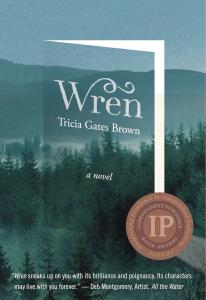
Wren, winner of a 2022 Independent Publishers Award Bronze Medal
Winner of the 2022 Independent Publisher Awards Bronze Medal for Regional Fiction; Finalist for the 2022 National Indie Excellence Awards. (2021) Paperback publication of Wren , a novel. “Insightful novel tackles questions of parenthood, marriage, and friendship with finesse and empathy … with striking descriptions of Oregon topography.” —Kirkus Reviews (2018) Audiobook publication of Wren.
Progressive Christian
Relationships and Religion
Health, Fitness and Religion

About Tricia Gates Brown
Tricia Gates Brown works as a writer, freelance editor, and poet in Oregon's Willamette Valley. She holds a PhD in theology from the University of St. Andrews and is an Ordained Deacon in the Episcopal Diocese of Oregon. Read more at https://triciagatesbrown.net . You can read more about the author here.
Previous Post

September 22, 2025
Learning to Live Together ‘Some Other Way'
Next Post

October 13, 2025 God Chooses Powerlessness
Recent Comments
""I recently told someone 'I have a man,' instead of 'I am hungry' ..."Oh, what ..."
A Different Kind of Lent: Mindfulness, ..."
"Depending on the genre, music is known to offer multiple benefits to listeners and to ..."
Prayer as Heartful Listening: How Music ..."
"Christmas comes and Christmas goes. Waiting is certainly the right thing for getting further energized ..."
The Already and Not Yet: On ..."
"Honesty and humility are weapons of mass construction. They always deepen our relationship with God ..."
Freedom in Humility: God Loves Us ..."
Browse Our Archives
Select a Category Education Essay Excerpt Uncategorized
Select a Month September 2026 August 2026 July 2026 June 2026 May 2026 April 2026 March 2026 February 2026 January 2026 December 2025 November 2025 October 2025 September 2025 August 2025 July 2025 June 2025 May 2025 April 2025 March 2025 February 2025 January 2025 December 2024 November 2024 October 2024 September 2024 August 2024 July 2024 June 2024 May 2024 April 2024 March 2024 February 2024 January 2024 December 2023 November 2023 October 2023 September 2023 August 2023 July 2023 June 2023 May 2023 April 2023 March 2023 February 2023 January 2023 December 2022 November 2022 October 2022 September 2022 August 2022 July 2022
Follow Us!
TAKE THE
Religious Wisdom Quiz
Who was Esther's cousin and guardian?
Select your answer to see how you score.
Nehemiah Haman Mordecai Ezra
Books by This Author Books by About Religion, Doubt and Why They Matter
Related posts from About Religion, Doubt and Why They Matter

Using Your Gifts Is Ministry: A Retired Deacon's...
About Religion, Doubt and Why They Matter

The Many Forms of Prayer: What Does it...
About Religion, Doubt and Why They Matter

In the Gloaming: What the Anti-Aging Movement Misses
About Religion, Doubt and Why They Matter

God Is in the Obstacle: What Loss Taught...
About Religion, Doubt and Why They Matter
TRENDING AT PATHEOS New Visions

Emotion in Early Christianity by Andrew Crislip
Andrew Crislip’s Emotion in Early Christianity examines an often overlooked dimension of...

16 Spiritual Touchstones for a More Grounded Life
After decades of spiritual study, here are 16 principles I try...

Catholic Evangelization: Sharing Your Faith Every Day
Welcome back to the Graceful Awakening mini-series called, “From Faith to Mission.” ...

The Pillar of the Boatmen: the Ancient Monument...
The Pillar of the Boatmen is a Romano-Gaulish sculpture that dates from...

In one sense walking into Westminster Abbey is like walking down the...

'Super Scam Me' Exposes AI Jon Bon Jovi...
Leslie Pickett believed she was in a relationship with Jon Bon Jovi....
view all New Visions blogs
What Are Your Thoughts?leave a comment
Ad-Free & Subscriber Log-In Subscription Support
- About Us
- 2026 Calendar
- Videos
- Podcasts
- Library of World Religions
- Faith In Media Tracker
- Advertise With Us
- Write for Us
- Privacy Policy
- Terms of Service
- Do Not Sell My Data
- Contact Us
- Radiant Digital
- Manage Newsletter Subscriptions
- Unsubscribe From Notifications
- Sitemap
Copyright 2008-2026, Patheos. All rights reserved.
Subscription Support Ad-Free & Subscriber Log-In
Follow Patheos