
BuddhistCatholicContemplativeEvangelicalGeneral ChristianHinduJewishLatter-day SaintMuslimNew VisionsProgressive Christian
Beliefs
- Buddhist
- Catholic
- Contemplative
- Evangelical
- General Christian
- Hindu
- Jewish
- Latter-day Saint
- More Voices
- Muslim
- New Visions
- Pagan
- Progressive Christian
Topics
- Religion News
- Food and Religion
- Sports and Religion
- Religious Art
- Religious Music and Entertainment
- Religious Events
- History and Religion
- Style and Religion
- Politics and Religion
- Women in Religion
- Recreation Outdoors and Religion
- Business Finance and Religion
- Careers Workplace and Religion
- Education and Religion
- Family Parenting and Religion
- Health Fitness and Religion
- Home and Religion
- Relationships and Religion
- Technology and Religion
- Travel and Religion
Columnists
- Buddhist Columnists
- Business Finance and Religion Columnists
- Careers Workplace and Religion Columnists
- Catholic Columnists
- Contemplative Columnists
- Education and Religion Columnists
- Evangelists Columnists
- Family Parenting and Religion Columnists
- General Christian Columnists
- Health Fitness and Religion Columnists
- Hindu Columnists
- History and Religion Columnists
- Home and Religion Columnists
- Jewish Columnists
- More Voices Columnists
- Latter Day Columnists
- Muslim Columnists
- New Visions Columnists
- Nonreligious Columnists
- Pagan Columnists
- Politics and Religion Columnists
- Progressive Columnists
- Recreation Outdoors and Religion Columnists
- Relationships and Religion Columnists
- Religion News Columnists
- Religious Art Columnists
- Religious Events Columnists
- Religious Music and Entertainment Columnists
- Sports and Religion Columnists
- Style and Religion Columnists
- Technology and Religion Columnists
- Travel and Religion Columnists
- Women in Religion Columnists
Resource Library
- 2026 Calendar
- Library of World Religions
- The 100 Most Holy Places on Earth
- Patheos Answers
- Podcasts
- Videos
- Faith Leaders Database
- Anglican Episcopalian
- Bahai
- Baptist
- Buddhism
- Christianity
- Confucianism
- Eastern Orthodoxy
- Hinduism
- Holiness and Pentecostal
- ISKCON
- Islam
- Judaism
- Lutheran
- Methodist
- The Church of Jesus Christ of Latter-day Saints
- New Age
- Paganism
- Presbytarian and Reformed
- Protestantism
- Religion Behind the Scenes
- Roman Catholic
- Scientology
- Shia Islam
- Sikhism
- Sufism
- Sunni Islam
- Taoism
- Zen
- See all religions
Research Tools
 Ad-Free & Subscriber Log-In Subscription Support
Ad-Free & Subscriber Log-In Subscription Support
Follow Patheos 

- Trending:
- Forgiveness
- |
- Marriage
- |
- Consciousness
- |
- Death Penalty
- |
- Election
- |
- Halloween

- Home
- New Visions
- Recreation, Outdoors and Religion
- What if Everything is Moving Toward Wholeness?
What if Everything is Moving Toward Wholeness?
Last updated on: May 25, 2025 at 6:29 am by Tricia Gates Brown
What if Everything is Moving Toward Wholeness? 2025-05-25T06:29:22-07:00 Tricia Gates Brown
Patheos Explore the world's faith through different perspectives on religion and spirituality! Patheos has the views of the prevalent religions and spiritualities of the world.
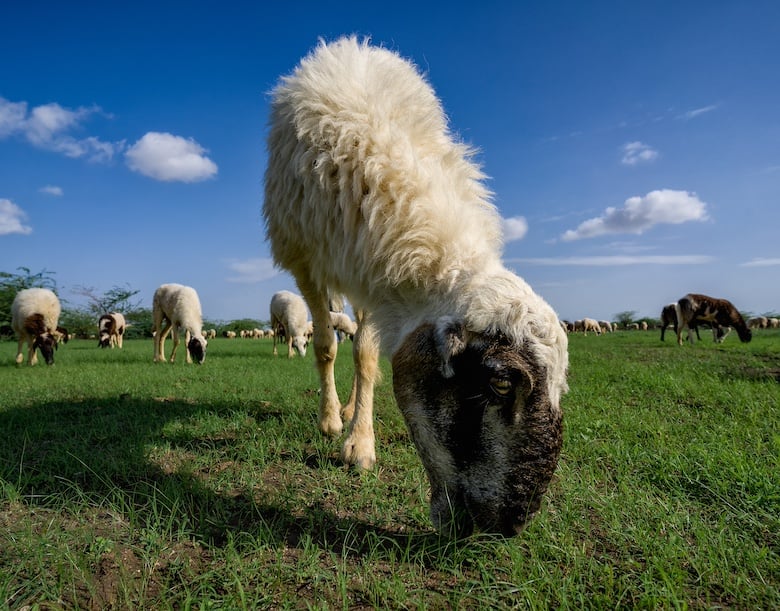
{Photo by Kiran Rawal for Scopio}
In the milieu I grew up in, it seemed nothing was worse than being called “worldly.” “Worldly” meant sinful and scary. Worldliness was the opposite of Godliness, as far as I could tell, which would have meant—according to my childhood reasoning—that God was not in the world. God had to be somewhere else, in some other realm; and our job was to avoid the rest of creation until we could go there ourselves. Because if not, the world would sully us and bring us down. This meant many things were to be avoided, including lots of people, and things like art and music and books—unless they were Christian. There were many places we couldn’t go (too worldly) and countless temptations to avoid. Nature itself was suspect, as the natural could be worshipped in a way that drew one away from God.
As I came of age, I became suspicious of this worldview because it seemed to find fear in many of the places I found beauty. As my spirituality developed, I experienced God precisely in the things I’d been led to believe were God-less: in folk music, in the woods, in loving connection with fellow humans, in poetry. Moreover, as my understandings of Jesus flowered and matured, he seemed a person in love with the world and the things and people within it. How could this be?! Some of my childhood ledger of God-on-one-side/world-on-the-other had started breaking down.
The Source of Life
I remember vividly the first time I heard the Jewish teacher Rachel Naomi Remen tell the story of the origin of the Ein Sof—the “holy darkness” and the source of life. In this story, the world was born out of the Ein Sofas a great ray of light that came to be carried in vessels. But the vessels broke. Upon this accident, the light of the world was scattered into a thousand thousand fragments that remain hidden in all people, places, and events. And each of us has the capacity to find these hidden fragments of light and make them visible again, gradually restoring the world’s wholeness.
I love this story for its poetry and hopefulness. But I also love how the pieces of God, the source of life, are scattered in—of all places!—the world. And our jobs here on this earth are not to avoid the world, but to go about it searching for that of God scattered among the things of this world. Making God visible. Restoring the light.
I appreciate how Jesus’ parables about “lost things” in Luke 15 glimpse God as a shepherd and housekeeper and father, searching for something lost. Not because it must be spared the sullying of “the world,” but because it is so valued and loved.

{Photo by Travel Life for Scopio}
Wholeness is for Everyone
Since the one way to talk about something as ineffable as God is by images and symbols, we all adopt favorite images for God. Some images resonate with us more than others. I’ve spent much of my life removing the “old man in the sky” image from the Etch-a-Sketch of my brain. Other images I’ve happily picked up along the way. My favorite image for God involves God as a flow, carrying all things along to redemption and restoration. I imagine a beautiful, lucid stream, gently wending its way past boulders and other obstacles, carrying things along toward a destination. In my mind, that destination is wholeness.
In the culmination of Luke 15, we have the word “repent.” Repentance: Metanoia—the Greek meaning “big mind”—to change one’s way of thinking. In the imagery of flow, we are being carried along toward the transformation of our way of thinking, which is also our way of seeing everything. When we surrender to the flow of God and to restoration, we are no longer lost (to use the language of the parables in Luke 15). To be lost is to try to swim upstream against the flow, or to resist God’s way, God’s flow toward restoration of all things. It is tiring and disorienting and futile to resist the flow. Much of the cumulative story of the Judeo-Christian scriptures answers the question: What is the flow of God moving toward? The scriptures include countless cautionary tales of people resisting, trying to make their own way upstream because they think they can go it alone. Yet as we see again and again, the flow is trustworthy and it is good for everyone. Wholeness is universal.
If you liked this article, please leave me a comment below; I am interested in your perspective. To support my writing, please subscribe and share with a friend!
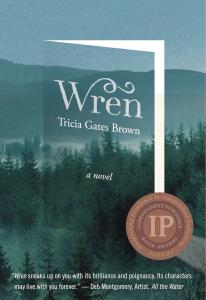
Wren, winner of a 2022 Independent Publishers Award Bronze Medal
Winner of the 2022 Independent Publisher Awards Bronze Medal for Regional Fiction; Finalist for the 2022 National Indie Excellence Awards. (2021) Paperback publication of Wren , a novel. “Insightful novel tackles questions of parenthood, marriage, and friendship with finesse and empathy … with striking descriptions of Oregon topography.” —Kirkus Reviews (2018) Audiobook publication of Wren.
Progressive Christian
Recreation, Outdoors and Religion
Family, Parenting and Religion

About Tricia Gates Brown
Tricia Gates Brown works as a writer/editor in Oregon's Willamette Valley, mainly editing and co-writing books for the National Parks Service and Native tribes. After completing an MA in theology then a PhD from the University of St. Andrews in 2000, she continued to pursue her studies—energetically self-educating in theology, spirituality, and the emotional life. She is also an Ordained Deacon in the Episcopal Diocese of Oregon. Additionally, Tricia is an art quilter, ceramicist, and poet. You can find more of her writing at www.triciagatesbrown.net. You can read more about the author here.
Previous Post
May 19, 2025
Trusting God’s Presence During Uncertainty
Next Post
June 9, 2025 Seeing the Beauty in Small Congregations
Recent Comments
""I recently told someone 'I have a man,' instead of 'I am hungry' ..."Oh, what ..."
A Different Kind of Lent: Mindfulness, ..."
"Depending on the genre, music is known to offer multiple benefits to listeners and to ..."
Prayer as Heartful Listening: How Music ..."
"Christmas comes and Christmas goes. Waiting is certainly the right thing for getting further energized ..."
The Already and Not Yet: On ..."
"Honesty and humility are weapons of mass construction. They always deepen our relationship with God ..."
Freedom in Humility: God Loves Us ..."
Browse Our Archives
Select a Category Education Essay Excerpt Uncategorized
Select a Month September 2026 August 2026 July 2026 June 2026 May 2026 April 2026 March 2026 February 2026 January 2026 December 2025 November 2025 October 2025 September 2025 August 2025 July 2025 June 2025 May 2025 April 2025 March 2025 February 2025 January 2025 December 2024 November 2024 October 2024 September 2024 August 2024 July 2024 June 2024 May 2024 April 2024 March 2024 February 2024 January 2024 December 2023 November 2023 October 2023 September 2023 August 2023 July 2023 June 2023 May 2023 April 2023 March 2023 February 2023 January 2023 December 2022 November 2022 October 2022 September 2022 August 2022 July 2022
Follow Us!
TAKE THE
Religious Wisdom Quiz
What is the last book of the Bible?
Select your answer to see how you score.
Hebrews Malachi Revelation Jude
Books by This Author Books by About Religion, Doubt and Why They Matter
Related posts from About Religion, Doubt and Why They Matter

Using Your Gifts Is Ministry: A Retired Deacon's...
About Religion, Doubt and Why They Matter

The Many Forms of Prayer: What Does it...
About Religion, Doubt and Why They Matter

In the Gloaming: What the Anti-Aging Movement Misses
About Religion, Doubt and Why They Matter

God Is in the Obstacle: What Loss Taught...
About Religion, Doubt and Why They Matter
TRENDING AT PATHEOS New Visions

Letters on Living the Faith by C.S. Lewis
Most of us met C.S. Lewis as a public intellectual. Mere Christianity....

When Halloween Unmasks Married Hearts
Written by Dr. David K. Ewen from Eternal Truth Bible College Behind...

Aristotle. He’s been called the father of logic, the father of the...

Methodist Central Hall and Westminster Abbey
Situated on the same square is Methodist Central Hall and Westminster Abbey. ...

57th Dove Awards Honor Dolly Parton, Crown New...
On gospel music’s biggest night, the 57th annual GMA Dove Awards honored...

The First Eucharistic Controversy: Christ’s Real Presence
For Catholics, the Eucharist is the source and summit of the Christian...
view all New Visions blogs
What Are Your Thoughts?leave a comment
Ad-Free & Subscriber Log-In Subscription Support
- About Us
- 2026 Calendar
- Videos
- Podcasts
- Library of World Religions
- Faith In Media Tracker
- Advertise With Us
- Write for Us
- Privacy Policy
- Terms of Service
- Do Not Sell My Data
- Contact Us
- Radiant Digital
- Manage Newsletter Subscriptions
- Unsubscribe From Notifications
- Sitemap
Copyright 2008-2026, Patheos. All rights reserved.
Subscription Support Ad-Free & Subscriber Log-In
Follow Patheos