
BuddhistCatholicContemplativeEvangelicalGeneral ChristianHinduJewishLatter-day SaintMuslimNew VisionsProgressive Christian
Beliefs
- Buddhist
- Catholic
- Contemplative
- Evangelical
- General Christian
- Hindu
- Jewish
- Latter-day Saint
- More Voices
- Muslim
- New Visions
- Pagan
- Progressive Christian
Topics
- Religion News
- Food and Religion
- Sports and Religion
- Religious Art
- Religious Music and Entertainment
- Religious Events
- History and Religion
- Style and Religion
- Politics and Religion
- Women in Religion
- Recreation Outdoors and Religion
- Business Finance and Religion
- Careers Workplace and Religion
- Education and Religion
- Family Parenting and Religion
- Health Fitness and Religion
- Home and Religion
- Relationships and Religion
- Technology and Religion
- Travel and Religion
Columnists
- Buddhist Columnists
- Business Finance and Religion Columnists
- Careers Workplace and Religion Columnists
- Catholic Columnists
- Contemplative Columnists
- Education and Religion Columnists
- Evangelists Columnists
- Family Parenting and Religion Columnists
- General Christian Columnists
- Health Fitness and Religion Columnists
- Hindu Columnists
- History and Religion Columnists
- Home and Religion Columnists
- Jewish Columnists
- More Voices Columnists
- Latter Day Columnists
- Muslim Columnists
- New Visions Columnists
- Nonreligious Columnists
- Pagan Columnists
- Politics and Religion Columnists
- Progressive Columnists
- Recreation Outdoors and Religion Columnists
- Relationships and Religion Columnists
- Religion News Columnists
- Religious Art Columnists
- Religious Events Columnists
- Religious Music and Entertainment Columnists
- Sports and Religion Columnists
- Style and Religion Columnists
- Technology and Religion Columnists
- Travel and Religion Columnists
- Women in Religion Columnists
Resource Library
- 2026 Calendar
- Library of World Religions
- The 100 Most Holy Places on Earth
- Patheos Answers
- Podcasts
- Videos
- Faith Leaders Database
- Anglican Episcopalian
- Bahai
- Baptist
- Buddhism
- Christianity
- Confucianism
- Eastern Orthodoxy
- Hinduism
- Holiness and Pentecostal
- ISKCON
- Islam
- Judaism
- Lutheran
- Methodist
- The Church of Jesus Christ of Latter-day Saints
- New Age
- Paganism
- Presbytarian and Reformed
- Protestantism
- Religion Behind the Scenes
- Roman Catholic
- Scientology
- Shia Islam
- Sikhism
- Sufism
- Sunni Islam
- Taoism
- Zen
- See all religions
Research Tools
 Ad-Free & Subscriber Log-In Subscription Support
Follow Patheos 

- Trending:
- Advent
- |
- Forgiveness
- |
- Thanksgiving
- |
- Election
- |
- Seasonal Holidays
- |
- Marriage

- Home
- New Visions
- Family, Parenting and Religion
- Trust Over Creed: Are ‘Correct Beliefs’ What We Really Need?
Trust Over Creed: Are ‘Correct Beliefs’ What We Really Need?
Last updated on: May 5, 2025 at 5:37 pm by Tricia Gates Brown
Trust Over Creed: Are ‘Correct Beliefs’ What We Really Need? 2025-05-05T17:37:06-07:00 Tricia Gates Brown
Patheos Explore the world's faith through different perspectives on religion and spirituality! Patheos has the views of the prevalent religions and spiritualities of the world.
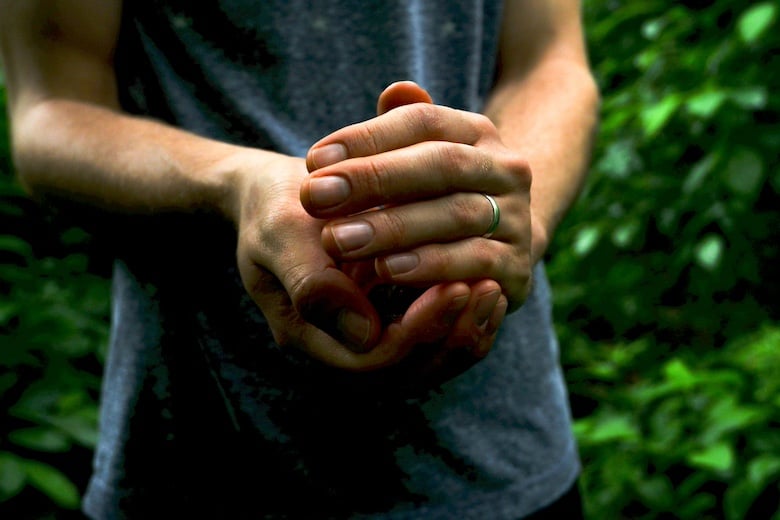
{Photo by Emilie Shepard for Scopio; trust over creed}
On the surface, this week’s lectionary reading at the end of John (John 20:19-31) is a story about doubt and trust, and a recounting of an appearance by Jesus before his disciples post-entombment. But I can’t read it without drawing in biblical studies. Because one of the key aspects of this passage is the statement “Blessed are those who have not seen and yet have believed.”
John was the last of the gospels, written many decades after Jesus’ life. The writer of the gospel and the leaders behind his community did not know Jesus face-to-face. They were among those who “had not seen, yet they believed” because they did not serve as witnesses to Jesus’ life on this earth. So this story is, on an important level, about the authority of the leaders behind the gospel of John. It is saying, we may not have known Jesus, but we have just as much authority as churches founded by the apostles!
In this context, the statement “Blessed are those who have not seen and yet have believed” has a competitive ring to it. I draw attention to this not only because it’s interesting, but because this story about “doubting Thomas” has often been used to guilt people for not believing enough, or not believing the right things. Maybe it is not saying this at all.
Trust Over Creed
Increasingly in podcasts or in news stories, I hear references to the fact that Americans on the whole—especially younger people—drift away from religion. It seems every year this chorus grows louder. Maybe you notice this among people in your life or in your community. I feel strongly that an emphasis on beliefs misleads people to think the faith life is about believing the right things—when it is really about love, and a mature trust in God as a benevolent presence in one’s life. We have all known people who can rattle off the right beliefs yet who put their full trust in money or power, or show very little kindness to others. Beliefs just don’t get us far without crucial things like kindness and rootedness and trust.

{Photo by Anna Fernandez Garcia for Scopio; trust over creed}
Then Why the Creed?
But then why do liturgical traditions stand up each Sunday and recite the creed, stating what “we believe”? Especially when some of us have as much doubt as belief when it comes to various statements of the creed? In large part, liturgical churches do this because it is an ancient part of our tradition and it reminds us who we are as a community stretching back 2000 years. The word “credo” in Latin is related to the word “heart.” In the sense of the ancient creed, to “credo” something doesn’t mean to accept it in your head. It really means to *embrace it with your heart—*as a part of a historical community rooted in those stories. I especially like the “we believe” language of the Nicene Creed. In saying “we believe” it defines the traditions of an “us.” Those who say this creed can embrace it with our hearts, as part of a community, even if we–like Thomas—need to experience things for ourselves before we can trust.
My Wish for Young People
What I wish most for people is trust and inclusion in loving community. What I wish most for young people is communities teaching them kindness, encouraging trust in God, and lighting their paths through life so they develop values, character, and strength for the journey. In my view, healthy faith communities do this well. They teach us how to live for others and to speak the truth. These are the things that are important, not clinging to the “right” beliefs.
Lives shaped by right beliefs can be rigid and exclusionary. Lives shaped by trust can be open and embracing, steady and resilient. When we look at the lives of saints among us, these latter qualities define them.
If you liked this article please leave me a comment below; I am interested in your perspective. To support my writing, please subscribe and share with a friend!
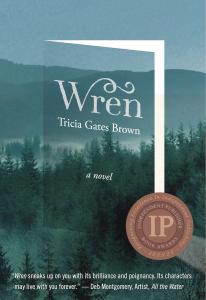
Wren, winner of a 2022 Independent Publishers Award Bronze Medal
Winner of the 2022 Independent Publisher Awards Bronze Medal for Regional Fiction; Finalist for the 2022 National Indie Excellence Awards. (2021) Paperback publication of Wren , a novel. “Insightful novel tackles questions of parenthood, marriage, and friendship with finesse and empathy … with striking descriptions of Oregon topography.” —Kirkus Reviews (2018) Audiobook publication of Wren.
Progressive Christian
Family, Parenting and Religion
Education and Religion
About Tricia Gates Brown
Tricia Gates Brown is an everyday theologian working as a writer/editor in Oregon's Willamette Valley, mainly editing and co-writing books for the National Parks Service and Native tribes. After completing an MA in theology then a PhD from the University of St. Andrews in 2000, she continued to pursue her studies—energetically self-educating in theology, spirituality, and the emotional life. She is also an Ordained Deacon in the Episcopal Diocese of Oregon. Additionally, Tricia is an art quilter, ceramicist, and poet. You can find more of her writing at www.triciagatesbrown.net. You can read more about the author here.
Previous Post

April 14, 2025
Wholeness Comes First: Compassion for Immigrants
Next Post

May 5, 2025 Simple Pleasures: On Finding Happiness Where We Can
Recent Comments
"What is prayer? Different people answer the question differently. "Prayer is all about attunement that ..."
The Many Forms of Prayer: What ..."
""I recently told someone 'I have a man,' instead of 'I am hungry' ..."Oh, what ..."
A Different Kind of Lent: Mindfulness, ..."
"Depending on the genre, music is known to offer multiple benefits to listeners and to ..."
Prayer as Heartful Listening: How Music ..."
"Christmas comes and Christmas goes. Waiting is certainly the right thing for getting further energized ..."
The Already and Not Yet: On ..."
Browse Our Archives
Select a Category Education Essay Excerpt Uncategorized
Select a Month October 2026 September 2026 August 2026 July 2026 June 2026 May 2026 April 2026 March 2026 February 2026 January 2026 December 2025 November 2025 October 2025 September 2025 August 2025 July 2025 June 2025 May 2025 April 2025 March 2025 February 2025 January 2025 December 2024 November 2024 October 2024 September 2024 August 2024 July 2024 June 2024 May 2024 April 2024 March 2024 February 2024 January 2024 December 2023 November 2023 October 2023 September 2023 August 2023 July 2023 June 2023 May 2023 April 2023 March 2023 February 2023 January 2023 December 2022 November 2022 October 2022 September 2022 August 2022 July 2022
Follow Us!
TAKE THE
Religious Wisdom Quiz
Who said to Jesus, "Remember me when you come into your kingdom"?
Select your answer to see how you score.
The thief on the cross Thomas Mary Magdalene Peter
Books by This Author Books by About Religion, Doubt and Why They Matter
Related posts from About Religion, Doubt and Why They Matter

The Grief of Healing: Being Found by the...
About Religion, Doubt and Why They Matter

Using Your Gifts Is Ministry: A Retired Deacon's...
About Religion, Doubt and Why They Matter

The Many Forms of Prayer: What Does it...
About Religion, Doubt and Why They Matter

In the Gloaming: What the Anti-Aging Movement Misses
About Religion, Doubt and Why They Matter
TRENDING AT PATHEOS New Visions

How to Have Financial Transparency in Marriage
Despite the fact that financial issues and money problems are the number...
The Healing Power of Forgiveness in Marriage
Learning how to give and accept apologies are essential ingredients of a...

The West's Christian Moral Inheritance: A Legacy Denied
Whether we like it or not, our environment matters, shaping us both...

How Does Tôḏâ Connect Florida & Thanksgiving?
The big news this weekend has been about the continued flooding on...
Were Early Christians Drinking Psychedelic Wine?
The Secret Sacrament the Church Took Away The early Christian church was...

As we in the United States approach the national Thanksgiving holiday...
view all New Visions blogs
What Are Your Thoughts?leave a comment
Ad-Free & Subscriber Log-In Subscription Support
- About Us
- 2026 Calendar
- Videos
- Podcasts
- Library of World Religions
- Faith In Media Tracker
- Advertise With Us
- Write for Us
- Privacy Policy
- Terms of Service
- Do Not Sell My Data
- Contact Us
- Radiant Digital
- Manage Newsletter Subscriptions
- Unsubscribe From Notifications
- Sitemap
Copyright 2008-2026, Patheos. All rights reserved.
Subscription Support Ad-Free & Subscriber Log-In
Follow Patheos