
BuddhistCatholicContemplativeEvangelicalGeneral ChristianHinduJewishLatter-day SaintMuslimNew VisionsProgressive Christian
Beliefs
- Buddhist
- Catholic
- Contemplative
- Evangelical
- General Christian
- Hindu
- Jewish
- Latter-day Saint
- More Voices
- Muslim
- New Visions
- Pagan
- Progressive Christian
Topics
- Religion News
- Food and Religion
- Sports and Religion
- Religious Art
- Religious Music and Entertainment
- Religious Events
- History and Religion
- Style and Religion
- Politics and Religion
- Women in Religion
- Recreation Outdoors and Religion
- Business Finance and Religion
- Careers Workplace and Religion
- Education and Religion
- Family Parenting and Religion
- Health Fitness and Religion
- Home and Religion
- Relationships and Religion
- Technology and Religion
- Travel and Religion
Columnists
- Buddhist Columnists
- Business Finance and Religion Columnists
- Careers Workplace and Religion Columnists
- Catholic Columnists
- Contemplative Columnists
- Education and Religion Columnists
- Evangelists Columnists
- Family Parenting and Religion Columnists
- General Christian Columnists
- Health Fitness and Religion Columnists
- Hindu Columnists
- History and Religion Columnists
- Home and Religion Columnists
- Jewish Columnists
- More Voices Columnists
- Latter Day Columnists
- Muslim Columnists
- New Visions Columnists
- Nonreligious Columnists
- Pagan Columnists
- Politics and Religion Columnists
- Progressive Columnists
- Recreation Outdoors and Religion Columnists
- Relationships and Religion Columnists
- Religion News Columnists
- Religious Art Columnists
- Religious Events Columnists
- Religious Music and Entertainment Columnists
- Sports and Religion Columnists
- Style and Religion Columnists
- Technology and Religion Columnists
- Travel and Religion Columnists
- Women in Religion Columnists
Resource Library
- 2026 Calendar
- Library of World Religions
- The 100 Most Holy Places on Earth
- Patheos Answers
- Podcasts
- Videos
- Faith Leaders Database
- Anglican Episcopalian
- Bahai
- Baptist
- Buddhism
- Christianity
- Confucianism
- Eastern Orthodoxy
- Hinduism
- Holiness and Pentecostal
- ISKCON
- Islam
- Judaism
- Lutheran
- Methodist
- The Church of Jesus Christ of Latter-day Saints
- New Age
- Paganism
- Presbytarian and Reformed
- Protestantism
- Religion Behind the Scenes
- Roman Catholic
- Scientology
- Shia Islam
- Sikhism
- Sufism
- Sunni Islam
- Taoism
- Zen
- See all religions
Research Tools
 Ad-Free & Subscriber Log-In Subscription Support
Ad-Free & Subscriber Log-In Subscription Support
Follow Patheos 

- Trending:
- Forgiveness
- |
- Marriage
- |
- Consciousness
- |
- Death Penalty
- |
- Election
- |
- Halloween

- Home
- New Visions
- Technology and Religion
- What Do Spiritual Communities Provide Kids?
What Do Spiritual Communities Provide Kids?
Last updated on: September 11, 2024 at 6:52 am by Tricia Gates Brown
What Do Spiritual Communities Provide Kids? 2024-09-11T06:52:23-07:00 Tricia Gates Brown
Patheos Explore the world's faith through different perspectives on religion and spirituality! Patheos has the views of the prevalent religions and spiritualities of the world.
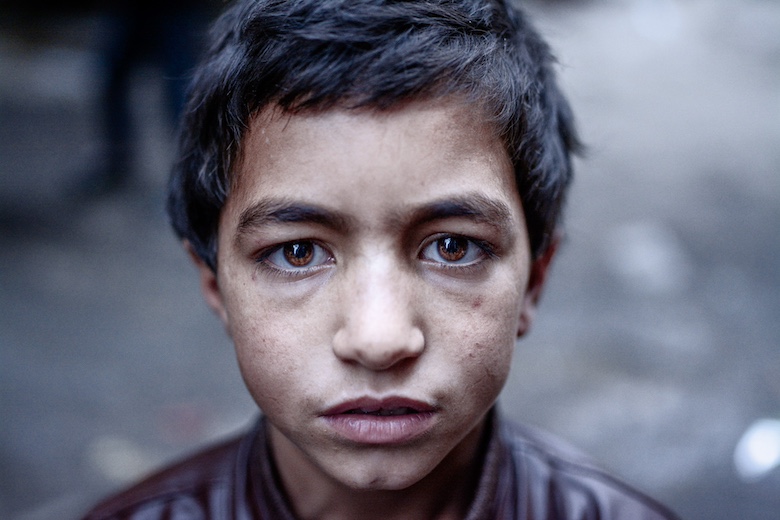
{Photo by Osama Zitoon for Scopio; spiritual communities}
It is one of those weeks where everywhere I turn, folks are talking about the “epidemic of loneliness,” including an excellent recent interview of Robert Putnam, author of the book Bowling Alone (published in 2000), who said: “…what we’ve seen over the last 25 years since the book was published is a deepening and intensifying of that trend. We become more socially isolated, and we can see it in every facet of our lives.”
The breakdown of connections to traditional institutions always garners mention in these discussions, as exemplified in the recent New York Magazine article on loneliness quoted below. In conjunction with this, reporters are noticing a heightened, main-stream-ized interest in things like astrology and tarot, which give people a language for talking about ultimate concerns apart from religious traditions and the once long-established frameworks religions provided humans for these discussions.
I am very sympathetic to people’s reaching-after, as I believe strongly that we all need language, imagery, and stories by which to investigate our lives and experiences, and by which to talk/think about things far bigger than ourselves. People should find meaning where it resonates for them—as long as it is not down avenues of prejudice and hate. We must all grapple with existential questions, and with loneliness, in our ways (loneliness being “the unavoidable human condition,” as my friend Brother Martin, a nearly life-long monk, used to say).
But something I wonder about is this: how does the hyper-individualized marketplace of spiritualities address the needs of young people? This is a concern amplified by psychologist and Harvard lecturer named Richard Weissbourd, researcher of loneliness, who says:
“ ‘…it’s impossible to look at the aggregate data from the 1950s onward, including a new survey by Gallup on weekly attendance of religious services, which sank last year to 21 percent of the U.S. population, and not feel that something has been lost.
‘I’m not suggesting that we should become more religious, but I want to just suggest to you that religious communities are a place where adults engage kids, stand for moral values, engage kids in big moral questions, where there’s a fusion of a moral life and a spiritual life,’ Weissbourd said at a talk held in March at the Harvard Kennedy School of Government.
‘A sense that you have obligations to your ancestors and to your descendants, where there is a structure for dealing with grief and loss,’ he went on, repeating his opening caveat. ‘I feel urgently like we have to figure out how to reproduce those aspects of religion in secular life.’
Earlier this year, Weissbourd and Batanova conducted a follow-up to their 2021 loneliness survey, adding an open-ended prompt in which lonely respondents could try to account for the presence of the emotion in their lives. Many subjects cited a lack of ‘meaningful connection’ as the primary culprit.”

{Photo by Rodrigo Nestor Quiñones Fernández for Scopio; spiritual communities}
This week as children venture back to school, and as school districts country-wide grapple with questions around cell phones and possible phone-bans during school hours, I am wondering at the confluence of three things: technology, declines in community including communities of faith, and epidemic loneliness. It’s not coincidental that these trends run a parallel course.
As I look far down the road, I intuit a time when young people will become more deeply disillusioned with distracting technologies and more hungry for community, including for spiritual communities. I suspect the turnaround will likely not come in my lifetime, but the hunger pangs are so evident that the feeding becomes inevitable.
In the meantime, how can we be part of the turnaround to deeper connection? I know that in my life, a grand reordering seems to be taking place. It’s about less striving and more sharing. Less ambition, more phone dates. Less scrolling, more presence. More community, less concern about ideological purity (“ideological purity” being the notion that we must agree with everything a group purports to believe before being part of that group). I want these things not because I’m especially virtuous, but because I feel the hunger at the pit of our collective stomachs, the hunger at the pit of mystomach. A hunger for things that last.
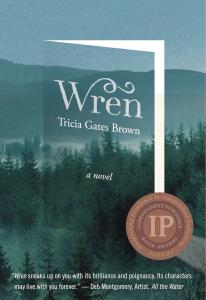
Wren, winner of a 2022 Independent Publishers Award Bronze Medal
Winner of the 2022 Independent Publisher Awards Bronze Medal for Regional Fiction; Finalist for the 2022 National Indie Excellence Awards. (2021) Paperback publication of Wren , a novel. “Insightful novel tackles questions of parenthood, marriage, and friendship with finesse and empathy … with striking descriptions of Oregon topography.” —Kirkus Reviews (2018) Audiobook publication of Wren.
Progressive Christian
Technology and Religion
Education and Religion
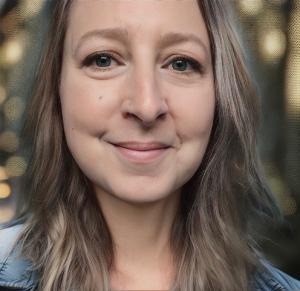
About Tricia Gates Brown
Tricia Gates Brown is an everyday theologian working as a writer/editor in Oregon's Willamette Valley, mainly editing and co-writing books for the National Parks Service and Native tribes. After completing an MA in theology then a PhD from the University of St. Andrews in 2000, she continued to pursue her studies—energetically self-educating in theology, spirituality, and the emotional life. She is also an Ordained Deacon in the Episcopal Diocese of Oregon. Tricia is also an art quilter, ceramicist, and poet. You can read more about the author here.
Previous Post

August 27, 2024
When I Encountered the Spirit of a Loved One
Next Post

September 11, 2024 The Gift of Regret: Experiencing Life-Transforming Grace
Recent Comments
""I recently told someone 'I have a man,' instead of 'I am hungry' ..."Oh, what ..."
A Different Kind of Lent: Mindfulness, ..."
"Depending on the genre, music is known to offer multiple benefits to listeners and to ..."
Prayer as Heartful Listening: How Music ..."
"Christmas comes and Christmas goes. Waiting is certainly the right thing for getting further energized ..."
The Already and Not Yet: On ..."
"Honesty and humility are weapons of mass construction. They always deepen our relationship with God ..."
Freedom in Humility: God Loves Us ..."
Browse Our Archives
Select a Category Education Essay Excerpt Uncategorized
Select a Month September 2026 August 2026 July 2026 June 2026 May 2026 April 2026 March 2026 February 2026 January 2026 December 2025 November 2025 October 2025 September 2025 August 2025 July 2025 June 2025 May 2025 April 2025 March 2025 February 2025 January 2025 December 2024 November 2024 October 2024 September 2024 August 2024 July 2024 June 2024 May 2024 April 2024 March 2024 February 2024 January 2024 December 2023 November 2023 October 2023 September 2023 August 2023 July 2023 June 2023 May 2023 April 2023 March 2023 February 2023 January 2023 December 2022 November 2022 October 2022 September 2022 August 2022 July 2022
Follow Us!
TAKE THE
Religious Wisdom Quiz
Be still, and know that I am ____.
Select your answer to see how you score.
Sovereign God Faithful Holy
Books by This Author Books by About Religion, Doubt and Why They Matter
Related posts from About Religion, Doubt and Why They Matter

The Power of Story in Spiritual Identity and...
About Religion, Doubt and Why They Matter

About Religion, Doubt and Why They Matter

Our Value Comes From Our Being, Not From...
About Religion, Doubt and Why They Matter
Active Engagement: Doing the Stuff Taught in Civics...
About Religion, Doubt and Why They Matter
TRENDING AT PATHEOS New Visions

How to Make a Decision When You Can't...
Main point: It’s much more valuable to stay close to God so...

Archdiocese Hosts Military Marriage Retreat in Germany
RASTATT, Germany — The transient military lifestyle, with its frequent deployments and...

Nearly every morning, I make the drive to Detroit with my high-school-age...

The Real AI Story Is Adoption Without Trust
Artificial intelligence has crossed a political threshold. It is no longer a...

A new article, written by Jeff Lindsay and Gale L. Pooley,...

Swimfan: Forgotten Aughts Pleasures
This is a recovery effort. In 2002, My Big Fat Greek Wedding...
view all New Visions blogs
What Are Your Thoughts?leave a comment
Ad-Free & Subscriber Log-In Subscription Support
- About Us
- 2026 Calendar
- Videos
- Podcasts
- Library of World Religions
- Faith In Media Tracker
- Advertise With Us
- Write for Us
- Privacy Policy
- Terms of Service
- Do Not Sell My Data
- Contact Us
- Radiant Digital
- Manage Newsletter Subscriptions
- Unsubscribe From Notifications
- Sitemap
Copyright 2008-2026, Patheos. All rights reserved.
Subscription Support Ad-Free & Subscriber Log-In
Follow Patheos