
BuddhistCatholicContemplativeEvangelicalGeneral ChristianHinduJewishLatter-day SaintMuslimNew VisionsProgressive Christian
Beliefs
- Buddhist
- Catholic
- Contemplative
- Evangelical
- General Christian
- Hindu
- Jewish
- Latter-day Saint
- More Voices
- Muslim
- New Visions
- Pagan
- Progressive Christian
Topics
- Religion News
- Food and Religion
- Sports and Religion
- Religious Art
- Religious Music and Entertainment
- Religious Events
- History and Religion
- Style and Religion
- Politics and Religion
- Women in Religion
- Recreation Outdoors and Religion
- Business Finance and Religion
- Careers Workplace and Religion
- Education and Religion
- Family Parenting and Religion
- Health Fitness and Religion
- Home and Religion
- Relationships and Religion
- Technology and Religion
- Travel and Religion
Columnists
- Buddhist Columnists
- Business Finance and Religion Columnists
- Careers Workplace and Religion Columnists
- Catholic Columnists
- Contemplative Columnists
- Education and Religion Columnists
- Evangelists Columnists
- Family Parenting and Religion Columnists
- General Christian Columnists
- Health Fitness and Religion Columnists
- Hindu Columnists
- History and Religion Columnists
- Home and Religion Columnists
- Jewish Columnists
- More Voices Columnists
- Latter Day Columnists
- Muslim Columnists
- New Visions Columnists
- Nonreligious Columnists
- Pagan Columnists
- Politics and Religion Columnists
- Progressive Columnists
- Recreation Outdoors and Religion Columnists
- Relationships and Religion Columnists
- Religion News Columnists
- Religious Art Columnists
- Religious Events Columnists
- Religious Music and Entertainment Columnists
- Sports and Religion Columnists
- Style and Religion Columnists
- Technology and Religion Columnists
- Travel and Religion Columnists
- Women in Religion Columnists
Resource Library
- 2026 Calendar
- Library of World Religions
- The 100 Most Holy Places on Earth
- Patheos Answers
- Podcasts
- Videos
- Faith Leaders Database
- Anglican Episcopalian
- Bahai
- Baptist
- Buddhism
- Christianity
- Confucianism
- Eastern Orthodoxy
- Hinduism
- Holiness and Pentecostal
- ISKCON
- Islam
- Judaism
- Lutheran
- Methodist
- The Church of Jesus Christ of Latter-day Saints
- New Age
- Paganism
- Presbytarian and Reformed
- Protestantism
- Religion Behind the Scenes
- Roman Catholic
- Scientology
- Shia Islam
- Sikhism
- Sufism
- Sunni Islam
- Taoism
- Zen
- See all religions
Research Tools
 Ad-Free & Subscriber Log-In Subscription Support
Ad-Free & Subscriber Log-In Subscription Support
Follow Patheos 

- Trending:
- Forgiveness
- |
- Marriage
- |
- Consciousness
- |
- Death Penalty
- |
- Election
- |
- Halloween

- Home
- New Visions
- Relationships and Religion
- Why the Slow Work of Transformation Beats Legalism
Why the Slow Work of Transformation Beats Legalism
Last updated on: June 11, 2024 at 8:02 am by Tricia Gates Brown
Why the Slow Work of Transformation Beats Legalism 2024-06-11T08:02:24-07:00 Tricia Gates Brown
Patheos Explore the world's faith through different perspectives on religion and spirituality! Patheos has the views of the prevalent religions and spiritualities of the world.

{Photo by Maria Dashkova for Scopio; transformation beats legalism}
Transformation beats moralism. But as a young adult, effort was my mantra. And effort, coupled with an adolescent zest to save the world, was perilous. In my early 20s, I stumbled my way through so many “good deeds,” it is painful to look back. The time I began buying food for a physically challenged, low-income woman and her teenaged daughter, then was unable to continue after one month, despite creating an impression of commitment. They welcomed me into their tiny apartment kitchen where I unloaded the groceries I’d brought onto near desolate shelves, feeling awkward as hell. Or the time I invited a homeless youth to family Thanksgiving, then had to un-invite him when someone close to me became enraged by my actions. I wanted to save him, but couldn’t see the limits preordained by my own life chaos. I wanted so badly to think I was a good person, I acted from self-absorption and tone-deafness. People got hurt. I had not learned that true helpfulness involves sufficient openness to sense when one is guided to an action, then acting with care and conscientiousness, aware of one’s shadow and potential to be a bumbling ass.
I grew up in a style of Christianity that put great emphasis on being “good.” Those who weren’t were called “worldly”; and we weren’t supposed to be like them. Furthermore, we were not only to be moral and effortful in our inter-personal lives, we were to meet certain obligations like praying in a certain way or reading the Bible every day. It was exhausting. I don’t know how it worked for others, but it mostly served to make me feel inadequate—even bad. Truly, no one could keep up with the expectations. Those who thought they were keeping up were often kidding themselves, and tended to be self-righteous and intolerant.
As a young woman, I worked so hard to pursue a kind of “goodness” because I didn’t fit the description defined by the context around me, a picture of sexual purity, obedience, female submission, and commitment to traditional understandings of religion. In these ways, I learned, I was not good. Thus, I had to compensate for resulting feelings of shame. Instead of proving myself in moralistic ways, I put effort into other measures: such as my ill-conceived good deeds, or good grades, artistic skill, intellectual achievement, attractive appearance. Most often my efforts led me farther from center where the shudder of silence could speak and I could see the prerequisites of my own unskillful heart. My striving resulted not only in blinding hubris, but in exhaustion and humiliation and worsening illness.

{Photo by Aditya Sharma for Scopio; transformation beats legalism}
Breakthroughs in Faith
A breakthrough in my faith-life came in my mid-to-late twenties as I studied theology. At the time, I learned about the repeated emphasis in Jesus’ teaching and throughout the Christian scriptures on Spirit, or the presence of God within—that the Spirit is always with us and fills us with love and direction and a kind of goodness that is centered in love. This teaching says the spiritual life is not about forcing ourselves to be good. Rather, the spiritual life is about surrender, about opening and trusting that God is transforming and restoring our hearts and minds every single day. It is about letting in the Spirit, allowing this work to be done; and we begin to trust and open to God’s Spirit as we experience God’s love. We can stop putting such forced effort into our personal goodness project, because often this project impedes the work of the Spirit. You see, the Spirit’s work is humbling and clarifying. If we’re fixated on making ourselves pure and good (which often is about feeling superior to others), we resist this humbling, clarifying work, which is unglamorous.
For me, the Christian teachings on Spirit, this new understanding, was transformative. I no longer had to strive all the time to “be a good person.” In fact, I often found that the harder I tried to be good the more I put up a road block to Spirit—most often not telling myself the truth about something important. The Spirit helps us to see ourselves as we truly are, which is to say, flawed—but also deeply loved. I found and continue to find this teaching incredibly hopeful and liberating. It allows us to see ourselves evolving as offspring of the Divine, and to see others in this hope-filled, transformative way.
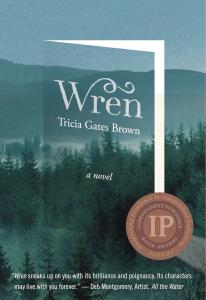
Wren, winner of a 2022 Independent Publishers Award Bronze Medal
Winner of the 2022 Independent Publisher Awards Bronze Medal for Regional Fiction; Finalist for the 2022 National Indie Excellence Awards. (2021) Paperback publication of Wren , a novel. “Insightful novel tackles questions of parenthood, marriage, and friendship with finesse and empathy … with striking descriptions of Oregon topography.” —Kirkus Reviews (2018) Audiobook publication of Wren.
Progressive Christian
Relationships and Religion
Family, Parenting and Religion
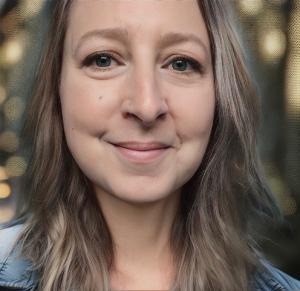
About Tricia Gates Brown
Tricia Gates Brown is an everyday theologian working as a writer/editor in Oregon's Willamette Valley, mainly editing and co-writing books for the National Parks Service and Native tribes. After completing an MA in theology then a PhD from the University of St. Andrews in 2000, she continued to pursue her studies—energetically self-educating in theology, spirituality, and the emotional life. She is also an Ordained Deacon in the Episcopal Diocese of Oregon. Tricia is an art quilter, potter, and novelist. Her art can be viewed at https://bit.ly/TGBArts . You can read more about the author here.
Previous Post

June 3, 2024
Overcoming Anxiety: Mental Health Recovery and Hope
Next Post

June 18, 2024 Beyond the Fray: Meditation and the Story of Jesus at Sea
Recent Comments
""I recently told someone 'I have a man,' instead of 'I am hungry' ..."Oh, what ..."
A Different Kind of Lent: Mindfulness, ..."
"Depending on the genre, music is known to offer multiple benefits to listeners and to ..."
Prayer as Heartful Listening: How Music ..."
"Christmas comes and Christmas goes. Waiting is certainly the right thing for getting further energized ..."
The Already and Not Yet: On ..."
"Honesty and humility are weapons of mass construction. They always deepen our relationship with God ..."
Freedom in Humility: God Loves Us ..."
Browse Our Archives
Select a Category Education Essay Excerpt Uncategorized
Select a Month September 2026 August 2026 July 2026 June 2026 May 2026 April 2026 March 2026 February 2026 January 2026 December 2025 November 2025 October 2025 September 2025 August 2025 July 2025 June 2025 May 2025 April 2025 March 2025 February 2025 January 2025 December 2024 November 2024 October 2024 September 2024 August 2024 July 2024 June 2024 May 2024 April 2024 March 2024 February 2024 January 2024 December 2023 November 2023 October 2023 September 2023 August 2023 July 2023 June 2023 May 2023 April 2023 March 2023 February 2023 January 2023 December 2022 November 2022 October 2022 September 2022 August 2022 July 2022
Follow Us!
TAKE THE
Religious Wisdom Quiz
True or False: Ruth was from Moab and chose to stay with her mother-in-law Naomi.
Select your answer to see how you score.
FALSE TRUE
Books by This Author Books by About Religion, Doubt and Why They Matter
Related posts from About Religion, Doubt and Why They Matter

Using Your Gifts Is Ministry: A Retired Deacon's...
About Religion, Doubt and Why They Matter

The Many Forms of Prayer: What Does it...
About Religion, Doubt and Why They Matter

In the Gloaming: What the Anti-Aging Movement Misses
About Religion, Doubt and Why They Matter

God Is in the Obstacle: What Loss Taught...
About Religion, Doubt and Why They Matter
TRENDING AT PATHEOS New Visions

Nearly every morning, I make the drive to Detroit with my high-school-age...

The Real AI Story Is Adoption Without Trust
Artificial intelligence has crossed a political threshold. It is no longer a...

A new article, written by Jeff Lindsay and Gale L. Pooley,...

Swimfan: Forgotten Aughts Pleasures
This is a recovery effort. In 2002, My Big Fat Greek Wedding...

Top Three Anti-Catholic Lies About Catholicism
This is my initial transcript for the video, "THE 3 WORST...

Pope Leo Celebrates Mass for Nurses & Docs...
I don't have any idea how he did it, but Pope Leo...
view all New Visions blogs
What Are Your Thoughts?leave a comment
Ad-Free & Subscriber Log-In Subscription Support
- About Us
- 2026 Calendar
- Videos
- Podcasts
- Library of World Religions
- Faith In Media Tracker
- Advertise With Us
- Write for Us
- Privacy Policy
- Terms of Service
- Do Not Sell My Data
- Contact Us
- Radiant Digital
- Manage Newsletter Subscriptions
- Unsubscribe From Notifications
- Sitemap
Copyright 2008-2026, Patheos. All rights reserved.
Subscription Support Ad-Free & Subscriber Log-In
Follow Patheos