
BuddhistCatholicContemplativeEvangelicalGeneral ChristianHinduJewishLatter-day SaintMuslimNew VisionsProgressive Christian
Beliefs
- Buddhist
- Catholic
- Contemplative
- Evangelical
- General Christian
- Hindu
- Jewish
- Latter-day Saint
- More Voices
- Muslim
- New Visions
- Pagan
- Progressive Christian
Topics
- Religion News
- Food and Religion
- Sports and Religion
- Religious Art
- Religious Music and Entertainment
- Religious Events
- History and Religion
- Style and Religion
- Politics and Religion
- Women in Religion
- Recreation Outdoors and Religion
- Business Finance and Religion
- Careers Workplace and Religion
- Education and Religion
- Family Parenting and Religion
- Health Fitness and Religion
- Home and Religion
- Relationships and Religion
- Technology and Religion
- Travel and Religion
Columnists
- Buddhist Columnists
- Business Finance and Religion Columnists
- Careers Workplace and Religion Columnists
- Catholic Columnists
- Contemplative Columnists
- Education and Religion Columnists
- Evangelists Columnists
- Family Parenting and Religion Columnists
- General Christian Columnists
- Health Fitness and Religion Columnists
- Hindu Columnists
- History and Religion Columnists
- Home and Religion Columnists
- Jewish Columnists
- More Voices Columnists
- Latter Day Columnists
- Muslim Columnists
- New Visions Columnists
- Nonreligious Columnists
- Pagan Columnists
- Politics and Religion Columnists
- Progressive Columnists
- Recreation Outdoors and Religion Columnists
- Relationships and Religion Columnists
- Religion News Columnists
- Religious Art Columnists
- Religious Events Columnists
- Religious Music and Entertainment Columnists
- Sports and Religion Columnists
- Style and Religion Columnists
- Technology and Religion Columnists
- Travel and Religion Columnists
- Women in Religion Columnists
Resource Library
- 2026 Calendar
- Library of World Religions
- The 100 Most Holy Places on Earth
- Patheos Answers
- Podcasts
- Videos
- Faith Leaders Database
- Anglican Episcopalian
- Bahai
- Baptist
- Buddhism
- Christianity
- Confucianism
- Eastern Orthodoxy
- Hinduism
- Holiness and Pentecostal
- ISKCON
- Islam
- Judaism
- Lutheran
- Methodist
- The Church of Jesus Christ of Latter-day Saints
- New Age
- Paganism
- Presbytarian and Reformed
- Protestantism
- Religion Behind the Scenes
- Roman Catholic
- Scientology
- Shia Islam
- Sikhism
- Sufism
- Sunni Islam
- Taoism
- Zen
- See all religions
Research Tools
 Ad-Free & Subscriber Log-In Subscription Support
Ad-Free & Subscriber Log-In Subscription Support
Follow Patheos 

- Trending:
- Forgiveness
- |
- Marriage
- |
- Consciousness
- |
- Death Penalty
- |
- Election
- |
- Halloween

- Home
- New Visions
- Politics and Religion
- Approaching Wisdom With Emptiness: Two Characters from John
Approaching Wisdom With Emptiness: Two Characters from John
Last updated on: May 28, 2024 at 7:09 am by Tricia Gates Brown
Approaching Wisdom With Emptiness: Two Characters from John 2024-05-28T07:09:38-07:00 Tricia Gates Brown
Patheos Explore the world's faith through different perspectives on religion and spirituality! Patheos has the views of the prevalent religions and spiritualities of the world.
{Photo by Bea Davidson for Scopio; approaching wisdom with emptiness}
This week in my tradition we read the story about Nicodemus. But I can’t think of this story, without also thinking about the next chapter of John and the story it features—about the woman from Samaria. These stories and their juxtaposition are strategic; and they are all about contrast. We understand Nicodemus better because of the woman from Samaria. And we understand this woman better because of her contrast with Nicodemus.
The author of John frequently paints contrasts. At times this is problematic. Such as in the dualistic language of light/dark, children of God/children of the devil, etc. In the late first-century time when John was written, deep rifts were taking place between followers of the Jesus movement and the communities and synagogues they were a part of. In addressing these rifts, the author borrows language from Hellenistic dualism that makes for the worst kind of fighting words. (It is not just in John. Dualism was so pervasive in the first-century Mediterranean that it was akin to capitalism in present-day America.) According to John’s dualism, the community’s opponents are cast as unredeemable.
But the contrast between the teacher Nicodemus and the Samaritan woman was different. Nicodemus is portrayed as sincere and as a seeker. But he, an elite and a powerful teacher, is also hapless. He cannot understand what Jesus is telling him. Jesus speaks to him symbolically, and he takes the words literally. He misses the point.
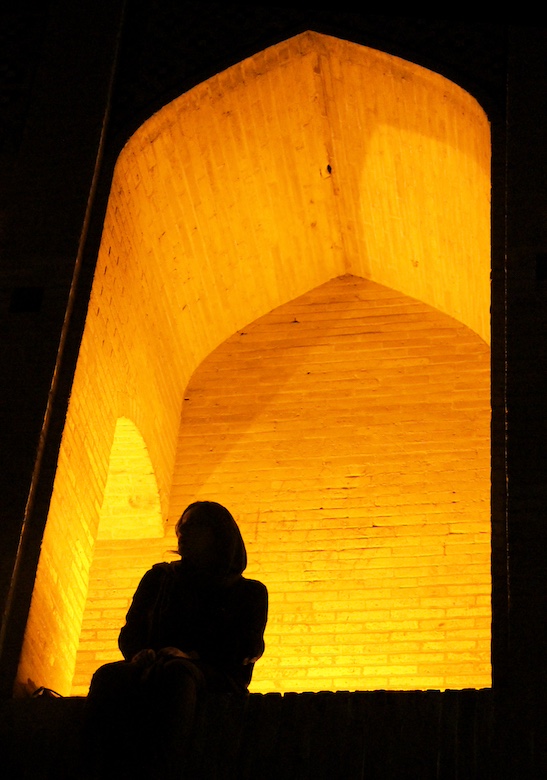
The woman from Samaria also does not fully understand. But as the conversation between her and Jesus goes on, her awareness deepens. Whereas Nicodemus, the person with power, gets more and more confused as the conversation with Jesus goes on, the Samaritan woman—who would have been marginalized in a number of ways—becomes increasingly open and enlightened as the conversation unfolds. In the end, we’re told she goes out to testify to what she has discovered. She goes to “tell everyone she knows” about Jesus. Jesus’ conversation with Nicodemus, on the other hand, ends unresolved. We don’t find out how it ends, or what Nicodemus does next. The passage simply wraps and we’re on to other topics.
{Photo by Fateme Gheybi for Scopio; approaching wisdom with emptiness}
An overt power imbalance is at the center of the contrast between the two characters in John. What might the gospel writer, who put these stories together for a reason, have been saying? For one thing, he seems to be saying that Jesus shows neither deference nor disdain for people based on their social status. He gives both characters his attention and respect. He teaches both. The author seems to be saying that to be a student of Jesus, one does not need power or socio-familial connections.
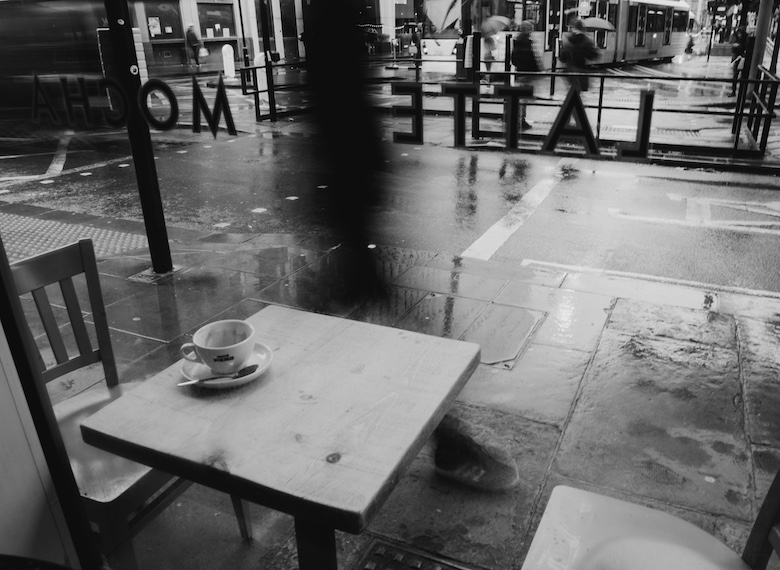
In the worlds you and I inhabit, power often gets people places. But in the end, the things that matter—such as deep understanding and wisdom—are often more accessible to those with less to lose, less position or social cache or wealth. The Samaritan woman was an example of this. In the end, she was more open to receiving. An empty cup can receive more than a cup already filled. This image is, in fact, a good one for the contrast between these characters. In Buddhism they call the stance “beginner’s mind.”
Wren, winner of a 2022 Independent Publishers Award Bronze Medal
Winner of the 2022 Independent Publisher Awards Bronze Medal for Regional Fiction; Finalist for the 2022 National Indie Excellence Awards. (2021) Paperback publication of Wren , a novel. “Insightful novel tackles questions of parenthood, marriage, and friendship with finesse and empathy … with striking descriptions of Oregon topography.” —Kirkus Reviews (2018) Audiobook publication of Wren.
Progressive Christian
Politics and Religion
History and Religion

About Tricia Gates Brown
Tricia Gates Brown is an everyday theologian working as a writer/editor in Oregon's Willamette Valley, mainly editing and co-writing books for the National Parks Service and Native tribes. After completing an MA in theology then a PhD from the University of St. Andrews in 2000, she continued to pursue her studies—energetically self-educating in theology, spirituality, and the emotional life. She is also an Ordained Deacon in the Episcopal Diocese of Oregon. Tricia is an art quilter, potter, and novelist. Her art can be viewed at https://bit.ly/TGBArts . You can read more about the author here.
Previous Post

May 22, 2024
Bridging Distance: Discovering the Joys of Audio-Messaging
Next Post

June 3, 2024 Overcoming Anxiety: Mental Health Recovery and Hope
Recent Comments
""I recently told someone 'I have a man,' instead of 'I am hungry' ..."Oh, what ..."
A Different Kind of Lent: Mindfulness, ..."
"Depending on the genre, music is known to offer multiple benefits to listeners and to ..."
Prayer as Heartful Listening: How Music ..."
"Christmas comes and Christmas goes. Waiting is certainly the right thing for getting further energized ..."
The Already and Not Yet: On ..."
"Honesty and humility are weapons of mass construction. They always deepen our relationship with God ..."
Freedom in Humility: God Loves Us ..."
Browse Our Archives
Select a Category Education Essay Excerpt Uncategorized
Select a Month September 2026 August 2026 July 2026 June 2026 May 2026 April 2026 March 2026 February 2026 January 2026 December 2025 November 2025 October 2025 September 2025 August 2025 July 2025 June 2025 May 2025 April 2025 March 2025 February 2025 January 2025 December 2024 November 2024 October 2024 September 2024 August 2024 July 2024 June 2024 May 2024 April 2024 March 2024 February 2024 January 2024 December 2023 November 2023 October 2023 September 2023 August 2023 July 2023 June 2023 May 2023 April 2023 March 2023 February 2023 January 2023 December 2022 November 2022 October 2022 September 2022 August 2022 July 2022
Follow Us!
TAKE THE
Religious Wisdom Quiz
Who said, "Man shall not live on bread alone, but on every word that comes from the mouth of God"?
Select your answer to see how you score.
David Moses Jesus Elijah
Books by This Author Books by About Religion, Doubt and Why They Matter
Related posts from About Religion, Doubt and Why They Matter

Using Your Gifts Is Ministry: A Retired Deacon's...
About Religion, Doubt and Why They Matter

The Many Forms of Prayer: What Does it...
About Religion, Doubt and Why They Matter

In the Gloaming: What the Anti-Aging Movement Misses
About Religion, Doubt and Why They Matter

God Is in the Obstacle: What Loss Taught...
About Religion, Doubt and Why They Matter
TRENDING AT PATHEOS New Visions

Emotion in Early Christianity by Andrew Crislip
Andrew Crislip’s Emotion in Early Christianity examines an often overlooked dimension of...

16 Spiritual Touchstones for a More Grounded Life
After decades of spiritual study, here are 16 principles I try...

Catholic Evangelization: Sharing Your Faith Every Day
Welcome back to the Graceful Awakening mini-series called, “From Faith to Mission.” ...

The Pillar of the Boatmen: the Ancient Monument...
The Pillar of the Boatmen is a Romano-Gaulish sculpture that dates from...

In one sense walking into Westminster Abbey is like walking down the...

'Super Scam Me' Exposes AI Jon Bon Jovi...
Leslie Pickett believed she was in a relationship with Jon Bon Jovi....
view all New Visions blogs
What Are Your Thoughts?leave a comment
Ad-Free & Subscriber Log-In Subscription Support
- About Us
- 2026 Calendar
- Videos
- Podcasts
- Library of World Religions
- Faith In Media Tracker
- Advertise With Us
- Write for Us
- Privacy Policy
- Terms of Service
- Do Not Sell My Data
- Contact Us
- Radiant Digital
- Manage Newsletter Subscriptions
- Unsubscribe From Notifications
- Sitemap
Copyright 2008-2026, Patheos. All rights reserved.
Subscription Support Ad-Free & Subscriber Log-In
Follow Patheos