
BuddhistCatholicContemplativeEvangelicalGeneral ChristianHinduJewishLatter-day SaintMuslimNew VisionsProgressive Christian
Beliefs
- Buddhist
- Catholic
- Contemplative
- Evangelical
- General Christian
- Hindu
- Jewish
- Latter-day Saint
- More Voices
- Muslim
- New Visions
- Pagan
- Progressive Christian
Topics
- Religion News
- Food and Religion
- Sports and Religion
- Religious Art
- Religious Music and Entertainment
- Religious Events
- History and Religion
- Style and Religion
- Politics and Religion
- Women in Religion
- Recreation Outdoors and Religion
- Business Finance and Religion
- Careers Workplace and Religion
- Education and Religion
- Family Parenting and Religion
- Health Fitness and Religion
- Home and Religion
- Relationships and Religion
- Technology and Religion
- Travel and Religion
Columnists
- Buddhist Columnists
- Business Finance and Religion Columnists
- Careers Workplace and Religion Columnists
- Catholic Columnists
- Contemplative Columnists
- Education and Religion Columnists
- Evangelists Columnists
- Family Parenting and Religion Columnists
- General Christian Columnists
- Health Fitness and Religion Columnists
- Hindu Columnists
- History and Religion Columnists
- Home and Religion Columnists
- Jewish Columnists
- More Voices Columnists
- Latter Day Columnists
- Muslim Columnists
- New Visions Columnists
- Nonreligious Columnists
- Pagan Columnists
- Politics and Religion Columnists
- Progressive Columnists
- Recreation Outdoors and Religion Columnists
- Relationships and Religion Columnists
- Religion News Columnists
- Religious Art Columnists
- Religious Events Columnists
- Religious Music and Entertainment Columnists
- Sports and Religion Columnists
- Style and Religion Columnists
- Technology and Religion Columnists
- Travel and Religion Columnists
- Women in Religion Columnists
Resource Library
- 2026 Calendar
- Library of World Religions
- The 100 Most Holy Places on Earth
- Patheos Answers
- Podcasts
- Videos
- Faith Leaders Database
- Anglican Episcopalian
- Bahai
- Baptist
- Buddhism
- Christianity
- Confucianism
- Eastern Orthodoxy
- Hinduism
- Holiness and Pentecostal
- ISKCON
- Islam
- Judaism
- Lutheran
- Methodist
- The Church of Jesus Christ of Latter-day Saints
- New Age
- Paganism
- Presbytarian and Reformed
- Protestantism
- Religion Behind the Scenes
- Roman Catholic
- Scientology
- Shia Islam
- Sikhism
- Sufism
- Sunni Islam
- Taoism
- Zen
- See all religions
Research Tools
 Ad-Free & Subscriber Log-In Subscription Support
Ad-Free & Subscriber Log-In Subscription Support
Follow Patheos 

- Trending:
- Forgiveness
- |
- Marriage
- |
- Consciousness
- |
- Death Penalty
- |
- Election
- |
- Halloween

- Home
- New Visions
- History and Religion
- Why Humans Do Ritual: Finding Meaning in Everyday Practice
Why Humans Do Ritual: Finding Meaning in Everyday Practice
Last updated on: April 6, 2024 at 4:13 pm by Tricia Gates Brown
Why Humans Do Ritual: Finding Meaning in Everyday Practice 2024-04-06T16:13:47-07:00 Tricia Gates Brown
Patheos Explore the world's faith through different perspectives on religion and spirituality! Patheos has the views of the prevalent religions and spiritualities of the world.
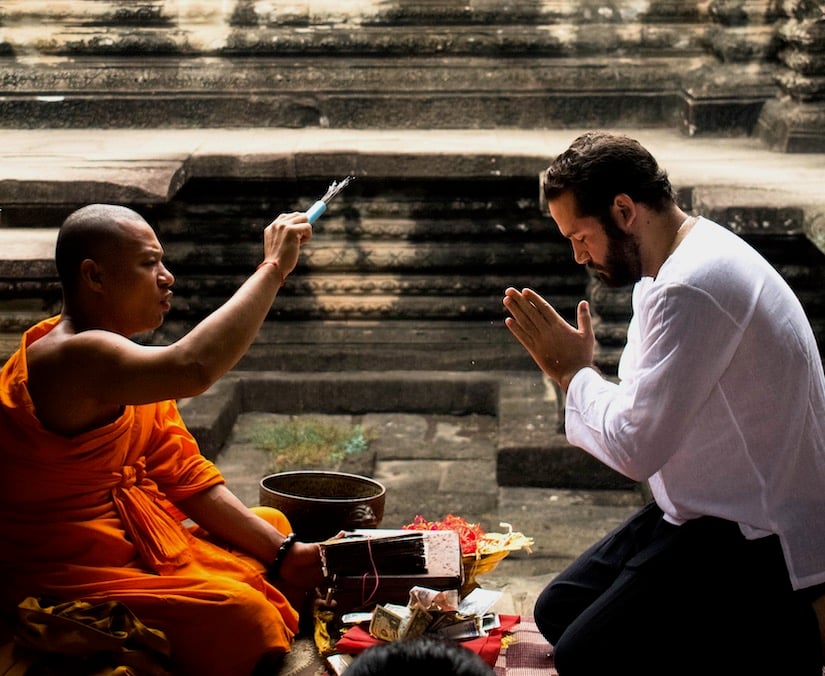
{Photo by Mark Anthony Cudal for Scopio; humans do ritual}
I didn’t intend to become a spokesperson for tradition. Of those who know me best, I doubt any would describe me as traditional. But along the way, I’ve become attached to the idea that we need tradition, which some find perplexing as I’m so questioning and critical of my own (Christianity ala Episcopalianism). Last month, two friends asked why I stay. The subtext of the question being: What is the use?
As my friends’ questions suggest, tradition is not well regarded or considered useful. It’s about as popular as aspic. As a collective, Westerners spent decades breaking free of religious norms and other socio-political ideologies—of formerly cherished traditions. Sure, we see a vexing rise in religious fundamentalisms and nationalism concurrent with this trend, but these movements constitute a reaction to a general trend of inching away from consciously chosen traditions.
Yet I would argue the typical American is decidedly traditional. He or she simply does not choose their traditions consciously. Humans are, by nature, traditional. We have merely come to think of ourselves as nontraditional because our traditions are largely unexamined and individual-based.
Yet we are all shaped by mega-stories telling us what it means to live a good life. These mega-stories, or meaning systems, can center around all sorts of things—even sports culture, material prosperity, raising successful kids, our jobs (click here for an Atlantic article about jobs as American religion). Our mega-stories are unifying narratives. And unifying narratives are essentially what traditions are comprised of. Yet again, few of us are consciously aware of our traditions anymore. Few recognize what master stories shape our sense of what is important, what is meaningful.
I argue that knowing one’s tradition is far more advantageous than not knowing. That’s because choosing a tradition consciously sets us free to scrutinize our tradition and debate with those within it, deciding what aspects we care to reflect in our lives. Consciously chosen traditions can also serve as counter narratives as we confront mega-stories peddled by overwhelming forces around us (think presidential candidates; corporate culture; advertising; ideological movements). In this sense, consciously chosen traditions—if they allow debate and criticism—can be liberating. I believe that choosing a tradition, examining it and wrestling with it, and letting it shape you into the kind of person you hope to be, brings freedom. This last statement hints at what is, in my opinion, the criteria for choosing a good tradition. Ask: will this tradition shape me into the kind of person I hope to be?
Some eschew tradition because the rules or strictures make them feel unfree. But I suggest the actions of allpeople are to a large extent dictated by some tradition; most simply cannot identify what that tradition is. Maybe the dominant mega-story or tradition in their lives is American reality TV, left leaning cable news, the military-industrial complex, or the history of a large, multi-generational family or immigrant group. All of these are powerful mega-narratives and meaning-making systems, and the people within them are shaped by the values, stories, and strictures of those traditions. The benefit of having a tradition consciously chosen is how we can select which strictures are meaningful and helpful to us and have an intelligent debate with our companions when they are not.
Rarely do we stop to scrutinize how our actions have been shaped by the traditions we unconsciously participate in. Rarely do we ask why we flock en masse to see the latest Marvel action movie, why we so energetically follow sports seasons and favorite teams, or why we buy so many Christmas presents for our kids. In each case, we operate as adherents to the rules of dominant traditions—we just don’t identify as adherents. We don’t understand the sway the traditions’ unifying narratives have over our lives, let alone their global impact. There is nothing inherently wrong with watching violence-saves-the-day superhero films, or sports, or buying Christmas presents—don’t get me wrong—but there can be problems with the unconscious ways we engage in these activities, not realizing how they become our guiding narratives, shaping our values and forming us into certain kinds of people we might just as well not be. (For example, with regard to Christmas spending, people with enormous credit card debt.) Without awareness of the mega-narratives dictating our actions, we can follow unhealthy traditions that lead us around by invisible tethers.
Again, each of us has a tradition shaping our lives, usually more than one—and in every case, these traditions are comprised of sweeping narratives. Sometimes they are curated by those in power who want our political compliance or brand loyalty. These stories lending meaning and explanation to our lives often burble away below the surface of consciousness, giving us certain cues and judgments, guiding us to go here, do that: Call your mother; wax your car; buy the organic eggs instead of factory-farmed. Or on a decidedly sinister tack: hate Muslims; have an insatiable appetite for stuff; distrust people; protect what’s yours from thugs who want to take it all away. If we grew up in a modern Western culture (or a culture heavily influenced by the West), we may dislike the idea we are guided by cues from mega-narratives curated by others. This makes us feel like robots, our stories like code. Choiceless, aggressive, rote.
Yet even those of us aware on an intellectual level that mega-stories shape our lives, rarely take time to scrutinize them. Take the tradition of The Hardworking American. Election season is ramping up, and I expect those listening to the stump speeches and debates among candidates will hear versions of the Hardworking American narrative over and over again. It is part of the defining, unexamined tradition of Americanism. It’s the “pulled themselves up by their boot straps” narrative forming Americanism’s backbone; and it’s a key narrative by which almost every American has been shaped: If you work hard, you will be important, have what you need, and quite possibly “achieve your dreams.” Almost every political candidate uses this mega-story (often in telling tales of parents or grandparents) because, as part of the tradition of nearly every American, it allows candidates to form an instant bond with us. Essentially, the candidates want us to feel they are one of us, even if their social status is outside the reach of most Americans. Furthermore, they use the story because we care about The Hardworking American. We want people who work hard to have their and their families’ needs met, and to have enough free time and comfort to “live a good life,” to “achieve their dreams.” Almost all Americans are shaped by and ascribe to this tradition at a young age, when we are taught the tradition by school teachers, TV programs, and films. Even if the disingenuousness of the tradition later dawns on us, we viscerally want it to be true because it comprises the core of our unexamined value system. We choose not to question it.
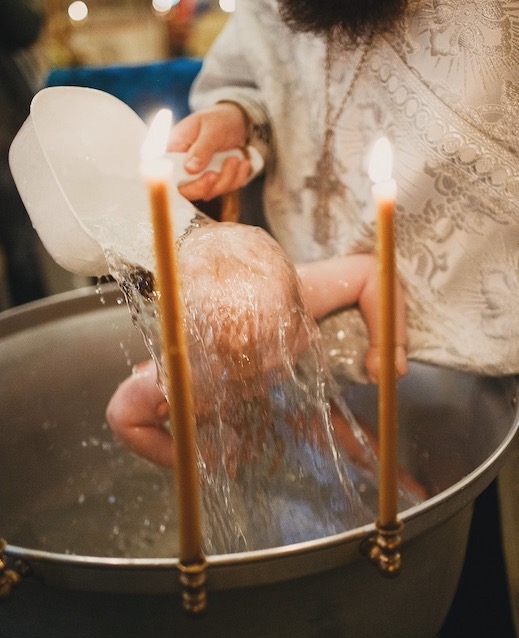
{Photo by Maksim Chernyshev for Scopio; humans do ritual}
Choosing A Tradition
How does one go about consciously choosing a tradition? Start with figuring out what your traditions already are. Once you know, you can decide if these are traditions you want to have shaping you. If so, begin a conversation with them—scrutinize them, deciding which parts of the traditions you admire and which you don’t. Recognize your tradition as an important meaning-making system and become a conversation partner with others in your tradition, because you will shape how it evolves. If you realize you are mostly shaped by traditions you don’t want to have shaping you, then choose a tradition you admire.
Most traditions are about action and values—not cognitive belief systems (no matter how the gatekeepers like to hold up their historic creeds; don’t be too distracted by them). It is our actions and value systems—what we find meaningful and important on a daily basis—that make us, not abstract ideas we say we “believe.” Worry less about whether you believe a tradition’s this or that. Instead of focusing on beliefs, ask of it: What kind of person is this tradition asking me to be? What kind of person would it be shaping me into? And, is that the kind of person I want to be?
Start there.
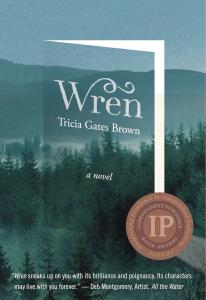
Wren, winner of a 2022 Independent Publishers Award Bronze Medal
Winner of the 2022 Independent Publisher Awards Bronze Medal for Regional Fiction; Finalist for the 2022 National Indie Excellence Awards. (2021) Paperback publication of Wren , a novel. “Insightful novel tackles questions of parenthood, marriage, and friendship with finesse and empathy … with striking descriptions of Oregon topography.” —Kirkus Reviews (2018) Audiobook publication of Wren.
Contemplative
History and Religion
Previous Post

April 1, 2024
Understanding Human Motivations: Spirit, Ernest, and Ozempic
Next Post

April 8, 2024 Living in Hope of Renewal: On Arendt and Easter Season
Recent Comments
""I recently told someone 'I have a man,' instead of 'I am hungry' ..."Oh, what ..."
A Different Kind of Lent: Mindfulness, ..."
"Depending on the genre, music is known to offer multiple benefits to listeners and to ..."
Prayer as Heartful Listening: How Music ..."
"Christmas comes and Christmas goes. Waiting is certainly the right thing for getting further energized ..."
The Already and Not Yet: On ..."
"Honesty and humility are weapons of mass construction. They always deepen our relationship with God ..."
Freedom in Humility: God Loves Us ..."
Browse Our Archives
Select a Category Education Essay Excerpt Uncategorized
Select a Month September 2026 August 2026 July 2026 June 2026 May 2026 April 2026 March 2026 February 2026 January 2026 December 2025 November 2025 October 2025 September 2025 August 2025 July 2025 June 2025 May 2025 April 2025 March 2025 February 2025 January 2025 December 2024 November 2024 October 2024 September 2024 August 2024 July 2024 June 2024 May 2024 April 2024 March 2024 February 2024 January 2024 December 2023 November 2023 October 2023 September 2023 August 2023 July 2023 June 2023 May 2023 April 2023 March 2023 February 2023 January 2023 December 2022 November 2022 October 2022 September 2022 August 2022 July 2022
Follow Us!
TAKE THE
Religious Wisdom Quiz
What did Moses do after breaking the tablets?
Select your answer to see how you score.
Fasted for 30 days Returned to Sinai for new tablets Left the camp Destroyed the calf
Books by This Author Books by About Religion, Doubt and Why They Matter
Related posts from About Religion, Doubt and Why They Matter

Using Your Gifts Is Ministry: A Retired Deacon's...
About Religion, Doubt and Why They Matter

The Many Forms of Prayer: What Does it...
About Religion, Doubt and Why They Matter

In the Gloaming: What the Anti-Aging Movement Misses
About Religion, Doubt and Why They Matter

God Is in the Obstacle: What Loss Taught...
About Religion, Doubt and Why They Matter
TRENDING AT PATHEOS New Visions

When Halloween Unmasks Married Hearts
Written by Dr. David K. Ewen from Eternal Truth Bible College Behind...

Aristotle. He’s been called the father of logic, the father of the...

Methodist Central Hall and Westminster Abbey
Situated on the same square is Methodist Central Hall and Westminster Abbey. ...

57th Dove Awards Honor Dolly Parton, Crown New...
On gospel music’s biggest night, the 57th annual GMA Dove Awards honored...

The First Eucharistic Controversy: Christ’s Real Presence
For Catholics, the Eucharist is the source and summit of the Christian...

What a Stop Sign Can Teach Us About...
How to Make a Decision When You Can't Hear God Main point:...
view all New Visions blogs
What Are Your Thoughts?leave a comment
Ad-Free & Subscriber Log-In Subscription Support
- About Us
- 2026 Calendar
- Videos
- Podcasts
- Library of World Religions
- Faith In Media Tracker
- Advertise With Us
- Write for Us
- Privacy Policy
- Terms of Service
- Do Not Sell My Data
- Contact Us
- Radiant Digital
- Manage Newsletter Subscriptions
- Unsubscribe From Notifications
- Sitemap
Copyright 2008-2026, Patheos. All rights reserved.
Subscription Support Ad-Free & Subscriber Log-In
Follow Patheos