
BuddhistCatholicContemplativeEvangelicalGeneral ChristianHinduJewishLatter-day SaintMuslimNew VisionsProgressive Christian
Beliefs
- Buddhist
- Catholic
- Contemplative
- Evangelical
- General Christian
- Hindu
- Jewish
- Latter-day Saint
- More Voices
- Muslim
- New Visions
- Pagan
- Progressive Christian
Topics
- Religion News
- Food and Religion
- Sports and Religion
- Religious Art
- Religious Music and Entertainment
- Religious Events
- History and Religion
- Style and Religion
- Politics and Religion
- Women in Religion
- Recreation Outdoors and Religion
- Business Finance and Religion
- Careers Workplace and Religion
- Education and Religion
- Family Parenting and Religion
- Health Fitness and Religion
- Home and Religion
- Relationships and Religion
- Technology and Religion
- Travel and Religion
Columnists
- Buddhist Columnists
- Business Finance and Religion Columnists
- Careers Workplace and Religion Columnists
- Catholic Columnists
- Contemplative Columnists
- Education and Religion Columnists
- Evangelists Columnists
- Family Parenting and Religion Columnists
- General Christian Columnists
- Health Fitness and Religion Columnists
- Hindu Columnists
- History and Religion Columnists
- Home and Religion Columnists
- Jewish Columnists
- More Voices Columnists
- Latter Day Columnists
- Muslim Columnists
- New Visions Columnists
- Nonreligious Columnists
- Pagan Columnists
- Politics and Religion Columnists
- Progressive Columnists
- Recreation Outdoors and Religion Columnists
- Relationships and Religion Columnists
- Religion News Columnists
- Religious Art Columnists
- Religious Events Columnists
- Religious Music and Entertainment Columnists
- Sports and Religion Columnists
- Style and Religion Columnists
- Technology and Religion Columnists
- Travel and Religion Columnists
- Women in Religion Columnists
Resource Library
- 2026 Calendar
- Library of World Religions
- The 100 Most Holy Places on Earth
- Patheos Answers
- Podcasts
- Videos
- Faith Leaders Database
- Anglican Episcopalian
- Bahai
- Baptist
- Buddhism
- Christianity
- Confucianism
- Eastern Orthodoxy
- Hinduism
- Holiness and Pentecostal
- ISKCON
- Islam
- Judaism
- Lutheran
- Methodist
- The Church of Jesus Christ of Latter-day Saints
- New Age
- Paganism
- Presbytarian and Reformed
- Protestantism
- Religion Behind the Scenes
- Roman Catholic
- Scientology
- Shia Islam
- Sikhism
- Sufism
- Sunni Islam
- Taoism
- Zen
- See all religions
Research Tools
 Ad-Free & Subscriber Log-In Subscription Support
Ad-Free & Subscriber Log-In Subscription Support
Follow Patheos 

- Trending:
- Forgiveness
- |
- Marriage
- |
- Consciousness
- |
- Death Penalty
- |
- Election
- |
- Halloween

- Home
- New Visions
- Politics and Religion
- How Might Christians Invest in Peace Instead of War?
How Might Christians Invest in Peace Instead of War?
Last updated on: January 2, 2024 at 6:48 am by Tricia Gates Brown
How Might Christians Invest in Peace Instead of War? 2024-01-02T06:48:05-08:00 Tricia Gates Brown
Patheos Explore the world's faith through different perspectives on religion and spirituality! Patheos has the views of the prevalent religions and spiritualities of the world.
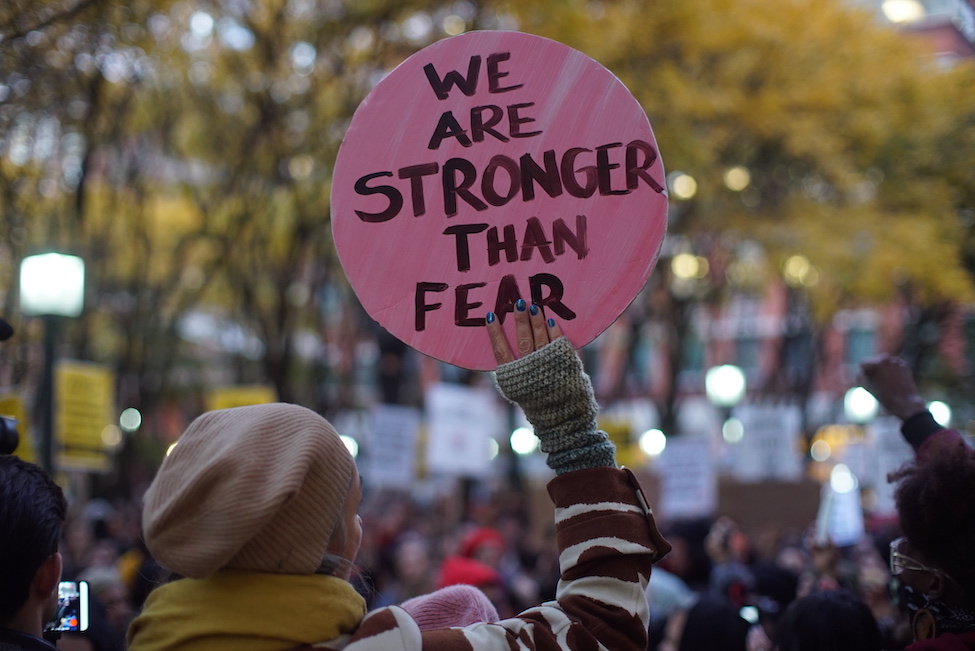
{Photo by Nour Chamoun for Scopio; Invest in peace}
These days have me remembering a book from the early 2000s that impacted me—a book about war’s devastations and seductiveness. It is called: War is a Force that Gives Us Meaning (New York: Public Affairs, 2002). The author Chris Hedges had worked for years as a war correspondent from El Salvador to Bosnia; and in this book, he recounts those wars as a survivor who was also an outsider. As he sees it, war is indescribably vile and destructive. It impels normal people—people like you and me—to lust after violence, to murder without hesitation.
Hedges concedes, though, that there are times when people must take the poison of war. His introduction makes reference to Reinhold Niebuhr, the modern Christian theologian now synonymous with legitimating Christian participation in war. Niebuhr viewed war as a sin, but felt it was a sin Christians must, at times, willingly commit—commit and then repent of. Hedges’ homage to Niebuhr didn’t sit well with me and still doesn’t, not because I can’t sympathize with Hedges’ perspective, but because Niebuhr is so often used by Christians to trump Jesus and is cited in ways that are misleading and incomplete.
I can understand Hedges’ and Niebuhr’s point that war is, at times, a necessary evil, though to this day, I wrestle hard with it. I can see how, at times in history, war seems to be the only solution to a conflict that has sunk to levels of baffling complexity. World War II is most often offered as an example of this kind of conflict. Hedges cites, as another example, the war in Bosnia. Sometimes evil regimes become so powerful and so depraved that nothing but a greater show of violence and force appears able to stop them.
But the argument that Christians should adopt methods of violence to address situations like those described above, fails to acknowledge the role Christian recourse to violence often plays in creating those situations in the first place. Many of the conflicts of the past century reached the point at which war seemed inevitable because people who called themselves Christians had, for years, allowed themselves to practice violence and domination. Christians in Germany allowed hatred and racism—natural corollaries to war—to take root among them. They in turn empowered Hitler. Likewise, Christians in the former Yugoslavia allowed criminals to lead them into a war fueled by racism and manufactured enmity. Today, the war playing out in Israel/Gaza has tentacles stretching to the earliest centuries of Christianity and to Christian antisemitism, and farther back still.

{Photo by Nicola Simoncini for Scopio; invest in peace}
Misuse of ‘Just War Theory’
Using Niebuhr’s ‘just war theory’ as justification, many Christians argue we should be open to the option of war because, at times, history demands that we act to stop rampant violence. Yet so often violence is allowed to run rampant and to spiral out of control because of Christian acquiescence to it. A question that resonated in me when I read Hedge’s book in the early 2000s still resonates with me: How can more bloodshed by Christians be a solution in such a predicament?
I absolutely contend that Jesus taught his followers nonviolent resistance. The problem with the idea that Christians may, in situations like the Holocaust, have to resort to violence, is that the majority of Christians have been resorting to violence in most every conflict we have been engaged in since Constantine. It is our failure to take nonviolence seriously that has largely allowed situations like the Holocaust, the genocide in Rwanda, the massacres of El Salvador, and so on, to happen. All of these atrocities happened in places where the majority of the population called itself Christian.
When Christians mostly prepare for violence, history has shown we will more often than not use it for self-interested purposes, not as a last resort when all other methods of resolving conflicts have proven ineffective, which is what Niebuhr theorized. In the days of Hedge’s book, American Christians were overwhelmingly supportive of war in Iraq because it was viewed as necessary to protect the interests and security of the United States post 9/11. In this, they were not altogether unlike the pre-World War II Germans, who had laid themselves wide open to the seductions of violence long before Hitler came into power. In the early 2000s, Christians did not face a situation like World War II or Bosnia, yet a great number of American Christians enthusiastically hopped on the war wagon. Today, we see the Evangelical movement in the US embracing violence in a similar way—even embracing an autocratic leader.
I want to suggest that at the very least, Christians should support enormous investments in a Department of Peace that studies and implements nonviolent transformation of conflicts before they explode into wars—even a fraction of the investment and rigor we put into our Department of “Defense.” But the fact is, most Christians chose the path of war-making long ago, and that path, that choice, will lead us into seemingly inevitable wars over and over again.

Wren, winner of a 2022 Independent Publishers Award Bronze Medal
Winner of the 2022 Independent Publisher Awards Bronze Medal for Regional Fiction; Finalist for the 2022 National Indie Excellence Awards. (2021) Paperback publication of Wren , a novel. “Insightful novel tackles questions of parenthood, marriage, and friendship with finesse and empathy … with striking descriptions of Oregon topography.” —Kirkus Reviews (2018) Audiobook publication of Wren.
Politics and Religion
History and Religion

About Tricia Gates Brown
Tricia Gates Brown is an everyday theologian working as a writer/editor in Oregon's Willamette Valley, mainly editing and co-writing books for the National Parks Service and Native tribes. After completing an MA in theology then a PhD from the University of St. Andrews in 2000, she continued to pursue her studies—energetically self-educating in theology, spirituality, and the emotional life. She is also an Ordained Deacon in the Episcopal Diocese of Oregon. Tricia is an art quilter, potter, and novelist, besides, living on a farm and loving a menagerie of cats. You can read more about the author here.
Previous Post

December 23, 2023
Mary Teaches Blessedness at Christ-Mass
Next Post

January 9, 2024 Building Bridges to the Inner World
Recent Comments
""I recently told someone 'I have a man,' instead of 'I am hungry' ..."Oh, what ..."
A Different Kind of Lent: Mindfulness, ..."
"Depending on the genre, music is known to offer multiple benefits to listeners and to ..."
Prayer as Heartful Listening: How Music ..."
"Christmas comes and Christmas goes. Waiting is certainly the right thing for getting further energized ..."
The Already and Not Yet: On ..."
"Honesty and humility are weapons of mass construction. They always deepen our relationship with God ..."
Freedom in Humility: God Loves Us ..."
Browse Our Archives
Select a Category Education Essay Excerpt Uncategorized
Select a Month September 2026 August 2026 July 2026 June 2026 May 2026 April 2026 March 2026 February 2026 January 2026 December 2025 November 2025 October 2025 September 2025 August 2025 July 2025 June 2025 May 2025 April 2025 March 2025 February 2025 January 2025 December 2024 November 2024 October 2024 September 2024 August 2024 July 2024 June 2024 May 2024 April 2024 March 2024 February 2024 January 2024 December 2023 November 2023 October 2023 September 2023 August 2023 July 2023 June 2023 May 2023 April 2023 March 2023 February 2023 January 2023 December 2022 November 2022 October 2022 September 2022 August 2022 July 2022
Follow Us!
TAKE THE
Religious Wisdom Quiz
What did Moses' staff turn into before Pharaoh?
Select your answer to see how you score.
A pillar of fire A serpent A stone A bird
Books by This Author Books by About Religion, Doubt and Why They Matter
Related posts from About Religion, Doubt and Why They Matter

Using Your Gifts Is Ministry: A Retired Deacon's...
About Religion, Doubt and Why They Matter

The Many Forms of Prayer: What Does it...
About Religion, Doubt and Why They Matter

In the Gloaming: What the Anti-Aging Movement Misses
About Religion, Doubt and Why They Matter

God Is in the Obstacle: What Loss Taught...
About Religion, Doubt and Why They Matter
TRENDING AT PATHEOS New Visions

Nearly every morning, I make the drive to Detroit with my high-school-age...

The Real AI Story Is Adoption Without Trust
Artificial intelligence has crossed a political threshold. It is no longer a...

A new article, written by Jeff Lindsay and Gale L. Pooley,...

Swimfan: Forgotten Aughts Pleasures
This is a recovery effort. In 2002, My Big Fat Greek Wedding...

Top Three Anti-Catholic Lies About Catholicism
This is my initial transcript for the video, "THE 3 WORST...

Pope Leo Celebrates Mass for Nurses & Docs...
I don't have any idea how he did it, but Pope Leo...
view all New Visions blogs
What Are Your Thoughts?leave a comment
Ad-Free & Subscriber Log-In Subscription Support
- About Us
- 2026 Calendar
- Videos
- Podcasts
- Library of World Religions
- Faith In Media Tracker
- Advertise With Us
- Write for Us
- Privacy Policy
- Terms of Service
- Do Not Sell My Data
- Contact Us
- Radiant Digital
- Manage Newsletter Subscriptions
- Unsubscribe From Notifications
- Sitemap
Copyright 2008-2026, Patheos. All rights reserved.
Subscription Support Ad-Free & Subscriber Log-In
Follow Patheos