
BuddhistCatholicContemplativeEvangelicalGeneral ChristianHinduJewishLatter-day SaintMuslimNew VisionsProgressive Christian
Beliefs
- Buddhist
- Catholic
- Contemplative
- Evangelical
- General Christian
- Hindu
- Jewish
- Latter-day Saint
- More Voices
- Muslim
- New Visions
- Pagan
- Progressive Christian
Topics
- Religion News
- Food and Religion
- Sports and Religion
- Religious Art
- Religious Music and Entertainment
- Religious Events
- History and Religion
- Style and Religion
- Politics and Religion
- Women in Religion
- Recreation Outdoors and Religion
- Business Finance and Religion
- Careers Workplace and Religion
- Education and Religion
- Family Parenting and Religion
- Health Fitness and Religion
- Home and Religion
- Relationships and Religion
- Technology and Religion
- Travel and Religion
Columnists
- Buddhist Columnists
- Business Finance and Religion Columnists
- Careers Workplace and Religion Columnists
- Catholic Columnists
- Contemplative Columnists
- Education and Religion Columnists
- Evangelists Columnists
- Family Parenting and Religion Columnists
- General Christian Columnists
- Health Fitness and Religion Columnists
- Hindu Columnists
- History and Religion Columnists
- Home and Religion Columnists
- Jewish Columnists
- More Voices Columnists
- Latter Day Columnists
- Muslim Columnists
- New Visions Columnists
- Nonreligious Columnists
- Pagan Columnists
- Politics and Religion Columnists
- Progressive Columnists
- Recreation Outdoors and Religion Columnists
- Relationships and Religion Columnists
- Religion News Columnists
- Religious Art Columnists
- Religious Events Columnists
- Religious Music and Entertainment Columnists
- Sports and Religion Columnists
- Style and Religion Columnists
- Technology and Religion Columnists
- Travel and Religion Columnists
- Women in Religion Columnists
Resource Library
- 2026 Calendar
- Library of World Religions
- The 100 Most Holy Places on Earth
- Patheos Answers
- Podcasts
- Videos
- Faith Leaders Database
- Anglican Episcopalian
- Bahai
- Baptist
- Buddhism
- Christianity
- Confucianism
- Eastern Orthodoxy
- Hinduism
- Holiness and Pentecostal
- ISKCON
- Islam
- Judaism
- Lutheran
- Methodist
- The Church of Jesus Christ of Latter-day Saints
- New Age
- Paganism
- Presbytarian and Reformed
- Protestantism
- Religion Behind the Scenes
- Roman Catholic
- Scientology
- Shia Islam
- Sikhism
- Sufism
- Sunni Islam
- Taoism
- Zen
- See all religions
Research Tools
 Ad-Free & Subscriber Log-In Subscription Support
Ad-Free & Subscriber Log-In Subscription Support
Follow Patheos 

- Trending:
- Forgiveness
- |
- Marriage
- |
- Consciousness
- |
- Death Penalty
- |
- Election
- |
- Halloween

- Home
- New Visions
- Travel and Religion
- Las Posadas: On Mary and Joseph and the Border
Las Posadas: On Mary and Joseph and the Border
Last updated on: November 8, 2023 at 8:54 pm by Tricia Gates Brown
Las Posadas: On Mary and Joseph and the Border 2023-11-08T20:54:39-08:00 Tricia Gates Brown
Patheos Explore the world's faith through different perspectives on religion and spirituality! Patheos has the views of the prevalent religions and spiritualities of the world.
{Wikimedia Commons}
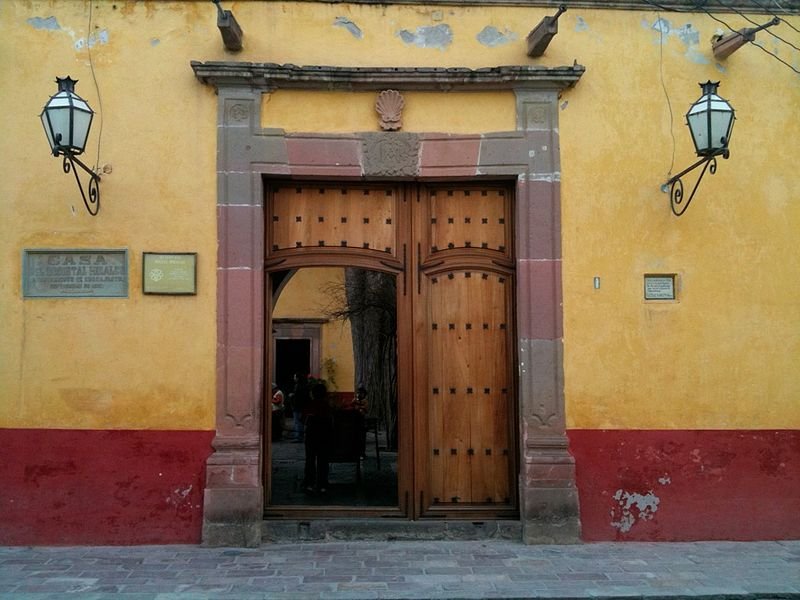
Celebrants press wall-to-wall into houses where we gather, forty to sixty people, night after night reciting the prayers and singing the songs of Las Posadas. Steamy windows emanate light into winter’s deepest dark. Posadas (translated literally as “lodgings”) take place each night from December 16 through Christmas Eve and reenact Mary and Joseph’s attempt to find lodging in Bethlehem. The tradition originated in Spain and was carried to Mexico. The uniquely Mexican version seems to have started in 1538, when Spanish friars intent on assimilating the faith with Aztec rites, combined posadas with the nine-night winter ritual of imploring the sun god’s return. Mexicans still celebrate posadas, enlivening them with balloons and papel picado, and the shrieking of children as candy erupts from handmade piñatas.
On foggy Oregon coast nights, in the homes of immigrants who work among the cows and hay of our nativities, who struggle to find open doors at banks, at college departments of financial aid and dental offices, at the Department of Motor Vehicles, we await the advent of Jesus, the one with no place to call home. I stand shoulder to shoulder with my Mexican friends in their rented houses that have seen better days, that sleep several children to a bedroom and boast a shrine of mother Mary, the Virgen of Guadalupe, surrounded by frolics of icons. I sing along with the “posada song”, pretending to be Mary and Joseph at the door of the inn (and on other nights, the innkeeper, roused from his sleep and ill-tempered). And as each night passes, I begin to understand a part of the Christian story I have previously not understood. Mary and Joseph were like these Mexican immigrants. And I, standing there in my invisible cloak of privilege, will find it harder to know them.
Mary and Joseph were Galilean. And the people from Galilee were belittled in Bethlehem and throughout Judea. In a reversal of geography, they were the disregarded neighbors from the backwater north, the presumed uncouth and superstitious and freeloading and restive. In Judea where they went to pay taxes, they were shut out as a matter of course. Galileans were stereotyped by Judeans as lawbreakers. Galilee was a renegade land that spawned messianic movements awaiting the coming of the Lord, a new day of fairness—movements started by leaders like “the Egyptian,” or “Judas the Galilean,” that were historically successful. That is, until the Romans got miffed and sent riot police to disband or kill them or paramilitary troops to intimidate them, or turned on them their own client kings like Herod Antipas, who wiled away the wealth of his subjects, sending them to border towns to pay their dues.
{Photo by Albina Krasniqi for Scopio}
At times the term “Galilean” was used in Jesus’ day to simply mean an outsider, especially of the political sort. Galilee was a center of economic protest, where the messiah named Jesus would wax prophetically on wealth and the sharing of it, on how the rich couldn’t make it into heaven any more than they could make it through the eye of a needle, or the Rio Grande, or a few days in the Arizona desert. In his last years, Jesus’ friends and audience were Galilean fisher-folk, and according to Roman values, dwelt at the bottom of the labor pool. In the words of Cicero, quoting the well-bred Terence: “The most shameful occupations are those which cater to our sensual pleasures: ‘fish-sellers, butchers, cooks, poultry-raisers, and fishermen’” (Cicero, On Duties 1.42). In our day, Cicero might have added hotel cleaners, line cooks, gardeners, vineyard or dairy laborers, makers of Versace denim jeans.
At Posadas, we are reminded by word and ritual that God chose an indigent, young Galilean girl, “Alegría,alegría!” We pray for the immigrants facing deportation, for the women with back pain and diabetes who need strength to rise each day and make two dozen beds. We pray for the children, for the church and its message of good news. We pray for the high school students fighting for a chance at a dream.
The litany, prayers and songs culminate in a meal, a feast of hospitality that night by night includes carnitas, tacos, tamales, pozole, always accompanied by rice and beans and a prismatic display of salsas. After dinner, children swing at brilliant piñatas.
For reasons unknown, the children flock to me, throwing hugs around me like coats on a rack. They glow with beauty and unyielding hope, and in America they are not unlike Jesus and his friends running about Jerusalem at Passover, yet unaware of how they are seen, or who they will become, only that they love the songs, the traditions of Christmas, the smell of the Passover tamales, and the community of Galilean pilgrims who love them. These children know only that Jesus and his parents were poor and had to stand at a door and knock only to be ignored, and then finally let into our broken and peregrine hearts as the queen and kings of heaven.

Wren, Winner of a 2022 Independent Publishers Award Bronze Medal
Contemplative
Travel and Religion
Politics and Religion
Previous Post

October 31, 2023
How Humility Makes Way for Forgiveness
Next Post

November 14, 2023 The Magic of Godparenting
Recent Comments
""I recently told someone 'I have a man,' instead of 'I am hungry' ..."Oh, what ..."
A Different Kind of Lent: Mindfulness, ..."
"Depending on the genre, music is known to offer multiple benefits to listeners and to ..."
Prayer as Heartful Listening: How Music ..."
"Christmas comes and Christmas goes. Waiting is certainly the right thing for getting further energized ..."
The Already and Not Yet: On ..."
"Honesty and humility are weapons of mass construction. They always deepen our relationship with God ..."
Freedom in Humility: God Loves Us ..."
Browse Our Archives
Select a Category Education Essay Excerpt Uncategorized
Select a Month September 2026 August 2026 July 2026 June 2026 May 2026 April 2026 March 2026 February 2026 January 2026 December 2025 November 2025 October 2025 September 2025 August 2025 July 2025 June 2025 May 2025 April 2025 March 2025 February 2025 January 2025 December 2024 November 2024 October 2024 September 2024 August 2024 July 2024 June 2024 May 2024 April 2024 March 2024 February 2024 January 2024 December 2023 November 2023 October 2023 September 2023 August 2023 July 2023 June 2023 May 2023 April 2023 March 2023 February 2023 January 2023 December 2022 November 2022 October 2022 September 2022 August 2022 July 2022
Follow Us!
TAKE THE
Religious Wisdom Quiz
Who was Isaac's wife?
Select your answer to see how you score.
Rachel Rebekah Leah Sarah
Books by This Author Books by About Religion, Doubt and Why They Matter
Related posts from About Religion, Doubt and Why They Matter

Using Your Gifts Is Ministry: A Retired Deacon's...
About Religion, Doubt and Why They Matter

The Many Forms of Prayer: What Does it...
About Religion, Doubt and Why They Matter

In the Gloaming: What the Anti-Aging Movement Misses
About Religion, Doubt and Why They Matter

God Is in the Obstacle: What Loss Taught...
About Religion, Doubt and Why They Matter
TRENDING AT PATHEOS New Visions

Methodist Central Hall and Westminster Abbey
Situated on the same square is Methodist Central Hall and Westminster Abbey. ...

57th Dove Awards Honor Dolly Parton, Crown New...
On gospel music’s biggest night, the 57th annual GMA Dove Awards honored...

The First Eucharistic Controversy: Christ’s Real Presence
For Catholics, the Eucharist is the source and summit of the Christian...

What a Stop Sign Can Teach Us About...
How to Make a Decision When You Can't Hear God Main point:...

Archdiocese Hosts Military Marriage Retreat in Germany
RASTATT, Germany — The transient military lifestyle, with its frequent deployments and...

Nearly every morning, I make the drive to Detroit with my high-school-age...
view all New Visions blogs
What Are Your Thoughts?leave a comment
Ad-Free & Subscriber Log-In Subscription Support
- About Us
- 2026 Calendar
- Videos
- Podcasts
- Library of World Religions
- Faith In Media Tracker
- Advertise With Us
- Write for Us
- Privacy Policy
- Terms of Service
- Do Not Sell My Data
- Contact Us
- Radiant Digital
- Manage Newsletter Subscriptions
- Unsubscribe From Notifications
- Sitemap
Copyright 2008-2026, Patheos. All rights reserved.
Subscription Support Ad-Free & Subscriber Log-In
Follow Patheos