
BuddhistCatholicContemplativeEvangelicalGeneral ChristianHinduJewishLatter-day SaintMuslimNew VisionsProgressive Christian
Beliefs
- Buddhist
- Catholic
- Contemplative
- Evangelical
- General Christian
- Hindu
- Jewish
- Latter-day Saint
- More Voices
- Muslim
- New Visions
- Pagan
- Progressive Christian
Topics
- Religion News
- Food and Religion
- Sports and Religion
- Religious Art
- Religious Music and Entertainment
- Religious Events
- History and Religion
- Style and Religion
- Politics and Religion
- Women in Religion
- Recreation Outdoors and Religion
- Business Finance and Religion
- Careers Workplace and Religion
- Education and Religion
- Family Parenting and Religion
- Health Fitness and Religion
- Home and Religion
- Relationships and Religion
- Technology and Religion
- Travel and Religion
Columnists
- Buddhist Columnists
- Business Finance and Religion Columnists
- Careers Workplace and Religion Columnists
- Catholic Columnists
- Contemplative Columnists
- Education and Religion Columnists
- Evangelists Columnists
- Family Parenting and Religion Columnists
- General Christian Columnists
- Health Fitness and Religion Columnists
- Hindu Columnists
- History and Religion Columnists
- Home and Religion Columnists
- Jewish Columnists
- More Voices Columnists
- Latter Day Columnists
- Muslim Columnists
- New Visions Columnists
- Nonreligious Columnists
- Pagan Columnists
- Politics and Religion Columnists
- Progressive Columnists
- Recreation Outdoors and Religion Columnists
- Relationships and Religion Columnists
- Religion News Columnists
- Religious Art Columnists
- Religious Events Columnists
- Religious Music and Entertainment Columnists
- Sports and Religion Columnists
- Style and Religion Columnists
- Technology and Religion Columnists
- Travel and Religion Columnists
- Women in Religion Columnists
Resource Library
- 2026 Calendar
- Library of World Religions
- The 100 Most Holy Places on Earth
- Patheos Answers
- Podcasts
- Videos
- Faith Leaders Database
- Anglican Episcopalian
- Bahai
- Baptist
- Buddhism
- Christianity
- Confucianism
- Eastern Orthodoxy
- Hinduism
- Holiness and Pentecostal
- ISKCON
- Islam
- Judaism
- Lutheran
- Methodist
- The Church of Jesus Christ of Latter-day Saints
- New Age
- Paganism
- Presbytarian and Reformed
- Protestantism
- Religion Behind the Scenes
- Roman Catholic
- Scientology
- Shia Islam
- Sikhism
- Sufism
- Sunni Islam
- Taoism
- Zen
- See all religions
Research Tools
 Ad-Free & Subscriber Log-In Subscription Support
Follow Patheos 

- Trending:
- Advent
- |
- Forgiveness
- |
- Thanksgiving
- |
- Election
- |
- Seasonal Holidays
- |
- Marriage

- Home
- New Visions
- Health, Fitness and Religion
- Your Body Remembers: The ‘Wolf at my Door’ Series
Your Body Remembers: The ‘Wolf at my Door’ Series
Last updated on: August 9, 2023 at 4:24 am by Tricia Gates Brown
Your Body Remembers: The ‘Wolf at my Door’ Series 2023-08-09T04:24:06-07:00 Tricia Gates Brown
Patheos Explore the world's faith through different perspectives on religion and spirituality! Patheos has the views of the prevalent religions and spiritualities of the world.
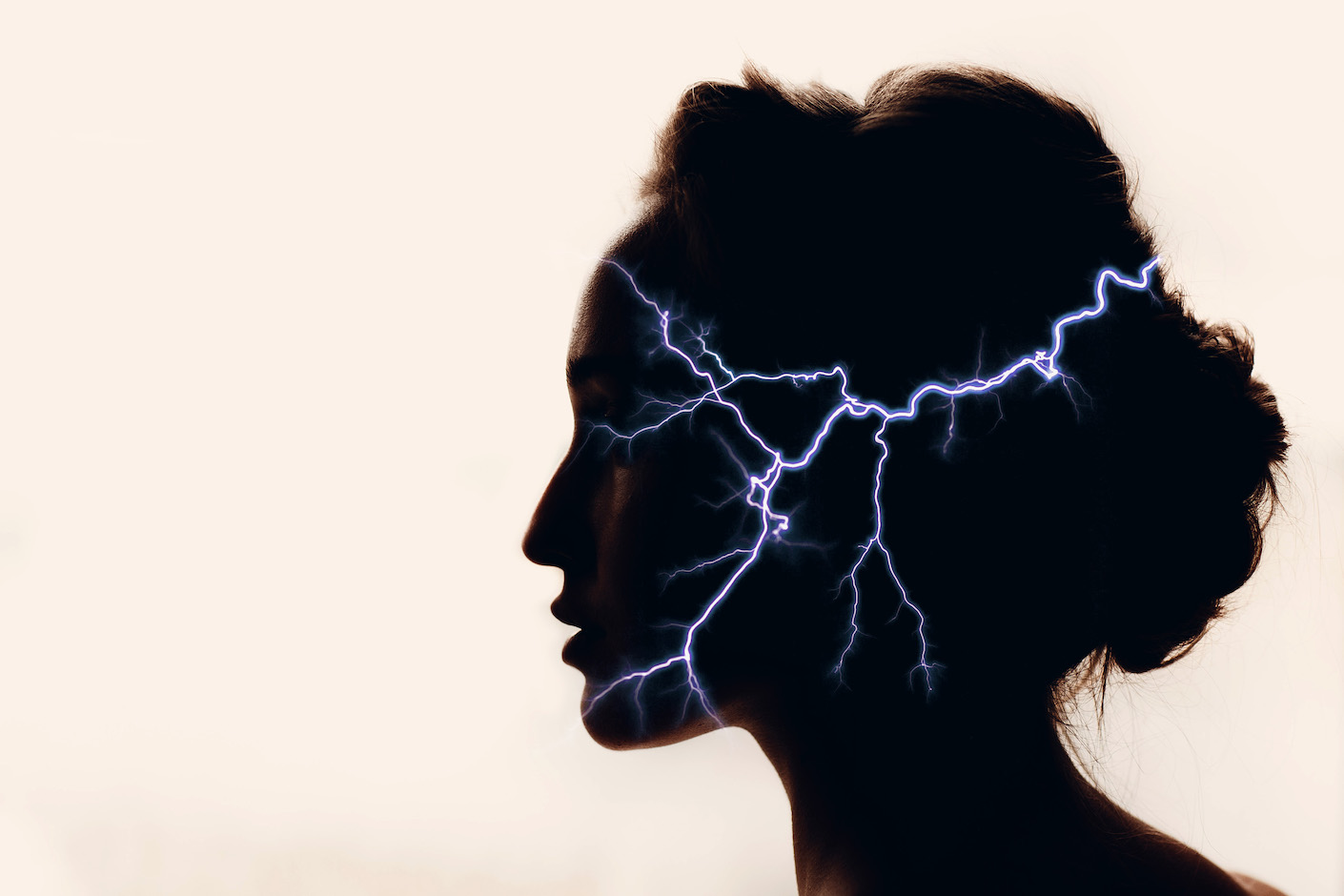
{Photo by Maksim Chernyshev for Scopio}
{For the beginning of this series, click HERE}
A bit of truth-telling: I have complex PTSD (C-PTSD). More people are familiar with PTSD proper, which can happen when one has experienced a shocking, scary, or dangerous event—such as an experience in war, a mugging or sexual assault, a car crash, a natural disaster. Complex PTSD happens when a traumatizing pattern of experience persists over a long period, especially if this happens when you are younger, with fewer resources to cope with the experience. It results in the body when you have been in a “freeze and appease” posture (ie dissociation) for a long time while under threat—when the body’s natural fight-or-flight mechanism is ignored. While the physiological cues are all there, telling you to flee, you can’t. On the outside, you freeze. And eventually, the physiological cascade in your body becomes hyper-activated. It does not shut off.
Though I’ve known for some time I deal with trauma in my body, and though I’ve been in therapy since before my lupus (SLE) crash and diagnosis, lupus has made me newly aware of the physiological implications of C-PTSD. So I finally decided to write about it: in case my case resonates for others and can, if nothing else, augment self-understanding for some readers, or a sense of “not being alone.”
Types of events that can cause C-PTSD include things like ongoing abuse or neglect or witnessing such; manipulation or entrapment; or experiences of traumatic events that linger, as in kidnapping or war. These are especially damaging when experienced in youth or young adulthood, when the trauma lasted a long time, and when one does not see a way out. Often the events are lingering because the perpetrator is someone close to you. In my case, C-PTSD stems from the experience of a 6-year emotionally abusive relationship/marriage that began when I was 17. My therapist thinks a severe accident/head-injury when I was 6 may also have contributed, and especially the prolonged fall-out from it like reading and attentional problems, depression, and impulsivity—most of which I kept to myself. In both cases, my personality was so bent on projecting beauty and success that I hid what was happening from those around me, even from those who could have offered care.
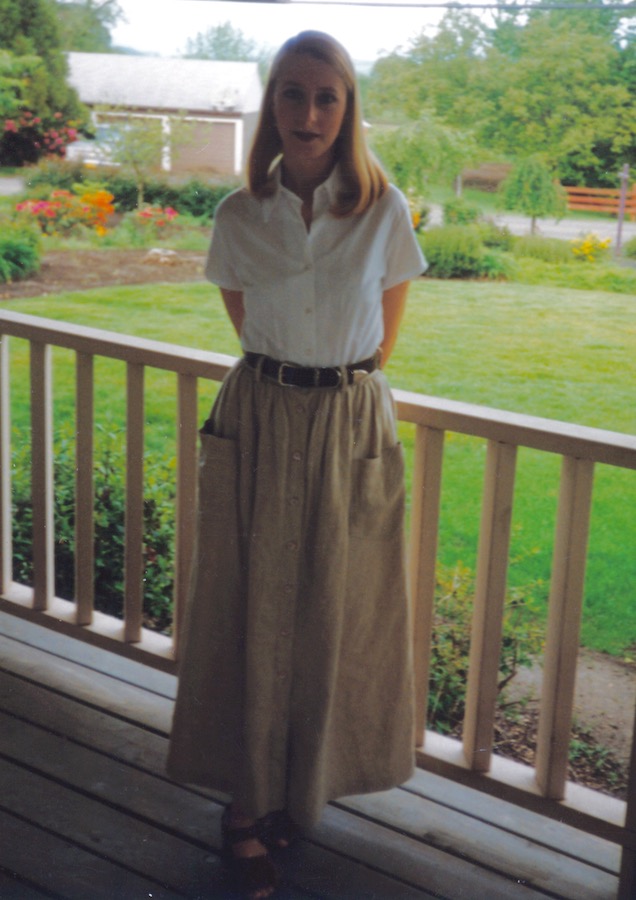
{Me after the storm, circa 1994}
The Body Remembers
Now I am 53 and my body remembers the trauma. Often my nervous system is so over-activated that the intensity of a fight-or-flight response is triggered by something very small, like dropping something, interpersonal conflict, or hearing a sudden loud noise. Even elation-stress or happy excitement can cause such a physiological response. C-PTSD can cause some of the same symptoms of PTSD, such as hypervigilance, shame, a sense of threat in the world, and flashbacks or intrusive memories, but C-PTSD can also include difficulty with processing intense emotions of all kinds, difficulty with hope and trust of others, and strong self-preservation instincts. It can lead to a perpetual hyperactivation of the nervous system, which in turn perpetuates sickness as the body’s stress response is persistent and over-activated. In some cases of PTSD and C-PTSD, the sympathetic nervous system becomes overactivated, in others, the parasympathetic nervous system. You can read more on this in the note and link below.[1]
My childhood accident and abusive marriage are in my long-long-distant past. But the lingering implications dwell in my body. I’ve often hesitated to talk or write about this with regard to chronic illness because of fear my illness will be dismissed as “all in my head.” The problem with such a dismissal or analysis is that the mind and body are never separate. They are one. The illness is very much in my body, affecting the functioning of organs (adrenal glands in Addison’s Disease) and systems (the immune system in SLE [lupus]). Though my dis-ease may be connected to past traumas, the physical illness is real. If you have had traumas that manifest in your body and make you sick, your sickness is real, your disease is real. If you know someone with PTSD or C-PTSD who has physical illness, their physical illness is real. Medicine is waking up to the fact that the body cannot be isolated from the mind. And when illness is related to an over-activated nervous system because of past trauma, addressing the body and the mind are imperative to healing.
A word on women and disease. It has been found that some illnesses, especially autoimmune diseases, impact women more commonly than men. Hormone fluctuation may play a role in this. SLE (lupus), for example, affects far more women than men, and it’s believed estrogen plays a part. But I also think women are more susceptible to disease because we’re socialized to “freeze and appease” rather than “fight or flee.” For reasons explained above, a prolonged “freeze and appease” posture in the face of threat dis-regulates the nervous system and can make the body quite vulnerable.
I’d love to say I’ve found an easy way to heal from trauma. In my case, the road has been very long and I have far to go. Evidence suggests that C-PTSD is often harder to treat than PTSD.[2] But I’m grateful for increasing attention to these conditions. Without awareness, we stumble in the dark.
____________________
[1] “Trauma changes the nervous system. Complex, developmental and relational trauma (CPTSD) can alter the nervous system to remain in a constant state of being prepared for danger. Trauma survivors may exist feeling on-edge, hypervigilant, or hyperaroused some or most of the time — or the complete opposite — numb, disconnected, or shut down (hypoaroused). Some may feel a combination of the two. Chances are, because of the trauma that happened to you, changing your ability to feel steady and stable, your nervous system has a harder time regulating itself long after the traumatic events of the past. You might find yourself living in a constant state of activation or imbalance, struggling to ever feel regulated or calm. When the sympathetic nervous system is constantly activated, this chronic stress can affect your immune system and your health. The same goes for an imbalanced activation of the parasympathetic nervous system. After trauma, the nervous system can remain prepared for danger!”
[2] https://www.sciencedirect.com/science/article/abs/pii/S2468749922000503
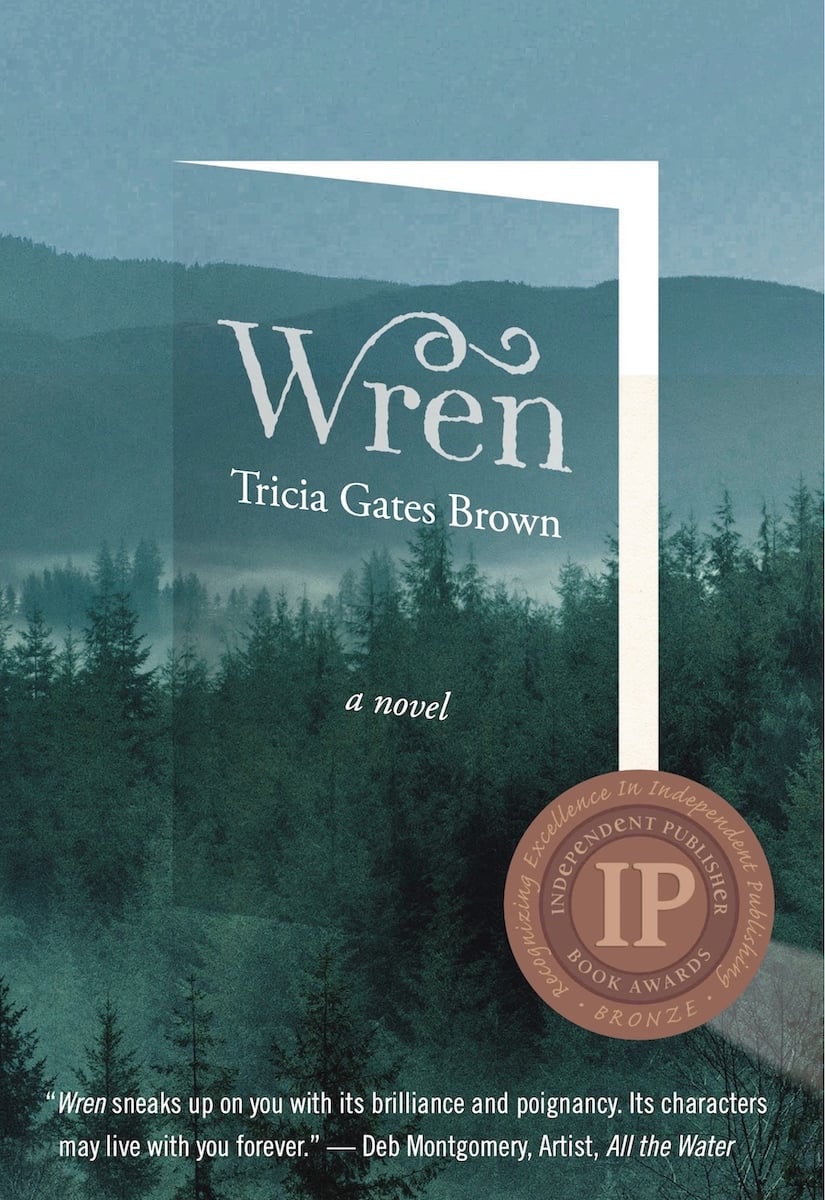
Wren, winner of a 2022 Independent Publishers Award Bronze Medal
Contemplative
Health, Fitness and Religion
Previous Post

June 6, 2023
You Can Change! Jairus and the Back of the Line
Next Post

June 16, 2023 In Praise of a Quiet Life
Recent Comments
"What is prayer? Different people answer the question differently. "Prayer is all about attunement that ..."
The Many Forms of Prayer: What ..."
""I recently told someone 'I have a man,' instead of 'I am hungry' ..."Oh, what ..."
A Different Kind of Lent: Mindfulness, ..."
"Depending on the genre, music is known to offer multiple benefits to listeners and to ..."
Prayer as Heartful Listening: How Music ..."
"Christmas comes and Christmas goes. Waiting is certainly the right thing for getting further energized ..."
The Already and Not Yet: On ..."
Browse Our Archives
Select a Category Education Essay Excerpt Uncategorized
Select a Month October 2026 September 2026 August 2026 July 2026 June 2026 May 2026 April 2026 March 2026 February 2026 January 2026 December 2025 November 2025 October 2025 September 2025 August 2025 July 2025 June 2025 May 2025 April 2025 March 2025 February 2025 January 2025 December 2024 November 2024 October 2024 September 2024 August 2024 July 2024 June 2024 May 2024 April 2024 March 2024 February 2024 January 2024 December 2023 November 2023 October 2023 September 2023 August 2023 July 2023 June 2023 May 2023 April 2023 March 2023 February 2023 January 2023 December 2022 November 2022 October 2022 September 2022 August 2022 July 2022
Follow Us!
TAKE THE
Religious Wisdom Quiz
What does 1 John say God is, and in Him is no darkness at all?
Select your answer to see how you score.
Light Truth Spirit Love
Books by This Author Books by About Religion, Doubt and Why They Matter
Related posts from About Religion, Doubt and Why They Matter
The Grief of Healing: Being Found by the...
About Religion, Doubt and Why They Matter

Using Your Gifts Is Ministry: A Retired Deacon's...
About Religion, Doubt and Why They Matter
The Many Forms of Prayer: What Does it...
About Religion, Doubt and Why They Matter
In the Gloaming: What the Anti-Aging Movement Misses
About Religion, Doubt and Why They Matter
TRENDING AT PATHEOS New Visions

How to Have Financial Transparency in Marriage
Despite the fact that financial issues and money problems are the number...
The Healing Power of Forgiveness in Marriage
Learning how to give and accept apologies are essential ingredients of a...

The West's Christian Moral Inheritance: A Legacy Denied
Whether we like it or not, our environment matters, shaping us both...

How Does Tôḏâ Connect Florida & Thanksgiving?
The big news this weekend has been about the continued flooding on...
Were Early Christians Drinking Psychedelic Wine?
The Secret Sacrament the Church Took Away The early Christian church was...

As we in the United States approach the national Thanksgiving holiday...
view all New Visions blogs
What Are Your Thoughts?leave a comment
Ad-Free & Subscriber Log-In Subscription Support
- About Us
- 2026 Calendar
- Videos
- Podcasts
- Library of World Religions
- Faith In Media Tracker
- Advertise With Us
- Write for Us
- Privacy Policy
- Terms of Service
- Do Not Sell My Data
- Contact Us
- Radiant Digital
- Manage Newsletter Subscriptions
- Unsubscribe From Notifications
- Sitemap
Copyright 2008-2026, Patheos. All rights reserved.
Subscription Support Ad-Free & Subscriber Log-In
Follow Patheos