
BuddhistCatholicContemplativeEvangelicalGeneral ChristianHinduJewishLatter-day SaintMuslimNew VisionsProgressive Christian
Beliefs
- Buddhist
- Catholic
- Contemplative
- Evangelical
- General Christian
- Hindu
- Jewish
- Latter-day Saint
- More Voices
- Muslim
- New Visions
- Pagan
- Progressive Christian
Topics
- Religion News
- Food and Religion
- Sports and Religion
- Religious Art
- Religious Music and Entertainment
- Religious Events
- History and Religion
- Style and Religion
- Politics and Religion
- Women in Religion
- Recreation Outdoors and Religion
- Business Finance and Religion
- Careers Workplace and Religion
- Education and Religion
- Family Parenting and Religion
- Health Fitness and Religion
- Home and Religion
- Relationships and Religion
- Technology and Religion
- Travel and Religion
Columnists
- Buddhist Columnists
- Business Finance and Religion Columnists
- Careers Workplace and Religion Columnists
- Catholic Columnists
- Contemplative Columnists
- Education and Religion Columnists
- Evangelists Columnists
- Family Parenting and Religion Columnists
- General Christian Columnists
- Health Fitness and Religion Columnists
- Hindu Columnists
- History and Religion Columnists
- Home and Religion Columnists
- Jewish Columnists
- More Voices Columnists
- Latter Day Columnists
- Muslim Columnists
- New Visions Columnists
- Nonreligious Columnists
- Pagan Columnists
- Politics and Religion Columnists
- Progressive Columnists
- Recreation Outdoors and Religion Columnists
- Relationships and Religion Columnists
- Religion News Columnists
- Religious Art Columnists
- Religious Events Columnists
- Religious Music and Entertainment Columnists
- Sports and Religion Columnists
- Style and Religion Columnists
- Technology and Religion Columnists
- Travel and Religion Columnists
- Women in Religion Columnists
Resource Library
- 2026 Calendar
- Library of World Religions
- The 100 Most Holy Places on Earth
- Patheos Answers
- Podcasts
- Videos
- Faith Leaders Database
- Anglican Episcopalian
- Bahai
- Baptist
- Buddhism
- Christianity
- Confucianism
- Eastern Orthodoxy
- Hinduism
- Holiness and Pentecostal
- ISKCON
- Islam
- Judaism
- Lutheran
- Methodist
- The Church of Jesus Christ of Latter-day Saints
- New Age
- Paganism
- Presbytarian and Reformed
- Protestantism
- Religion Behind the Scenes
- Roman Catholic
- Scientology
- Shia Islam
- Sikhism
- Sufism
- Sunni Islam
- Taoism
- Zen
- See all religions
Research Tools
 Ad-Free & Subscriber Log-In Subscription Support
Ad-Free & Subscriber Log-In Subscription Support
Follow Patheos 

- Trending:
- Forgiveness
- |
- Marriage
- |
- Consciousness
- |
- Death Penalty
- |
- Election
- |
- Halloween

- Home
- New Visions
- Politics and Religion
- How the Handmaid’s Tale is about the Undocumented
How the Handmaid’s Tale is about the Undocumented
Last updated on: June 23, 2023 at 8:13 am by Tricia Gates Brown
How the Handmaid’s Tale is about the Undocumented 2023-06-23T08:13:08-07:00 Tricia Gates Brown
Patheos Explore the world's faith through different perspectives on religion and spirituality! Patheos has the views of the prevalent religions and spiritualities of the world.
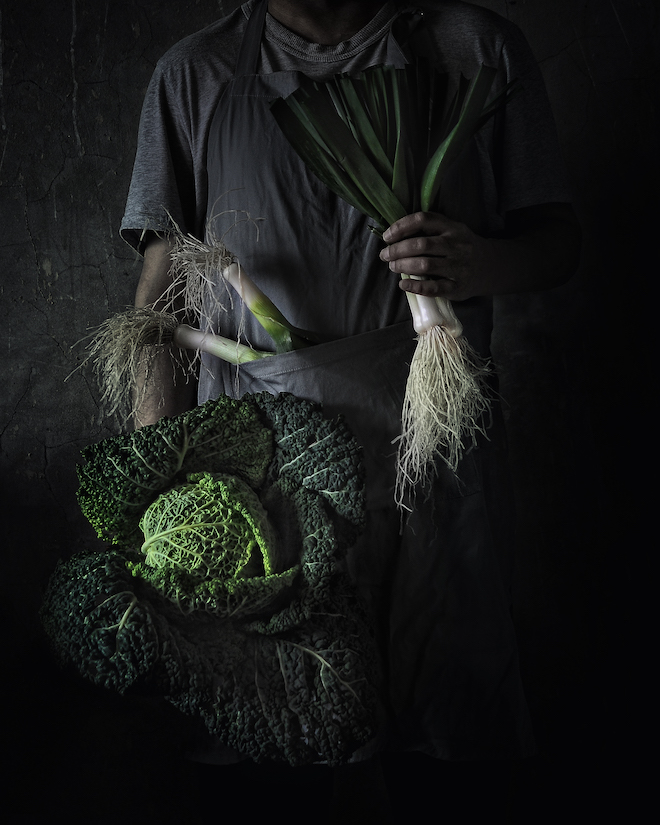
{Photo by Leo Sneg for Scopio ; The Handmaid’s Tale}
I’m reading the follow up to Margaret Atwood’s The Handmaids Tale (The Testaments) and again find my mind in Gilead. The Handmaid’s Tale takes place in a dystopian United States where the vast majority of women can no longer have children. In response to this crisis, an authoritarian government allows those in power to subjugate fertile women, forcing them to work as “handmaids” (sex/birth slaves/surrogates) for elite families. Taken from their own families by paramilitaries, the handmaids live under the watchful eye of the state, are granted no rights, and are treated like servants. Fear of being singled out for punishment overshadows their days, and as we hear through the thoughts of Offred, the main character, they are allowed freedom only in the alcoves of the mind. In the view of elites who control them, the maidens are sub-human; yet the maidens hold the keys to life. As life-holders, they have the power in a society where fertility is perilously low. Because of this fact, it is all the more important—from the perspective of the system—to keep them isolated, disenfranchised, and afraid, unable to see their inherent leverage.
The Handmaid’s Tale portrays a chillingly patriarchal society where women—whether the handmaids or the wives who share their husbands—are strictly controlled by males. I doubt there is a woman who watches this series without a twinge of discomfort, recognizing traces of familiarity in the domination. Still, what I observed as I watched the series was how the nearest modern-day equivalent of the handmaids’ experience, the nearest equivalent in today’s United States, is the experience of some undocumented immigrants. That group tarnished in mainstream news with titles like “criminal,” “illegal alien,” “thug,” and “invader.”
Like the handmaids, the undocumented do what the average American is physically or psychologically unable to do. In our economy, the undocumented do the most challenging aspects of physical labor. As the workers who pick our produce, process the foods that appear in grocery aisles, milk the cows, and prep our meals in restaurants, the undocumented hold the keys to life—insofar as food is life (this aside from raising young children, caring for the aged, putting roofs over our heads, rebuilding after natural disasters). The fact is, Americans cannot hold up our food system on our own.
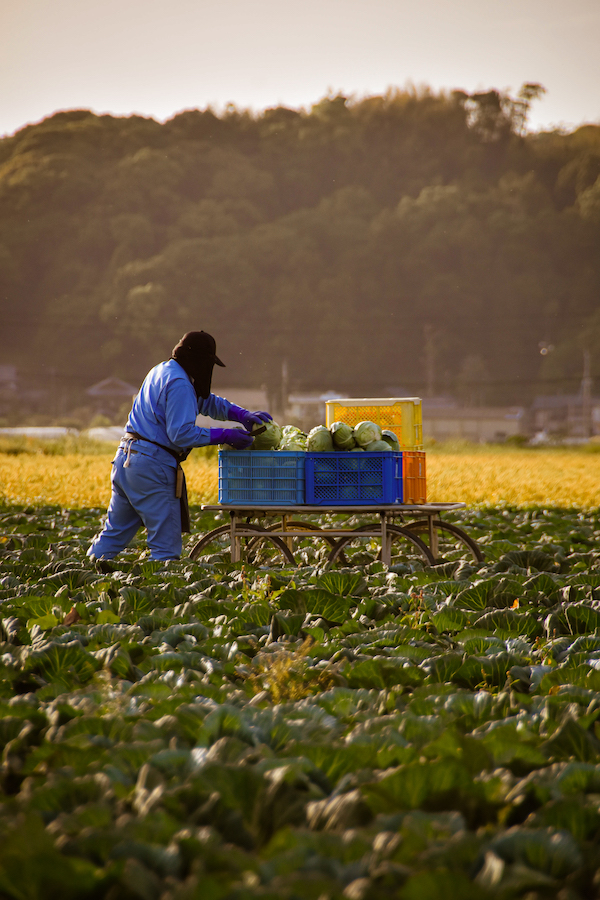
{Photo by Joshua Galyean for Scopio ; The Handmaid’s Tale}
We depend every day on the work of people who come to this country to fill jobs we cannot do. But lest these workers realize leverage in the system that depends on them, US authorities have in place an elaborate system of control. While bipartisan efforts have in the past tried to humanize the system for these integral contributors to our economy, for years efforts have mounted to harshly control and curtail the movement, freedoms, and experiences of the undocumented in the United States, to brand them as dangerous. This is what stood out to me as I reentered the world of The Handmaid’s Tale. This was especially true under Trump (who launched his presidential campaign calling the undocumented drug dealers and rapists), when threats were made to garnish their wages to pay for a wall, more for-profit prisons and tent cities were put up to house the less productive among them (grandparents, women and children), young children were separated from family members indefinitely, and rhetoric against asylum seekers relentlessly portrayed them as dangerous intruders.
Undocumented people come to the US willingly; they are not abducted like handmaids in The Handmaid’s Tale. I am not implying otherwise. But they are often fleeing violence, as in the case of many Central Americans and Mexicans who flee drug wars fueled by US-American addiction and decades of destructive US foreign policy in their countries. Other immigrants are economic refugees. Though they are not abducted, they are severed from their families, cultures, and homes because no good choices remain for them. I am not saying the undocumented experience is the same as that of the handmaids. But the echoes and resonances, the shadowy resemblance between the circumstances of the undocumented and the handmaids, should give us all pause.
Most US citizens do not personally know undocumented immigrants (or don’t know that they know). Fewer still are familiar with the restrictive in’s and out’s of US immigration law, or the extent to which undocumented immigrants contribute to our economy while having curtailed rights and no viable pathways to legitimization. They contribute significantly to the social security system with no prospect of receiving social security for themselves. Perhaps it would be fruitful for people to read The Handmaid’s Tale (or watch the series on Hulu) with the undocumented in mind. Then to take a small or large step in support of them.
Judeo-Christian tradition emphasizes the importance of hospitality toward “the alien,” meaning the stranger in a foreign land. It is not hard to see why. The tradition tells the story of a people who often find themselves as strangers in a foreign land—from Abraham, who is told to leave his homeland; to Moses, who flees Pharaoh’s home for Midian; to the Hebrew people he leads out of Egypt; to the Israelites in the long, painful exile that gave birth to the most powerful Hebrew scriptures; to the experience of the Israelites as strangers in their own land under a succession of dominating empires; to Jesus, a stranger compelled to take his transformative message from Nazareth to the churning pot of Jerusalem; to the men and women who, transformed by that message, leave their homes to proclaim a radical counter narrative—the upside-down reign of God—throughout the Roman Empire. The Judeo-Christian tradition is a tradition of immigrants and strangers that commands merciful action toward immigrants and strangers. Proclaimed well, it offers hope to the outsider. It is equally a rebuke of those chanting: “[Insiders] First!”
Many see more than ever the need to shine a bright light on the tide of white nationalism advancing in our country. Anti-immigrant hate speech is a core component of rhetoric among these groups, as is scapegoating of immigrants. We cannot downplay the seriousness of this or fail to apprehend how dangerous it is for all people of color, including immigrants. Those of us in the Judeo-Christian tradition can speak from our tradition against these movements, and against efforts to further disenfranchise undocumented workers. Especially, critically, when Christianity is being coopted to promote the domination, as it is in American white nationalism, as it is in The Handmaid’s Tale.

Wren, winner of a 2022 Independent Publishers Award Bronze Medal
Contemplative
Politics and Religion
Food and Religion
Previous Post
June 16, 2023
In Praise of a Quiet Life
Next Post
June 29, 2023 What Did Matthew 10:40-42 Mean in Jesus' Culture?
Recent Comments
""I recently told someone 'I have a man,' instead of 'I am hungry' ..."Oh, what ..."
A Different Kind of Lent: Mindfulness, ..."
"Depending on the genre, music is known to offer multiple benefits to listeners and to ..."
Prayer as Heartful Listening: How Music ..."
"Christmas comes and Christmas goes. Waiting is certainly the right thing for getting further energized ..."
The Already and Not Yet: On ..."
"Honesty and humility are weapons of mass construction. They always deepen our relationship with God ..."
Freedom in Humility: God Loves Us ..."
Browse Our Archives
Select a Category Education Essay Excerpt Uncategorized
Select a Month September 2026 August 2026 July 2026 June 2026 May 2026 April 2026 March 2026 February 2026 January 2026 December 2025 November 2025 October 2025 September 2025 August 2025 July 2025 June 2025 May 2025 April 2025 March 2025 February 2025 January 2025 December 2024 November 2024 October 2024 September 2024 August 2024 July 2024 June 2024 May 2024 April 2024 March 2024 February 2024 January 2024 December 2023 November 2023 October 2023 September 2023 August 2023 July 2023 June 2023 May 2023 April 2023 March 2023 February 2023 January 2023 December 2022 November 2022 October 2022 September 2022 August 2022 July 2022
Follow Us!
TAKE THE
Religious Wisdom Quiz
What does "Messiah" mean in Hebrew?
Select your answer to see how you score.
Son of God Savior Chosen One Anointed One
Books by This Author Books by About Religion, Doubt and Why They Matter
Related posts from About Religion, Doubt and Why They Matter

Using Your Gifts Is Ministry: A Retired Deacon's...
About Religion, Doubt and Why They Matter

The Many Forms of Prayer: What Does it...
About Religion, Doubt and Why They Matter

In the Gloaming: What the Anti-Aging Movement Misses
About Religion, Doubt and Why They Matter

God Is in the Obstacle: What Loss Taught...
About Religion, Doubt and Why They Matter
TRENDING AT PATHEOS New Visions

The Iron Gates and the Lion of the...
Yesterday, I didn't finish my report about, well, yesterday. So I'll...

Dolly Parton’s Last Song Wins Dove Award with...
Bluegrass band The Grascals, speaking on the red carpet at the 57th...

The Image: On the Horror of Capitalism and...
The Image Then went the Pharisees, and took counsel how they might...

We are approaching the date of our new American national holiday: October...

Letters on Living the Faith by C.S. Lewis
Most of us met C.S. Lewis as a public intellectual. Mere Christianity....

When Halloween Unmasks Married Hearts
Written by Dr. David K. Ewen from Eternal Truth Bible College Behind...
view all New Visions blogs
What Are Your Thoughts?leave a comment
Ad-Free & Subscriber Log-In Subscription Support
- About Us
- 2026 Calendar
- Videos
- Podcasts
- Library of World Religions
- Faith In Media Tracker
- Advertise With Us
- Write for Us
- Privacy Policy
- Terms of Service
- Do Not Sell My Data
- Contact Us
- Radiant Digital
- Manage Newsletter Subscriptions
- Unsubscribe From Notifications
- Sitemap
Copyright 2008-2026, Patheos. All rights reserved.
Subscription Support Ad-Free & Subscriber Log-In
Follow Patheos