
BuddhistCatholicContemplativeEvangelicalGeneral ChristianHinduJewishLatter-day SaintMuslimNew VisionsProgressive Christian
Beliefs
- Buddhist
- Catholic
- Contemplative
- Evangelical
- General Christian
- Hindu
- Jewish
- Latter-day Saint
- More Voices
- Muslim
- New Visions
- Pagan
- Progressive Christian
Topics
- Religion News
- Food and Religion
- Sports and Religion
- Religious Art
- Religious Music and Entertainment
- Religious Events
- History and Religion
- Style and Religion
- Politics and Religion
- Women in Religion
- Recreation Outdoors and Religion
- Business Finance and Religion
- Careers Workplace and Religion
- Education and Religion
- Family Parenting and Religion
- Health Fitness and Religion
- Home and Religion
- Relationships and Religion
- Technology and Religion
- Travel and Religion
Columnists
- Buddhist Columnists
- Business Finance and Religion Columnists
- Careers Workplace and Religion Columnists
- Catholic Columnists
- Contemplative Columnists
- Education and Religion Columnists
- Evangelists Columnists
- Family Parenting and Religion Columnists
- General Christian Columnists
- Health Fitness and Religion Columnists
- Hindu Columnists
- History and Religion Columnists
- Home and Religion Columnists
- Jewish Columnists
- More Voices Columnists
- Latter Day Columnists
- Muslim Columnists
- New Visions Columnists
- Nonreligious Columnists
- Pagan Columnists
- Politics and Religion Columnists
- Progressive Columnists
- Recreation Outdoors and Religion Columnists
- Relationships and Religion Columnists
- Religion News Columnists
- Religious Art Columnists
- Religious Events Columnists
- Religious Music and Entertainment Columnists
- Sports and Religion Columnists
- Style and Religion Columnists
- Technology and Religion Columnists
- Travel and Religion Columnists
- Women in Religion Columnists
Resource Library
- 2026 Calendar
- Library of World Religions
- The 100 Most Holy Places on Earth
- Patheos Answers
- Podcasts
- Videos
- Faith Leaders Database
- Anglican Episcopalian
- Bahai
- Baptist
- Buddhism
- Christianity
- Confucianism
- Eastern Orthodoxy
- Hinduism
- Holiness and Pentecostal
- ISKCON
- Islam
- Judaism
- Lutheran
- Methodist
- The Church of Jesus Christ of Latter-day Saints
- New Age
- Paganism
- Presbytarian and Reformed
- Protestantism
- Religion Behind the Scenes
- Roman Catholic
- Scientology
- Shia Islam
- Sikhism
- Sufism
- Sunni Islam
- Taoism
- Zen
- See all religions
Research Tools
 Ad-Free & Subscriber Log-In Subscription Support
Ad-Free & Subscriber Log-In Subscription Support
Follow Patheos 

- Trending:
- Forgiveness
- |
- Marriage
- |
- Consciousness
- |
- Death Penalty
- |
- Election
- |
- Halloween

- Home
- New Visions
- Recreation, Outdoors and Religion
- Why We Are More Like Animals Than Not
Why We Are More Like Animals Than Not
Last updated on: May 3, 2023 at 6:58 am by Tricia Gates Brown
Why We Are More Like Animals Than Not 2023-05-03T06:58:27-07:00 Tricia Gates Brown
Patheos Explore the world's faith through different perspectives on religion and spirituality! Patheos has the views of the prevalent religions and spiritualities of the world.
{Photo by Samuel Gauthier for Scopio}
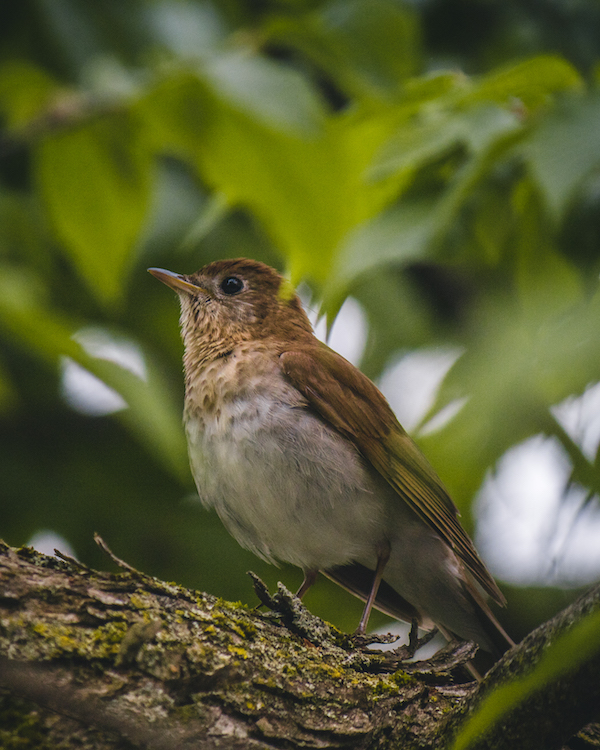
She was nose down in dense clover, tail feathers up and wings askew like an ill-fated paper airplane. No movement, and seemingly no way to right her injured self from the expanses of oxalis that had overtaken my late-summer garden. Whenever a bird strikes my front window, my eyes dart in that direction; if I don’t see the bird rebound and fly away, I scan the bed below the window for a sign. After eleven years in this house, I’ve lost count of how many injured birds I’ve found dead, or near enough.
My habit is to grab a hand towel before going outside so the creature might rest and revive in softness. When I lifted this particular bird into the towel, straightening her wings and resting her on her side, I saw the lift and fall of her chest with steady breath. Her eyes were dull, but she blinked on occasion. Mostly she kept her eyes closed. For a few minutes, I stood still as the St. Francis statue beside us in the garden. I walked to a nearby Adirondack chair and sat, cradling her in my hand and stroking her chest for several more minutes as her eyes steadily opened. She was stunning: smaller than a child’s fist, a shiny dapple of brown and black feathers, her pebble-black eyes shimmering with life. After a time, she stood, legs steady despite their slightness, frail as pine needles. She appeared unafraid. Maybe it was the blow to the head. Upright on my hand, she was free to fly, but seemed worn out, slightly stricken. I walked her to a thick branch of hinoki cypress in my garden. Dense, lateral needles form wide platforms within this tree, offering safety from cats and dogs. She was standing steadily now, so I rested the back of my hand on a high branch of the hinoki and waited.
She wouldn’t budge. I transferred her claws to the bare fingers of my other hand, placing them against the branch, but she wouldn’t step off. My inner guidance said, Take her in, keep her safe while she strengthens, yet I knew that if one of her wings was permanently injured, she would not survive in the wild. By Oregon law, I had twenty-four hours to return the creature to the wild or take her to a licensed wildlife rehabilitation center. This would require a one-and-a-half-hour drive and a none-too-cozy intake at the rehab center. If the center determined the bird couldn’t be rehabilitated, she would be euthanized. Turning from the hinoki, I went inside, protecting the bird with the tent of my hands.
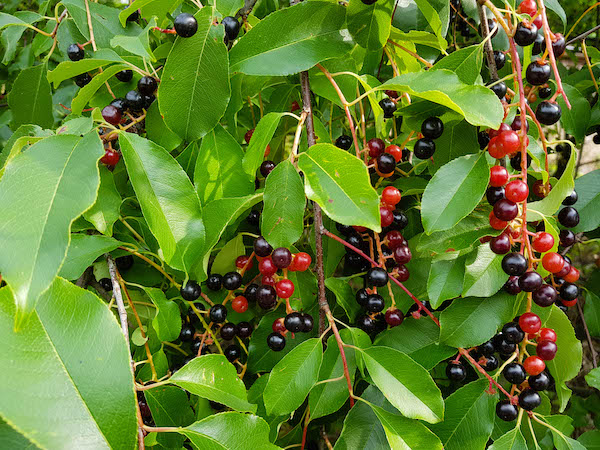
Covering her loosely in the hand towel, careful to keep her out of sight of my cats, I retrieved a plush-lined pet carrier and took it to the kitchen table, then nestled her inside. I filled a mayonnaise lid with water and sat it the carrier, added a few red huckleberries from the bush outside my back door, and brought the carrier to my bed. Two feet apart, in sight of one another, she and I slept through the night.
{Photo by Andreas Steidlinger for Scopio}
The next morning, the bird bounced around the carrier looking from side to side. I tried again to release her to the hinoki, and again she wouldn’t budge, clinging to my finger as before. So I headed to town to buy a cage, stopping to pick a few thimbleberries. As soon as I placed them in her carrier, she snatched up a berry. Returning from town, I hung the cage over my old clawfoot bathtub, sixteen inches from a window that opened onto woods, where she could hear the trilling and chirping of many birds through the open window. Research revealed she was a Swainson’s thrush.
I called the thrush Nene. She immediately let me into her space and experience. Once, I had encountered this closeness with a chipmunk, but never a wild bird or other wild creature. With Nene, there was none of the skittishness and distance one usually experiences with an injured bird. She let me stroke her and nestle her beautiful body into my chest. She turned to me when I spoke to her and easily wrapped her splinter claws around my finger. It felt like a privilege, somehow singular and remarkable. I have experienced connections with several domesticated animals and currently have three pets, but domesticated breeds have adapted and developed for so long in the context of human companionship that they now “let us in” quite naturally. The experience of being let in by non-domesticated animals seems unique to those working in rehabilitation or in close study or training. Not to the rest of us.
Nene let me experience up close something I have held mostly theoretically. With her, I felt in my gut that we animals—non-human and human—are all of the same kind. Here she was, this tiny wild bird, and I this enormous, unfamiliar human, yet it seemed, on a certain level of the unseen, that there was no difference. I know this view challenges the long-held Western orthodoxy that says we humans are altogether different because we have self-reflective consciousness. But this seems to be a difference of degree, not of kind. How can we know what degree of self-reflective awareness an advanced primate, or a dolphin or elephant, does or does not have? Perhaps their self-reflective consciousness is merely incipient, as ours was once. Maybe some non-human creatures even “know what they know” more than we think they do.
As a theologian, I want to challenge theological concepts placing humans on an entirely different plane than animals—concepts that say humans are a reflection of the Divine (however one defines it) in a wholly unique way, having the nature of the Divine in ways animals do not. These concepts and the “dominion” they have historically been said to grant us are suspect. They have led to our looting the created world as if it was our personal ATM instead of a delicately balanced ecology of reciprocity for the good of all species. Many religious and spiritual people the world over accelerate this looting despite the dire warnings of climate scientists and the rapid extinction of species in the modern era. Many people unaffiliated with religion or spiritual traditions are likewise shaped by long-held ideas elevating humans over other animals and likewise loot carelessly, greedy for more than our species’ share of resources.
If our level of self-reflective consciousness is different from animals only by degree and not by kind, we should find ourselves in a position of greater responsibility and service, not of inherent preeminence. A by-degree approach asks much more of us than we have been willing to give, in the way more is asked of a parent or an elder than of the child in their care. We have merely reached the heights of our abilities and responsibilities more quickly than have other animals. We are merely at a different stage of development and vocation. As the species at the top of the food chain, we are also the species most dispensable.
By the end of her first full day with me, Nene was splashing in a bowl of water, semi-flying from the bottom of her cage to her perch and stretching out her wings. I could not tell if she was eating. Whenever I entered the bathroom, she would hop toward me. Twice that day, we visited the hinoki, and she held fast to my finger, unprepared for freedom. It concerned me that she hadn’t used her voice, despite the birdsong coming through the window. By the end of that second evening, however, she was animated, seemingly eager to attempt real flight.

{Photo by Roberto Lopez for Scopio}
The next morning, I put her to the test. I opened the large door on the front of the cage and let her take off around the bathroom. She flew to a wrought-iron flourish at the top of an antique mirror six feet away from the cage, then to the window sill. I had no idea if her wings were strong enough to carry her on the fall southern migration with her kin. Yet she was strong enough to fly around the woods, it seemed, to resume her life among them. The rest was not for me to know.
It was early in the day, and the din of birdsong was boisterous outside the bathroom window. Taking her onto my finger, I covered Nene loosely with a towel to walk her outside and up into the dense northwest coastal woods where I reside. Alongside the trail was an old birdhouse with a craggy driftwood perch. I pried her claws from my finger, forcing her to step onto it. As she rested on the perch, I stroked her chest and whispered. I looked into her eyes and she into mine, and we remained that way for two long minutes. What was happening in those moments, I don’t exactly know. But I wonder if the universal being in me, which I would associate with the Divine, was connecting with the universal being in her—the common experience of being and love bridging any distance between us. Eventually she turned her gaze from me to the birdsong higher up in the forest. Then, she flew from the birdhouse to the moss-encrusted branch of a vine maple about three feet away, on the other side of the path. Though her flight was more specious than strong, she could clearly make her way around the place. From that one branch, she flew to another.
As I watched her, my feelings were mixed. Her meager flight among the branches was joyous and right, and surely she needed to scout her own food. But there were no guarantees she would make it. No guarantees—and I worried. Don’t we all want guarantees? She had flown again, to another vine maple branch, this time about five feet away from me, where she stood and faced up into the woods.
At that point, I heard—for the first time—her voice. She began to chirp distinctively. Though I am familiar with the baroque, trilling call of the Swainson’s thrush, I was not familiar with their more mundane chirping. As she started to chirp, I noticed the sound was identical to calls all around us in the surrounding woods. The woods were full of Swainson’s thrushes, and she was making conversation, rejoining her kin. I watched as her thorn of a beak opened and closed, speaking her own language, until finally she flew to a branch out of my sight, lost in the undefined chaos of twigs, leaves, and open air, lost to uncertainty and possibility. Yet truly, also, found.

Wren, winner of a 2022 Independent Publisher Awards Bronze Medal
Contemplative
Recreation, Outdoors and Religion
Previous Post

April 26, 2023
How Trust Transforms Where Fear Cannot
Next Post

May 4, 2023 What Happens When Americans Pray
Recent Comments
""I recently told someone 'I have a man,' instead of 'I am hungry' ..."Oh, what ..."
A Different Kind of Lent: Mindfulness, ..."
"Depending on the genre, music is known to offer multiple benefits to listeners and to ..."
Prayer as Heartful Listening: How Music ..."
"Christmas comes and Christmas goes. Waiting is certainly the right thing for getting further energized ..."
The Already and Not Yet: On ..."
"Honesty and humility are weapons of mass construction. They always deepen our relationship with God ..."
Freedom in Humility: God Loves Us ..."
Browse Our Archives
Select a Category Education Essay Excerpt Uncategorized
Select a Month September 2026 August 2026 July 2026 June 2026 May 2026 April 2026 March 2026 February 2026 January 2026 December 2025 November 2025 October 2025 September 2025 August 2025 July 2025 June 2025 May 2025 April 2025 March 2025 February 2025 January 2025 December 2024 November 2024 October 2024 September 2024 August 2024 July 2024 June 2024 May 2024 April 2024 March 2024 February 2024 January 2024 December 2023 November 2023 October 2023 September 2023 August 2023 July 2023 June 2023 May 2023 April 2023 March 2023 February 2023 January 2023 December 2022 November 2022 October 2022 September 2022 August 2022 July 2022
Follow Us!
TAKE THE
Religious Wisdom Quiz
What does "Jesus" name mean?
Select your answer to see how you score.
Anointed one God saves Messiah Savior
Books by This Author Books by About Religion, Doubt and Why They Matter
Related posts from About Religion, Doubt and Why They Matter

Using Your Gifts Is Ministry: A Retired Deacon's...
About Religion, Doubt and Why They Matter

The Many Forms of Prayer: What Does it...
About Religion, Doubt and Why They Matter

In the Gloaming: What the Anti-Aging Movement Misses
About Religion, Doubt and Why They Matter

God Is in the Obstacle: What Loss Taught...
About Religion, Doubt and Why They Matter
TRENDING AT PATHEOS New Visions

I was strolling through the top floor of the brand new Parthenon...

What Does Gêvâh Mean For Kimberley Guifoyle &...
This week, a lot of the news is focused on Kimberly Guilfoyle....

INNER CIRCLE: Profound Mystery (Of Christ In All...
Ephesians 5:31-32 “For this reason, a man will leave his father and...

Do Not Rejoice When Your Enemy Falls: The...
Turning an execution into a public spectacle is a disturbing expression of...

'The Chosen' S6 Trailer: The Passion Gets Very...
Not many watching 'The Chosen' worry about spoilers, but just because they...

The purpose-driven labor priest
A labor activist reads Rick Warren and it gets me wondering about...
view all New Visions blogs
What Are Your Thoughts?leave a comment
Ad-Free & Subscriber Log-In Subscription Support
- About Us
- 2026 Calendar
- Videos
- Podcasts
- Library of World Religions
- Faith In Media Tracker
- Advertise With Us
- Write for Us
- Privacy Policy
- Terms of Service
- Do Not Sell My Data
- Contact Us
- Radiant Digital
- Manage Newsletter Subscriptions
- Unsubscribe From Notifications
- Sitemap
Copyright 2008-2026, Patheos. All rights reserved.
Subscription Support Ad-Free & Subscriber Log-In
Follow Patheos