
BuddhistCatholicContemplativeEvangelicalGeneral ChristianHinduJewishLatter-day SaintMuslimNew VisionsProgressive Christian
Beliefs
- Buddhist
- Catholic
- Contemplative
- Evangelical
- General Christian
- Hindu
- Jewish
- Latter-day Saint
- More Voices
- Muslim
- New Visions
- Pagan
- Progressive Christian
Topics
- Religion News
- Food and Religion
- Sports and Religion
- Religious Art
- Religious Music and Entertainment
- Religious Events
- History and Religion
- Style and Religion
- Politics and Religion
- Women in Religion
- Recreation Outdoors and Religion
- Business Finance and Religion
- Careers Workplace and Religion
- Education and Religion
- Family Parenting and Religion
- Health Fitness and Religion
- Home and Religion
- Relationships and Religion
- Technology and Religion
- Travel and Religion
Columnists
- Buddhist Columnists
- Business Finance and Religion Columnists
- Careers Workplace and Religion Columnists
- Catholic Columnists
- Contemplative Columnists
- Education and Religion Columnists
- Evangelists Columnists
- Family Parenting and Religion Columnists
- General Christian Columnists
- Health Fitness and Religion Columnists
- Hindu Columnists
- History and Religion Columnists
- Home and Religion Columnists
- Jewish Columnists
- More Voices Columnists
- Latter Day Columnists
- Muslim Columnists
- New Visions Columnists
- Nonreligious Columnists
- Pagan Columnists
- Politics and Religion Columnists
- Progressive Columnists
- Recreation Outdoors and Religion Columnists
- Relationships and Religion Columnists
- Religion News Columnists
- Religious Art Columnists
- Religious Events Columnists
- Religious Music and Entertainment Columnists
- Sports and Religion Columnists
- Style and Religion Columnists
- Technology and Religion Columnists
- Travel and Religion Columnists
- Women in Religion Columnists
Resource Library
- 2026 Calendar
- Library of World Religions
- The 100 Most Holy Places on Earth
- Patheos Answers
- Podcasts
- Videos
- Faith Leaders Database
- Anglican Episcopalian
- Bahai
- Baptist
- Buddhism
- Christianity
- Confucianism
- Eastern Orthodoxy
- Hinduism
- Holiness and Pentecostal
- ISKCON
- Islam
- Judaism
- Lutheran
- Methodist
- The Church of Jesus Christ of Latter-day Saints
- New Age
- Paganism
- Presbytarian and Reformed
- Protestantism
- Religion Behind the Scenes
- Roman Catholic
- Scientology
- Shia Islam
- Sikhism
- Sufism
- Sunni Islam
- Taoism
- Zen
- See all religions
Research Tools
 Ad-Free & Subscriber Log-In Subscription Support
Ad-Free & Subscriber Log-In Subscription Support
Follow Patheos 

- Trending:
- Forgiveness
- |
- Marriage
- |
- Consciousness
- |
- Death Penalty
- |
- Election
- |
- Halloween

- Home
- New Visions
- Education and Religion
- What We Mean When We say “We Believe”
What We Mean When We say “We Believe”
Last updated on: April 26, 2023 at 7:49 am by Tricia Gates Brown
What We Mean When We say “We Believe” 2023-04-26T07:49:09-07:00 Tricia Gates Brown
Patheos Explore the world's faith through different perspectives on religion and spirituality! Patheos has the views of the prevalent religions and spiritualities of the world.
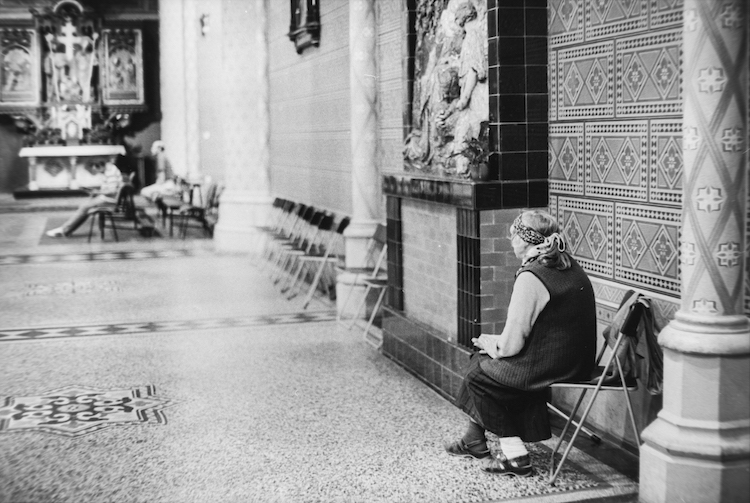
{Photo for Rafal Zelek for Scopio}
On the surface, this week’s gospel reading at the end of John (John 20:19-31) is a story about doubt and belief, and a recounting of an appearance by Jesus before his disciples. But I can’t read it without drawing in biblical studies. Because one of the key aspects of this passage is the statement “Blessed are those who have not seen and yet have believed.”
John was the last of the gospels, written many decades after Jesus’ life. The writer of the gospel and the leaders behind the Johannine community did not know Jesus. They were among those who “had not seen, yet they believed” because they did not serve as witnesses to Jesus’ life on this earth. So this story is, on an important level, about the authority of the leaders behind the gospel of John. It is saying, we may not have known Jesus, but we have just as much authority as those churches founded by the apostles! In this context, the statement “Blessed are those who have not seen and yet have believed” has a competitive ring to it. I draw attention to this not only because it’s interesting socio-historically, but because this story about “doubting Thomas” has often been used to guilt people for not believing enough, or not believing the right things. Maybe it is saying no such thing.
Trust, not “beliefs”
Increasingly in podcasts or in news stories, I hear references to the fact that Americans on the whole—especially younger people—drift away from religion. It seems every month this refrain grows louder. Maybe you notice this among people in your life or in your community. I feel strongly that an emphasis on beliefs misleads people to think that the faith life is about believing the right things—when the faith life is about love, and a mature trust in God as a benevolent presence in one’s life. We have all known people who can rattle off the right beliefs yet who put their full trust in money or might, or who rattle off the right beliefs but show very little kindness to others. Beliefs just don’t get us far in life without more important things like kindness and rootedness and trust.
But then why do liturgical traditions stand up each Sunday and recite the creed, stating what “we believe”? Especially when some of us have as much doubt as belief when it comes to various statements of the creed? In large part we do this because it is an ancient part of our tradition. The word “credo” in Latin is related to the word “heart.” In the sense of the ancient creed, to “credo” something doesn’t mean to accept it in your head. It really means to embrace it with your heart—as a part of a historical community rooted in those stories. I especially like the “we believe” language of the Nicene Creed. In saying “we believe” it defines the tradition of “us,” of our community as Christians. And we are part of this Christian community and can embrace it with our hearts even if we, like Thomas, need to experience things for ourselves before we can trust.

{Photo by Hamisi Omollo for Scopio}
What I wish most for our young people is that they will be a part of close communities that will teach them kindness, encourage them in deepening trust in God, and light their paths through life so that they will develop values and character and strength for the journey. In my view, healthy faith communities do this well. They teach us how to live this life for others, and to be true to ourselves. These are the things that are important, not holding the “right” beliefs.

Wren, winner of a 2022 Independent Publisher Award Bronze Medal
Contemplative
Education and Religion
Previous Post

April 8, 2023
Why Needing People is a Gift
Next Post

April 19, 2023 Just Live Your Little Life: The 'Wolf at my Door' Series
Recent Comments
""I recently told someone 'I have a man,' instead of 'I am hungry' ..."Oh, what ..."
A Different Kind of Lent: Mindfulness, ..."
"Depending on the genre, music is known to offer multiple benefits to listeners and to ..."
Prayer as Heartful Listening: How Music ..."
"Christmas comes and Christmas goes. Waiting is certainly the right thing for getting further energized ..."
The Already and Not Yet: On ..."
"Honesty and humility are weapons of mass construction. They always deepen our relationship with God ..."
Freedom in Humility: God Loves Us ..."
Browse Our Archives
Select a Category Education Essay Excerpt Uncategorized
Select a Month September 2026 August 2026 July 2026 June 2026 May 2026 April 2026 March 2026 February 2026 January 2026 December 2025 November 2025 October 2025 September 2025 August 2025 July 2025 June 2025 May 2025 April 2025 March 2025 February 2025 January 2025 December 2024 November 2024 October 2024 September 2024 August 2024 July 2024 June 2024 May 2024 April 2024 March 2024 February 2024 January 2024 December 2023 November 2023 October 2023 September 2023 August 2023 July 2023 June 2023 May 2023 April 2023 March 2023 February 2023 January 2023 December 2022 November 2022 October 2022 September 2022 August 2022 July 2022
Follow Us!
TAKE THE
Religious Wisdom Quiz
Who said, "Faith without works is dead"?
Select your answer to see how you score.
Paul John James Peter
Books by This Author Books by About Religion, Doubt and Why They Matter
Related posts from About Religion, Doubt and Why They Matter

Using Your Gifts Is Ministry: A Retired Deacon's...
About Religion, Doubt and Why They Matter

The Many Forms of Prayer: What Does it...
About Religion, Doubt and Why They Matter

In the Gloaming: What the Anti-Aging Movement Misses
About Religion, Doubt and Why They Matter

God Is in the Obstacle: What Loss Taught...
About Religion, Doubt and Why They Matter
TRENDING AT PATHEOS New Visions

Nearly every morning, I make the drive to Detroit with my high-school-age...

The Real AI Story Is Adoption Without Trust
Artificial intelligence has crossed a political threshold. It is no longer a...

A new article, written by Jeff Lindsay and Gale L. Pooley,...

Swimfan: Forgotten Aughts Pleasures
This is a recovery effort. In 2002, My Big Fat Greek Wedding...

Top Three Anti-Catholic Lies About Catholicism
This is my initial transcript for the video, "THE 3 WORST...

Pope Leo Celebrates Mass for Nurses & Docs...
I don't have any idea how he did it, but Pope Leo...
view all New Visions blogs
What Are Your Thoughts?leave a comment
Ad-Free & Subscriber Log-In Subscription Support
- About Us
- 2026 Calendar
- Videos
- Podcasts
- Library of World Religions
- Faith In Media Tracker
- Advertise With Us
- Write for Us
- Privacy Policy
- Terms of Service
- Do Not Sell My Data
- Contact Us
- Radiant Digital
- Manage Newsletter Subscriptions
- Unsubscribe From Notifications
- Sitemap
Copyright 2008-2026, Patheos. All rights reserved.
Subscription Support Ad-Free & Subscriber Log-In
Follow Patheos