
BuddhistCatholicContemplativeEvangelicalGeneral ChristianHinduJewishLatter-day SaintMuslimNew VisionsProgressive Christian
Beliefs
- Buddhist
- Catholic
- Contemplative
- Evangelical
- General Christian
- Hindu
- Jewish
- Latter-day Saint
- More Voices
- Muslim
- New Visions
- Pagan
- Progressive Christian
Topics
- Religion News
- Food and Religion
- Sports and Religion
- Religious Art
- Religious Music and Entertainment
- Religious Events
- History and Religion
- Style and Religion
- Politics and Religion
- Women in Religion
- Recreation Outdoors and Religion
- Business Finance and Religion
- Careers Workplace and Religion
- Education and Religion
- Family Parenting and Religion
- Health Fitness and Religion
- Home and Religion
- Relationships and Religion
- Technology and Religion
- Travel and Religion
Columnists
- Buddhist Columnists
- Business Finance and Religion Columnists
- Careers Workplace and Religion Columnists
- Catholic Columnists
- Contemplative Columnists
- Education and Religion Columnists
- Evangelists Columnists
- Family Parenting and Religion Columnists
- General Christian Columnists
- Health Fitness and Religion Columnists
- Hindu Columnists
- History and Religion Columnists
- Home and Religion Columnists
- Jewish Columnists
- More Voices Columnists
- Latter Day Columnists
- Muslim Columnists
- New Visions Columnists
- Nonreligious Columnists
- Pagan Columnists
- Politics and Religion Columnists
- Progressive Columnists
- Recreation Outdoors and Religion Columnists
- Relationships and Religion Columnists
- Religion News Columnists
- Religious Art Columnists
- Religious Events Columnists
- Religious Music and Entertainment Columnists
- Sports and Religion Columnists
- Style and Religion Columnists
- Technology and Religion Columnists
- Travel and Religion Columnists
- Women in Religion Columnists
Resource Library
- 2026 Calendar
- Library of World Religions
- The 100 Most Holy Places on Earth
- Patheos Answers
- Podcasts
- Videos
- Faith Leaders Database
- Anglican Episcopalian
- Bahai
- Baptist
- Buddhism
- Christianity
- Confucianism
- Eastern Orthodoxy
- Hinduism
- Holiness and Pentecostal
- ISKCON
- Islam
- Judaism
- Lutheran
- Methodist
- The Church of Jesus Christ of Latter-day Saints
- New Age
- Paganism
- Presbytarian and Reformed
- Protestantism
- Religion Behind the Scenes
- Roman Catholic
- Scientology
- Shia Islam
- Sikhism
- Sufism
- Sunni Islam
- Taoism
- Zen
- See all religions
Research Tools
 Ad-Free & Subscriber Log-In Subscription Support
Ad-Free & Subscriber Log-In Subscription Support
Follow Patheos 

- Trending:
- Forgiveness
- |
- Marriage
- |
- Consciousness
- |
- Death Penalty
- |
- Election
- |
- Halloween

- Home
- New Visions
- What makes us unstoppable? We tell stories.
What makes us unstoppable? We tell stories.
Last updated on: November 12, 2022 at 1:33 pm by Tricia Gates Brown
What makes us unstoppable? We tell stories. 2022-11-12T13:33:43-08:00 Tricia Gates Brown
Patheos Explore the world's faith through different perspectives on religion and spirituality! Patheos has the views of the prevalent religions and spiritualities of the world.

{Photo by Natesh Vallury for Scopio}
First, a few years back, Yuval Noah Harari’s book Sapiens (2014) enthralled me. Now he’s got a new book out. While I’ve not yet read Unstoppable Us, How Humans Took Over the World, I enjoyed hearing him talk about it on a favorite podcast: ‘The Gray Area with Sean Illing.’ Harari makes some similar assertions in these books, namely that humans have transcended other species because—of all things—we were able to pass on great stories. Sacred stories. Shared stories. Basically, we prevail because we spin a good yarn; and a good yarn builds cohesion, allowing us the level of cooperation needed to accomplish great feats.
Prior to the ability to build group cohesion through shared concepts and values—through shared stories, groups tended to reach a breaking point at around 150—apparently the number able to directly know one another, forming face-to-face mutual trust. But stories or shared myths make possible a whole new level of connection, giving rise to understandings and agreements about critical abstract ideas—ideas like justice, transcendence, money, and family. It is these agreements that allow for cooperation. (And here I mean by the word “myths” sacred narratives, not fabrications). Our shared agreements and understandings make possible the mutual trust that allows collectives to develop into towns, then countries, and eventually into empires. Along the way, collectives of humans cooperate in the invention of both rapidly evolving technologies and more even complex sacred stories or mythologies.
This past week, in listening to Harari talk about his new book, I was struck by his concern that we’re losing our common stories, and by turns, our ability to cooperate to solve existence-threatening problems like climate change, nuclear weapons, and inequality. Here’s a key part of the conversation:
Illing: “I think in a lot of ways [humans are] still using the same language, but the words are coming to mean, very, very different things. And that process is accelerating and, and at some point, those founding myths or that paradigm that we’re all sort of operating in will come apart. What do you think happens to a community or a country or society once it stops believing in shared myths or its founding myth?
Harari: “…you cannot have a democracy in a place where people hate each other and see each other as their enemies and can’t agree on any common story. You can have political rivalries, that’s absolutely fine. Democracy is all about that. …But if you start seeing the other side not as your political rivals but as your enemies … out to destroy us… then democracy is simply impossible. You can’t force democracy on such a situation, even if you have elections. Elections are just a ritual in this sense.”
We need common stories because we need to cooperate. For most of our history, many Americans have shared common stories about our democracy, and even in some vague way about religion. Shared common religious stories matter. Even Americans from the faith traditions of Judaism or Islam shared some common scriptures/stories with the more demographically dominant Christians and were seen by many Christians as common adherents of the “Abrahamic faiths.” But in recent years, some Christians have adopted an acutely adversarial stance to those not like them religiously or otherwise—even toward Christians who are not like them (I find this article illuminating in this regard). Enter the scourge of Christian nationalism.
What do we do when our common stories break down on a massive scale, as seems to be the case for humans the world over and certainly here in the States? Harari—like many thoughtful people I hear these days—is concerned that the outcome won’t be good.
We need our shared stories.
I would include our religious stories. Religious stories matter (which is why my column is called “About Religion, Doubt, and Why They Matter”). But an indictment Harari makes against “many religions” is that they “don’t acknowledge that they were invented by human beings and therefore they don’t have a self-correction mechanism.” Self-correcting mechanisms, or adaptations, allow sacred-story traditions to continue to build meaning and cooperation among adherents to those traditions even as understandings evolve. Yet while I hear what Harari is saying and I sympathize with his indictment to some degree, the fact is, my close Christian friends are in liberal traditions that do acknowledge our sacred texts were written by human beings. Therefore, we hold that understandings of those texts can be adaptable; self-correction plays a vital role in our understandings of our traditions.
I resonate with Harari’s concern that loss of our collective stories is of great concern. And if we are to hold onto religious stories and the gift of cooperation these stories make possible—whether in working cooperatively for social justice, in helping people find meaning, in giving people language to talk/think about transcendence and concepts like self-giving love, forgiveness, trust, surrender, justice, death—we must make our religious stories adaptable. This means allowing for self-correction. This means acknowledging unapologetically the ways that humans wrote those traditions, including our sacred, inspired texts. God did not write the scriptures! Humans did. And our understandings of those scriptures can be fluid and adaptive.
Shared secular stories are important and critical—stories about democracy, for example. But these stories don’t always answer questions of purpose, integrity, love, and so forth. They do not necessarily address our inner life and our formation as moral agents. Stories from the religious/spiritual traditions have historically been pivotal in forming the ethical mind, the charitable heart, and the non-self-centered life.
As I walk through neighborhoods in the town where I live, I see stories on display through symbols. Pride flags; yard signs saying “Don’t give up” or “You Matter”; holiday decorations for Halloween or Christmas; signs for the Portland Trailblazers or for candidates running for election; MAGA signs. Shared stories are as important to us as ever. As we separate from stories that shaped people in the past, I wonder how the stories represented by these yard displays provide common ground to help us cooperate—cooperate on a grand scale to accomplish grand, much-needed projects, like sacrificing for the sake others and the planet.
Thank you for supporting my work by subscribing (free).
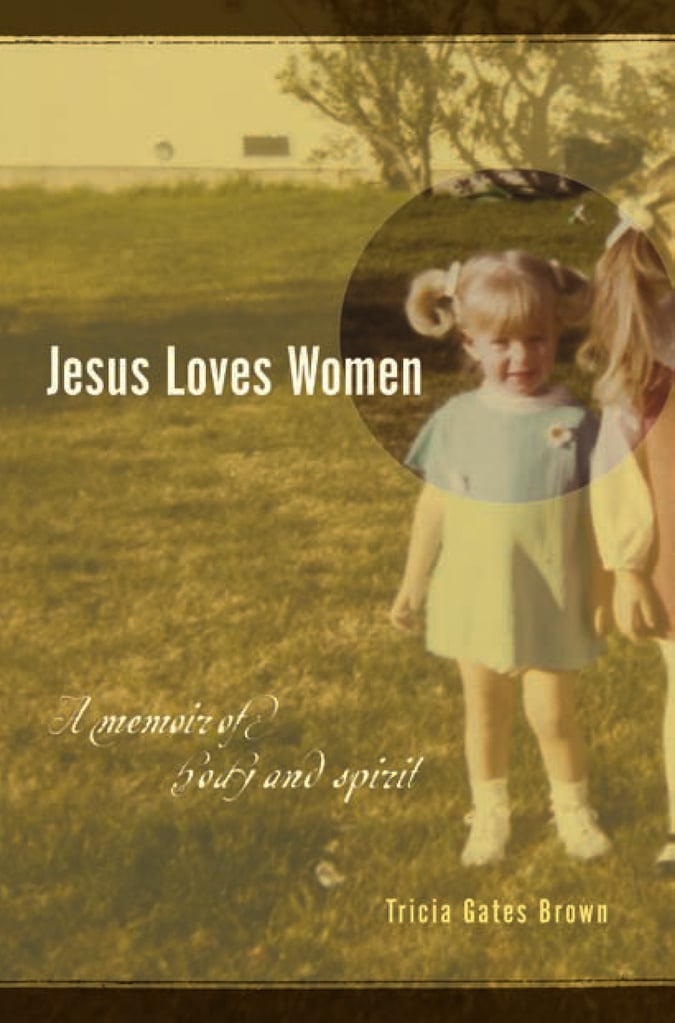
Available HERE.
Contemplative
Previous Post

November 5, 2022
Have you ever had a bad goodbye? Offer yourself compassion.
Next Post

November 16, 2022 Upside-down: Four questions as we ponder the metaphor ‘king’
Browse Our Archives
Select a Category Education Essay Excerpt Uncategorized
Select a Month September 2026 August 2026 July 2026 June 2026 May 2026 April 2026 March 2026 February 2026 January 2026 December 2025 November 2025 October 2025 September 2025 August 2025 July 2025 June 2025 May 2025 April 2025 March 2025 February 2025 January 2025 December 2024 November 2024 October 2024 September 2024 August 2024 July 2024 June 2024 May 2024 April 2024 March 2024 February 2024 January 2024 December 2023 November 2023 October 2023 September 2023 August 2023 July 2023 June 2023 May 2023 April 2023 March 2023 February 2023 January 2023 December 2022 November 2022 October 2022 September 2022 August 2022 July 2022
Follow Us!
TAKE THE
Religious Wisdom Quiz
Which letter contains a section on taming the tongue?
Select your answer to see how you score.
Galatians Romans James Titus
Books by This Author Books by About Religion, Doubt and Why They Matter
Related posts from About Religion, Doubt and Why They Matter

Using Your Gifts Is Ministry: A Retired Deacon's...
About Religion, Doubt and Why They Matter

The Many Forms of Prayer: What Does it...
About Religion, Doubt and Why They Matter

In the Gloaming: What the Anti-Aging Movement Misses
About Religion, Doubt and Why They Matter

God Is in the Obstacle: What Loss Taught...
About Religion, Doubt and Why They Matter
TRENDING AT PATHEOS New Visions

Swimfan: Forgotten Aughts Pleasures
This is a recovery effort. In 2002, My Big Fat Greek Wedding...

Top Three Anti-Catholic Lies About Catholicism
This is my initial transcript for the video, "THE 3 WORST...

Pope Leo Celebrates Mass for Nurses & Docs...
I don't have any idea how he did it, but Pope Leo...

The Sermon on the Mount, Part I: Matthew...
The Sermon on the Mount, Part I (Matthew 4:12-5:12) St. Matthew moves...

What's up from Crossway: Reviewing some of their latest A few weeks...

Janie Learns the Way of the Cross: A...
Teaching children about Jesus' Passion can be challenging. Many parents and educators...
view all New Visions blogs
Ad-Free & Subscriber Log-In Subscription Support
- About Us
- 2026 Calendar
- Videos
- Podcasts
- Library of World Religions
- Faith In Media Tracker
- Advertise With Us
- Write for Us
- Privacy Policy
- Terms of Service
- Do Not Sell My Data
- Contact Us
- Radiant Digital
- Manage Newsletter Subscriptions
- Unsubscribe From Notifications
- Sitemap
Copyright 2008-2026, Patheos. All rights reserved.
Subscription Support Ad-Free & Subscriber Log-In
Follow Patheos