
BuddhistCatholicContemplativeEvangelicalGeneral ChristianHinduJewishLatter-day SaintMuslimNew VisionsProgressive Christian
Beliefs
- Buddhist
- Catholic
- Contemplative
- Evangelical
- General Christian
- Hindu
- Jewish
- Latter-day Saint
- More Voices
- Muslim
- New Visions
- Pagan
- Progressive Christian
Topics
- Religion News
- Food and Religion
- Sports and Religion
- Religious Art
- Religious Music and Entertainment
- Religious Events
- History and Religion
- Style and Religion
- Politics and Religion
- Women in Religion
- Recreation Outdoors and Religion
- Business Finance and Religion
- Careers Workplace and Religion
- Education and Religion
- Family Parenting and Religion
- Health Fitness and Religion
- Home and Religion
- Relationships and Religion
- Technology and Religion
- Travel and Religion
Columnists
- Buddhist Columnists
- Business Finance and Religion Columnists
- Careers Workplace and Religion Columnists
- Catholic Columnists
- Contemplative Columnists
- Education and Religion Columnists
- Evangelists Columnists
- Family Parenting and Religion Columnists
- General Christian Columnists
- Health Fitness and Religion Columnists
- Hindu Columnists
- History and Religion Columnists
- Home and Religion Columnists
- Jewish Columnists
- More Voices Columnists
- Latter Day Columnists
- Muslim Columnists
- New Visions Columnists
- Nonreligious Columnists
- Pagan Columnists
- Politics and Religion Columnists
- Progressive Columnists
- Recreation Outdoors and Religion Columnists
- Relationships and Religion Columnists
- Religion News Columnists
- Religious Art Columnists
- Religious Events Columnists
- Religious Music and Entertainment Columnists
- Sports and Religion Columnists
- Style and Religion Columnists
- Technology and Religion Columnists
- Travel and Religion Columnists
- Women in Religion Columnists
Resource Library
- 2026 Calendar
- Library of World Religions
- The 100 Most Holy Places on Earth
- Patheos Answers
- Podcasts
- Videos
- Faith Leaders Database
- Anglican Episcopalian
- Bahai
- Baptist
- Buddhism
- Christianity
- Confucianism
- Eastern Orthodoxy
- Hinduism
- Holiness and Pentecostal
- ISKCON
- Islam
- Judaism
- Lutheran
- Methodist
- The Church of Jesus Christ of Latter-day Saints
- New Age
- Paganism
- Presbytarian and Reformed
- Protestantism
- Religion Behind the Scenes
- Roman Catholic
- Scientology
- Shia Islam
- Sikhism
- Sufism
- Sunni Islam
- Taoism
- Zen
- See all religions
Research Tools
 Ad-Free & Subscriber Log-In Subscription Support
Ad-Free & Subscriber Log-In Subscription Support
Follow Patheos 

- Trending:
- Forgiveness
- |
- Marriage
- |
- Consciousness
- |
- Death Penalty
- |
- Election
- |
- Halloween

- Home
- New Visions
- Learning to Listen to my Life: In Memoriam Frederick Buechner
Learning to Listen to my Life: In Memoriam Frederick Buechner
Last updated on: September 2, 2022 at 6:04 am by Tricia Gates Brown
Learning to Listen to my Life: In Memoriam Frederick Buechner 2022-09-02T06:04:25-07:00 Tricia Gates Brown
Patheos Explore the world's faith through different perspectives on religion and spirituality! Patheos has the views of the prevalent religions and spiritualities of the world.
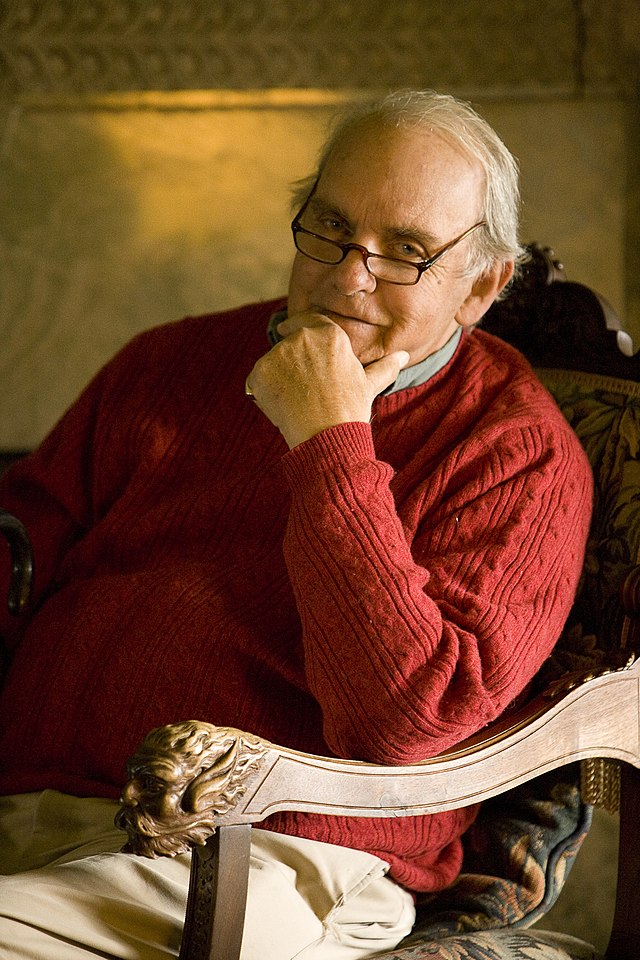
{Photo from Wikimedia Commons, CC}
No author has impacted my life as has Frederick Buechner. Not only have I read all but two or three of his copious writings (two of his novels are among my ‘top five’: Godric and The Final Beast), but he inspired me to become a writer. Finding and reading him changed my life—the honesty, the remarkable loveliness of his writing filled me with aspiration. It still does. And the wide-open, not fussy, warm-and-hospitable God Buechner portrayed made me want to keep looking.
The following excerpt is from my memoir Jesus Loves Women: A Memoir of Body and Spirit. It tells of how I discovered Buechner. How blessed, the day.
My systematic theology professor reads aloud in class. One fall day he reads from an author named Frederick Buechner, his autobiographical trilogy. Sitting at my desk, I hear the following words in which Buechner tells of his encounter with a surprisingly down-to-earth faith healer:
“More even than our bodies, she said, it was [our] hurtful memories that needed healing. For God, all time is one, and we were to invite Jesus into our past as into a house that has been locked up for years—to open windows and doors for us so that light and life could enter at last, to sweep out the debris of decades, to drive back the shadows. The healing of memories was like the forgiveness of sins, she said” (Now and Then, p. 63).
As I hear these words, I stare at my desk and force back tears. Buechner’s words seep deep beneath my layers of guardedness, behind the bulwark I had erected to keep from remembering the hurts of my past. The words stir in me a longing for something I hadn’t even known I needed—the healing of memories.
The words linger with me all day: The healing of memories is like the forgiveness of sins*. I picture God as an old woman, carefully working her way through dusty, stale rooms, humming, pulling back curtains and opening windows, whisking away the hurt and leaving rooms sunny and smelling of Murphy’s Wood Soap, leaving the memories changed and hallowed.*
Within a couple of weeks, I encounter Buechner again. At the time I am cataloging books for the university library where I hold a part-time work-study job. Almost every new book that enters the library passes through my hands. One day as I work through another monotonous MARC record, robotically filling in the necessary fields on my computer screen, I notice Buechner’s name on the spine of a book halfway down my cart. The three short volumes of Buechner’s autobiography sit there, waiting to be catalogued, waiting like a treasure in a field. Since I have the privilege of signing books out before they’re processed, I take Buechner home.
I delve into those volumes of memoir the way I would relish good wine—mmm-ing over each sip, appreciating the richness—but in the case of Buechner, also weeping. Reading Buechner I feel as a child does, having done something careless or clumsy, and someone comes along to say, “Don’t worry. It’s going to be okay. Everything is okay*.” In Buechner’s telling, that is like God. In his view, the only way we know God and see God is through the most ridiculous, painful, humiliating moments of our lives, because God is in those places embracing us and helping us along. God is there with the cursed more so than with the blessed. At first, I cannot read Buechner without sobbing.*
Describing the way God speaks to people via the medium of everyday life, Buechner writes,
“God speaks to us in such a way, presumably, not because he chooses to be obscure but because, unlike a dictionary word whose meaning is fixed, the meaning of an incarnate word is the meaning it has for the one it is spoken to, the meaning that becomes clear and effective in our lives only when we ferret it out for ourselves” (The Sacred Journey, p. 4)
Buechner seems to revere human life, depicting everyone’s life as undeniably sacred. Love and God are there if we look for them. And wherever love is, there is God; and wherever God is, there is sacredness. Embarrassed by the mistakes of the past several years, I had walked through life like a person with voluntary amnesia. I had refused to look back for fear I would crumble under the weight of regret. The mixed-up marriage, the loss of my self and the unheeded deterioration of my confidence, the seeming waste of those years—I had blamed myself for all of it.
Buechner urges me to look back on my life not with shame but with reverence and to let God heal the memories. Years will pass before I experience more reverence than repulsion, before I experience actual healing. But it is Buechner, more than anyone else, who turns me in the right direction.
Buechner walks with me that entire year. I read volume after volume of his writing.
Thank you, friend Buechner. Thank you for writing no matter what. Rest in power.
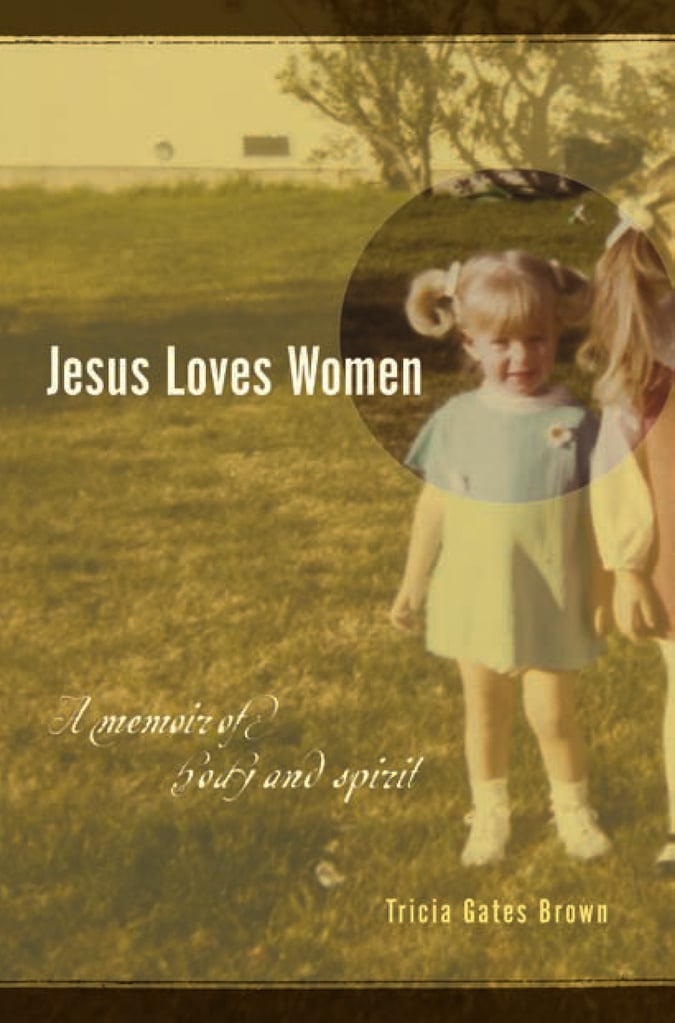
Available HERE.
Contemplative
Previous Post

August 16, 2022
How I Pray {Part Two}
Next Post

August 20, 2022 How I Pray {Part Three}
Browse Our Archives
Select a Category Education Essay Excerpt Uncategorized
Select a Month September 2026 August 2026 July 2026 June 2026 May 2026 April 2026 March 2026 February 2026 January 2026 December 2025 November 2025 October 2025 September 2025 August 2025 July 2025 June 2025 May 2025 April 2025 March 2025 February 2025 January 2025 December 2024 November 2024 October 2024 September 2024 August 2024 July 2024 June 2024 May 2024 April 2024 March 2024 February 2024 January 2024 December 2023 November 2023 October 2023 September 2023 August 2023 July 2023 June 2023 May 2023 April 2023 March 2023 February 2023 January 2023 December 2022 November 2022 October 2022 September 2022 August 2022 July 2022
Follow Us!
TAKE THE
Religious Wisdom Quiz
How long was Israel in Egyptian bondage?
Select your answer to see how you score.
500 years 400 years 300 years 200 years
Books by This Author Books by About Religion, Doubt and Why They Matter
Related posts from About Religion, Doubt and Why They Matter

Using Your Gifts Is Ministry: A Retired Deacon's...
About Religion, Doubt and Why They Matter

The Many Forms of Prayer: What Does it...
About Religion, Doubt and Why They Matter

In the Gloaming: What the Anti-Aging Movement Misses
About Religion, Doubt and Why They Matter

God Is in the Obstacle: What Loss Taught...
About Religion, Doubt and Why They Matter
TRENDING AT PATHEOS New Visions

The Sermon on the Mount, Part I: Matthew...
The Sermon on the Mount, Part I (Matthew 4:12-5:12) St. Matthew moves...

What's up from Crossway: Reviewing some of their latest A few weeks...

Janie Learns the Way of the Cross: A...
Teaching children about Jesus' Passion can be challenging. Many parents and educators...

Looking For Good Catholic Writing - October 2026
He alone extends the heavens, and he walks upon the waves of...

In "Irreplaceable," our book on vocation and technology, Trevor Sutton and I...

I was strolling through the top floor of the brand new Parthenon...
view all New Visions blogs
Ad-Free & Subscriber Log-In Subscription Support
- About Us
- 2026 Calendar
- Videos
- Podcasts
- Library of World Religions
- Faith In Media Tracker
- Advertise With Us
- Write for Us
- Privacy Policy
- Terms of Service
- Do Not Sell My Data
- Contact Us
- Radiant Digital
- Manage Newsletter Subscriptions
- Unsubscribe From Notifications
- Sitemap
Copyright 2008-2026, Patheos. All rights reserved.
Subscription Support Ad-Free & Subscriber Log-In
Follow Patheos