
BuddhistCatholicContemplativeEvangelicalGeneral ChristianHinduJewishLatter-day SaintMuslimNew VisionsProgressive Christian
Beliefs
- Buddhist
- Catholic
- Contemplative
- Evangelical
- General Christian
- Hindu
- Jewish
- Latter-day Saint
- More Voices
- Muslim
- New Visions
- Pagan
- Progressive Christian
Topics
- Religion News
- Food and Religion
- Sports and Religion
- Religious Art
- Religious Music and Entertainment
- Religious Events
- History and Religion
- Style and Religion
- Politics and Religion
- Women in Religion
- Recreation Outdoors and Religion
- Business Finance and Religion
- Careers Workplace and Religion
- Education and Religion
- Family Parenting and Religion
- Health Fitness and Religion
- Home and Religion
- Relationships and Religion
- Technology and Religion
- Travel and Religion
Columnists
- Buddhist Columnists
- Business Finance and Religion Columnists
- Careers Workplace and Religion Columnists
- Catholic Columnists
- Contemplative Columnists
- Education and Religion Columnists
- Evangelists Columnists
- Family Parenting and Religion Columnists
- General Christian Columnists
- Health Fitness and Religion Columnists
- Hindu Columnists
- History and Religion Columnists
- Home and Religion Columnists
- Jewish Columnists
- More Voices Columnists
- Latter Day Columnists
- Muslim Columnists
- New Visions Columnists
- Nonreligious Columnists
- Pagan Columnists
- Politics and Religion Columnists
- Progressive Columnists
- Recreation Outdoors and Religion Columnists
- Relationships and Religion Columnists
- Religion News Columnists
- Religious Art Columnists
- Religious Events Columnists
- Religious Music and Entertainment Columnists
- Sports and Religion Columnists
- Style and Religion Columnists
- Technology and Religion Columnists
- Travel and Religion Columnists
- Women in Religion Columnists
Resource Library
- 2026 Calendar
- Library of World Religions
- The 100 Most Holy Places on Earth
- Patheos Answers
- Podcasts
- Videos
- Faith Leaders Database
- Anglican Episcopalian
- Bahai
- Baptist
- Buddhism
- Christianity
- Confucianism
- Eastern Orthodoxy
- Hinduism
- Holiness and Pentecostal
- ISKCON
- Islam
- Judaism
- Lutheran
- Methodist
- The Church of Jesus Christ of Latter-day Saints
- New Age
- Paganism
- Presbytarian and Reformed
- Protestantism
- Religion Behind the Scenes
- Roman Catholic
- Scientology
- Shia Islam
- Sikhism
- Sufism
- Sunni Islam
- Taoism
- Zen
- See all religions
Research Tools
 Ad-Free & Subscriber Log-In Subscription Support
Ad-Free & Subscriber Log-In Subscription Support
Follow Patheos 

- Trending:
- Forgiveness
- |
- Marriage
- |
- Consciousness
- |
- Death Penalty
- |
- Election
- |
- Halloween

- Home
- New Visions
- The Lay of the Land: How did we get here?
The Lay of the Land: How did we get here?
Last updated on: July 12, 2022 at 2:07 pm by Tricia Gates Brown
The Lay of the Land: How did we get here? 2022-07-12T14:07:22-07:00 Tricia Gates Brown
Patheos Explore the world's faith through different perspectives on religion and spirituality! Patheos has the views of the prevalent religions and spiritualities of the world.
We are in a time. Long before the pandemic, separation and polarization had come to characterize American society—the result of many factors, not least being the media-/now-social-media landscape of the past thirty years. But surely our physical separation from one another since March 2020 has accelerated divisions and suspicions. We are in a time that some speculate could even lead to civil war (of some kind). How on earth did we get here?
As an “everyday theologian,” I try to wrap my head around what I see, to give contour to a problem in order to understand, especially from an inner-life or spiritual perspective. What I notice most is that people are looking for meaning, looking for answers—even as our old ways of constructing meaning and answers fade. In the vacuum created by the fading of the old ways, and the vacuum created by people’s disconnection from and distrust of institutions, various movements gain ascendancy. In the United States in the past several years, white nationalism—also called ‘Christian nationalism’—has been principal among them.
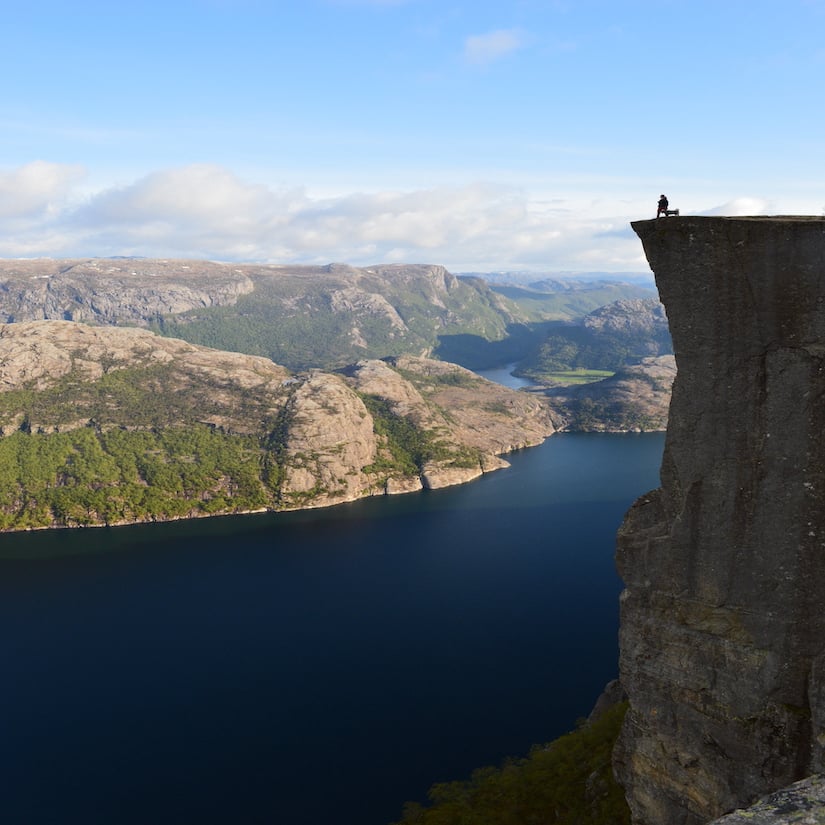
{Photo by Dani James for Scopio}
I observe these trends:
~ The mind-blowing pace of technological, societal, and environmental change has led to collective unease.
~ During times of unease and rapid change, people look for easy answers to questions of purpose and meaning.
~ Increasingly Americans are disconnected from dominant institutions that formerly lent people accessible answers to complex questions (often ‘simplistic’ answers, unfortunately).
~ In the vacuum created by the fading of institutions, arise movements and groups to which people gravitate for answers.
~ White grievance and white anxiety in the face of societal change and the fading of institutions by which white people formerly exacted domination have strengthened the movement of white nationalism/Christian nationalism/white ‘evangelicalism,’ so that more whites in the U.S. identify with this movement and identify as ‘evangelical’ since 2016 than before 2016, and it seems a political moniker at least or more than a religious one (see the research HERE).
~ With the rise of Trumpism, one of the two major political parties in the U.S. has become increasingly dominated by white nationalism and autocratic tendencies.
~ The covid-19 pandemic has accelerated polarization, separation from one another, and separation from institutions like religious, organizational, or other community groups, as people must distance from one another for the sake of community health.
This is the lay-of-the-land, as I see it—the “how we got here.” It is one person’s perspective, and I realize others we will see things I don’t. But these facets have come clear for me. The roots of the problem run deep. Indeed, the roots in institutional racism and white domination are as old as the country itself. The roots in the rise of virulently partisan media are newer. Roots in the rapid demise of institutions and organizations are also relatively new.
We all have a role to play in shedding light on the truth and advocating for the common good, for democracy—clearly one of the victims in this struggle, and to re-join what has been torn asunder.
As a clergy person and thinker/writer about religion, I reflect on the lay-of-the-land from this perspective. Re-ligionmeans “to re-join” or “re-connect.” Historically, religion has played this role in societies, both connecting people to a sense of meaning and to one another. Religion continues to play this role, but in an increasingly polarizing way, building strong bonds between people within siloed, homogenous groups. Here, I’m not just talking about participation in dominant faith traditions. As I often explain, I contend that all people have a religion. And by religion, I mean the narratives/stories, rituals, beliefs, values, and everyday practices by which we derive meaning for our lives. We all have these systems; and our sacred constellations of stories, values, and practices constitute our religions. More and more, people’s religions revolve around things other than dominant faith traditions, instead orienting around politics, family, pop culture, or some combination of sacred narratives.
My interest is in people recognizing their religions (being conscious of them) and striving to form healthy religious worldviews. I see a challenge for my own religious group—namely progressive Christianity—to do a better job at offering accessible answers to people’s questions about meaning and purpose, to questions arising from the anxieties of our rapidly changing world. Answers that are accessible without being simplistic, that re-join people to something larger than themselves without increasing divisions and ‘re-connecting’ people in increasingly siloed, homogenous groupings.
In this essay I’m not setting out to formulate or offer answers, but to name the problem as I see it. People are anxious. They are searching for meaning and direction. No matter what our religions or our sacred narrative structures, we are all—during this time of crumbling—challenged to ask both how our religious worldviews offer accessible answers, and how they might offer healing of divisions, widening our hearts to encompass change, diversity, and uncertainty—because change, diversity, and uncertainty are not going away. I admit: I’ve always been more comfortable with questions than answers. Yet I do believe certain things. There are in fact ‘truths self-evident’ to me that orient my heart and mind in the midst of uncertainty. I ask myself (and challenge you to ask yourself): Am I sharing my truths in such a way—clearly, passionately, honestly—that they might offer solace to others and healing to our brokenness?

WREN: Winner of a 2022 Independent Publishers Award Bronze Medal.

Next Post

July 11, 2022 An En-fleshed Worldview: Incarnation and caring about real-world needs
Browse Our Archives
Select a Category Education Essay Excerpt Uncategorized
Select a Month September 2026 August 2026 July 2026 June 2026 May 2026 April 2026 March 2026 February 2026 January 2026 December 2025 November 2025 October 2025 September 2025 August 2025 July 2025 June 2025 May 2025 April 2025 March 2025 February 2025 January 2025 December 2024 November 2024 October 2024 September 2024 August 2024 July 2024 June 2024 May 2024 April 2024 March 2024 February 2024 January 2024 December 2023 November 2023 October 2023 September 2023 August 2023 July 2023 June 2023 May 2023 April 2023 March 2023 February 2023 January 2023 December 2022 November 2022 October 2022 September 2022 August 2022 July 2022
Follow Us!
TAKE THE
Religious Wisdom Quiz
Do to others as you would have them do to ____.
Select your answer to see how you score.
Others Themselves Everyone You
Books by This Author Books by About Religion, Doubt and Why They Matter
Related posts from About Religion, Doubt and Why They Matter

Using Your Gifts Is Ministry: A Retired Deacon's...
About Religion, Doubt and Why They Matter

The Many Forms of Prayer: What Does it...
About Religion, Doubt and Why They Matter

In the Gloaming: What the Anti-Aging Movement Misses
About Religion, Doubt and Why They Matter

God Is in the Obstacle: What Loss Taught...
About Religion, Doubt and Why They Matter
TRENDING AT PATHEOS New Visions

How to Make a Decision When You Can't...
Main point: It’s much more valuable to stay close to God so...

Archdiocese Hosts Military Marriage Retreat in Germany
RASTATT, Germany — The transient military lifestyle, with its frequent deployments and...

Nearly every morning, I make the drive to Detroit with my high-school-age...

The Real AI Story Is Adoption Without Trust
Artificial intelligence has crossed a political threshold. It is no longer a...

A new article, written by Jeff Lindsay and Gale L. Pooley,...

Swimfan: Forgotten Aughts Pleasures
This is a recovery effort. In 2002, My Big Fat Greek Wedding...
view all New Visions blogs
Ad-Free & Subscriber Log-In Subscription Support
- About Us
- 2026 Calendar
- Videos
- Podcasts
- Library of World Religions
- Faith In Media Tracker
- Advertise With Us
- Write for Us
- Privacy Policy
- Terms of Service
- Do Not Sell My Data
- Contact Us
- Radiant Digital
- Manage Newsletter Subscriptions
- Unsubscribe From Notifications
- Sitemap
Copyright 2008-2026, Patheos. All rights reserved.
Subscription Support Ad-Free & Subscriber Log-In
Follow Patheos