
BuddhistCatholicContemplativeEvangelicalGeneral ChristianHinduJewishLatter-day SaintMuslimNew VisionsProgressive Christian
Beliefs
- Buddhist
- Catholic
- Contemplative
- Evangelical
- General Christian
- Hindu
- Jewish
- Latter-day Saint
- More Voices
- Muslim
- New Visions
- Pagan
- Progressive Christian
Topics
- Religion News
- Food and Religion
- Sports and Religion
- Religious Art
- Religious Music and Entertainment
- Religious Events
- History and Religion
- Style and Religion
- Politics and Religion
- Women in Religion
- Recreation Outdoors and Religion
- Business Finance and Religion
- Careers Workplace and Religion
- Education and Religion
- Family Parenting and Religion
- Health Fitness and Religion
- Home and Religion
- Relationships and Religion
- Technology and Religion
- Travel and Religion
Columnists
- Buddhist Columnists
- Business Finance and Religion Columnists
- Careers Workplace and Religion Columnists
- Catholic Columnists
- Contemplative Columnists
- Education and Religion Columnists
- Evangelists Columnists
- Family Parenting and Religion Columnists
- General Christian Columnists
- Health Fitness and Religion Columnists
- Hindu Columnists
- History and Religion Columnists
- Home and Religion Columnists
- Jewish Columnists
- More Voices Columnists
- Latter Day Columnists
- Muslim Columnists
- New Visions Columnists
- Nonreligious Columnists
- Pagan Columnists
- Politics and Religion Columnists
- Progressive Columnists
- Recreation Outdoors and Religion Columnists
- Relationships and Religion Columnists
- Religion News Columnists
- Religious Art Columnists
- Religious Events Columnists
- Religious Music and Entertainment Columnists
- Sports and Religion Columnists
- Style and Religion Columnists
- Technology and Religion Columnists
- Travel and Religion Columnists
- Women in Religion Columnists
Resource Library
- 2026 Calendar
- Library of World Religions
- The 100 Most Holy Places on Earth
- Patheos Answers
- Podcasts
- Videos
- Faith Leaders Database
- Anglican Episcopalian
- Bahai
- Baptist
- Buddhism
- Christianity
- Confucianism
- Eastern Orthodoxy
- Hinduism
- Holiness and Pentecostal
- ISKCON
- Islam
- Judaism
- Lutheran
- Methodist
- The Church of Jesus Christ of Latter-day Saints
- New Age
- Paganism
- Presbytarian and Reformed
- Protestantism
- Religion Behind the Scenes
- Roman Catholic
- Scientology
- Shia Islam
- Sikhism
- Sufism
- Sunni Islam
- Taoism
- Zen
- See all religions
Research Tools
 Ad-Free & Subscriber Log-In Subscription Support
Ad-Free & Subscriber Log-In Subscription Support
Follow Patheos 

- Trending:
- Forgiveness
- |
- Marriage
- |
- Consciousness
- |
- Death Penalty
- |
- Election
- |
- Halloween

- Home
- New Visions
- Reluctant Spokesperson {Part One}
Reluctant Spokesperson {Part One}
Last updated on: September 2, 2022 at 6:06 am by Tricia Gates Brown
Reluctant Spokesperson {Part One} 2022-09-02T06:06:07-07:00 Tricia Gates Brown
Patheos Explore the world's faith through different perspectives on religion and spirituality! Patheos has the views of the prevalent religions and spiritualities of the world.
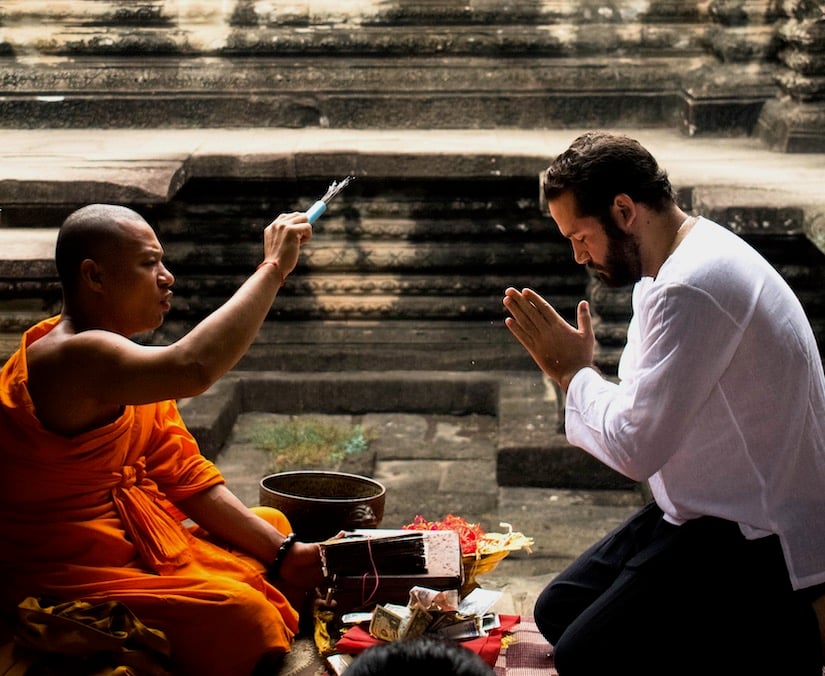
{Photo by Mark Anthony Cudal for Scopio}
I didn’t intend to become a spokesperson for tradition. Of those who know me best, I doubt any would describe me as traditional. But along the way, I’ve become attached to the idea that we need tradition, which some find perplexing as I’m so questioning and critical of my own (Christianity ala Episcopalianism). Last month, two friends asked why I stay. The subtext of the question being: What is the use?
As my friends’ questions suggest, tradition is not well regarded or considered useful. It’s about as popular as aspic. As a collective, Westerners spent decades breaking free of religious norms and other socio-political ideologies—of formerly cherished traditions. Sure, we see a vexing rise in religious fundamentalisms and nationalism concurrent with this trend, but these movements constitute a reaction to a general trend of inching away from consciously chosen traditions.
Yet I would argue the typical American is decidedly traditional. He or she simply does not choose their traditions consciously. Humans are, by nature, traditional. We have merely come to think of ourselves as nontraditional because our traditions are largely unexamined and individual-based.
Yet we are all shaped by mega-stories telling us what it means to live a good life. These mega-stories, or meaning systems, can center around all sorts of things—even sports culture, material prosperity, raising successful kids, our jobs (click here for an Atlantic article about jobs as American religion). Our mega-stories are unifying narratives. And unifying narratives are essentially what traditions are comprised of. Yet again, few of us are consciously aware of our traditions anymore. Few recognize what master stories shape our sense of what is important, what is meaningful.
I argue that knowing one’s tradition is far more advantageous than not knowing. That’s because choosing a tradition consciously sets us free to scrutinize our tradition and debate with those within it, deciding what aspects we care to reflect in our lives. Consciously chosen traditions can also serve as counter narratives as we confront mega-stories peddled by overwhelming forces around us (think presidential administrations; corporate culture; advertising; ideological movements). In this sense, consciously chosen traditions—if they allow debate and criticism—can be liberating. I believe that choosing a tradition, examining it and wrestling with it, and letting it shape you into the kind of person you hope to be, brings freedom. This last statement hints at what is, in my opinion, the criteria for choosing a good tradition. Ask: will this tradition shape me into the kind of person I hope to be?
Some eschew tradition because the rules or strictures make them feel unfree. But I suggest the actions of allpeople are to a large extent dictated by some tradition; most simply cannot identify what that tradition is. Maybe the dominant mega-story or tradition in their lives is American reality TV, left leaning cable news, the military-industrial complex, or the history of a large, multi-generational family or immigrant group. All of these are powerful mega-narratives and meaning-making systems, and the people within them are shaped by the values, stories, and strictures of those traditions. The benefit of having a tradition consciously chosen is how we can select which strictures are meaningful and helpful to us and have an intelligent debate with our companions when they are not.
For a deeper look at how we all function as traditionalists, read “Reluctant Spokesperson {Part 2}.”

Wren, Winner of a 2022 Independent Publishers Award Bronze Medal.
Contemplative
Previous Post

July 23, 2022
Seeing Beauty in Ourselves and Others
Next Post

July 30, 2022 What is Revelation for Progressive Christians?
Browse Our Archives
Select a Category Education Essay Excerpt Uncategorized
Select a Month September 2026 August 2026 July 2026 June 2026 May 2026 April 2026 March 2026 February 2026 January 2026 December 2025 November 2025 October 2025 September 2025 August 2025 July 2025 June 2025 May 2025 April 2025 March 2025 February 2025 January 2025 December 2024 November 2024 October 2024 September 2024 August 2024 July 2024 June 2024 May 2024 April 2024 March 2024 February 2024 January 2024 December 2023 November 2023 October 2023 September 2023 August 2023 July 2023 June 2023 May 2023 April 2023 March 2023 February 2023 January 2023 December 2022 November 2022 October 2022 September 2022 August 2022 July 2022
Follow Us!
TAKE THE
Religious Wisdom Quiz
Which Jewish festival commemorates the defeat of Haman?
Select your answer to see how you score.
Passover Pentecost Purim Booths
Books by This Author Books by About Religion, Doubt and Why They Matter
Related posts from About Religion, Doubt and Why They Matter

Using Your Gifts Is Ministry: A Retired Deacon's...
About Religion, Doubt and Why They Matter

The Many Forms of Prayer: What Does it...
About Religion, Doubt and Why They Matter

In the Gloaming: What the Anti-Aging Movement Misses
About Religion, Doubt and Why They Matter

God Is in the Obstacle: What Loss Taught...
About Religion, Doubt and Why They Matter
TRENDING AT PATHEOS New Visions

A new article, written by Jeff Lindsay and Gale L. Pooley,...

Swimfan: Forgotten Aughts Pleasures
This is a recovery effort. In 2002, My Big Fat Greek Wedding...

Top Three Anti-Catholic Lies About Catholicism
This is my initial transcript for the video, "THE 3 WORST...

Pope Leo Celebrates Mass for Nurses & Docs...
I don't have any idea how he did it, but Pope Leo...

The Sermon on the Mount, Part I: Matthew...
The Sermon on the Mount, Part I (Matthew 4:12-5:12) St. Matthew moves...

What's up from Crossway: Reviewing some of their latest A few weeks...
view all New Visions blogs
Ad-Free & Subscriber Log-In Subscription Support
- About Us
- 2026 Calendar
- Videos
- Podcasts
- Library of World Religions
- Faith In Media Tracker
- Advertise With Us
- Write for Us
- Privacy Policy
- Terms of Service
- Do Not Sell My Data
- Contact Us
- Radiant Digital
- Manage Newsletter Subscriptions
- Unsubscribe From Notifications
- Sitemap
Copyright 2008-2026, Patheos. All rights reserved.
Subscription Support Ad-Free & Subscriber Log-In
Follow Patheos