
BuddhistCatholicContemplativeEvangelicalGeneral ChristianHinduJewishLatter-day SaintMuslimNew VisionsProgressive Christian
Beliefs
- Buddhist
- Catholic
- Contemplative
- Evangelical
- General Christian
- Hindu
- Jewish
- Latter-day Saint
- More Voices
- Muslim
- New Visions
- Pagan
- Progressive Christian
Topics
- Religion News
- Food and Religion
- Sports and Religion
- Religious Art
- Religious Music and Entertainment
- Religious Events
- History and Religion
- Style and Religion
- Politics and Religion
- Women in Religion
- Recreation Outdoors and Religion
- Business Finance and Religion
- Careers Workplace and Religion
- Education and Religion
- Family Parenting and Religion
- Health Fitness and Religion
- Home and Religion
- Relationships and Religion
- Technology and Religion
- Travel and Religion
Columnists
- Buddhist Columnists
- Business Finance and Religion Columnists
- Careers Workplace and Religion Columnists
- Catholic Columnists
- Contemplative Columnists
- Education and Religion Columnists
- Evangelists Columnists
- Family Parenting and Religion Columnists
- General Christian Columnists
- Health Fitness and Religion Columnists
- Hindu Columnists
- History and Religion Columnists
- Home and Religion Columnists
- Jewish Columnists
- More Voices Columnists
- Latter Day Columnists
- Muslim Columnists
- New Visions Columnists
- Nonreligious Columnists
- Pagan Columnists
- Politics and Religion Columnists
- Progressive Columnists
- Recreation Outdoors and Religion Columnists
- Relationships and Religion Columnists
- Religion News Columnists
- Religious Art Columnists
- Religious Events Columnists
- Religious Music and Entertainment Columnists
- Sports and Religion Columnists
- Style and Religion Columnists
- Technology and Religion Columnists
- Travel and Religion Columnists
- Women in Religion Columnists
Resource Library
- 2026 Calendar
- Library of World Religions
- The 100 Most Holy Places on Earth
- Patheos Answers
- Podcasts
- Videos
- Faith Leaders Database
- Anglican Episcopalian
- Bahai
- Baptist
- Buddhism
- Christianity
- Confucianism
- Eastern Orthodoxy
- Hinduism
- Holiness and Pentecostal
- ISKCON
- Islam
- Judaism
- Lutheran
- Methodist
- The Church of Jesus Christ of Latter-day Saints
- New Age
- Paganism
- Presbytarian and Reformed
- Protestantism
- Religion Behind the Scenes
- Roman Catholic
- Scientology
- Shia Islam
- Sikhism
- Sufism
- Sunni Islam
- Taoism
- Zen
- See all religions
Research Tools
 Ad-Free & Subscriber Log-In Subscription Support
Ad-Free & Subscriber Log-In Subscription Support
Follow Patheos 

- Trending:
- Forgiveness
- |
- Marriage
- |
- Consciousness
- |
- Death Penalty
- |
- Election
- |
- Halloween

- Home
- New Visions
- Fragile
Fragile
Last updated on: July 12, 2022 at 1:40 pm by Tricia Gates Brown
Fragile 2022-07-12T13:40:57-07:00 Tricia Gates Brown
Patheos Explore the world's faith through different perspectives on religion and spirituality! Patheos has the views of the prevalent religions and spiritualities of the world.
{I wrote this essay about our common fragility during early days of the pandemic. The feelings it brings back! But lately I’m struck anew by our common experience of and encounter with fragility as we observe the war in Ukraine, as we watch the West change almost overnight while war is waged on behalf of democracy and national sovereignty, and as Europe-US relations evolve apace. Let us not forget ‘how fragile we are,’ how much we need each other—not only in ‘the West’ but globally. In no way are we more fragile than ecologically. We are fragile and broken as one common body needing to heal together.}
FRAGILE
In quarantine, I’m of normal mood most days; other days I tear up a lot. Part of my Plan For Wellness involves feeling my feelings. Yet some days the feelings are so knotted and complex and all-inclusive I need assistance teasing them out. Music helps. At times of past sadness, I avoided music. It carried too much emotional, evocative power. These days on the other hand, I put on a playlist of folksy-acoustic favorites and the tears flow to salubrious effect. No narrative, no story behind the tears (which story—of so many—would I tell?). Letting emotion move through and out of my body is the accomplished goal.
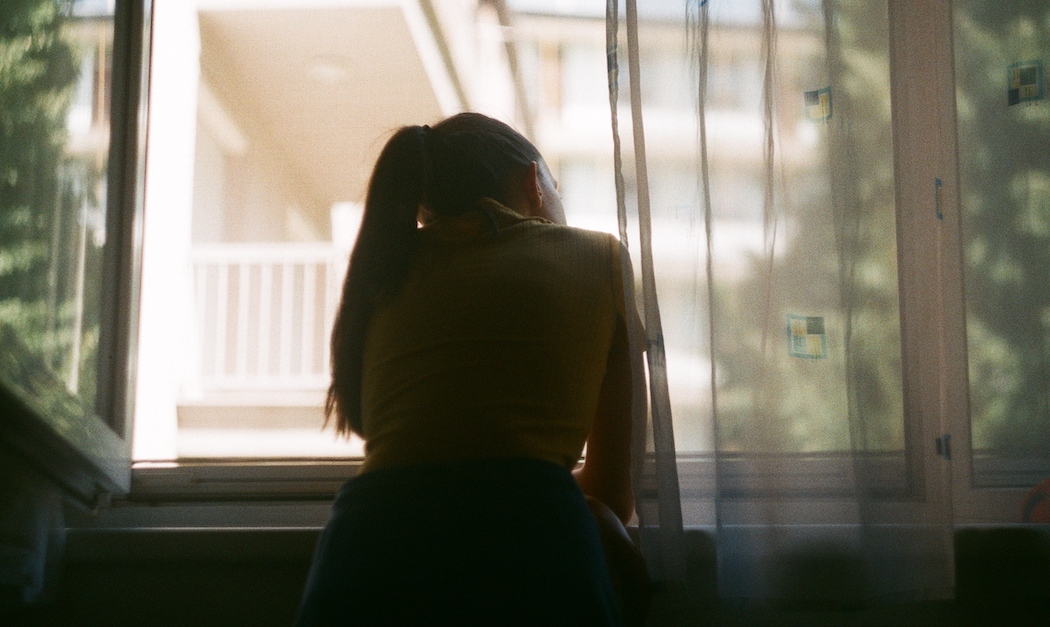
{Photo by Vidovics Adam for Scopio}
Every evening I take a soak in my hot tub (read: spiritual quiet place). As I find my way to feeling, the birds flit from maple to pear to red bud to magnolia: chickadee sparrow mourning dove red-winged finch junco robin. I can even scream under water when the rare need arises—without disturbing a single creature. Mostly I lean back and prop my feet on the edge, taking everything in like a prayer—the buds and blossoms, the shape of the clouds to the west and the drama of shadow and light weather creates against them. For me, this is a prayer, and more.
These days when Sting’s ‘Fragile’ plays, I find it resonantly painful, in a beautiful way, and sometimes I cry without tears. … ‘On and on the rain will fall/Like tears from a star/On and on the rain will say/How fragile we are.’
How fragile we are, brought to heel by a microscopic pestilence.
***
Like many millennials, my twenty-eight-year-old, Madison, was laid-off and moved home. She’s taken up the studio space on the farm, and for two weeks is self-isolating. At times we talk at a distance as I soak. My partner emerges from the house to bring her eggs from his hens, a clutch of daffodils, leftovers. He’s slow to catch on to isolation and she laughs at him, covering her face with the collar of her sweatshirt as she accepts the gifts.
She will come out of isolation on my 50th birthday to bake a cake and eat a celebratory dinner in the farmhouse. The party my parents and siblings planned to throw was postponed. Madison makes an excellent cake, though.
***
In February, a few weeks before the pandemic outbreak in the US I talked with my spiritual director, describing my current season as one of “hibernation.” The year preceding 2020—full of fullness and joy and new love and tragedy and loss—put me in the mood to hibernate. I was feeling apologetic about this mood. Then the pandemic arrived. Suddenly I had millions of far flung companions in hibernation. All of us fragile. All of us together and alone—all at once.
I continue my employment in isolation since I work from home (as editor). Most of my work relates to Native tribes. In a document I recently edited I read about how, when Elders of the Dena’ina tribe met those they hadn’t seen for a time, they asked, Nchugh tse gu?, which means, ‘Are you still breathing?’ Apparently, a Maori greeting (ki ora) similarly references the breath of life.
When all of this is over and we see each other again, will we ask: ‘Are you still breathing?’ Will we have a new interest in the ‘breath of life’ we share and now appreciate anew—having seen so many gasp for it literally and figuratively? Are many of us finding out—perhaps for the first time—what keeps us alive and gives us meaning? Is it not what we expected?
***
On social media I read anecdotes of artists who accomplished feats of creativity while in quarantine (did Shakespeare really write King Lear during a plague?). The cloying pressure of these anecdotes is burdensome. It tells me I should be something more than I am right now. I should complete my novel. I should craft an impressive art quilt. I should write more letters. I should; I should.… Yet I barely muster energy to call friends; mostly brief notes suffice. My goals during this pandemic are realistic: do my job, keep myself spiritually /emotionally/physically healthy, nurture relationships with partner and daughter—my isolation co-inhabitants. Acknowledging my fragility and limits, I rest a lot.
***
May we be gentle with ourselves. The more we are gentle and forgiving with ourselves, the more we will be gentle and forgiving of others. Maybe we can let go of perfectionism and the pressure to produce and succeed. These are the withdrawal effects of rabid capitalism, from which we are experiencing a cold-turkey break for a spell. Who knows whether we will get back on the drug when the moment allows? In the past few weeks, I have cancelled a trip, play and concert tickets, trips to the store, a 50th birthday party, friend visits, long-range internship plans, medical appointments, dinner out to celebrate an anniversary, and more. When isolation ends, will I rush to fill my calendar with tasks I couldn’t do while isolating? It probably depends how long the break lasts, and how long I’ve detoxed from the need to stay occupied, to perform. The longer I’m allowed to work through and beyond the pressures to succeed, or to have a ‘full and interesting life’—or the more I can get past the withdrawals, perhaps the more content I will be.
The trick is to not turn the goal of contentment into another achievement standard. I am fragile; you are fragile. No one is impervious to this pandemic or its accompanying assaults. We watch it break us in ways we never thought possible as we see loved ones lost around the world. Sometimes submitting to being less than enough, is enough; or in the language of the 12-step program, admitting we are powerless. I say this somewhat naively, as I have not done the 12-step program myself. But maybe it’s time to learn from those who have.

WREN: Winner of a 2022 Independent Publishers Award Bronze Medal.

Next Post

July 11, 2022 The Gift of Regret: Experiencing life-transforming grace
Browse Our Archives
Select a Category Education Essay Excerpt Uncategorized
Select a Month September 2026 August 2026 July 2026 June 2026 May 2026 April 2026 March 2026 February 2026 January 2026 December 2025 November 2025 October 2025 September 2025 August 2025 July 2025 June 2025 May 2025 April 2025 March 2025 February 2025 January 2025 December 2024 November 2024 October 2024 September 2024 August 2024 July 2024 June 2024 May 2024 April 2024 March 2024 February 2024 January 2024 December 2023 November 2023 October 2023 September 2023 August 2023 July 2023 June 2023 May 2023 April 2023 March 2023 February 2023 January 2023 December 2022 November 2022 October 2022 September 2022 August 2022 July 2022
Follow Us!
TAKE THE
Religious Wisdom Quiz
What body part did Peter cut off a servant during Jesus’ arrest?
Select your answer to see how you score.
Nose Ear Hand Finger
Books by This Author Books by About Religion, Doubt and Why They Matter
Related posts from About Religion, Doubt and Why They Matter

Using Your Gifts Is Ministry: A Retired Deacon's...
About Religion, Doubt and Why They Matter

The Many Forms of Prayer: What Does it...
About Religion, Doubt and Why They Matter

In the Gloaming: What the Anti-Aging Movement Misses
About Religion, Doubt and Why They Matter

God Is in the Obstacle: What Loss Taught...
About Religion, Doubt and Why They Matter
TRENDING AT PATHEOS New Visions

57th Dove Awards Honor Dolly Parton, Crown New...
On gospel music’s biggest night, the 57th annual GMA Dove Awards honored...

The First Eucharistic Controversy: Christ’s Real Presence
For Catholics, the Eucharist is the source and summit of the Christian...

What a Stop Sign Can Teach Us About...
How to Make a Decision When You Can't Hear God Main point:...

Archdiocese Hosts Military Marriage Retreat in Germany
RASTATT, Germany — The transient military lifestyle, with its frequent deployments and...

Nearly every morning, I make the drive to Detroit with my high-school-age...

The Real AI Story Is Adoption Without Trust
Artificial intelligence has crossed a political threshold. It is no longer a...
view all New Visions blogs
Ad-Free & Subscriber Log-In Subscription Support
- About Us
- 2026 Calendar
- Videos
- Podcasts
- Library of World Religions
- Faith In Media Tracker
- Advertise With Us
- Write for Us
- Privacy Policy
- Terms of Service
- Do Not Sell My Data
- Contact Us
- Radiant Digital
- Manage Newsletter Subscriptions
- Unsubscribe From Notifications
- Sitemap
Copyright 2008-2026, Patheos. All rights reserved.
Subscription Support Ad-Free & Subscriber Log-In
Follow Patheos