
BuddhistCatholicContemplativeEvangelicalGeneral ChristianHinduJewishLatter-day SaintMuslimNew VisionsProgressive Christian
Beliefs
- Buddhist
- Catholic
- Contemplative
- Evangelical
- General Christian
- Hindu
- Jewish
- Latter-day Saint
- More Voices
- Muslim
- New Visions
- Pagan
- Progressive Christian
Topics
- Religion News
- Food and Religion
- Sports and Religion
- Religious Art
- Religious Music and Entertainment
- Religious Events
- History and Religion
- Style and Religion
- Politics and Religion
- Women in Religion
- Recreation Outdoors and Religion
- Business Finance and Religion
- Careers Workplace and Religion
- Education and Religion
- Family Parenting and Religion
- Health Fitness and Religion
- Home and Religion
- Relationships and Religion
- Technology and Religion
- Travel and Religion
Columnists
- Buddhist Columnists
- Business Finance and Religion Columnists
- Careers Workplace and Religion Columnists
- Catholic Columnists
- Contemplative Columnists
- Education and Religion Columnists
- Evangelists Columnists
- Family Parenting and Religion Columnists
- General Christian Columnists
- Health Fitness and Religion Columnists
- Hindu Columnists
- History and Religion Columnists
- Home and Religion Columnists
- Jewish Columnists
- More Voices Columnists
- Latter Day Columnists
- Muslim Columnists
- New Visions Columnists
- Nonreligious Columnists
- Pagan Columnists
- Politics and Religion Columnists
- Progressive Columnists
- Recreation Outdoors and Religion Columnists
- Relationships and Religion Columnists
- Religion News Columnists
- Religious Art Columnists
- Religious Events Columnists
- Religious Music and Entertainment Columnists
- Sports and Religion Columnists
- Style and Religion Columnists
- Technology and Religion Columnists
- Travel and Religion Columnists
- Women in Religion Columnists
Resource Library
- 2026 Calendar
- Library of World Religions
- The 100 Most Holy Places on Earth
- Patheos Answers
- Podcasts
- Videos
- Faith Leaders Database
- Anglican Episcopalian
- Bahai
- Baptist
- Buddhism
- Christianity
- Confucianism
- Eastern Orthodoxy
- Hinduism
- Holiness and Pentecostal
- ISKCON
- Islam
- Judaism
- Lutheran
- Methodist
- The Church of Jesus Christ of Latter-day Saints
- New Age
- Paganism
- Presbytarian and Reformed
- Protestantism
- Religion Behind the Scenes
- Roman Catholic
- Scientology
- Shia Islam
- Sikhism
- Sufism
- Sunni Islam
- Taoism
- Zen
- See all religions
Research Tools
 Ad-Free & Subscriber Log-In Subscription Support
Ad-Free & Subscriber Log-In Subscription Support
Follow Patheos 

- Trending:
- Forgiveness
- |
- Marriage
- |
- Consciousness
- |
- Death Penalty
- |
- Election
- |
- Halloween

- Home
- Evangelical
- The Power of Christ’s Blood
The Power of Christ’s Blood
Last updated on: April 11, 2025 at 11:16 am by Richard E. Simmons III
The Power of Christ’s Blood 2025-04-11T11:16:17-06:00 Richard E. Simmons III
Patheos Explore the world's faith through different perspectives on religion and spirituality! Patheos has the views of the prevalent religions and spiritualities of the world.
For the past twenty years, we’ve held a Good Friday breakfast at the Country Club of Birmingham. Years ago, one of the attendees brought a friend. Afterward, the guest remarked, “The minister at my church never talks about the things that Richard talks about.” I believe he was referring to the harsh realities of the crucifixion—the blood and the suffering. In other words, he was saying his minister preferred to focus on more pleasant topics.
This reminds me of God’s words in Isaiah 30:9-11 when He says my people are rebellious, they do not like to hear the hard truth. Instead, they want to hear what is pleasant, even if it is an illusion.
Think about the following attributes of God; He is loving, merciful, holy, full of grace, all powerful, just and fair. This is referred to as “the theology of glory.” This is what makes us feel good about God and religion. It does not offend people.
Now consider these Biblical words: sin, wrath, the cross, crucifixion, the blood of Christ, sacrifice, and repentance. This is called “the theology of the cross.” Many find it offensive.
There are many liberal theologies who hate the idea of Christ’s blood paying for our sins. They call such views “slaughterhouse religion.” However, if you remove the cross and Christ’s shed blood from the Christian faith, it becomes meaningless.
In both the Old and New Testaments, God makes it quite clear that the forgiveness of our sins is only possible through the shed blood of an acceptable substitute. Without that substitute, we have to bear our own sins.
Prior to the coming of Christ the Jews performed blood sacrifices with animals. One of the most common animals used to be sacrificed was a lamb. This of course explains why when John the Baptist was baptizing people in the Jordan River and was approached by Jesus, John said, “Behold, the lamb of God who takes away the sins of the world.” He was declaring that Jesus would become the ultimate sacrifice.
Author Jill Carratini captures the significance of this so beautifully with these words:
When Christianity speaks of Christ as the Lamb of God, it is meant to be a description that moves well beyond symbolism. Christ is the Lamb whose blood cries out with enough life and power to atone every sin, every shortfall, every evil and depravity of the world. He is the Lamb who comes to the slaughter alive and aware, on his own accord, and with his blood covers our deep need, moving us forever into the presence of God. There is life in the blood of Christ; there is power, and he has freely presented it. “I tell you the truth,” Jesus said to a crowd that would understand the concept, “unless you eat the flesh of the Son of Man and drink his blood, you have no life in you.” (John 6:53).
Considering Christ’s body and blood, the elements of the Lord’s Supper, or the story of Jesus being led to the cross, do you see someone very much alive, bleeding, and conscious? “When they hurled their insults at him,” writes Peter, “he did not retaliate; when he suffered, he made no threats. Instead, he … bore our sins in his body on the tree, so that we might die to sins and live for righteousness” (1 Peter 2:23-24). The Christian story tells of a time when we will bow before the slain Lamb who stands very much alive, though bearing the scars of our atonement. The Lamb of God is not dead and buried, but alive, beckoning a broken world to his wounded side, offering the life and power of his blood.
Richard E Simmons III is the founder and Executive Director of The Center for Executive Leadership and a best-selling author.
Previous Post

April 4, 2025
Nuggets of Wisdom – Spring 2025
Next Post
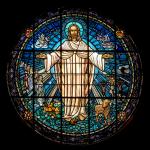
April 18, 2025 The Hope of Easter
Browse Our Archives
Select a Category Character Development Inspiration Leadership Life Purpose Personal Growth Relationships Seeking God Spiritual Truth The Bible True Masculinity Uncategorized Wisdom
Select a Month October 2026 September 2026 August 2026 July 2026 June 2026 May 2026 April 2026 March 2026 February 2026 January 2026 December 2025 November 2025 October 2025 September 2025 August 2025 July 2025 June 2025 May 2025 April 2025 March 2025 February 2025 January 2025 December 2024 November 2024 October 2024 September 2024 August 2024 July 2024 June 2024 May 2024 April 2024 March 2024 February 2024 January 2024 December 2023 November 2023 October 2023 September 2023 August 2023 April 2023 March 2023 February 2023 January 2023 December 2022 November 2022 October 2022 September 2022 August 2022 July 2022 June 2022 May 2022 April 2022 March 2022 February 2022 January 2022 December 2021 November 2021 October 2021 September 2021 August 2021 July 2021 June 2021 May 2021
Follow Us!
TAKE THE
Religious Wisdom Quiz
What is the meaning of "Jerusalem"?
Select your answer to see how you score.
Mountain of God Place of Kings Foundation of Peace City of Truth
Related posts from Reliable Truth




TRENDING AT PATHEOS Evangelical

How the author of the world's best hymn...
I've been working with John Newton for a while now. This makes...

Long before this Lectio Divina, Psalm 130 - the song - started...

What About the Trees? Another Living Parable
After I finished writing the last article about falling leaves as a...

Why Classical Education Is a Conversation, Not a...
Come and Read: Joy in Classical Education When I was a little...

Falling Leaves: A Living Parable on Letting Go
I’ve spent the vast majority of my life in the southeast corner...

Cornell University has received a great deal of negative publicity and intense...
view all Evangelical blogs
Ad-Free & Subscriber Log-In Subscription Support
- About Us
- 2026 Calendar
- Videos
- Podcasts
- Library of World Religions
- Faith In Media Tracker
- Advertise With Us
- Write for Us
- Privacy Policy
- Terms of Service
- Do Not Sell My Data
- Contact Us
- Radiant Digital
- Manage Newsletter Subscriptions
- Unsubscribe From Notifications
- Sitemap
Copyright 2008-2026, Patheos. All rights reserved.
Subscription Support Ad-Free & Subscriber Log-In
Follow Patheos